
This post is also available in:
 Español
 Português
 Français
Paulaner Hefe-Weissbier Naturtrüb is the number 1 wheat beer in Germany and one of the most appreciated in the world. With a cloudy appearance, it presents a velvety golden color, under a robust crown of foam.
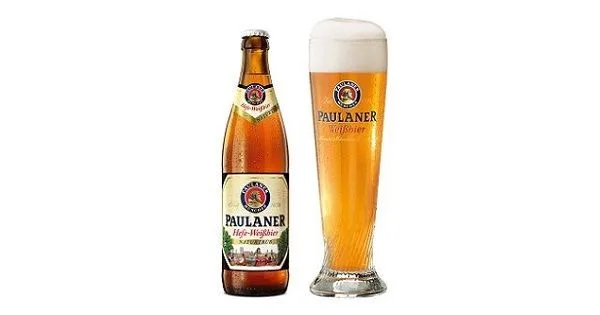
Its combination of wheat, yeast and lively carbonation gives rise to a refreshing, fruity and spicy profile, marked by the classic notes of banana and clove.

General Information
Name: Paulaner Hefe-Weissbier
Brewery: Paulaner Brauerei
Origin: Munich, Germany
Style: German Hefeweizen
ABV: 5.5 %
IBU: 12
Calories: 165 kcal
Glass: Weizen
Tasting Notes and Tasting
From the very beginning, Paulaner Hefe-Weissbier emanates that classic banana aroma, with hints of mango and pineapple that enhance the beautiful balance of sweetness and bitterness. Beer lovers enjoy the fine yeast aroma and its fabulous bubbly smoothness. It is the typical beer to drink outdoors, capable of bringing together people from all over the world.
1. Appearance
Ochre orange with soft golden reflections against the light and a uniform turbidity that does not reveal or allow appreciating its carbonation at first glance, generating a white and high foam, very fine, creamy and homogeneous, with good retention and adhesion.
2. Aroma
Initially, it develops defined fruity banana esters that immediately balance mid-nose by a slight spicy and citrus character, of clove and orange zest, balanced next by a sweet grain profile and a slight vanilla quality, profiled in a closure that incorporates attributes of yeast and raw bread dough in the deep nose.
3. Flavor
In flavor, its character begins with a marked profile of grain and spices, wheat and clove, which manage to combine toward a mid-palate that this time reverts to an esterous profile, of ripe banana and sweet bread, which after a pause immediately heads toward a closure that merges into a slight final acidity as contrast and balance, finally combined in an aftertaste that extends brief but defined.
4. Mouthfeel
Medium body, well-structured, creamy and silky, with sparkling but light carbonation; it unfolds smoothly throughout the mouth without roughness or alcohol warmth.
5. Overall Impression
Paulaner Hefe-Weissbier Naturtrüb (“Hefe” is yeast, “Weissbier” is wheat beer and “Naturtrüb”, unfiltered) is a classic of German wheat beers. Archetypal of the style, it expresses to a greater or lesser extent all the characteristics expected in beers of its type; it drinks smooth, creamy and refreshing, filling and thirst-quenching, with a defined banana and clove profile produced by the characteristic yeast, contrasted by soft citrus tones and that touch of acidity typical of the wheat used. Paulaner Hefe-Weissbier is that type of beer with which you could start the day, but in general it is a good option at any time and in any season.

Suggested Pairings
Paulaner Hefe-Weissbier, with its fruity, spicy and refreshing profile, is a versatile beer that complements a wide variety of dishes, from traditional Bavarian options to modern creations.
1. Main Dishes
Paulaner Hefe-Weissbier is ideal to accompany pretzels with sweet mustard or a classic schweinshaxe (roasted pork knuckle). The light acidity and spicy character of the beer cut the fat of the pork, while its fruity sweetness balances the saltiness of the pretzel.
2. Cheeses
This wheat beer harmonizes especially well with cheeses that are fresh and creamy, such as goat cheese or buffalo mozzarella. Its light carbonation and spicy profile contrast with the soft texture of the cheeses, while the banana and vanilla notes add a sweet touch that complements their dairy flavor.
3. Vegetarian Dishes
Paulaner Hefe-Weissbier combines perfectly with dishes based on roasted vegetables, such as eggplants or zucchinis, or with vegetarian curries of mild flavors. It is also ideal to accompany savory spinach or mushroom tarts, where its refreshing carbonation cleanses the palate between bites.
4. Desserts
Try pairing it with an apple strudel or a banana cake, where its fruity esters highlight the dessert’s flavors. It is also an excellent companion for citrus desserts, such as a lemon tart or a cheesecake with orange zest, where its citrus and spicy notes create a perfect harmony.
Frequently Asked Questions (FAQ)
1. Why should you gently shake the Paulaner bottle before serving it?
Being a Naturtrüb (unfiltered) beer, the yeast tends to settle at the bottom of the container. To enjoy its velvety texture and full flavor, it is recommended to serve three quarters of the glass, shake the bottle in a circular motion to suspend the remaining yeast, and then pour the rest. This guarantees the characteristic turbidity and aromatic profile of an authentic Hefeweizen.
2. What is the difference between Paulaner Hefe-Weissbier and a Kristallweizen?
The main difference lies in filtering. While Paulaner Hefe-Weissbier Naturtrüb keeps the yeast in suspension, giving it its cloudy appearance and silky body, the Kristallweizen is filtered to obtain crystalline clarity. This results in a more effervescent and lighter beer, but with a less accentuated presence of banana and clove than in the classic version.
3. Is Paulaner Hefe-Weissbier a vegan-friendly beer?
Yes, Paulaner Hefe-Weissbier is brewed following the Reinheitsgebot (German Purity Law of 1516), which only allows the use of water, malt, hops and yeast. As it does not use clarifying agents of animal origin (such as isinglass or gelatin), common in other beer styles, it is a product totally suitable for vegan consumption.
4. What exactly does the term “Hefe-Weissbier” mean on the label?
The term comes from German: “Hefe” means yeast, indicating that it is a beer with live sediment; “Weiss” means white, a historical reference to the pale color of the foam and turbidity compared to the dark beers of the time; and “Bier” is beer. Together, they describe the traditional wheat style of Bavaria.
5. How much carbonation pressure does this beer have compared to a Lager?
Wheat beers like Paulaner have significantly higher carbonation, reaching levels of between 3.0 and 4.5 volumes of CO2, while a standard Lager usually hovers around 2.5. This high effervescence is responsible for its iconic dense foam crown and that “sparkling” sensation in the mouth that helps cleanse the palate.
We Recommend
- 10 Arguments in Favor of Alcohol-Free Beers
- Dubbel, Tripel and Quadrupel: What Is the Origin of the Names?