This post is also available in:
 Español
  Português
Every year, more than 400 million tons of plastic are produced worldwide, causing enormous damage to terrestrial ecosystems.
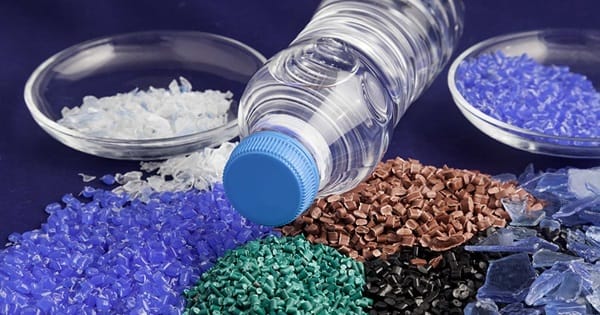
It is estimated that by 2050, the amount of plastic waste entering the ocean could quadruple, meaning there could be more debris than fish in the sea, according to United Nations projections.

An innovation from the company Indura, part of the Air Products Group, aims to help the beverage industry reduce plastic use in the manufacture of PET bottles.
By pressurizing containers with liquid nitrogen, it is possible to develop lighter containers with the same strength and handling properties.
Andrea López, business development engineer for Indura’s wine and food markets, explains:
One of the most important challenges facing the bottling industry, alongside the production of juices, beverages, and water, is the need to contribute to environmental protection through more sustainable packaging that generates less waste or recyclable material.
The technique is based on nitrogen’s rapid gasification and expansive capacity: a single drop of nitrogen injected inside the container is enough to pressurize it, providing comfortable rigidity for handling and storage, as well as for palletizing and subsequent transport — even if the container was designed with a thinner wall to minimize plastic use.
The gas is supplied from a cryogenic storage tank or equipment (at -196°C) and transported through a high-vacuum line to a dosing unit that, configured to a specific injection speed and duration along with a bottle-detection sensor, allows the desired amount of nitrogen to be added in a controlled manner, the specialist explains.

The temperature differential between liquid nitrogen stored at -196°C, the surrounding environment, and the temperature of the liquid inside the bottle causes a rapid phase change in the nitrogen, generating a gas volume 700 times greater than the size of the injected drop — which, at positive pressure, provides the sealed container with greater resistance to deformation.
In addition to contributing to savings in material and distribution costs, the technique also applies to the packaging of sauces, yogurt, ground coffee, snacks, canned goods, and many others. In general, any product that requires increasing the internal pressure of its storage container.
According to the United Nations, between 19 and 23 million tons of plastic waste end up in lakes, rivers, and beaches.
In Chile, of the 990,000 tons of plastic generated per year, only 83,679 tons (8.5%) are recycled. 17% of recycled plastic comes from households, and more than half of it corresponds to PET bottles.
The effects of pressurizing bottles with nitrogen will allow us to reduce the amount of plastic needed to manufacture each container, decreasing the volume of waste or recyclable material, promoting the development of lighter bottles with lower raw material and distribution costs.
The gas Indura uses in this process is food-grade, of high purity, free from physical, chemical, and microbiological contamination, meeting high international standards.
Pressurization allows an inert, oxygen-free atmosphere to be generated inside containers, which increases the product’s shelf life by preserving its original organoleptic characteristics.
This also prevents deterioration caused by oxidative and microbiological reactions.