This post is also available in:
 Español
  Português
  Français
In November 2016, UNESCO inscribed Belgian beer culture on its Representative List of the Intangible Cultural Heritage of Humanity. A decade later, Brussels celebrates that recognition with a richer and more diverse beer scene than ever: over 1,500 varieties, new experience spaces, and entire neighborhoods that have made craft beer part of their urban identity.
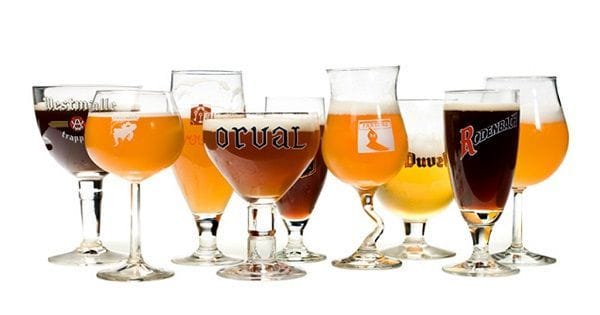
What that recognition consecrated was not just a product but a set of practices: the technical knowledge of brewers, the social rituals around consumption, the diversity of styles, and the generational transmission of that knowledge.

UNESCO emphasized that beer culture is “linked to the daily life and festive moments of Belgians” and that it is perpetuated through brotherhoods, associations of master brewers, and institutions that teach and promote it.
Beer is much more than a drink: it is a social language and a technical mastery passed down through generations.
Belgian Beer World, the epicenter of the anniversary
The Bourse de Bruxelles, the old stock exchange building in the city center, now houses Belgian Beer World. The experience center allows visitors to taste over 100 references under one roof, tour Belgian beer history interactively, and end at a panoramic skybar with views over the historic center.
It is the best starting point to understand the breadth of what Belgium has built over centuries of brewing: spontaneously fermented lambic, gueuze with bottle refermentation, or kriek, the cherry variant that lends itself to unexpected gastronomic combinations.
A few minutes away, on the Grand-Place, the Museum of Belgian Brewers completes the historical tour with tools and documentation on the guilds that managed production in the city for centuries.
The breweries leading the renewal
Alongside historic producers, a new generation of breweries has settled in converted spaces in Brussels and is redefining how beer is brewed and consumed in the city.
La Source Beer Co
At the BE-HERE space in the Laeken district, it has built its offering around a system of five tanks directly connected to the counter taps. The beer reaches the glass from the fermentation tank with no intermediaries, with the shortest possible time between production and consumption.
Brasserie de la Senne
Alongside Tour & Taxis, it is one of the engines of the local craft revival. It works exclusively with natural ingredients and opens its process to technical visits where attendees can follow the brewing process from start to finish. Its tasting area allows comparison of different expressions of new Brussels beer.
CoHop
Opened in 2022 at the Arsenal de Etterbeek, it operates under a unique cooperative model: four independent microbreweries share infrastructure and machinery on a rotating basis and concentrate their offering in a common space with over twenty taps. The result is a product diversity that none of the four could offer individually, with styles ranging from modern lambic to American-influenced IPA.
Lambic and Brussels’ irreducible identity
The renewal coexists with a tradition that has no equivalent anywhere else in the world. Lambic is a spontaneously fermented beer: it is not inoculated with cultivated yeast but exposed to the surrounding air so that wild microorganisms present in the valley colonize the wort.

Maturation times can exceed two years. The result is a beer with marked acidity, aromatic complexity, and radically local character.
Cantillon Gueuze remains the most recognizable symbol of that legacy. The brewery, still active as a living museum in Anderlecht, illustrates the continuity between historic Brussels and the present: the same 19th-century facilities, the same local yeasts, and the same recipes with decades of history.
The tradition of serving lambic in a basket maintained in several establishments in the city is one of Brussels’ most photographed rituals and one of the most authentic expressions of what UNESCO recognized in 2016.
In the Marolles and Saint-Gilles districts, a new wave of microbreweries works with local ingredients and commits to sustainability, reinterpreting traditional recipes without abandoning the artisanal stamp that defines the scene.
The canal periphery also concentrates recent projects that take advantage of converted industrial spaces in the west of the city.
Taverns and bars where beer takes center stage
Poechenellekelder
Across from Manneken-Pis, it preserves the charm of Brussels’ historic taverns. Within its walls, beer ceases to be a drink and becomes a way of understanding the city’s identity and character.
In’t Spinnekopke
Housed in an 18th-century former posthouse, it is the clearest example of how gueuze and lambic integrate into Belgian cuisine. The menu adapts centuries-old recipes to contemporary palates without losing the essence: “Beer doesn’t just accompany the meal; it integrates into the cooking.”
Beer Mania
In the European Quarter, it offers one of the city’s widest selections of national and international references. Le Barboteur, in Schaerbeek, specializes in limited editions from small producers and serves as a showcase for brewers without their own premises.

Frequently Asked Questions (FAQ)
1. When was Belgian beer declared a UNESCO Heritage Site?
Belgian beer culture was inscribed on the Representative List of the Intangible Cultural Heritage of Humanity on November 30, 2016. In 2026, the tenth anniversary of that recognition is celebrated.
2. How many beer varieties are there in Belgium?
Belgium has over 1,500 beer varieties, including styles as diverse as traditional pils, abbey beers, spontaneously fermented lambic, gueuze, kriek, and gluten-free or alcohol-free options.
3. What is Belgian Beer World?
Belgian Beer World is a beer experience center located in the restored Bourse de Bruxelles in central Brussels. It offers over 100 references to taste and features a panoramic skybar with views over the city.
4. What is gueuze, and why is it called the champagne of beers?
Gueuze is a Belgian beer made by blending lambics from different vintages, which are then re-fermented in the bottle. Its process—second fermentation, fine bubbles, and aromatic complexity—is reminiscent of champagne, hence the nickname given by the Belgian brewing tradition.