This post is also available in:
 Español
  Português
In 1841, Anton Dreher brewed the first Vienna Lager in history in Schwechat, combining malting techniques learned in Britain with the cold fermentation that dominated Bavarian tradition.
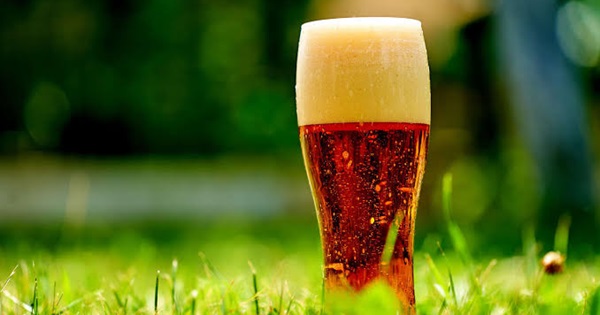
The result was an amber, toasted, clean-profile beer that transformed the European industry and, decades later, crossed the Atlantic to become the foundation of industrial Mexican beer.

Vienna Lager occupies a unique place in brewing history. It is the style that invented amber lager, was pushed aside by Pilsner in its own country of origin, and today survives with more vigor in Mexico and in the global craft scene than in Austria itself.
To understand this journey, we must start with a trip that two brewers took to Britain in 1833.
The journey that gave birth to a new beer style
In 1833, Anton Dreher and Gabriel Sedlmayr—heir to Munich’s Hofbräuhaus—traveled together through the main breweries of Britain and Ireland. The goal was to study British malting techniques, which produced paler and more stable beers than continental ones.
The methods they used to collect samples were not exactly what one would expect from two future founders of modern industry: they carried hollow canes with which they extracted wort and yeast samples without authorization, something both acknowledged in later correspondence.
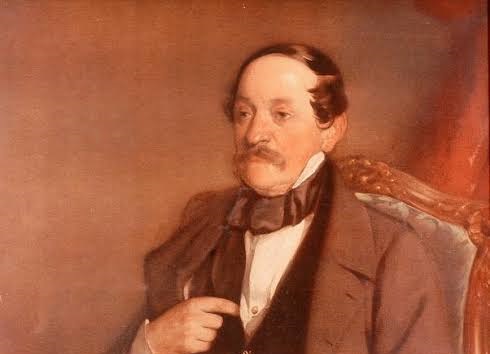
Back in their respective countries, each applied what they had learned to their local tradition. Sedlmayr perfected Märzen in Munich. Dreher developed a new way of treating malt that combined the cold drying of British maltsters with somewhat higher temperatures, producing an amber-colored grain with toasted aromas that had no precedent in the continental market.
In 1841, the Brauerei Schwechat presented this new beer. The color was golden amber. Cold fermentation produced a clean profile, without the fruity esters of ales. The flavor was malty, toasted, and balanced, with moderate noble hop bitterness. It was the first Vienna Lager.
The ingredient that defines the style
Dreher’s most important technical contribution was not the recipe, but the grain. Vienna malt is obtained by kilning germinated barley at medium temperatures—around 60-65°C—which produces Maillard reactions without reaching the caramelization of dark malts. The result is an amber cereal with flavors reminiscent of fresh bread, dry biscuits, and nuts.
Unlike pale malt—paler and less aromatic—and caramel or crystal malts—with intense caramelization—Vienna malt provides color and complexity without losing the clean profile characteristic of lagers.
This balance is what makes the style technically demanding: the malt must sustain all the sensory interest of the beer because hops and yeast are deliberately kept in the background.
The lager yeast that Dreher used for cold fermentation has an origin as fascinating as the style itself. Research published in 2011 confirmed that Saccharomyces pastorianus, the yeast responsible for all lagers worldwide, emerged from a hybrid with wild yeasts from Patagonia.
Why did Vienna Lager emigrate to Mexico?
The style’s story in Europe ended sooner than anyone could have predicted. In 1842, just one year after the debut of Vienna Lager, Josef Groll brewed the first Pilsner in Plzeň.
The blonde, light, brilliant beer that came out of Bohemia began a conquest of the European market that no one could stop. Pale lager was going to dominate the next century.
In Austria, Pilsner gradually displaced Vienna Lager from taps throughout the second half of the 19th century. The style born in Schwechat lost market share in its own country of origin until it became a historical rarity.
What Dreher could not foresee was that his beer would survive on the other side of the Atlantic. During the empire of Maximilian I—the Austrian archduke who ruled Mexico between 1864 and 1867—waves of European immigrants arrived in the country.
Among them were many Austrian and German brewers who knew the Viennese style perfectly. The breweries they founded in the following decades adopted Vienna Lager as their reference model.

The legacy of those foundations is today in brands that any enthusiast recognizes. Dos Equis Ambar, whose formula descends directly from the Viennese style, and Negra Modelo, which shares the same malty roots, are two of Mexico’s best-selling beers.
The country turned Vienna Lager into a large-scale industrial style just as it was disappearing in its land of origin.
The craft revival and return to the global map
For almost a century, Vienna Lager existed as a historical category but rarely as an actual beer in most of the world. The revival came from the United States.
In 1984, Jim Koch founded The Boston Beer Company and launched Samuel Adams Boston Lager, brewed with Vienna malt, which became the flagship of the nascent American craft movement and proved there was an audience willing to pay for beers with malty character and real body.
Throughout the nineties and 2000s, Vienna Lager gradually joined the catalog of craft breweries worldwide. The style found in craft a space that the industrial market had never given it.
Today, the category has consolidated recognition in the BJCP and in major international competitions. Argentina has recently produced what was recognized as the best Vienna Lager in the world in two consecutive editions, Andes Origen Red, from Cervecería Andes, a new geographical twist in the history of a style that has never stayed still.
The journey of Vienna Lager—historical definition, eclipse by a more massive style, survival in an unexpected market, and craft revival—has parallels in other regional styles that also sought their identity over time.
The Mediterranean Lager, Spain’s first officially codified native style, follows a different but equally revealing path on how markets build and recover beer’s identities.
What to expect from a Vienna Lager?
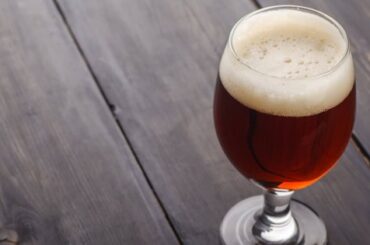
Authentic Vienna Lager has a recognizable sensory profile from the first glance. The color ranges from light amber to copper, with a brilliant clarity characteristic of well-made lagers. The foam is ivory and persistent.
On the nose, toasted malt aromas predominate—bread, biscuit, and nut—with a discreet, floral noble hop presence. There are no fruity notes; cold lager fermentation eliminates the esters that do appear in ales.
On the palate, the body is medium, carbonation is moderate, and bitterness is balanced with malty sweetness. The finish is dry and toasty, with no dominant residual sugar or astringency.
The style’s technical parameters according to the BJCP are as follows:
- Alcohol between 4.7 and 5.5% ABV
- Bitterness between 18 and 30 IBU
- Color between 9 and 15 SRM (light amber to amber)
- Clean fermentation profile, without fruity esters
- Medium body with dry finish
Commercial references to identify the style include Samuel Adams Boston Lager, Dos Equis Ámbar, Negra Modelo, and Andes Origen Red. In the European craft segment, production is growing in Spain, Germany, and the United Kingdom.
Frequently Asked Questions (FAQ)
When and where was the Vienna Lager style born?
The first Vienna Lager was brewed in 1841 by Anton Dreher at the Brauerei Schwechat, on the outskirts of Vienna, Austria. Dreher combined malting techniques learned in Britain with the cold fermentation of Bavarian tradition to create an amber lager with a toasted and clean profile.
Why did Vienna Lager become the foundation of Mexican beer?
During the Empire of Maximilian I (1864-1867), Austrian and German immigrants arrived in Mexico with knowledge of the Viennese style. The breweries they founded adopted Vienna Lager as their model, and that legacy survives today in brands like Dos Equis Ámbar and Negra Modelo.
What is Vienna malt, and what role does it play in the style?
Vienna malt is a grain kilned at medium temperature that produces amber color and toasted aromas without reaching the caramelization of dark malts. It is the main ingredient of Vienna Lager and provides the malty complexity that sustains the style in the absence of prominent hops or yeasts.
What are the technical characteristics of Vienna Lager?
According to the BJCP, Vienna Lager has between 4.7 and 5.5% ABV, a bitterness of 18 to 30 IBU, and an amber color of 9 to 15 SRM. Its profile combines toasted malt, medium body, and dry finish with clean fermentation without fruity esters.

You may also be interested in
- Chicha beer, the Andean style combining jora corn and Latin American craft tradition
- The silent revolution of non-conventional yeasts in craft beer