
This post is also available in:
 Español
  Português
Chicha beer is not chicha mixed with beer. It is its own craft beer style born in the Andes, combining jora corn with barley malt, using local herbs instead of hops, and mixed fermentation instead of industrial yeasts.
In recent years it has won international competitions, appeared in the BJCP style guidelines as an emerging category, and is now produced in Colombia, Peru, and the United States. Gordon Strong, one of the most respected beer judges in the world, notes:
It is a model of how indigenous styles can be rediscovered and reinterpreted in our times.
From Inca nobility to colonial stigmatization
Chicha has roots dating back to approximately 5000 B.C. in the Andean region. It was the drink of the Inca nobility, an axis of community life, an instrument of economic exchange, and a central element in religious ceremonies.
Archaeological evidence suggests that even the Pueblo tribes in New Mexico produced fermented corn beverages around 800 years ago.
The best-known traditional brewing process, though not the only one, involves chewing the corn so that the enzyme ptyalin in saliva converts starch into fermentable sugars. The corn thus treated is called muko.
It is dried, combined with raw corn, cooked in water, and fermented for a week in clay vessels covered with cloth. The result was a cloudy, slightly acidic, low-alcohol, highly variable beverage.
The Spanish conquest radically altered the perception of chicha. The colonizers promoted European wine as a superior beverage and relegated chicha to the status of a lower-class drink.
For centuries, stigmatization was effective; in many Latin American countries, chicha became associated with the rural, the marginal, the ancient. In Colombia, it was even illegally prohibited for decades. That irony —the drink of the Inca nobility turned into a symbol of poverty— is the starting point of the modern recovery movement.
From marginal beverage to competition category
The artisanal reinterpretation of chicha does not seek to exactly recreate the ancestral beverage. Strong, who participated as a judge at the Copa Cervecera Mitad del Mundo in Quito, makes it clear:
They are not recreations of the original, they are reimaginings.
The recovery movement takes the central ingredient, jora corn, and introduces it into a modern brewing process with controlled mashing, selected yeast fermentation, and hygiene standards that guarantee batch-to-batch stability.
For Andean producers, brewing chicha beer is also a political act. In words collected by Beer & Brewing, contemporary brewers see their work as:
An act of rebellion that honors pre-Hispanic heritage, a way to reclaim a beverage that colonialism deliberately relegated.
PUCE (Pontifical Catholic University of Ecuador) has taken that spirit to the laboratory: it recovered ancient yeasts to recreate 1567, a beer commemorating the first South American brewery founded in Quito by Flemish friar Jodoco Ricke.
Ecuador as the epicenter of modern chicha beer
If there is one country that has systematized chicha beer as a competitive style, it is Ecuador. The Copa Cervecera Mitad del Mundo, which celebrates its tenth edition in 2026 and is considered one of the three most important competitions in Latin America, has positioned the style as one of its identity references.
In the 2026 edition, 180 breweries from South and Central America presented more than 800 samples before 25 international judges from the United States, Belgium, Germany, Italy, and various Latin American countries.
The Ecuadorian craft sector has approximately 350 breweries distributed across Quito, Guayaquil, Loja, and Cuenca, with annual growth of 12%.
Cervecería Quiteña, owned by Andrés Erazo, won the Best in Show at the Copa Cervecera with its chicha beer Fandango, a champagne-profile version, highly carbonated, dry (OG 1.040, FG 1.002, 5% ABV), made with 60% malted corn, 30% Pilsner malt, and 10% unmalted wheat, fermented in three phases with Lactobacillus, Saison, and Brettanomyces.
Sereno Moreno, also in Quito, serves chicha in multiple flavors by the glass or growler, giving an idea of the density of the local market. You can delve deeper into the origin and etymology of these fermented beverages in the article Chicha: definition and etymology of native fermented beverages of the Americas.
Jora corn, Andean herbs, and no hops
Chicha beer starts with a base grain that is not barley, but jora corn, germinated and sun-dried, whose germination develops amylase enzymes that convert starch into fermentable sugars.
Modern producers can use artisanal malted corn in purple, white, yellow, red, or blue hues depending on the available Andean variety; brewers outside the region often resort to pre-cooked masarepa (the P.A.N. arepa brand is the most accessible alternative) or dry corn from Latin markets.

Instead of hops, chicha beer uses Andean flora. The most common herbs are cedrón, lemon balm, lemongrass, mint, and congona. Flowers include sweet violet, rose geranium, mallow, chamomile, and ataco (purple amaranth).
Spices used are cinnamon, ishpingo, clove, and allspice. To this are added fruits such as wild mountain strawberry, pineapple, orange, golden berries, and sweeteners like panela or honey. The result does not taste like hopped beer, but rather more herbal, slightly acidic, and earthy.
Mixed fermentation is characteristic of the modern style. Traditional starters were spontaneously fermented pineapple peels, a kind of tepache, which inoculated the wort with Lactobacillus and wild yeasts.
Microbiological studies have identified more than 50% of Peruvian samples with Lactobacillus as the dominant microorganism, and Ecuadorian chichas have shown up to 26 different yeast species, with Saccharomyces cerevisiae and Torulaspora delbrueckii being the most frequent.
Modern producers can replicate this with diastatic saison-type yeasts, Lactobacillus plantarum for controlled acidity, and Brettanomyces for wild character. If you want to try brewing it at home, the jora chicha recipe on the site is a good starting point.
How to recognize a chicha beer?
There is no single profile; regional variability is part of the style’s identity, but there are common traits that allow its identification:
1. Appearance
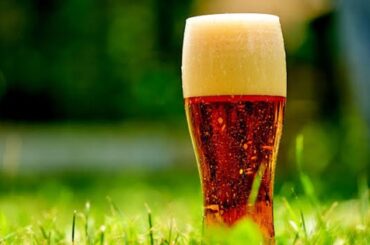
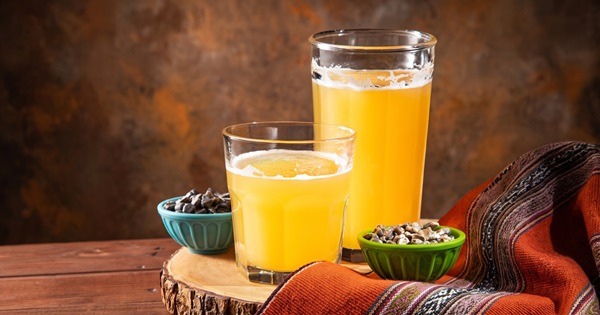
Cloudy, straw-yellow to orange-golden color, similar to a hazy IPA or an unfiltered lambic. Sometimes with foam, sometimes without.
2. Aroma
Herbal, citrusy (from herbs like cedrón or lemongrass), with earthy field-corn character —not the synthetic sweetness of corn adjunct in industrial lagers— and fruity notes when fruits are used in fermentation.
3. Flavor
Intentional light acidity, dry in the more refined modern versions, with herbal bitterness replacing hop bitterness. In versions like Fandango, almost Champagne-like profile, dry, carbonated, effervescent. In Bolivian versions, almost flat, more funky and acetic.
4. Body
Light to medium. Ancestral versions were thicker and cloudier; modern competition versions tend toward dryness and high attenuation.
5. Alcohol content
Between 3% and 5.5% ABV in most cases.
One style, many territories
Regional diversity is one of the style’s strengths and complexities. In Ecuador, modern chicha beer is dry, carbonated, and competitive; in Peru, Cervecería Barbarian produces Chicha Tu Mare, a sour, dry version comparable to a Berliner Weisse with corn and quinoa.
In Bolivia, especially in Cochabamba, traditional chicha is served in a gourd, almost without carbonation, acidic, and with pronounced funky character; it is produced mainly by women and consumed in a social context very different from urban craft beer.
In Colombia, Chichería Demente in Bogotá serves cloudy, house-made chicha in a high-end gastronomic context, illustrating the breadth of the spectrum, from ancestral community beverage to signature restaurant offering.
Ecuadorian chicha de yamor, made with seven varieties of corn, and Peruvian chicha morada, made with purple corn, fruits, and spices, without alcoholic fermentation, are variants that expand the concept beyond beer.
Gordon Strong anticipates that chicha will be a model for “the rebirth of other indigenous styles around the world waiting to be rediscovered,” making this style not just a beer category but a movement.
Frequently Asked Questions (FAQ)
1. Is chicha beer made by chewing corn?
In the vast majority of modern artisanal versions, no. Producers use germinated (jora) or malted corn to obtain enzymes without chewing. The ancestral muko process persists only in indigenous communities east of the Andes.
2. What differentiates chicha beer from traditional jora chicha?
Chicha beer incorporates barley malt, modern mashing, and selected yeasts (Saison, Lacto, Brett), guaranteeing stability and reproducibility. Traditional jora chicha ferments with wild microflora, has low carbonation, and batch variability.
3. What herbs are used instead of hops?
Cedrón, lemon balm, lemongrass, mint, and congona (herbs); violet, rose geranium, mallow, chamomile, and ataco (flowers); cinnamon, ishpingo, clove, and allspice (spices). Plus Andean fruits, depending on the producer.
4. Where can chicha beer be found outside Ecuador?
Cervecería Barbarian (Lima, Peru) with its Chicha Tu Mare; Chichería Demente (Bogotá, Colombia); artisanal producers in the United States. In Bolivia, traditional Cochabamba chicha remains locally produced and community-consumed.
References
- Strong, Gordon. “Chicha Beer”. Brew Your Own Magazine, 2025.
- “Style School: Modern Chicha”. Beer & Brewing, 2025.
- “Chew, Spit & Brew: How to Make Chicha Beer”. Homebrewers Association, 2025.
- “Ecuador celebrates Beer Week 2026 in Quito”. El Universo, July 2026.
We Recommend
- Chicha: definition and etymology of native fermented beverages of the Americas
- Andean jora chicha recipe: the ancient South American corn beer
- History of Corona Extra beer: origins, myths, and global expansion