This post is also available in:
 Español
 Português
 Français
Chicha de jora (from the Quechua “aqha”) is a fermented drink of Andean origin, consumed since pre-Inca times in territories that today belong to Peru, Bolivia and Ecuador.
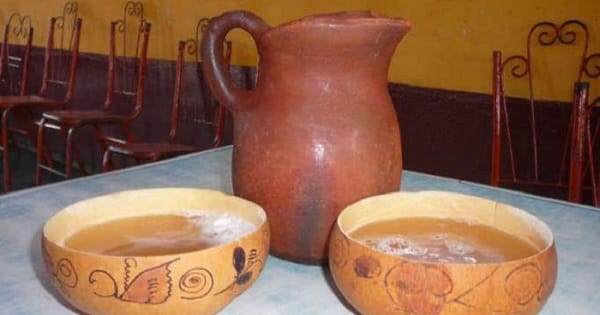
It is made mainly from germinated starchy yellow corn, the “jora”, and it played a ceremonial, social and agricultural role in Andean cultures and later in the Inca Empire.

For beer history enthusiasts, chicha de jora is one of the oldest documented spontaneous fermentation traditions in the Americas. Its artisanal production and its use of wild microorganisms have led to comparisons, in cultural and fermentation terms, with the lambic beers of Belgium.
It was a ritual and communal drink, present at agricultural ceremonies, religious festivals and social gatherings, including celebrations such as Inti Raymi, where it was symbolically offered to the sun and the earth.
Origin and History of Chicha de Jora
Chicha de jora has pre-Inca origins and belongs to an ancient tradition of fermented drinks developed by various farming cultures of the central Andes. Corn fermentation was already practiced in present-day Peru long before the expansion of the Inca Empire, and some researchers place its ritual roots in the Chavín culture, around 900 BC.
Over the centuries, this technique was refined and scaled up by later pre-Hispanic societies. In the Moche culture, between 100 and 700 AD, and later in the Wari Empire, around 600 to 1100 AD, production went from being only domestic or ritual to being made on a large scale.
Wari archaeological sites have yielded large vessels, remains of processed corn and spaces set aside for the collective preparation of chicha. A 2023 study combined excavations at Cerro Baúl, a Wari provincial center, with experimental brewing of chicha from corn and from molle berries to identify the traces this production leaves in the archaeological record (Nash, Biwer and Witte, 2023). Archaeologist Justin Jennings has also shown how chicha was used to rally collective labor at feasts, a logistical and political foundation later inherited by the Incas (Jennings, 2004).

From Saliva to Malt
Before germination became widespread, many Andean cultures made chicha by chewing cooked corn, a technique known as “chicha de mukho”. The amylases in saliva broke starch down into fermentable sugars, the same method The Beer Times describes in its article on how saliva was used to make beer.
Mastering jora, malted or germinated corn, was a crucial technological advance. It made large-scale production possible without relying on chewing, because the grain itself, when it breaks dormancy, produces the enzymes needed to turn its starch into sugar.
Andean cultures were thus using the same biochemical principle behind modern malted beer, which is converting starch into fermentable sugars through the germination of the grain.
The Inca Empire and the Acllas
With the expansion of Tawantinsuyu, chicha de jora gained significant political and religious value. Ceremonial production was in the hands of the acllas or aqllakuna, the chosen women, who prepared the drink and guarded the knowledge needed to make it.
The drink was stored and fermented in large clay vessels known archaeologically as urpus or aryballos, typical containers of the Inca period used to transport and store fermented liquids.


Cultural Importance of Chicha de Jora
More than just a drink, chicha de jora was a symbol of hospitality, reciprocity (ayni) and social cohesion in the Andes. Sharing chicha sealed political alliances and community agreements.
The origin of the word chicha and the other native fermented drinks of the continent are explained in The Beer Times article on the definition and etymology of chicha.
The Science of Fermentation
Modern commercial beer uses selected yeast strains in stainless steel tanks. Traditional chicha de jora relies instead on a wild microbial community that comes from the grain, the air and the vessels.
Alcoholic fermentation is carried out by yeasts, mainly Saccharomyces cerevisiae, along with other wild yeasts that contribute fruity aromas in the early stages. Lactic acid bacteria work in parallel. A 2020 study that sequenced 27 chicha samples from 14 chicherías in seven Peruvian provinces found that Lactobacillus accounted for more than half of the bacterial sequences, followed by Weissella, Leuconostoc, Lactococcus and Streptococcus (Bassi et al., 2020). These bacteria produce lactic acid, which gives chicha its refreshing taste, similar to yogurt or sour beers, and lowers the pH until the environment becomes hostile to pathogens.
Clay vessels are porous and can harbor biofilms of yeasts and bacteria from previous batches. Every time chicha is made in the same jar, the vessel acts as a kind of mother culture that inoculates the new batch with local microorganisms, giving each chichería its own flavor profile.
How to Make Chicha de Jora
Many modern recipes add barley, refined sugar or cloves, ingredients that came from Europe. This is the base of the ancient Andean preparation.
Prep time: 30 minutes
Cooking time: 4 to 6 hours
Fermentation: 3 to 6 days
Servings: 12 people
Ingredients
- 1 kg (2.2 lb) of jora corn
- 5 liters (1.3 gallons) of water
Preparation
- Crush or coarsely grind the jora corn. This step is essential; if you boil the whole kernels, the water will not be able to extract the fermentable sugars. Put the ground corn and the water in a large pot.
- Bring to a boil, reduce the heat to the minimum and cook for at least 4 hours, stirring from time to time with a wooden spoon, until the liquid turns amber gold and has reduced to about 3.5 liters.

- Let it cool until lukewarm and strain through a clean cotton cloth or cheesecloth, squeezing the solids well to extract all the sugar-rich liquid.
- Transfer the liquid to a clay vessel or a glass container. Do not use bleach or chemical sanitizers on the clay, because you would kill the wild yeasts living in its pores.

- Cover the opening with a porous cloth (cheesecloth or muslin) and tie it with string. This allows the air exchange needed in the early stages and keeps out fruit flies, which can carry acetic bacteria.
- Leave it to ferment in a dark, cool place and taste it daily. After 2 or 3 days it will be sweet and low in alcohol; after 5 or 6 days it will be drier, more sour and stronger.
Frequently Asked Questions (FAQ)
1. What is the difference between chicha de jora and other Andean chichas?
The main difference is the use of jora, malted corn, to produce the sugars. Other chichas, such as mukho (chewed), quinoa or güiñapo (germinated purple corn) chicha, use other substrates and other enzymatic routes. Chicha morada, on the other hand, is a non-alcoholic drink made by boiling purple corn with fruit and spices.
2. What alcohol content does chicha de jora usually have?
It usually has a low alcohol content, generally between 2% and 5% ABV, which varies widely depending on the density of the wort, the ambient temperature and the days of fermentation.
3. Why does my chicha de jora taste like vinegar?
It is the work of acetic bacteria of the genus Acetobacter, found in chicha according to the 2020 study by Bassi and colleagues. They turn alcohol into acetic acid when there is too much exposure to oxygen, high temperatures or an overly long fermentation. To avoid it, keep the vessel covered with a tightly woven cloth in a cool place and drink the chicha within the first week.
4. Can I make chicha de jora in a plastic or glass container?
Yes, you can use glass or food-grade plastic and you will get alcohol. You will lose some complexity of flavor, however. Clay allows micro-oxygenation that rounds out the flavor and harbors Lactobacillus colonies that give chicha its traditional acidity.
Did You Know?
Before drinking chicha de jora, many Andean communities pour a small amount onto the ground. This ceremonial gesture, known as payment to the earth or challa, is an offering to Pachamama and symbolizes gratitude, reciprocity and respect for the nature that provided the corn harvest.
References
- Bassi, D., Orrù, L., Cabanillas Vasquez, J., Cocconcelli, P. S., and Fontana, C. (2020). Peruvian chicha, a focus on the microbial populations of this ancient maize-based fermented beverage. Microorganisms, 8(1), 93. doi.org/10.3390/microorganisms8010093
- Nash, D. J., Biwer, M. E., and Witte, E. (2023). Dreg deposits and domestic beer production, assessing the ubiquity of chicha production in the Wari Empire. Ethnoarchaeology, 16(1), 163 to 191. doi.org/10.1080/19442890.2023.2284072
- Jennings, J. (2004). La Chichera y El Patrón, chicha and the energetics of feasting in the prehistoric Andes. Archaeological Papers of the American Anthropological Association, 14, 241 to 259. doi.org/10.1525/ap3a.2004.14.241
Recommended
- Traditional Wheat Muday Recipe, Ancestral Mapuche Homebrew Beer
- How Was Saliva from Your Mouth Used to Make Beer Before Malting and Mashing?