This post is also available in:
 Español
 Português
 Français
Kettle souring has revolutionized sour beer production, establishing itself as a modern, controlled technique that makes it possible to brew beers with a pronounced acidic profile in significantly less time than traditional fermentation methods.
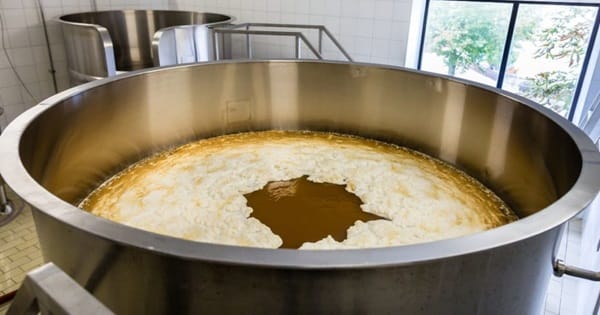
Popularized over the last decade, this method lets brewers experiment with sour beers without the risks of prolonged contamination and without the long waiting times typical of “wild” fermentations.

What Is the Kettle Souring Technique?
Kettle souring is a controlled acidification technique carried out in the kettle before the wort is boiled.
Unlike traditional sour fermentation, which can take months and involves prolonged exposure of the beer to microorganisms in barrels or tanks, a kettle sour is completed within 24 to 48 hours.
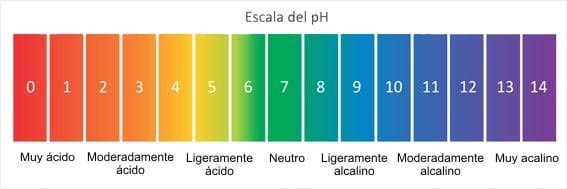
This fast approach allows the brewer to define the beer’s acidic profile in a more precise and reproducible way, keeping the acidity within a pH range of 3.2 to 3.8, which contributes to the consistency of the final product and reduces the risk of unwanted flavors.
The Kettle Sour Process Step by Step
Kettle souring involves several key steps that must be carried out carefully to ensure a high quality final product.
1. Wort Preparation
An initial pasteurization of the wort at 80 °C eliminates unwanted microorganisms, after which the wort is cooled to 35 to 40 °C, the ideal temperature for Lactobacillus activity.
Before inoculating, many brewers pre-acidify the wort to a pH of 4.0 to 4.5 with food-grade lactic or phosphoric acid. This step holds back the growth of contaminating microorganisms and prevents Lactobacillus from degrading the proteins that support the foam (Milk the Funk).
2. Inoculation and Acidification
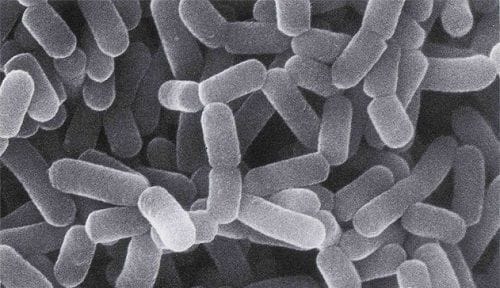
The wort is inoculated with lactic acid bacteria such as Lactobacillus plantarum, brevis or delbrueckii, which lower the pH to a range of 3.2 to 3.8 within 24 to 48 hours.
During this phase, the system is purged with CO₂ and dissolved oxygen is monitored, since it must be kept to a minimum in order to prevent oxidation and preserve the stability of the beer.
Purging also holds back aerobic microorganisms that can contaminate the wort and produce isovaleric acid, with its aged cheese aroma. Oxygen itself does not inhibit Lactobacillus, which tolerates small amounts (Milk the Funk).
3. Post-Acidification and Boil
Once the target pH is reached, the wort is brought to a boil to stop bacterial activity and the hops are added.
The wort is then cooled again and prepared for yeast fermentation, which gives the sour beer its final profile.
Gravity and Nutrient Control
A typical original gravity range for a kettle sour is 1.040 to 1.048. Styles such as Berliner Weisse start lower, between 1.028 and 1.032 according to the BJCP 2021 guidelines.
Lactobacillus mainly needs manganese and magnesium, minerals that the wort already supplies in good measure.
Zinc is best held back until after souring, because in trials with L. brevis its addition slowed acidification and left a higher final pH.
Its place is in the yeast fermentation, where it is indeed a key nutrient (Milk the Funk).
Temperature Control
Precise temperature control prevents fluctuations that can alter the flavor profile.
Heat wraps or PID controllers help hold the ideal range of 35 to 40 °C during acidification, ensuring that fermentation takes place under optimal conditions.
Critical Parameters
To ensure quality, certain key parameters need to be monitored, with defined measurement frequencies, acceptable ranges and corrective actions for each critical metric.
| Parameter | Frequency | Range | Corrections |
| pH | Every 4 hours | 3.2 to 3.8 | Adjust temperature or reinoculate. |
| Original gravity | Start | 1.040 to 1.048 | Adjust by dilution or concentration. |
| Temperature | Continuous | 35 to 40 °C | Adjust thermal control |
| Dissolved oxygen | Continuous | As low as possible | Purge with CO₂. |
| Nutrients | Start | Manganese and magnesium | Zinc only after souring. |
General Water Profile
For sour beers, water with low levels of bicarbonates and sulfates is recommended. Bicarbonates contribute alkalinity and buffer the drop in pH, while sulfates, which have no effect on acidity, accentuate a dry bitterness that is undesirable in a sour beer (BYO).
Adjusting these levels can significantly improve the kettle sour process and ensure balanced acidity along with a clean, fresh flavor profile.

Calcium (Ca²⁺)
Between 50 and 100 mg/L, to support the activity of lactic acid bacteria and help flocculate particles in the wort.
Magnesium (Mg²⁺)
Between 5 and 20 mg/L to contribute to yeast health, although in excess it can produce bitter flavors.
Sodium (Na⁺)
Low concentrations of 5 to 30 mg/L, since at high levels it can add an unwanted salty taste.
Sulfates (SO₄²⁻)
Less than 50 mg/L, to avoid an overly bitter influence.
Chlorides (Cl⁻)
Between 30 and 50 mg/L, for a sense of body and a softer flavor.
Bicarbonates (HCO₃⁻)
Less than 30 mg/L, to avoid excessive alkalinity that would interfere with the desired acidity.
How to Scale Up Production?
Scaling up a kettle sour requires adjusting parameters according to production volume and the available infrastructure.
- For larger volumes, acidification time and CO₂ purging capacity must be recalculated.
- As volume increases, the time needed to reach the target pH may vary, so gravity and nutrients must be calculated proportionally.
- For large production runs, stainless steel tanks with integrated temperature control and an efficient CO₂ purging system are recommended.

How to Control the Process?
Process control and validation ensure that every batch meets the following appropriate quality standards.
1. pH and Gravity
The final pH should be between 3.2 and 3.8, and the gravity should fall within the defined range of 1.040 to 1.048.
2. Critical Controls
Original gravity, nutrient levels, temperature control and dissolved oxygen.
3. Detailed Records
Record the values of each critical metric and the corrective actions taken in the event of deviations.
Technical Considerations
Constant microbiological control is essential, since maintaining rigorous sanitation prevents contamination.
In addition, to ensure the microbiological stability and shelf life of the final product, it is advisable to run viable cell counts, monitor organic acid levels and check microbiological quality at every stage of the process.
For those who prefer not to work with bacteria in the brewery, there is a more recent alternative.
Lallemand’s WildBrew Philly Sour yeast, a Lachancea strain isolated by the University of the Sciences in Philadelphia, produces lactic acid and alcohol in a single fermentation.
According to the manufacturer, it produces a sour beer in 7 to 10 days at 25 °C and, thanks to its hop tolerance, is also suitable for Sour IPA (Lallemand).
Common Problems and Solutions
Precise monitoring and adjustment of these factors corrects most problems.
- Slow acidification may point to an inadequate temperature or low Lactobacillus levels, and it is corrected through constant monitoring and adjustment of temperature and nutrients.
- Oxidation or temperature fluctuation are often the cause of off-flavors, so purging with CO₂ and keeping a stable temperature is essential.
- To ensure the shelf life of the final product, it is crucial to minimize oxygen during fermentation and packaging (can or bottle).
- Using preservation techniques such as pasteurization along with airtight packaging will help maintain the stability and final quality of the beer.
General Conclusions
Kettle souring offers brewers an effective way to create high quality sour beers in a short time, provided that pH, temperature, oxygen and hygiene are precisely controlled at every step.
Frequently Asked Questions (FAQ)
1. Which beer styles can be produced with the kettle souring technique?
Kettle souring is ideal for producing beer styles with a clean acidity dominated by lactic acid, without the complex, rustic notes of mixed (wild) fermentation. The most common styles include Gose and Berliner Weisse, and it also serves as the base for many modern Fruit Sours such as Catharina Sour. It is generally used as the base for a subsequent fermentation with Ale yeast (Saccharomyces).
2. What is the risk of cross-contamination when using Lactobacillus?
The risk of cross-contamination (especially of equipment downstream of the kettle) is a key concern. The main mitigation is the boil that follows acidification. Boiling the soured wort effectively pasteurizes it, killing all Lactobacillus bacteria before the wort moves on to the chiller and the fermenter. This isolates the acidification process from the rest of the brewery, allowing the fermentation areas to stay clean.
3. What differences result from kettle souring compared with traditional sour brewing?
The difference is significant, since a kettle sour produces a “clean”, pure and one-dimensional acidity dominated by lactic acid (a yogurt or mild lemon flavor). Mixed fermentation, on the other hand, involves Brettanomyces, Pediococcus and other microorganisms that generate acidity but also produce complex secondary flavors and aromas such as leather, hay and stone fruit notes, or a sharper (acetic) acidity.
4. Can hops be added before acidification with Lactobacillus?
It is not recommended. Hops have natural antibacterial properties, which means that even small amounts can inhibit or drastically slow the growth and activity of Lactobacillus, prolonging or halting acidification. For this reason, wort for kettle souring is first produced (pasteurized) without hops. Hops are typically added during the boil, after the target pH has been reached and acidification has finished.
5. What happens if the pH does not drop to the desired range of 3.2 to 3.8?
If the pH stalls or acidification is slow, it is a sign that the Lactobacillus bacteria are stressed. The first step is to check the temperature and immediately adjust it to the optimal range of 35 to 40 °C. It is also worth checking the CO₂ purge, which protects the wort from aerobic contaminants. If there is no change after these adjustments, the solution is to reinoculate with more Lactobacillus.

Recommended
- Origin and History of the Berliner Weisse Style: Germany’s “Champagne of the North”
- Catharina Sour, the Brazilian Beer Style That Is Conquering the World