This post is also available in:
 Español
  Português
  Français
There is no single cider. It changes with the country, the law that defines it, the apples it is made from and the way it is fermented, and that mix yields styles as different as Asturian natural cider (sidra natural), French cidre, tannic English cider and Quebec ice cider.
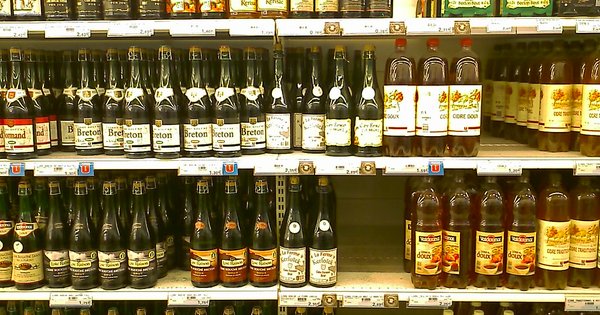
This guide covers the main types of cider through each country’s rules, the protected designations of origin and the BJCP style guidelines, the benchmark for competitions. At the end, a table compares their strength, their sweetness and what comes through in the glass.
How are types of cider classified?
There are three common ways to group them. By origin, with each region’s designations of origin and geographical indications, by production method, depending on whether sugar, water or carbonation is added, and by style, with the categories judges use in competitions.
The 2025 BJCP style guidelines group ciders into four broad categories. They are traditional ciders, strong ciders, specialty ciders and perry, which is made from pears.
Each country also defines by law what may be called cider. Those definitions explain many of the differences you later notice when you taste a cider.
What does the law say a cider is?
In Spain, Royal Decree 72/2017 distinguishes two products. Natural cider comes only from apple must, with carbonation and sugars entirely its own and at least 5% alcohol, while cider, with a minimum of 4%, may contain sugars or syrups and carbon dioxide added after fermentation.
In France, the name cidre is reserved for the drink made by fermenting fresh apple must, or apple and pear must, with or without added water, under the 1953 decree that is still in force. In the United Kingdom, the tax authority requires at least 35% apple or pear juice and a strength below 8.5%.
In the United States, hard cider under tax law must contain from 0.5% to less than 8.5% alcohol and no more than 0.64 grams of CO2 per 100 milliliters. It must be made primarily from apples or pears, or from their concentrate with water, with no other fruits or flavorings.
The table summarizes those legal definitions.
| Country | Regulation | Main requirements |
|---|---|---|
| Spain | Royal Decree 72/2017 | Natural cider with at least 5% ABV, no added sugar or carbonation. Cider with at least 4% ABV, with sugar and carbonation allowed |
| France | Decree 53-978 of 1953 | Fresh apple must, or apple and pear must, with or without water |
| United Kingdom | HMRC technical guide | At least 35% apple or pear juice and under 8.5% ABV |
| United States | 26 U.S.C. § 5041(g) | From 0.5% to under 8.5% ABV and no more than 0.64 g of CO2 per 100 ml |
What types of cider are there in Spain?
Spain has two great cider traditions, Asturian and Basque, plus a quality standard that also covers other categories.
1. Asturian natural cider
The Sidra de Asturias PDO covers two products, natural cider, with at least 5% alcohol, and sparkling natural cider, with a minimum of 5.5%. Its Regulatory Council also distinguishes traditional natural cider, unfiltered and poured from a height (escanciado), from filtered or new expression cider (nueva expresión), which is served in a stemmed glass.
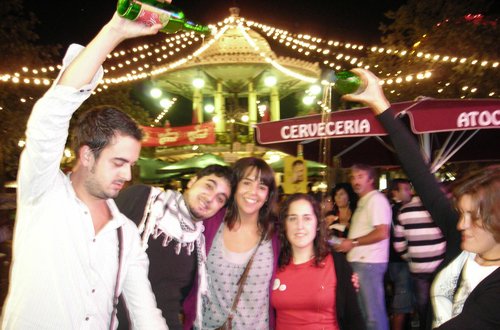
The BJCP includes it in the Spanish Cider style, made from sharp and bittersharp apples through a spontaneous fermentation by yeasts and bacteria. It describes it as dry and crisp, with lively acidity, citrus notes and high volatile acidity, like Trabanco natural cider.
2. Basque cider
Basque Country cider, Euskal Sagardoa, is made from native apple varieties, with no added sugar or water and with carbonation that comes only from the cider itself. Its 2024 product specification requires unfiltered cider to have no more than 0.2 grams per liter of glucose and fructose, which means it is practically dry.
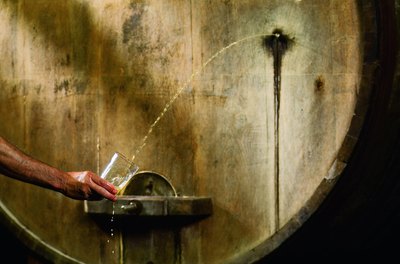
The specification lists 194 native apple varieties and the tradition of opening the txotx. It also protects a sweet-tart cider, Gazi-gozoa, and a sparkling one, Aparduna, although the designation is still pending registration in the European Union.
3. Other categories in the Spanish standard
Royal Decree 72/2017 also defines sparkling natural cider, with at least 5.5% alcohol and a pressure above 3 bar, and sweet natural cider, an exception to the 5% minimum, with 1% to 3% alcohol and more than 50 grams of sugar per liter. It also regulates ice cider, cider with fruit juice, flavored cider and cider cocktail, which has less than 4% alcohol.
What is French cider like?
France has cidre bouché, a cider bottled under a mushroom cork with at least 3 grams per liter of carbon dioxide, according to Que Choisir. The BJCP describes the French style as medium to sweet, full-bodied and rich, with a strength of 3% to 6%.
Labels carry the terms doux, demi-sec and brut, from sweetest to driest.
According to the consumer association Que Choisir, a cidre doux has at least 35 grams of sugar per liter, or 42 if it is bouché, and less than 3% alcohol, a demi-sec between 28 and 42 grams and a brut 28 at most. In 2023 a reform of the decree was announced that would classify them by density instead of sugar.
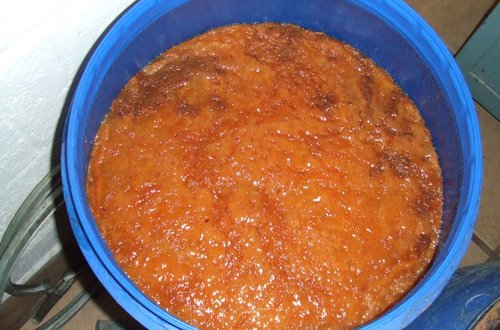
According to the 2025 draft specification, the Pays d’Auge AOP in Normandy requires the must to be clarified by défécation, with no added carbonation and a second fermentation in the bottle lasting at least six weeks. The Cornouaille AOP in Brittany describes a cider especially rich in tannins, golden to orange in color.
France also has the Cidre Cotentin and Cidre du Perche PDOs and the Cidre de Bretagne and Cidre de Normandie PGIs.
What sets English cider apart?
Traditional English cider stands out for its high tannin content. The BJCP describes it as full-bodied, often with a fairly dry impression and a long finish, and with a strength of 6% to 9%.
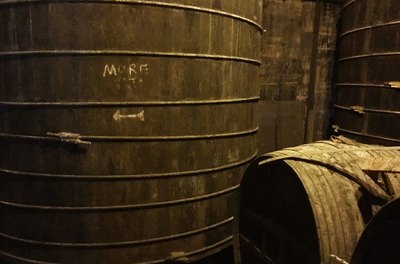
The United Kingdom protects the ciders and perries of Herefordshire, Worcestershire and Gloucestershire as geographical indications, as well as Welsh ones. The Worcestershire Cider specification allows bittersweet, bittersharp, sweet and sharp apples, up to 25% pear juice and chaptalization, with a strength of 4% to 8.5%.
The consumer organization CAMRA defines real cider as cider fermented from the whole juice of freshly pressed apples or pears, with no concentrates and no sugar added to the must. It is a stricter criterion than those of the geographical indications and of British tax law.
Commercial British ciders include Strongbow Original Dry.
What is modern or New World cider?
The BJCP uses the name Common Cider for cider made mainly from dessert apples, also known as New World or modern cider. It is more acidic and has less tannin than most other traditional styles, with a strength of 4.5% to 8%.

Heirloom Cider combines the apple character and acidity of modern cider with the tannin of English or French cider apple varieties. The BJCP notes that it is sometimes called traditional or heritage cider, and it has 6% to 9% alcohol.
An American variant is New England Cider, made from the region’s sharp apples with sugar, molasses, maple syrup or honey to raise the alcohol, often with raisins. It is traditionally dry and reaches 7% to 13%.
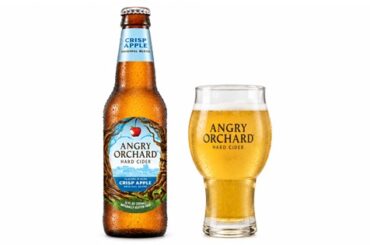
Commercial American ciders include Angry Orchard Crisp Apple.
What are ice cider and other strong ciders?
Ice cider comes from juice concentrated by cold, either by freezing the fruit before pressing or by freezing the juice to remove water. The BJCP places its origin in Quebec in the 1990s and allows no additives.
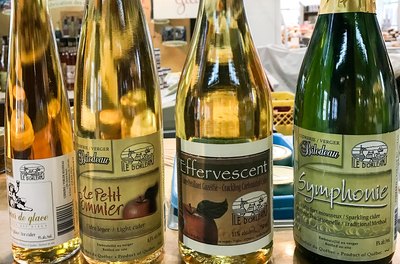
The Cidre de glace du Québec geographical indication requires late apple varieties, a must of at least 32 degrees Brix and residual sugar of at least 140 grams per liter. If the apples freeze on the tree, they must stay there at least until December 1, and the finished cider has 9% to 13% alcohol.
The figures change from one standard to another. The BJCP accepts ice ciders from 7% alcohol, and the Spanish standard requires at least 8% and 100 grams of sugar per liter.
The BJCP recognizes two other strong ciders. Applewine is fermented with added neutral sugar, reaches 9% to 12% and resembles a dry white wine, and Fire Cider, or Canadian cidre de feu, is made from boiled and concentrated juice, very sweet and caramelized, at up to 16%.
The table shows how the requirements for ice cider change depending on who defines it.
| Standard | Alcohol | Sugar |
|---|---|---|
| BJCP 2025 | 7 to 13% | Final gravity of 1.050 to 1.085 |
| Royal Decree 72/2017 (Spain) | 8% or more | 100 g/L or more |
| Cidre de glace du Québec PGI | 9 to 13% | 140 g/L or more |
What is perry?
Perry is cider made from pears. The BJCP defines it as the fermented juice of crushed pears, in which pear must account for most of the fermentables, and British law caps the apple juice in it at 25%.
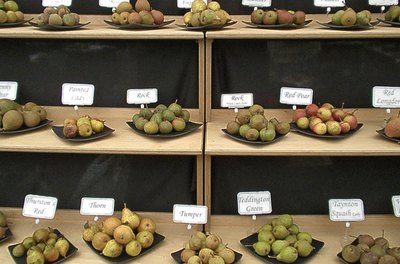
The BJCP distinguishes Common Perry, from dessert pears, Heirloom Perry, from perry pears that are almost inedible because of their high tannin, Quebec ice perry and an experimental category. It also warns that a dry perry made from perry pears can seem sweet because of the pear’s sorbitol, a sugar alcohol that yeasts do not ferment.
In France, the Domfront AOP covers a sparkling poiré with at least 40% of the plant de blanc variety. In England, the Herefordshire Perry specification names varieties such as Blakeney, Hellens’ Early and Brown Bess.
What are specialty ciders?
They are ciders with other ingredients added. The BJCP distinguishes fruit cider, which usually contains at least 75% apple juice, spiced cider, which includes hopped ciders, and experimental cider, which covers ciders with honey, blends with beer and wood-aged ciders.
The Spanish standard also includes cider with fruit juice and flavored cider. In these categories the tasting challenge is for the added ingredient to blend with the apple character without masking it.
What other traditional ciders are there in Europe?
In Germany the standout is Hessischer Apfelwein, the cider of Hesse, registered as a geographical indication in 2010. It is made from 100% apple juice that is fermented, clarified and bottled in Hesse, with at least 5% alcohol and no added water or sugar.
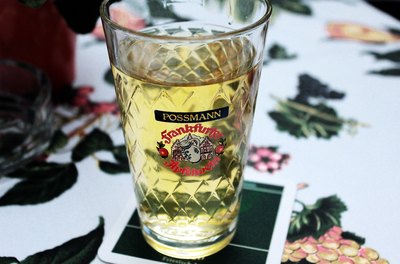
Its specification also requires at least 4 grams per liter of non-volatile acids and no more than 0.8 grams of volatile acids.
Where do people drink the most cider?
The United Kingdom is by far the largest cider market in Europe. According to market data in the European Cider Trends 2025 report from AICV, the European cider association, its consumption is around 8.2 million hectoliters, well ahead of Spain, with just over one million, and of Germany, Ireland and France.
These are consumption figures rather than production figures, and they exclude the Somersby brand in France and Poland. The same report puts global volume at 25.4 million hectoliters in 2024, compared with 27.1 million in 2019.
[math]\dfrac{25{,}369.41 – 27{,}135.16}{27{,}135.16}[/math]
[math]= -6.5\%[/math]
In other words, global cider consumption fell 6.5% over those five years. The table lists the five largest European markets according to that report.
| Country | Volume (thousands of hl) |
|---|---|
| United Kingdom | 8,186.76 |
| Spain | 1,032.06 |
| Germany | 681.92 |
| Ireland | 652.87 |
| France | 635.91 |
How do the main types of cider compare?
Each type calls for different expectations in the glass. The table summarizes their usual strength and sweetness according to the BJCP and the standards cited, along with the trait that stands out most when tasting them.
| Type | Alcohol | Sweetness | Main trait |
|---|---|---|---|
| Asturian natural cider | 5 to 6.5% | Dry to medium | Lively acidity and volatile acidity, poured from a height |
| Basque cider (Euskal Sagardoa, unfiltered) | Over 5% | Dry | No added sugar or water |
| French cider | 3 to 6% | Medium to sweet | Body, richness and bottle carbonation |
| English cider | 6 to 9% | Dry to medium sweet | Tannin and a long finish |
| Modern cider (Common) | 4.5 to 8% | Variable | Acidity and low tannin |
| New England Cider | 7 to 13% | Traditionally dry | Added sugars, often raisins |
| Ice cider | 7 to 13% | Sweet | Juice concentrated by cold |
| Perry (Common Perry) | 5 to 8% | Medium dry to medium sweet | Dessert pear character |
Frequently asked questions (FAQ)
1. What is the difference between natural cider and cider?
In Spain, natural cider contains only apple must, with its own carbonation and sugar and at least 5% alcohol. Cider, with a minimum of 4%, may contain sugars and carbon dioxide added after fermentation, according to Royal Decree 72/2017.
2. What do doux, demi-sec and brut mean on a French cider?
They are sweetness terms, from sweetest to driest. According to Que Choisir, a cidre doux has at least 35 grams of sugar per liter, or 42 if it is bouché, a demi-sec between 28 and 42 and a brut 28 at most.
3. Are Basque cider and Asturian cider the same?
Unfiltered Euskal Sagardoa cider must be practically dry, with no more than 0.2 grams of glucose and fructose per liter. Traditional Asturian natural cider, by contrast, is poured from a height, and the BJCP describes Spanish cider as having high volatile acidity.
4. What is ice cider?
It is a sweet cider made from juice concentrated by cold, born in Quebec in the 1990s. The Quebec geographical indication requires at least 140 grams of sugar per liter and 9% to 13% alcohol.
5. Is perry a type of cider?
It is the pear equivalent, and the BJCP includes it among ciders as a category of its own. According to the BJCP, a dry perry can seem sweet because of sorbitol, a sugar alcohol in pears that yeasts do not ferment.
Bibliography
- AICV y GlobalData. (2025). European Cider Trends 2025. https://aicv.org/files/attachments/.627/AICV_Cider_Trends_2025_Final.pdf
- CAMRA. (2022). What are real cider & perry? https://members.camra.org.uk/learn-discover/the-basics/what-are-real-cider-perry/
- CARTV. (2022). Cahier des charges de l’IGP Cidre de glace du Québec (v1.3). https://cartv.gouv.qc.ca/app/uploads/2022/02/cc_cdg_qc_igp_v20220217_complet.pdf
- Regulatory Council of the PDO Sidra de Asturias. (n.d.). Sidra natural. https://sidradeasturias.es/sidra-natural/
- European Commission. (n.d.). eAmbrosia, the European Union geographical indications register. https://ec.europa.eu/agriculture/eambrosia/geographical-indications-register/
- Defra. (n.d.). Worcestershire Cider. Protected food name specification. https://assets.publishing.service.gov.uk/media/5fd369a5e90e076634d01783/pfn-worcestershire-cider.pdf
- Defra. (n.d.). Herefordshire Perry. Protected food name specification. https://assets.publishing.service.gov.uk/media/5fd363108fa8f54d6480f4fb/pfn-herefordshire-perry.pdf
- Direction générale des Entreprises. (2025). Cidres et poirés. https://www.entreprises.gouv.fr/espace-entreprises/s-informer-sur-la-reglementation/cidres-et-poires
- Basque Government. (2024). Pliego de condiciones Euskal Sagardoa. https://www.euskadi.eus/contenidos/informacion/calidad_diferenciada_dopigp/es_def/adjuntos/Pliego-de-condiciones-Euskal-Sagardoa_20240719.pdf
- HM Revenue & Customs. (2026). Alcoholic products technical guide, section 2. https://www.gov.uk/guidance/alcoholic-products-technical-guide/section-2-alcoholic-products
- Assemblée nationale. (2023). Question écrite n° 11185. https://questions.assemblee-nationale.fr/dyn/16/questions/QANR5L16QE11185.pdf
- Humbert, F. (n.d.). Doux, demi-sec, brut? Comment choisir du cidre. Que Choisir. https://www.quechoisir.org/guide-d-achat-cidre-n63155/
- INAO. (2019). Cahier des charges de l’AOP Cornouaille. https://extranet.inao.gouv.fr/fichier/CDC-Cornouaille-modifi%C3%A9-20191219-Vconsolid%C3%A9.pdf
- INAO. (2025). Cahier des charges de l’AOP Domfront (draft amendment submitted for opposition). https://extranet.inao.gouv.fr/fichier/PNO2025-CDC-DOMFRONT.pdf
- INAO. (2025). Cahier des charges de l’AOP Pays d’Auge (draft amendment submitted for opposition). https://extranet.inao.gouv.fr/fichier/PNO-2025-CDC-AOP-Pays-d-Auge.pdf
- Principality of Asturias. (2024). Pliego de condiciones de la Denominación de Origen Protegida Sidra de Asturias. https://www.asturias.es/documents/4911212/4919930/DOP-Sidra-Normal25.pdf/dc24402b-e4a8-ff38-fc8c-24838b3296dd
- Publication of an application for registration, Hessischer Apfelwein (PGI). (2010). Official Journal of the European Union, C 41, 18 February 2010. https://eur-lex.europa.eu/legal-content/DE/TXT/HTML/?uri=CELEX:52010XC0218(02)
- Real Decreto 72/2017, de 10 de febrero, por el que se aprueba la norma de calidad de la sidra natural y de la sidra. Boletín Oficial del Estado. https://www.boe.es/buscar/act.php?id=BOE-A-2017-1749
- Reglamento (UE) n.º 976/2010, registration of Hessischer Apfelwein (PGI). https://www.legislation.gov.uk/eur/2010/976/data.xht
- Strong, G., Wilcox, M., & England, K. (2025). BJCP 2025 cider style guidelines (v2). Beer Judge Certification Program. https://www.bjcp.org/wp-content/uploads/2026/08/2025_Guidelines_Cider_v2_final.pdf
- United States Code. (n.d.). 26 U.S.C. § 5041, imposition and rate of tax. Legal Information Institute, Cornell Law School. https://www.law.cornell.edu/uscode/text/26/5041

Recommended
- How do you taste a cider? What to look at, smell and taste to enjoy it like an expert
- What is cider? History, production, varieties and main characteristics