This post is also available in:
 Español
  Português
  Français
Tasting a cider means evaluating it with the senses, from appearance and aroma to flavor and the final overall impression, while understanding where each sensation comes from. In cider, almost everything comes down to three elements of the apple, namely sugar, malic acid and polyphenols, plus what yeasts and bacteria do with them during fermentation.
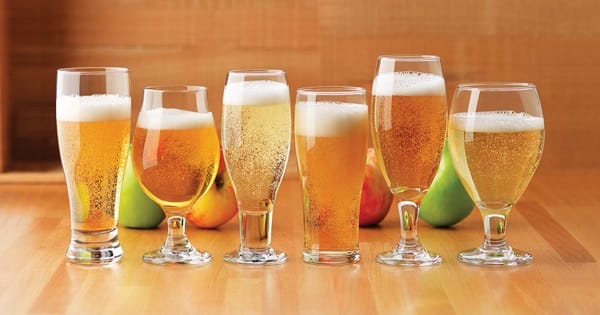
That origin sets it apart from beer. There is no malt or hops, and the bitterness and astringency come from the tannins of the fruit itself, not from an added flower.

This guide explains where cider’s flavors and aromas come from, how they are perceived together and which faults reveal a problem. It also covers how to set up a tasting, how the BJCP scores cider and how Asturian natural cider is tasted after the high pour known as escanciado.
Where do the basic flavors of cider come from?
The sweetness, acidity, bitterness and astringency of a cider come from the apple. Fermentation partly transforms them, which is why the apple variety is the first clue to understanding what is in the glass.
1. Sweetness and acidity
Fructose is the predominant sugar in cider, according to a review published in 2026 in the journal Microorganisms. What remains after fermentation is residual sugar, the basis for classifying a cider’s sweetness.
Acidity comes mainly from malic acid, which in a study of 106 varieties accounted on average for 94.5% of the six organic acids measured in the fruit. This is the fresh, fruity acidity that the BJCP says should not be confused with acetification, the vinegar fault.
2. Bitterness and astringency
British researcher Andrew Lea distinguished four classes of polyphenols in the apple, phenolic acids, phloretin derivatives, catechins and procyanidins. According to his 1978 work, only procyanidins are true tannins and only they contribute bitterness and astringency.
Molecular size and concentration influence both sensations, and no procyanidin is associated exclusively with either one. Smaller ones tend to give more bitterness, peaking at the epicatechin tetramer, and larger ones more astringency.
The same study found that a lot of sugar suppresses perceived bitterness. Ethanol, for its part, increases bitterness and at the same time reduces astringency.
Not all of the apple’s tannin reaches the cider. In a French study, the mean degree of polymerization of flavanols was 14.7 in the fruit and dropped to 2.2 in the must, because pressing mainly lets the smaller ones through.
3. Cider apples
The Long Ashton classification, dating from 1903, sorts cider apples by their acidity and tannin. An apple is sharp if it exceeds 0.45% acid and bitter if it exceeds 0.2% tannin, which gives four types, sweet, sharp, bittersweet and bittersharp.
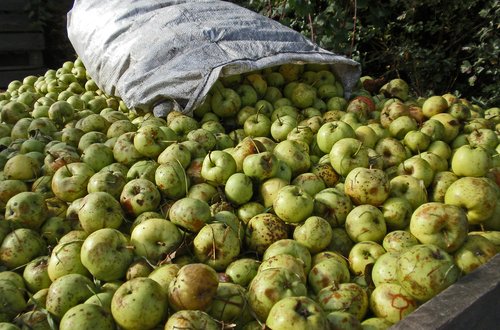
The Sidra de Asturias PDO allows 76 varieties, grouped into nine blocks according to their acidity and phenolic compounds. Using Andrew Lea’s data, the table compares a cooking apple, a dessert apple, a typical bittersweet and what he considers the ideal cider apple.
| Apple | Sugar (%) | Malic acid (%) | Tannin (%) |
|---|---|---|---|
| Bramley (cooking) | 10 | More than 1 | Less than 0.05 |
| Cox (dessert) | 12 | 0.5 | 0.1 |
| Typical bittersweet | 15 | Less than 0.2 | More than 0.2 |
| Ideal cider apple | 15 | 0.4 | 0.2 |
How are sweetness, acidity and bitterness perceived?
In cider, no flavor is perceived in isolation. Symoneaux’s team in France has measured several of these interactions with tasting panels.
Across 16 French ciders, those with fruity and caramel notes were perceived as sweeter than those with hay, animal or earthy notes, an effect that only appeared at around 40 grams of sugar per liter.
The same ciders were rated more astringent when tasted without a nose clip, that is, with the aroma present.
Carbonation matters too. In model ciders, CO2 increased astringency without changing bitterness and reduced sweetness only in the samples with more sugar.
An extension guide from Virginia Tech also notes that acidity offsets the perception of sweetness. The BJCP likewise warns against relying on residual sugar alone, because acidity, tannin and alcohol change how sweetness is perceived.
To classify sweetness, the BJCP uses that residual sugar, expressed as a percentage. Converting it to grams per liter only takes multiplying by ten, so the limit for a dry cider is 4 grams.
[math]0.4 \times 10 = 4 \text{ g/L}[/math]
Other organizations use different cutoffs. According to the American Cider Association, the US competition GLINTCAP considered a cider dry below 0.9%, so it is worth checking which scale each label or competition uses.
These are the five sweetness levels of the BJCP 2025 guidelines, an indicative scale for competitions rather than a universal classification, with their approximate equivalent in grams per liter and in final gravity.
| Sweetness level | Residual sugar | Grams per liter (approx.) | Final gravity (approx.) |
|---|---|---|---|
| Dry | Less than 0.4% | Less than 4 | Less than 1.002 |
| Semi-dry | 0.4 to 0.9% | 4 to 9 | 1.002 to 1.004 |
| Medium | 0.9 to 2.0% | 9 to 20 | 1.004 to 1.009 |
| Semi-sweet | 2.0 to 4.0% | 20 to 40 | 1.009 to 1.019 |
| Sweet | More than 4.0% | More than 40 | More than 1.019 |
Cider aromas and where they originate
During fermentation, yeasts produce esters, with fruity notes, and higher alcohols, joined by some compounds that come from the fruit.
An olfactometry study identified 2-phenylethanol as a key cider aroma, along with several ethyl esters such as ethyl butanoate, hexanoate and 2-methylbutanoate, and compounds such as 4-ethylguaiacol, eugenol and 4-vinylphenol. It analyzed only two ciders, so it is a sample of what is possible more than a general profile.
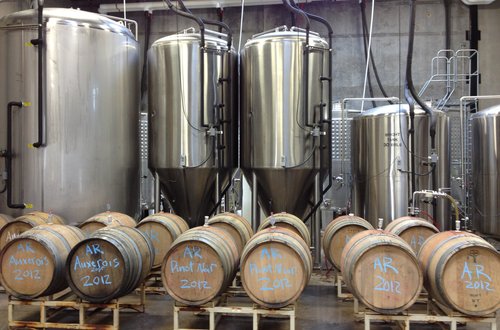
Among the higher alcohols, 2-phenylethanol, with its honey and rose note, and isoamyl alcohol predominate. Esters bring the fruit, from the banana of isoamyl acetate to the green apple of ethyl hexanoate.
Lea also described a molecule with a green aroma, a dioxane that could be almost exclusive to cider. He himself cautions that the work was never published in a scientific journal, so it remains a preliminary finding.
Some of these compounds have the following descriptors and perception thresholds, according to the 2026 review by Zhang et al., which compiles data from other studies, and thresholds can vary with the beverage and the measurement method.
| Compound | Family | Descriptor | Threshold (mg/L) |
|---|---|---|---|
| Isoamyl acetate | Ester | Fruity, sweet, banana | 0.03 |
| Ethyl hexanoate | Ester | Fruity, green apple, banana | 0.05 |
| Hexyl acetate | Ester | Green, herbaceous, fruity | 1.5 |
| 2-phenylethanol | Higher alcohol | Honey, rose | 10 |
What do malolactic fermentation and other microorganisms contribute?
Besides yeasts, many ciders rely on lactic acid bacteria that convert malic acid into lactic acid. This malolactic fermentation lowers total acidity because lactic acid is monobasic and malic acid is dibasic, and according to Lea, desirable strains soften and round out the cider.
In Normandy ciders destined for calvados, lactic acid bacteria, including Oenococcus, were associated with ethyl lactate and other volatiles. The yeast Dekkera, on the other hand, was linked to high levels of volatile phenols and volatile acidity.
Among the volatile phenols, 4-ethylcatechol, 4-ethylphenol and 4-ethylguaiacol are produced by Dekkera and the lactic acid bacterium Lactobacillus collinoides from the apple’s caffeic, p-coumaric and ferulic acids. Measured in cider, their detection thresholds are around 20 to 25 mg/L for 4-ethylcatechol and 1.5 to 2.0 mg/L for 4-ethylphenol.
In tasting they come across as leather, barnyard or smoky notes, which appear on the Virginia Tech wheel, and leather also features in the Long Ashton classification.
These notes are not an automatic consequence of malolactic fermentation, since they depend on the microorganisms present and on production conditions. The BJCP lists them among the profiles that may accompany it and considers Brett contamination a serious fault.
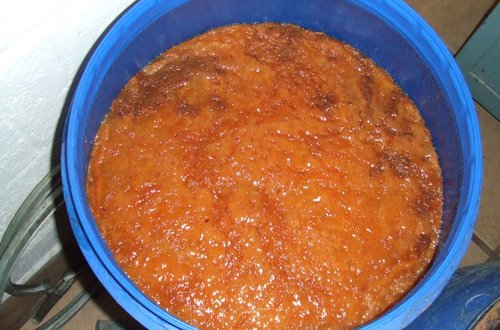
The French technique of keeving (défécation) also changes the flavor, because the apple’s pectin methylesterase de-esterifies pectin into pectic acid, which combines with the calcium in the juice to form a calcium pectate gel. That gel rises to the surface as a brown cap, the chapeau brun, and according to Lea it carries off at least 50% of the pectin and nitrogenous nutrients.
With few nutrients, fermentation slows down, and the result is a naturally sweet, full-flavored cider. Of the five clarification treatments compared in Hubert’s study, keeving reduced flavanols the most, including the procyanidins that give bitterness and astringency.
What sets the profile of Asturian natural cider apart?
The BJCP groups the ciders of northern Spain, from Asturias, Cantabria and the Basque Country, into a style made with sharp and bittersharp apples through a spontaneous fermentation by yeasts and bacteria. It describes the style as dry and fresh, with lively acidity, citrus notes and high volatile acidity that is traditionally released during escanciado, and notes that the Asturian version is softer, more floral and fruitier than the Basque one.
Researchers at SERIDA, the agri-food research center of Asturias, found that amyl alcohols, ethyl lactate and ethyl acetate are the main volatiles in Asturian and Basque ciders. The compound 4-ethylcatechol was strongly associated with mature ciders.
Among its polyphenols, hydrocaffeic acid accounts for more than 80% of the phenolic acids, and procyanidins are the most important family among the flavonoids.
The specification of the Sidra de Asturias PDO describes a cider in various shades of yellow, with a clean, balanced aroma and varietal or fruity notes. On the palate it should be frank, balanced between acidity and bitterness, lightly or moderately astringent and with a light natural prickle.
Its volatile acidity must stay below 2.2 grams of acetic acid per liter to qualify for the PDO. Outside competitions it is tasted after escanciado, in a thin glass tumbler, since in competition the BJCP asks to avoid theatrical serving methods.
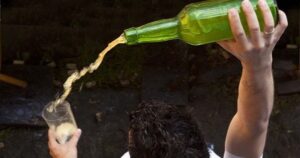
According to the RAE, the Royal Spanish Academy, escanciar means to pour or serve a drink, especially wine or cider. In Asturias, the escanciador, or pourer, holds the bottle high above the head and the tilted glass below the waist, so that the stream strikes the rim.
It is a traditional serving technique that aerates the cider and changes how the gas behaves and how the volatiles are released. According to the PDO Regulatory Council, the fall awakens the natural carbon dioxide, volatilizes part of the acetic acid and improves flavor and aroma.
Each serving is a culete, a short pour that should not be less than 100 milliliters and is drunk immediately.
When tasting it, you look at three foam behaviors that the Regulatory Council defines as follows. The espalme, the surface foam that forms during escanciado, should disappear quickly and completely without leaving rings.
The aguante, or hold, is the persistence of an emulsion of bubbles throughout the liquid that fades slowly. The pegue, or cling, is the consistent adhesion of the foam to the walls of the glass in small particles.
In our tasting of Trabanco natural cider you can see how an Asturian cider served by escanciado is described.
How do you set up a cider tasting and score the ciders?
Certified tasters from the American Cider Association recommend using the same type of glass throughout the session and avoiding perfume or cologne. Sensory analysis panels use standardized, covered glasses, and between samples the BJCP provides water and bread to cleanse the palate.
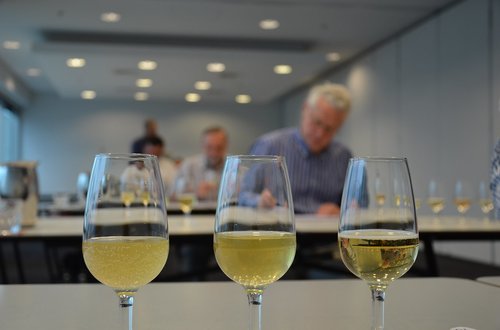
If there are several bottles of the same cider, the BJCP examination procedure calls for blending them before serving, in portions of about 60 to 90 milliliters. The taster is told only the style, sweetness and carbonation.
Knowing the style changes what you expect from each glass. A tannic English cider, a medium to sweet French cider and an Asturian natural cider with lively acidity are judged with different expectations, as explained in the types of cider and how they differ.
The BJCP recommends serving ciders from least to most sweet, because sweetness can mask faults, and within each level from lowest to highest alcohol. In its exam, six ciders are tasted in 90 minutes, one every 15, and the Virginia Tech panel also tasted six per one-hour session.
There is no single temperature. The Sidra de Asturias PDO Regulatory Council recommends natural cider at 12 to 14°C, filtered cider in a glass at 8 to 10°C and sparkling cider in a tulip glass at 6 to 8°C; the Virginia Tech panel tasted at 5°C, and the BJCP gives no figure.
For scoring, the classic BJCP cider scoresheet allocates 50 points and has no separate box for mouthfeel, because body is assessed within flavor. The American Homebrewers Association (AHA) and the BJCP have also introduced structured scoresheets for beer, cider and mead.
The scoresheet translates the score into categories, with 45 to 50 points outstanding, 38 to 44 excellent, 30 to 37 very good, 21 to 29 good, 14 to 20 fair and below 14 problematic. The points are distributed as follows.

| Section | What is assessed | Points |
|---|---|---|
| Appearance | Color, clarity and carbonation level | 6 |
| Bouquet and aroma | Bouquet and aroma appropriate to the style and expression of other ingredients | 10 |
| Flavor | Balance of acidity, sweetness, alcohol, body and carbonation (14), other ingredients (5) and aftertaste (5) | 24 |
| Overall impression | Drinking pleasure and suggestions for improvement | 10 |
| Total | 50 |
What are the steps to taste a cider?
Certified tasters from the American Cider Association follow a fixed order, from sight to finish, as reported by Brewer Magazine in 2025. The BJCP guidelines and scoresheet complete that sequence with cider-specific guidance.
1. Look at the cider
Appearance is quick to assess, taking no more than 15 seconds for clarity, color and carbonation. What to look for in each is detailed below, in the stages of the tasting.
2. Smell with the trombone technique
Move the glass toward and away from your nose to rate aroma intensity as light, medium or pronounced. This is the method taught by ACA certified tasters.
3. Taste in sequence
On the palate, sweetness, acidity, tannin and body are evaluated in that order. The BJCP scoresheet adds alcohol, balance, carbonation and aftertaste.
4. Tell acidity apart from acetification
The BJCP warns against confusing malic acid acidity with acetification, the vinegar or solvent character. In Spanish cider, noticeable volatile acidity can be released by pouring the cider from one glass to another or with an aerator, without theatrical serving in competition.
5. Measure the finish
ACA tasters time in seconds how long the finish lasts and close with a description of balance and structure. Alan Stone, a judge at the British Bath & West competition, also considers the length of the flavor in the throat on swallowing.
6. Confirm the faults
For mousiness, the BJCP suggests that judges who cannot detect it use an alkaline mouth rinse, a specialized evaluation technique. Michael Wilcox, coauthor of the guidelines, points out that an infection matters more than tannin and asks judges not to penalize tannin in modern ciders.
7. Score and round off the overall impression
With the BJCP scoresheet, the points are added up and the cider is placed somewhere between outstanding and problematic. The overall impression captures the pleasure of drinking it and suggestions for improvement.
What is evaluated at each stage of a cider tasting?
To learn how to taste, it helps to go through five aspects, appearance, aroma, flavor, mouthfeel and overall impression. This is a teaching structure that differs from the official BJCP scoresheet, which does not score mouthfeel separately because it assesses body within flavor.
1. Appearance
Appearance is worth 6 of the 50 points on the BJCP scoresheet, 12% of the total. It carries little weight in the score and works as a first indicator of the cider’s condition.
1.1 Color
Describe the hue and its brilliance; the Sidra de Asturias PDO specification, for example, describes its natural cider with various shades of yellow and straw-colored glints. Dull or brownish tones can indicate oxidation, but the BJCP warns against judging a cider oxidized by its color alone, so it is best confirmed in the aroma and flavor.
1.2 Clarity
According to the BJCP, clarity can range from good to brilliant and lacking crystal-clear brilliance is not a fault, unlike visible particles, which are undesirable. An oily sheen on the surface is a fault for the BJCP, which notes that it usually indicates incipient lactic contamination.
1.3 Carbonation
Watch the release of bubbles and classify it into the three BJCP levels, still, pétillant or sparkling. According to the BJCP, it can range from completely still to as carbonated as a soft drink.
1.4 Foam
Foam is not scored on the BJCP scoresheet, which only assesses color, clarity and carbonation under appearance. In Asturian natural cider, by contrast, tasters observe the espalme, aguante and pegue defined by the Regulatory Council.
2. Aroma
Aroma is worth 10 of the 50 points, 20% of the total, and is evaluated with the trombone technique described in the steps. For each aroma family, note whether it is present, its intensity (light, medium or pronounced) and its character with a specific descriptor, using the cider aroma and flavor wheel below as a guide to terms.
2.1 Apple and fruit aromas
Note the intensity of the apple character and of other fruits, with wheel terms such as green apple, pear, citrus or tropical fruit. The BJCP points out that cider need not show overtly fruity aromas, and in English cider the apple character is usually subtle.
2.2 Fermentation aromas
These are the esters and higher alcohols produced by yeasts. They are described as fruity, floral or honeyed, or as solvent if excessive.
2.3 Malolactic aromas and volatile phenols
Some ciders show lactic notes, which can come from malolactic fermentation, or spicy, smoky, leather or barnyard notes typical of volatile phenols. Note their intensity and whether they fit the style or come across as excessive.
2.4 Aromas from other ingredients
Ciders with fruit, spices, hops or wood aging gain aromas of their own. Note whether they come through and whether they integrate well with the apple character.
2.5 Faults
Record any aroma linked to a production or storage problem, such as vinegar, solvent, sulfur, burnt match or sherry. The faults table in this guide explains the origin of each one.
3. Flavor
Flavor is the heaviest section, 24 of the 50 points or 48% of the total, of which 14 go to the balance of acidity, sweetness, alcohol, body and carbonation, 5 to other ingredients and 5 to aftertaste. The cider is swallowed to perceive the finish and aftertaste, and tasting it confirms the sensations from the aroma and records new ones.
3.1 Sweetness
Compare the perceived sweetness with the declared level, from dry to sweet, bearing in mind that acidity, tannin and alcohol change that perception.
3.2 Acidity
Note the acidity level and its character, fresh and fruity when it comes from malic acid, softer and lactic after malolactic fermentation. If it recalls vinegar or scratches the throat, it is volatile acidity, a fault in most styles that in Spanish natural cider is part of the character in the right measure.
3.3 Bitterness
Note whether there is bitterness and how intense it is. It comes from the apple’s procyanidins, and the BJCP describes it in English cider, while in French cider the tannin shows mainly as body and astringency.
3.4 Alcohol
Note whether the alcohol is perceptible in the flavor, lightly or intensely. In the BJCP guidelines, traditional styles range from 3% in some French ciders to 9% in English ones, and strong ciders have a category of their own.
3.5 Balance
Assess how sweetness, acidity, bitterness and alcohol coexist. As seen in the section on where flavors come from, each one modifies the perception of the others.
3.6 Finish and aftertaste
The finish is the set of sensations on swallowing, dry, sweet, sour or bitter, and the aftertaste is what lingers afterward, described by its duration, short or long, and its character. When a cider ends dry, clean and fresh, English-speaking tasters sum it up as a crisp finish.
4. Mouthfeel
Describing mouthfeel helps explain the balance and the final impression.
4.1 Body
It is the sense of fullness in the mouth. The BJCP compares the body of cider with that of a light wine.
4.2 Carbonation
Assess the level of carbonation on the palate. Strong carbonation also makes the cider more astringent.
4.3 Astringency
It is a drying sensation in the mouth, which the BJCP scoresheet compares to chewing a tea bag. According to the BJCP, it should be in balance when present.
4.4 Alcohol warmth
Note whether the alcohol produces a burning sensation, a term included in the Virginia Tech lexicon.
5. Overall impression
Overall impression is worth 10 of the 50 points, 20% of the total, and the BJCP scoresheet asks for comments on the pleasure of drinking the cider and suggestions for improvement. It sums up everything before it, what you will remember about that cider, and if the tasting is for a cidermaker, this is the place to explain what to reinforce and what to correct.
What faults should you look for when tasting a cider?
Almost every cider fault has a specific microbial or chemical cause. Knowing it helps separate what belongs to a style, such as the volatile acidity of Asturian cider, from what is a production or storage error.
Mousiness behaves differently from the rest. Lea describes it as a taste of mouse cages, which some people associate with freshly baked bread or crackers, and it appears mainly in ciders without sulfites and with access to oxygen.
It is caused by three known compounds that lactic acid bacteria and also Brettanomyces can produce. In wine, the Australian Wine Research Institute explains that they are barely volatile at the acidic pH of the beverage and become perceptible when saliva raises the pH in the mouth, which is why they are noticed after swallowing.
The BJCP considers it more likely in high pH ciders that have gone through malolactic fermentation. For judges who cannot detect it, it suggests an alkaline mouth rinse, because the ability to perceive it varies from person to person.
Cider sickness, called framboise in France, is caused by bacteria of the genus Zymomonas, which produce acetaldehyde with an aroma of lemon peel or banana skin. According to Lea, it only affects sweet, low-acid ciders with a pH above 3.8.
The BJCP guidelines add another sign. A geranium note indicates excess sorbate, a preservative.
These are the most common faults, how they are perceived and their origin, based on Lea’s descriptions and the BJCP scoresheet.
| Fault | How it is perceived | Origin |
|---|---|---|
| Vinegary | Harsh vinegar in the throat | Acetic acid bacteria (Acetobacter) that oxidize alcohol |
| Solvent | Nail polish remover | Excess ethyl and amyl acetates, for example from film yeasts |
| Mousy | Mouse cage, bread or crackers, at the end of the swallow | Lactic acid bacteria or Brettanomyces |
| Barnyard or leather | Manure, stable, leather | Volatile phenols from Dekkera (Brettanomyces) and lactic acid bacteria |
| Cider sickness | Lemon peel or banana skin | Acetaldehyde from Zymomonas |
| Ropy | Oily or viscous texture, like egg white | Polysaccharides from lactic acid bacteria |
| Oxidized | Stale, sherry, raisins or bruised fruit | Oxygen exposure |
| Sulfite | Burnt match | Excess sulfur dioxide |
| Sulfide | Rotten egg | Sulfur compounds such as hydrogen sulfide |
What vocabulary should you use to describe a cider?
Cider has its own vocabulary of aromas and flavors, just as beer has the Meilgaard wheel. A classic reference is the Long Ashton descriptor classification, developed by Rutter from Williams’s 1975 work, with 12 classes that include terms such as bittersweet apple, leather or mousy.
A team led by Virginia Tech researchers published two wheels designed for American cider in 2024, based on the sortings of 40 professionals and 58 consumers. In their extension guide, the central circle of the wheel has five families, Dry, Sweet, Earthy, Savory and Off-flavors.
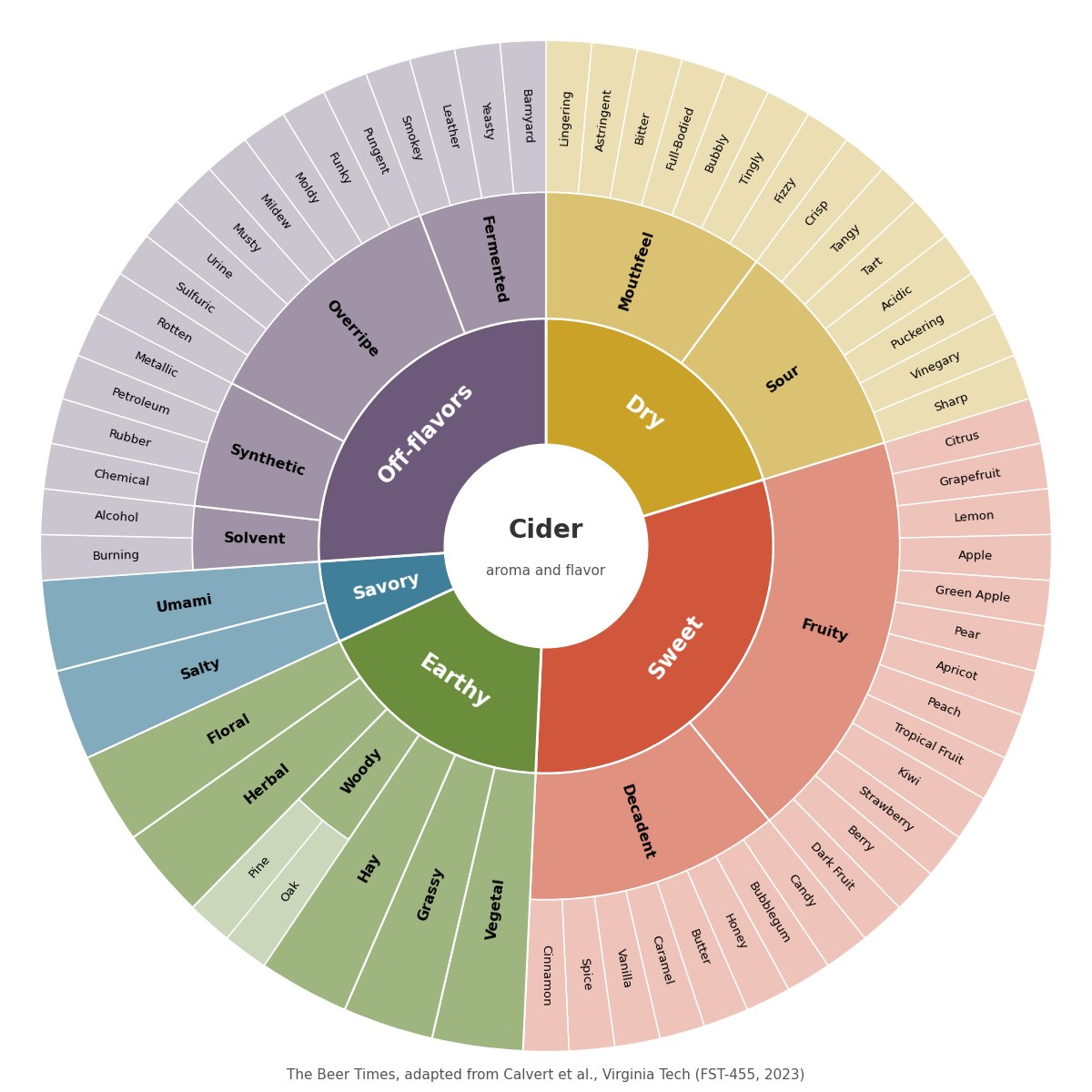
Dry covers mouthfeel and sourness, with terms such as acidic, sharp or vinegary. Sweet opens up the fruit, from citrus and green apple to pear, peach or tropical fruit, plus a group of decadent notes such as honey, caramel, vanilla or cinnamon.
Earthy brings together vegetal, grassy, hay, woody and floral notes. Off-flavors split into Solvent, Synthetic, Overripe and Fermented, the last of which includes smokey, leather and barnyard.
The same group trained eight tasters for 13 hours with 42 ciders and obtained 33 terms, 29 of which discriminated between ciders. They include aromas such as apple, citrus, overripe fruit, oak or cinnamon, and on the palate sensations such as fizzy or astringent, plus a lingering finish.
To describe those sensations precisely, it helps to be clear on the difference between taste and flavor. Taste is what the tongue picks up, and flavor adds the aroma that reaches the nose retronasally.
The table lists the same wheel terms, ordered by family and subfamily, to use as a guide when writing tasting notes.
| Family | Subfamily | Descriptors |
|---|---|---|
| Dry | Mouthfeel | Lingering, Astringent, Bitter, Full-Bodied, Bubbly, Tingly, Fizzy |
| Sour | Crisp, Tangy, Tart, Acidic, Puckering, Vinegary, Sharp | |
| Sweet | Fruity | Citrus, Grapefruit, Lemon, Apple, Green Apple, Pear, Apricot, Peach, Tropical Fruit, Kiwi, Strawberry, Berry, Dark Fruit |
| Decadent | Candy, Bubblegum, Honey, Butter, Caramel, Vanilla, Spice, Cinnamon | |
| Earthy | Vegetal | No subdivision |
| Grassy | No subdivision | |
| Hay | No subdivision | |
| Woody | Oak, Pine | |
| Herbal | No subdivision | |
| Floral | No subdivision | |
| Savory | Salty | No subdivision |
| Umami | No subdivision | |
| Off-flavors | Solvent | Burning, Alcohol |
| Synthetic | Chemical, Rubber, Petroleum, Metallic | |
| Overripe | Rotten, Sulfuric, Urine, Musty, Mildew, Moldy, Funky, Pungent | |
| Fermented | Smokey, Leather, Yeasty, Barnyard |
Frequently asked questions (FAQ)
1. What makes cider bitter?
Procyanidins, the tannins of the apple. According to Lea and Arnold, small molecules give bitterness and large ones give astringency, and the BJCP describes tannin-rich English ciders as ciders that often seem quite dry, with a long finish.
2. Why is Asturian cider poured from a height?
Falling from a height, natural cider awakens its carbon dioxide and releases part of its acetic acid. According to the Sidra de Asturias PDO Regulatory Council, this markedly improves its flavor and aroma.
3. At what temperature should cider be tasted?
The Regulatory Council recommends natural cider at 12 to 14 °C, filtered cider at 8 to 10 °C and sparkling cider at 6 to 8 °C. The BJCP sets no temperatures, and in a tasting it is best to serve all samples of a style at the same one.
4. How do you tell a cider’s acidity from a vinegar fault?
Malic acid acidity is fresh and fruity, while acetification smells of vinegar or solvent and scratches the throat. In Asturian natural cider some volatile acidity is accepted, below 2.2 grams per liter according to the PDO.
5. What does it mean for a cider to be dry?
It has very little residual sugar. For the BJCP a dry cider has less than 0.4%, about 4 grams per liter, but the GLINTCAP competition set the limit at 0.9%.
Bibliography
- Australian Wine Research Institute. (2015). Ask the AWRI. Avoid mousy off-flavours. Grapegrower & Winemaker, 613. https://www.awri.com.au/wp-content/uploads/2018/04/s1694.pdf
- Beer Judge Certification Program. (2017). Cider judging examination procedures. https://www.bjcp.org/wp-content/uploads/2019/01/cider-judging-exam-procedures.pdf
- Beer Judge Certification Program. (2017). Cider scoresheet (rev. 170612). https://www.bjcp.org/wp-content/uploads/2011/11/SCP_CiderScoreSheet.pdf
- Beer Judge Certification Program. (2023). Mulling it over. Tips for judging cider. BJCP Communications. https://www.bjcp.org/newsletter/mulling-it-over-tips-for-judging-cider/
- Buron, N., Coton, M., Legendre, P., Ledauphin, J., Kientz-Bouchart, V., Guichard, H., Barillier, D., & Coton, E. (2012). Implications of Lactobacillus collinoides and Brettanomyces/Dekkera anomala in phenolic off-flavour defects of ciders. International Journal of Food Microbiology, 153(1-2), 159-165. https://doi.org/10.1016/j.ijfoodmicro.2011.11.002
- Calvert, M. D., et al. (2023). Effective communication of cider sensory quality. A white paper (FST-455). Virginia Cooperative Extension. https://pubs.ext.vt.edu/FST/fst-455/fst-455.html
- Calvert, M. D., Neill, C. L., Ac-Pangan, M. F., Stewart, A. C., & Lahne, J. (2024). Development of a hard cider flavor wheel using free word sorting and multivariate statistical techniques. Journal of Sensory Studies, 39(2), e12916. https://doi.org/10.1111/joss.12916
- Calvert, M. D., Neill, C. L., Stewart, A. C., & Lahne, J. (2023). Sensory descriptive analysis of hard ciders from the Northeast and Mid-Atlantic United States. Journal of Food Science, 88(4), 1700-1717. https://doi.org/10.1111/1750-3841.16507
- Consejo Regulador de la DOP Sidra de Asturias. (n.d.). Sidra natural and El escanciado. https://sidradeasturias.es/sidra-natural/
- Hubert, B., Baron, A., Le Quéré, J.-M. M., & Renard, C. M. G. C. (2007). Influence of Prefermentary Clarification on the Composition of Apple Musts. Journal of Agricultural and Food Chemistry, 55(13), 5118-5122. https://doi.org/10.1021/jf0637224
- Lea, A. (n.d.). The Wittenham Hill Cider Portal (the science of cidermaking, faults, keeving and the Long Ashton apple classification). http://www.cider.org.uk/
- Lea, A. G. (1978). The analysis of cider phenolics. Annales de la Nutrition et de l’Alimentation. https://pubmed.ncbi.nlm.nih.gov/754579/
- Lea, A. G. H., & Arnold, G. M. (1978). The phenolics of ciders: Bitterness and astringency. Journal of the Science of Food and Agriculture, 29(5), 478-483. https://doi.org/10.1002/jsfa.2740290512
- McGrath, M. (2018). What is “dry”? American Cider Association. https://web.archive.org/web/20210618114638/https://ciderassociation.org/what-is-dry/
- Misery, B., Legendre, P., Simon, J. P., Bouchart, V., Guichard, H., Sesboue, A., Laplace, J. M., & Cretenet, M. (2026). From spontaneous apple fermentations to Calvados: Insights into its aromatic complexity. International Journal of Food Microbiology, 446, 111507. https://doi.org/10.1016/j.ijfoodmicro.2025.111507
- Payne, B. (n.d.). 600 different ciders at the British Cider Championships at the Royal Bath & West Show. South West Farmer. https://www.southwestfarmer.co.uk/news/17492789.600-different-ciders-british-cider-championships-royal-bath-west-show-like-apples/
- Picinelli Lobo, A., Antón-Díaz, M. J., Mangas Alonso, J. J., & Suárez Valles, B. (2016). Characterization of Spanish ciders by means of chemical and olfactometric profiles and chemometrics. Food Chemistry, 213, 505-513. https://doi.org/10.1016/j.foodchem.2016.06.063
- Principado de Asturias. (2024). Pliego de condiciones de la Denominación de Origen Protegida Sidra de Asturias. https://www.asturias.es/documents/4911212/4919930/DOP-Sidra-Normal25.pdf/dc24402b-e4a8-ff38-fc8c-24838b3296dd
- Real Academia Española. (n.d.). Escanciar. In Diccionario de la lengua española. https://dle.rae.es/escanciar
- Rodríguez Madrera, R., Picinelli Lobo, A., & Suárez Valles, B. (2006). Phenolic Profile of Asturian (Spain) Natural Cider. Journal of Agricultural and Food Chemistry, 54(1), 120-124. https://doi.org/10.1021/jf051717e
- Sicotte, J. (2025, May 14). Calibrate your cider tasting. Strengthen quality control by drinking like a Certified Pommelier. Brewer Magazine. https://thebrewermagazine.com/calibrate-your-cider-tasting-strengthen-quality-control-by-drinking-like-a-certified-pommelier/
- Snowdon, E. M., Bowyer, M. C., Grbin, P. R., & Bowyer, P. K. (2006). Mousy Off-Flavor: A Review. Journal of Agricultural and Food Chemistry, 54(18), 6465-6474. https://doi.org/10.1021/jf0528613
- Strong, G., Wilcox, M., & England, K. (2025). BJCP 2025 cider style guidelines (v2). Beer Judge Certification Program. https://www.bjcp.org/wp-content/uploads/2026/08/2025_Guidelines_Cider_v2_final.pdf
- Symoneaux, R., Guichard, H., Le Quéré, J.-M. M., Baron, A., & Chollet, S. (2015). Could cider aroma modify cider mouthfeel properties?. Food Quality and Preference, 45, 11-17. https://doi.org/10.1016/j.foodqual.2015.04.004
- Symoneaux, R., Le Quéré, J.-M., Baron, A., Bauduin, R., & Chollet, S. (2015). Impact of CO2 and its interaction with the matrix components on sensory perception in model cider. LWT – Food Science and Technology, 63(2), 886-891. https://doi.org/10.1016/j.lwt.2015.04.037
- Xu, Y., Fan, W., & Qian, M. C. (2007). Characterization of Aroma Compounds in Apple Cider Using Solvent-Assisted Flavor Evaporation and Headspace Solid-Phase Microextraction. Journal of Agricultural and Food Chemistry, 55(8), 3051-3057. https://doi.org/10.1021/jf0631732
- Yan, Z., Zheng, L., Nie, J., Li, Z., & Cheng, Y. (2018). Evaluation indices of sour flavor for apple fruit and grading standards. Journal of Integrative Agriculture, 17(5), 994-1002. https://doi.org/10.1016/S2095-3119(17)61795-7
- Zhang, Z., Yan, C., Li, J., Zhao, L., Li, L., Cai, R., Wei, W., & Lu, S. (2026). Advances in Cider Flavor: Integrating Apple Raw Materials, Microbial Ecology, and Process Control. Microorganisms, 14(8), 1802. https://doi.org/10.3390/microorganisms14081802

Recommended
- How do you taste a beer? Learn to savor it like a true expert
- What is cider? History, production, varieties and main characteristics