This post is also available in:
 Español
  Português
  Français
No. The US CDC, the WHO and Spain’s Ministry of Health agree that there is no known safe amount of alcohol during pregnancy, and no stage of pregnancy when drinking stops being risky.
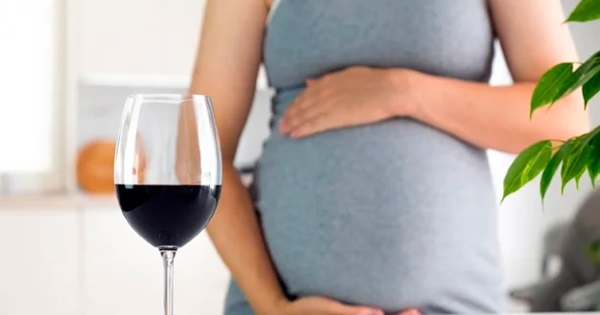
That answer applies to wine, beer and any spirit. What does change from one drink to another is how much alcohol each glass delivers, and that is where alcohol-free beer raises a question the official guidelines leave unanswered.
This article sums up what health authorities and studies say, what to do if you drank before you knew you were pregnant, and what a 0.0 beer actually contains. It is not a substitute for talking to your midwife or doctor.
Why is no amount of alcohol considered safe during pregnancy?
Because no one has been able to show a threshold below which alcohol does not affect fetal development. The CDC sums it up in two sentences on its page about alcohol and pregnancy, reviewed in August 2026.
There is no known safe amount of alcohol use during pregnancy. There is no safe time during pregnancy to drink alcohol.
The WHO Regional Office for Europe adds in its 2026 fact sheet that there is no known safe amount, type or timing. Spain’s Ministry of Health put it this way in 2022, to mark International Fetal Alcohol Spectrum Disorder Awareness Day.
There is no known amount of alcohol consumption that can be considered safe for the fetus.
The American Academy of Pediatrics reached the same conclusion in its 2015 clinical report (Williams and Smith, Pediatrics). No amount should be considered safe, there is no safe trimester and all forms of alcohol pose a similar risk.
Evidence on low intake is scarce, and it points the same way. A systematic review in BMJ Open pooled 24 cohort studies with intake of up to 32 grams per week, a little more than three small 250 ml draft beers (Mamluk et al., 2017).
At that light level of drinking, the odds ratio was 1.08 for the baby being small for gestational age and 1.10 for preterm birth, the latter not statistically significant. The authors proposed that guidelines advise abstaining as a precaution and explain how little is known.
Does it make any difference whether it’s wine, beer or spirits?
No. The CDC states explicitly that all types of alcohol can be harmful, including red or white wine, beer and liquor.
The idea that a glass of wine or a beer is gentler than spirits does not hold up, because what reaches the fetus is ethanol. To work out how much ethanol each drink contains, all you need is its volume, its strength and the density of ethanol, which is 0.789 grams per milliliter.
[math]\text{grams of alcohol} = V \times \dfrac{\text{ABV}}{100} \times 0.789[/math]
A 150 milliliter glass of wine at 13% alcohol gives this result.
[math]150 \times 0.13 \times 0.789[/math]
[math]= 15.4 \text{ g}[/math]
That glass holds more alcohol than a 330 ml bottle of beer or a shot of spirits. In Spain, the Ministry of Health counts 10 grams of pure alcohol as one standard drink unit (UBE), the equivalent of a 250 milliliter caña, or small draft beer, at 5%.
| Drink | Volume | Strength | Alcohol |
|---|---|---|---|
| Caña (small draft beer) | 250 ml | 5% | 9.9 g |
| Tercio (bottle of beer) | 330 ml | 5% | 13.0 g |
| Glass of wine | 150 ml | 13% | 15.4 g |
| Shot of spirits | 40 ml | 40% | 12.6 g |
What can happen to the baby if the mother drinks during pregnancy?
According to the NHS, drinking during pregnancy increases the risk of miscarriage, premature birth and low birthweight. The most lasting harm is fetal alcohol spectrum disorder (FASD), a group of developmental conditions whose most severe form is fetal alcohol syndrome (FAS).
Among its signs, the CDC lists low body weight, a small head, distinctive facial features such as a smooth philtrum (the ridge between the nose and upper lip), problems with attention, memory and learning, speech delays, and problems with the heart, kidneys or bones. They can last a lifetime, and the WHO points out that FASD only occurs when the mother drinks during pregnancy, which makes it preventable.
A meta-analysis published in The Lancet Global Health estimated that 9.8% of women worldwide drink alcohol during pregnancy (Popova et al., 2017). The same study put the prevalence of FAS at 14.6 cases per 10,000 people and estimated that one in every 67 women who drink during pregnancy will have a child with the syndrome.
The full spectrum is far more common. A second analysis by the same group, in JAMA Pediatrics, put it at 7.7 cases per 1,000 children worldwide, with Europe the most affected region at 19.8 per 1,000 (Lange et al., 2017).
In the United States, a study in four communities that directly assessed schoolchildren found a prevalence of between 1.1% and 5.0% using the most conservative approach (May et al., 2018, JAMA). Of the 222 children with the disorder, only 2 had been diagnosed previously.
What if I drank before I knew I was pregnant?
The most important thing is to stop drinking from the moment you find out. It happens a lot, since WHO Europe notes that 60% of women do not recognize their pregnancy until after week 6 or 7.
The NHS pregnancy guidance, from the UK’s National Health Service, has a reassuring message for anyone who drank without knowing.
Women who find out they’re pregnant after already having drunk in early pregnancy should avoid further drinking for the rest of their pregnancy. However, they should not worry unnecessarily, as the risks of their baby being affected are likely to be low.
The CDC stresses that what matters most is having stopped alcohol completely once you found out. Talking to your doctor or midwife makes it possible to monitor the baby’s development and, if there was heavy or frequent drinking, to get support so you don’t start again.
If you drank heavily or find it hard to stop, asking for help as early as possible is what best protects the baby. The strategies that work to quit drinking beer also help at this stage, always with medical support.
Can you drink alcohol-free beer during pregnancy?
The “alcohol-free” label does not guarantee zero alcohol, and it does not mean the same thing in every country. In Spain, Royal Decree 678/2016 defines alcohol-free beer as beer with an alcohol content below 1% by volume.
In the United Kingdom, the 1996 labeling rules reserved “alcohol free” for drinks of up to 0.05%, “de-alcoholised” for those up to 0.5% and “low alcohol” for those up to 1.2%. Since 2018 they have remained voluntary guidance, and the UK government plans to consult on raising the “alcohol free” threshold from 0.05% to 0.5% (Alcohol Change UK, 2025).
In Spain, the 0.0 label has no legal definition of its own.
Nor is the label always accurate. An analysis by Canada’s Motherisk program of 45 alcohol-free or low-alcohol drinks found that 13 of them, or 29%, contained more alcohol than declared, and six of those sold as “alcohol-free” exceeded 1% (Goh et al., 2010, Canadian Journal of Clinical Pharmacology).
The same formula helps put those figures in context. A 330 ml bottle of beer at 0.5% contains just over one gram of alcohol.
[math]330 \times 0.005 \times 0.789[/math]
[math]= 1.30 \text{ g}[/math]
Some everyday foods also contain ethanol from natural fermentation. A German study measured between 0.16 and 0.73 grams per liter in orange juice and 1.28 grams per 100 grams in hamburger buns (Gorgus et al., 2016, Journal of Analytical Toxicology).
Its authors used those figures to estimate the daily exposure of a six-year-old child and compared it with the threshold that triggers warnings on children’s medicines. They therefore cannot be used to conclude that alcohol-free beer is harmless during pregnancy.
The official guidelines cited here, from the CDC, the NHS and Spain’s Ministry of Health, do not mention these drinks. The same Motherisk program recommended in 2014 avoiding them during pregnancy as well, because they may contain more ethanol than stated.
That gap shows in practice. A 2025 British survey of 2,092 women found that 71% drank alcohol-free or low-alcohol drinks during pregnancy and that 55% received no information about them (Alcohol Change UK and the University of Plymouth).
Based on the available evidence, the most prudent choice is to avoid alcohol-free beer during pregnancy, 0.0 included, and to raise it at your prenatal checkup. A 0.0 only has less alcohol than an “alcohol-free” one if its label is accurate.
The difference between a 0.0 and an “alcohol-free” beer comes down to the yeasts and brewing techniques, which range from arrested fermentation to dealcoholization by membranes or vacuum distillation.
The table compares the alcohol in one serving of each, assuming the label is accurate, with that of common foods measured in the sources cited. Similar figures in a food do not make these drinks safe during pregnancy.
| Product | Serving | Alcohol per serving |
|---|---|---|
| Beer labeled 0.0 (if it does not exceed 0.05%) | 330 ml | 0.13 g |
| “Alcohol-free” beer at 0.5% | 330 ml | 1.30 g |
| “Alcohol-free” beer at the Spanish limit (under 1%) | 330 ml | up to 2.6 g |
| Orange juice | 330 ml | 0.05 to 0.24 g |
| Hamburger bun | 100 g | 1.28 g |
What about drinking while breastfeeding?
The CDC says that not drinking is the safest option for breastfeeding mothers. If you do have a standard drink, which in the United States equals 14 grams of alcohol, it recommends waiting at least two hours before nursing.
There is little data on alcohol-free beer while breastfeeding. In a German study of 15 mothers who drank 1.5 liters, only traces of ethanol were detected in the milk of two of them, and the authors considered this likely harmless for the infant (Schneider et al., 2013, Breastfeeding Medicine).
If you wonder whether a dealcoholized drink is still technically beer, the answer depends on the country and its regulations, just like its maximum alcohol content.
Frequently asked questions (FAQ)
1. Is a glass of wine late in pregnancy safe?
There is no safe trimester to drink. The American Academy of Pediatrics and the CDC say so explicitly, and they advise not drinking at any point in pregnancy.
2. What if I drank alcohol in the first month of pregnancy without knowing?
According to the UK’s National Health Service (NHS), the risk is likely to be low and there is no need to panic. What matters is to stop drinking from then on and talk to your doctor or midwife.
3. Does 0.0 beer contain alcohol?
It may contain traces, and in Spain the 0.0 label has no legal definition of its own. If it does not exceed 0.05%, a 330 milliliter bottle contains about 0.13 grams, and even so the most prudent choice during pregnancy is not to drink it.
4. How many grams of alcohol are in a glass of wine?
A 150 milliliter glass of wine at 13% alcohol contains about 15.4 grams. That is more than a 250 milliliter caña, or small draft beer, at 5%, which comes to around 10 grams.
5. How long should you wait to breastfeed after drinking?
The CDC advises waiting at least two hours after a single standard drink, which in the United States is 14 grams of alcohol. A 150 milliliter glass at 13% contains a little more, about 15.4 grams, and not drinking remains the safest option while breastfeeding.

Recommended
- Why is drinking before age 15 so risky? What science says about alcohol in teenagers
- What are the types of alcoholism and how severe can they be? What science says and how they are diagnosed