This post is also available in:
 Español
  Português
  Français
Morten Meilgaard is an unsung hero in the world of beer. Born in Denmark in 1928, he was a brilliant chemical engineer and beer lover who basically invented the language we use today to describe it.

The two most important tools of this kind developed in the last 50 years are his work and helped establish a standard vocabulary for beer sensory analysis: the first, an early system based on flavor units, and then the beer flavor and aroma wheel.

The beer flavor and aroma wheel
The research by Morton Meilgaard, Gail Vance Civille, and B. Thomas Caar in the 1970s identified more than 1,000 possible characteristics to be found in a beer, of which a trained taster with experience should be able to identify approximately 100.
Fewer than half of these are commonly found in beer; the rest are used to describe flavors in defective beers or specialty beers.
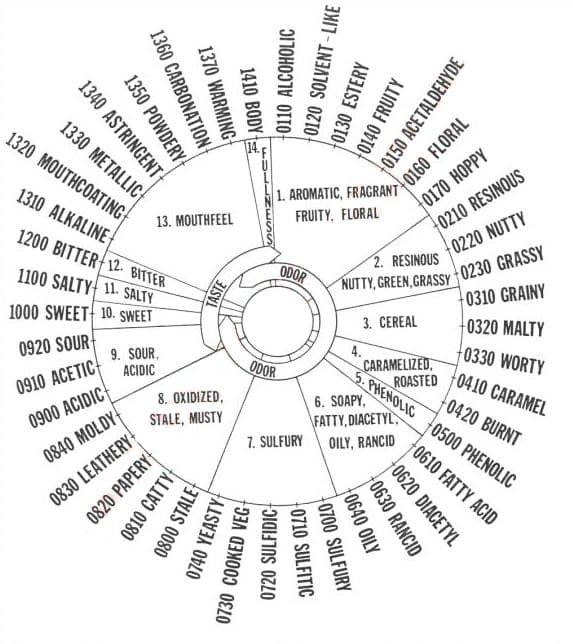
Based on this work, in 1979 Meilgaard developed a flavor and aroma wheel in an attempt to standardize the analysis language that would enable fluent communication between brewers, consumers, judges, writers, and anyone else related to beer.
His work focused primarily on defining each identifiable aroma and flavor separately, and then categorizing them into a structured flavor and aroma wheel.
Subsequently, this work was jointly adopted as a standard by the European Brewery Convention (EBC), the American Society of Brewing Chemists (ASBC), and the Master Brewers Association of the Americas (MBAA).
Structure of the flavor and aroma wheel
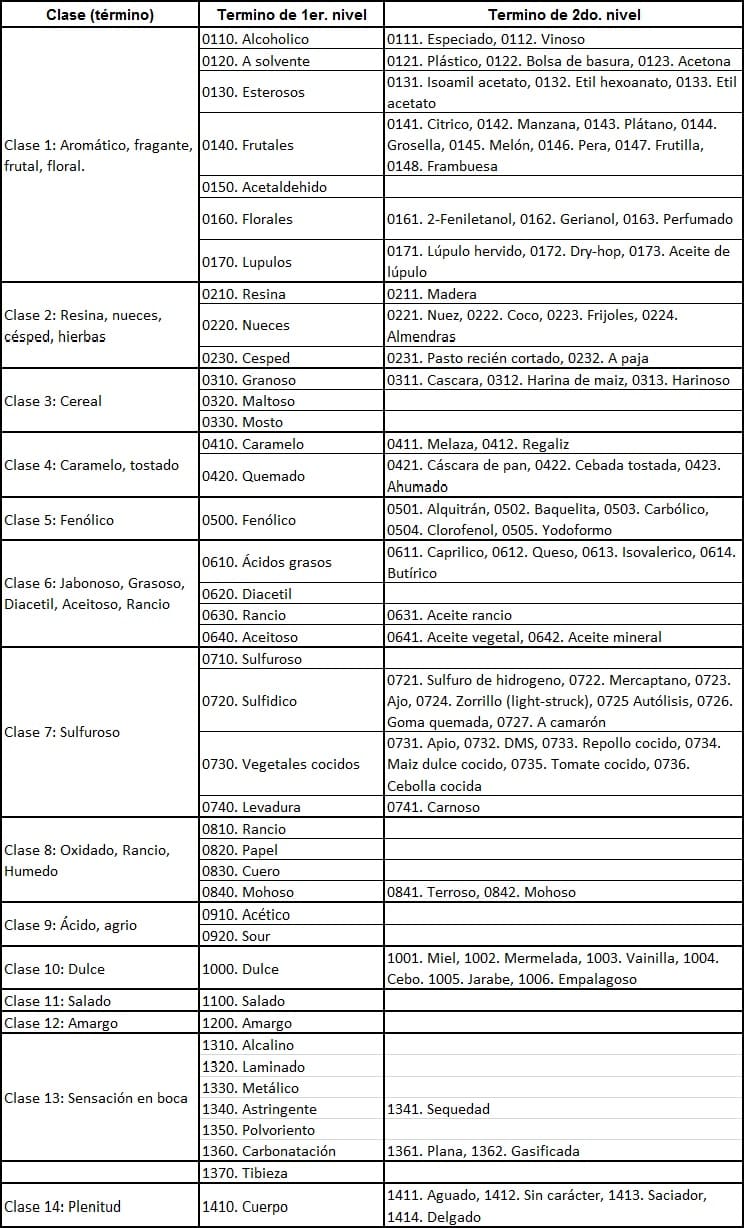
Meilgaard’s flavor and aroma wheel gives a descriptive name to each aroma and flavor, grouping them with similar aromas and flavors within 14 different classes.
The wheel contains a total of 44 first-level descriptors with common terms familiar to most people.
Then, a second level breaks down the first-level descriptors into 76 specific characteristics.
For example, under class “01, Aromatic, Fragrant, Fruity, Floral” and under the descriptive name “0110, Alcoholic,” there are two associated descriptors, “0111, Spicy” and “0112, Winy.”
Subjective terms such as good or bad, young or aged, balanced or unbalanced are not incorporated.
This is particularly important when judging in a competition, as standardizing the descriptive language allows that when evaluating a beer, it is not simply described.
The main objective of its use allows establishing causes and characteristics associated with a range of possible recommendations that will guide the brewer on what needs to be reinforced, corrected, and/or refocused in their recipe or process.
Most common descriptors
Below are described some of the most common characteristics that can be found in beer evaluation and their numerical reference in Meilgaard’s flavor and aroma wheel.
Some may be appropriate in certain styles but not in others, and desirability may depend on concentration.
1. Alcoholic (0110)
Characteristics
Detectable in aroma, flavor, and mouthfeel (warmth). It is a general sensation produced by ethanol and higher alcohols.
Process
It is one of the final products of the fermentation process, once yeast converts fermentable sugars into carbon dioxide and ethyl alcohol.
Control
The amount and type of alcohols will depend on fermentable sugars and the yeast strain. Primarily, excessively high fermentation temperatures and the use of highly attenuative yeast strains should be controlled.
2. Solvent (0120)
Characteristics
Detectable in aroma, flavor, and mouthfeel. At low levels, ethyl acetate can smell like flowers or chewing gum. At higher levels, it can smell like nail polish, acetone, lacquer, thinner, or glue. At very high levels, it produces a “hot,” “spicy,” or “prickly” mouthfeel, with an aroma that could even be irritating to the eyes.
Process
Produced by some yeast strains or wild yeasts, which may be accompanied by other esters and higher alcohols. High levels are always undesirable, but perceptible values are allowed in Old Ale beers.
Control
Maintain proper cleaning and sanitation of equipment, control excessive fermentation temperatures, and ensure a sufficient amount of healthy, active yeast.
3. Acetaldehyde (0150)
Characteristics
Detectable in aroma and flavor. It is described as green apple, grated apples, or cut grass. Depending on the formation pathway, it may also have a vinegar (acetic) and/or cider aroma/flavor.
Process
It is a product of yeast metabolism at an intermediate stage of ethanol production. It can also be produced by oxidation and/or bacterial contamination (Acetobacter or Zymomonas), which will produce vinegary flavors (acetic acid).
Control
Fully oxygenate the wort. Ensure vigorous and complete fermentation with a healthy yeast strain. Control fermentation temperature. Maintain proper cleaning and sanitation of equipment.
4. Fruity (0130) and Esters (0140)
Characteristics
Detectable in aroma and flavor. They are aromatic compounds identified as a wide range of fruits (banana, apple, pear, and grape). In total, there are more than 90 different esters that can be detected in beer. At very high concentrations, they have solvent notes.
Process
They are produced by yeast action. The amount generated will depend mainly on the strain used and the fermentation temperature.
Control
Select a yeast strain appropriate for the style. Control fermentation temperature according to the yeast strain.
5. Grainy (0310)
Characteristics
Detectable in aroma, flavor, and mouthfeel, it is perceived as raw grain, fresh, cereal husk, and/or astringency. Depending on the style, grainy notes may be desirable, but astringency is not.
Process
The aromas and flavors come from compounds present in the malt, while astringency is produced by tannins present in the grain husk.
Control
Avoid excessive milling. Do not over-sparge the grains. Do not wash the grains with very hot or alkaline water. Avoid very extended mashes.
6. Isovaleric (0613)
Characteristics
Detectable in aroma and flavor. It is described as blue cheese, Parmesan, sweat, and sometimes also as dirty socks or rotten.
Process
Caused by oxidation of alpha acids in hops, usually during storage. The intensity of this characteristic decreases over time.
Causes
Store hops properly. Avoid using degraded or aged hops.
7. Diacetyl (0620)
Characteristics
Detectable in aroma, flavor, and mouthfeel. It is described as butter, margarine, buttered popcorn, or butterscotch (at high levels). In the mouth, the sensation is oily, greasy, and creamy, sometimes appearing as a full body.
Process
It is a fermentation byproduct that is normally reabsorbed by the yeast during the final stages of the process. It can also be produced by bacterial contamination (Pediococcus damnosus and/or Lactobacillus).
Control
Maintain adequate cleaning and sanitation. Use healthy yeast in sufficient quantity. Control fermentation time and temperature.
8. Sulfurous (0721)
Characteristics
Detectable in aroma and flavor. Hydrogen sulfide manifests with characteristics of rotten eggs, burnt matches, or sewage water.
Process
Normally produced by some yeast strains. Bacterial infections (Zymomonas, Pectinatus, and Megasphaera) can produce large amounts of hydrogen sulfide. They can also be formed by yeast autolysis or the use of flavor stabilizers.

Control
Maintain adequate cleaning and sanitation. Use fresh, healthy yeast appropriate for the style. Control fermentation temperature. Check water for excessive sulfates.
9. Mercaptan (0722)
Characteristics
Detectable in aroma and flavor. They are sulfur compounds described as drain, feces, rotten vegetables, and sometimes as methane or natural gas.
Process
Generally formed by yeast autolysis (cell death) during fermentation and maturation.
Causes
Maintain adequate cleaning and sanitation. Remove the beer from the yeast once fermentation has finished.
10. Skunky (0724)
Characteristics
Detectable in aroma and flavor. Easily recognized by its characteristic skunk and/or cat urine.
Process
Produced by the photochemical reaction of visible or ultraviolet light that causes the degradation of hop iso-alpha-acids in the wort or finished beer.
Control
Store beer in opaque, light-protected places. Use opaque bottles, cans, or chemically modified hops in brewing.
11. Cooked vegetables (0730)
Characteristics
Detectable in aroma and flavor. Gives the beer a cooked vegetable flavor and aroma (DMS, celery, cabbage, canned vegetables). At high concentrations, it can have a seafood aroma and flavor or like the water in which shrimp are boiled. In pale beers, it is generally detected as corn or similar. In dark beers, it may appear more like tomato and other vegetables.
Process
Formed from a precursor (SMM) existing in the malt during wort production; the presence of this precursor will depend on the type of barley and the malting process. It can also be produced at high levels by bacterial contamination (Zymomonas or Proteus), which would also produce acetic acid, phenols, and other sulfur compounds.
Control
Maintain adequate cleaning and sanitation. Use fresh, well-stored malt. Perform a long, vigorous boil with rapid subsequent cooling. Use fresh, healthy yeast. Use low levels of corn adjuncts.
12. Papery (0820)
Characteristics
Detectable in aroma and flavor. Described as wet cardboard, paper, ink, or mustiness; sometimes also described as cucumber or fat. In dark beers, it can be perceived as tomato juice.
Process
Produced by aging and oxidation of beer components and alcohol; it can also occur by aeration of the beer after fermentation.
Control
Avoid introducing oxygen into the beer after fermentation. Do not splash when racking and bottling. Avoid excessive headspace in the bottle. Store the beer cold, consuming it while still fresh (depending on the style).

13. Moldy (0840)
Characteristics
Detectable in aroma and flavor. Recognized by its characteristics of damp earth, cellar, and/or moldy bread.
Causes
Fungal contamination is the main cause of moldy aromas and flavors. It can develop both in the wort and in the finished beer if fermentation or conditioning takes place in damp places.
Control
Maintain adequate cleaning and sanitation. Do not expose the beer to a contaminated environment. Use fresh, well-stored ingredients.
14. Sour/Acid (0900)
Characteristics
Detectable in aroma, flavor, and mouthfeel. It is a basic taste that can be described as cider, citrus (lemon, grapefruit, etc.), or sour milk. At high levels, it can cause a warm burning sensation and a prickly tingling. Some acids are not volatile and may not be detectable in aroma.
Process
The main cause is bacterial contamination by Lactobacillus (lactic acid) and Pediococcus (acetic acid) and Brettanomyces-type yeasts.
Control
Maintain adequate cleaning and sanitation. Use a suitable and healthy yeast strain. Avoid long mashes at low temperatures.
15. Bitter (1200)
Characteristics
Detectable in flavor and mouthfeel. It is a basic taste provided to the beer by hops. Extreme levels of bitterness can cause a dry, harsh, and/or resinous mouthfeel. It is measured in IBU (International Bitterness Unit).
Process
Mainly provided by the type of hop and its alpha-acid level; it is a function of the volume and time of hop addition during boiling, the presence of malts, and the type of water.
Control
Manage the type and addition of hops according to alpha-acid concentration. Control boiling time and water pH. Use water appropriate for the specific style.
16. Metallic (1330)
Characteristics
Detectable in appearance, flavor, aroma, and mouthfeel. It is perceived with characteristics of copper, blood, aluminum, iron, rust, or ink that can cause tingling in the mouth. On the other hand, metal ions can cause haze in the beer and affect proper foam formation.
Process
While traces of copper, manganese, iron, and zinc are necessary for yeast health, high levels of metal ions are usually due to dilution in the wort due to nicks and cracks in coated steels. It can also develop from the use of water with high metal ion content.
Control
Use equipment in good condition, stainless steel, or food-grade plastic. Avoid prolonged contact of equipment with caustic cleaners. Treat water correctly to remove excess metal ions.
17. Astringent (1340)
Characteristics
Detectable as a mouthfeel and aftertaste. Similar to chewing unripe grape skin or quince. It causes a harshness and a feeling of dryness that are easily recognizable.
Process
Mainly caused by excessive grain milling (tannin extraction) or the use of hops with high alpha-acid levels. Another possible cause is bacterial or wild yeast contamination.
Control
Maintain adequate cleaning and sanitation. Adjust milling and control water pH during mashing. Do not over-sparge the grain. Properly manage hop additions and types.
18. Carbonation (1360)
Characteristics
Detectable in appearance and mouthfeel. Produced by the presence of dissolved CO2 in the beer. It causes a sparkling sensation on the tongue caused by the bursting of CO2 bubbles as they form carbonic acid.
Process
CO2, like alcohol, is a byproduct of fermentation. Natural carbonation is produced by adding sugar to the already fermented beer to reactivate the yeasts. For artificial carbonation, CO2 is added under pressure.
Control
Control and measure the use of sugar according to the style. Control and measure CO2 pressures according to the style.
19. Body (1410)
Characteristics
Detectable in mouthfeel. It is a sensation of fullness. A low body is described as light, easy to drink, thin, or watery; as it increases, it is described as silky, creamy, unctuous, full, chewy.
Process
It is determined by the level of non-fermentable sugars, proteins, and dextrins present in the beer; all of these are components that the yeast is unable to process during fermentation and conditioning.
Control
Control mashing temperature to produce higher or lower levels of non-fermentable sugars. Manage the use of caramel and cara-pils malts, maltodextrins, wheat flakes, oats, and barley.
Frequently Asked Questions (FAQ)
1. What is the difference between a primary aroma and a defect according to Meilgaard’s wheel?
In Meilgaard’s taxonomy, no descriptor is intrinsically a defect by itself. The difference lies in the beer style and concentration: compounds like diacetyl or certain fruity esters are defects in a clean Pilsner, but are desirable and part of the traditional profile in styles like an English Pale Ale or a Weizen.
2. How is Meilgaard’s wheel used in BJCP or Cicerone® exams?
Certification programs such as BJCP (Beer Judge Certification Program) and Cicerone® use Meilgaard’s wheel as the basis of their standardized lexicon. It allows judges to identify an exact compound (e.g., DMS or acetaldehyde), associate it with a cause in brewing, and write an evaluation sheet with precise technical feedback without resorting to subjective adjectives.
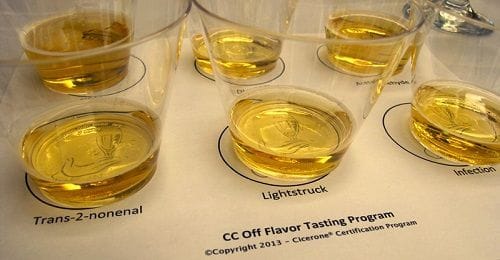
3. What are sensory training kits (off-flavor kits) and how do they relate to this wheel?
They are kits of standardized chemical vials with the exact compounds cataloged in the wheel (such as ethyl acetate, isovaleric acid, or 3-methyl-2-butene-1-thiol). They are diluted in a neutral base beer to calibrate the sensory detection threshold of tasters, judges, and master brewers through direct olfactory memory.
4. Why does the beer flavor wheel exclude terms like “balanced” or “refreshing”?
The wheel was designed exclusively as an analytical and scientific tool. Hedonic or subjective terms such as “rich,” “fresh,” or “balanced” depend on the individual taste of the consumer and do not correspond to a chemical molecule or a control variable in the brewhouse.
5. What are the differences between Meilgaard’s aroma wheel and the wine tasting wheel (Ann Noble)?
Although both were created around the same time to standardize sensory evaluation, Meilgaard’s incorporates a deep focus on fermentation byproducts, trigeminal sensations (mouthfeel), and microbiological or oxidation defects, while Noble’s wine wheel focuses primarily on varietal profiles, oak, and grape maturation.