This post is also available in:
 Español
  Português
Beer is the second most consumed alcoholic beverage worldwide, but it has a very long and distinguished legacy. In fact, it is older than wine, older than whiskey and even older than bread.
As soon as humans learned to cultivate grains, about 13,000 years ago, fermentation appeared as a natural phenomenon.
But it was not until the 5th century BC that we have sources documenting the deliberate production of beer in ancient Sumer.
However, beer has been described as the “midwife of civilization” due to its central role in agriculture, trade, urbanization and medicine.
The Goddess Ninkasi
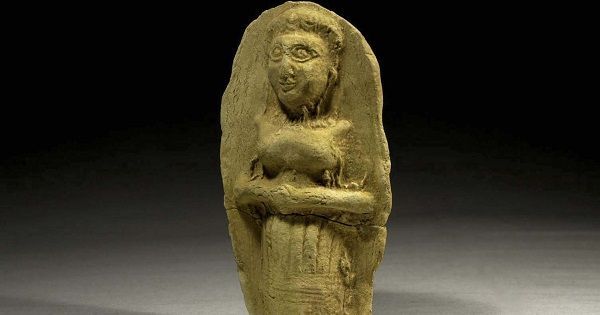
Beer became so important to ancient Mesopotamian culture that the Sumerians created a goddess for beer and its brewing, Ninkasi, to whom an anonymous poet, intoxicated by her powers, wrote a hymn in 1800 BC.
A daughter of the powerful creator Enki and Ninti, “queen of the sacred lake,” Ninkasi is a particularly moving deity given the role of women in ancient culture as respected brewers.
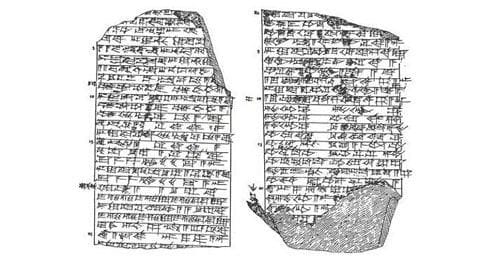
The “Hymn to Ninkasi” not only provides an insight into the importance of this custom in Sumerian mythology, but also gives us a recipe to prepare it, the oldest beer recipe in history.
Translated from two clay tablets by Miguel Civil, professor of Sumerology at the University of Chicago, the poem contains instructions precise enough that Fritz Maytag, former owner of Anchor Brewing Company in San Francisco, took it upon himself to experiment with them.
“Ninkasi Beer”
His results were presented at the annual meeting of the American Association of Micro Brewers in 1991.
The brewers, Civil wrote:

Were able to taste ‘Ninkasi Beer’ by sipping from large jars with straws, just as they would have done four millennia ago.
The beer reached an alcohol concentration of 3.5% ABV, very similar to modern session beers:
It had a dry taste, lacking in bitterness, similar to strong apple cider. A challenge for all homebrewers.

Unfortunately, Maytag could not bottle and retail the recreation, as the ancient Mesopotamian beer “was brewed for immediate consumption.”
But the most important thing for Miguel Civil about the experiment was that his translation was in the hands of a master brewer:
Maytag was able to see beyond the complex terms and poetic metaphors.
The Hymn to Ninkasi
Below is the first part of the “Hymn to Ninkasi,” which describes in poetic terms the step-by-step process of Sumerian beer brewing.
A second part of the hymn celebrates the vessels in which the beer is brewed and served, and includes the usual toasts in the tavern and its songs.
Born of the flowing water, tenderly cared for by the Ninhursag.
Born of the flowing water, tenderly cared for by the Ninhursag.Having founded your city next to the sacred lake, she built your great walls for you.
Ninkasi, having founded your city next to the sacred lake, she built your great walls for you.Your father is Enki, Lord Nidimmud, your mother is Ninti, queen of the sacred lake.
Ninkasi, your father is Enki, Lord Nidimmud, your mother is Ninti, queen of the sacred lake.You are the one who handles the dough [and] with your great shovel mixes in a pit the bappir with sweet spices.
Ninkasi, you are the one who handles the dough [and] with your great shovel mixes in a pit the bappir with [dates] honey.You are the one who bakes the bappir in the great oven, ordering the piles of hulled grains.
Ninkasi, you are the one who bakes the bappir in the great oven, ordering the piles of hulled grains.You are the one who waters the malt of the earth, while your noble dogs keep even the potentates at bay.
Ninkasi, you are the one who waters the malt of the earth while your noble dogs keep even the potentates at bay.You are the one who soaks the malt in a jar, the waves rise, the waves fall.
Ninkasi, you are the one who soaks the malt in a jar while the waves rise and the waves fall.You are the one who spreads the cooked and mashed dough over large woven reed filters, the freshness overcomes;
Ninkasi, you are the one who spreads the cooked and mashed dough over large woven reed filters, and freshness overcomes.You are the one who holds in both hands the fresh beer, fermenting it with honey [and] wine.
(You, the sweet new beer in the vessel) Ninkasi, (…) (You, the sweet new beer in the vessel) The filtering vat, with its pleasant sound, you placed it properly in a large collecting tub.
Ninkasi, the filtering vat, with its pleasant sound, you placed it properly in a large collecting tub.When you pour from the collecting tub the already filtered beer it is [like] the floods of the Tigris and Euphrates,
Ninkasi, you are the one who pours from the collecting tub the already filtered beer,
and it is [like] the floods of the Tigris and Euphrates.
Frequently Asked Questions (FAQ)
1. What role did beer play in the development of early civilizations?
Beer was an economic and social driver in cultures such as the Sumerian. Its production spurred agriculture (grain cultivation), trade (exchange of surpluses) and even urbanization, as it required storage and distribution.
2. How does Sumerian brewing compare to modern brewing?
Sumerian beer used rudimentary methods: spontaneous fermentation, mixing grains (bappir) with dates or honey, and filtering with reeds. Today, beer uses malt, hops and controlled fermentation.
3. Why were women the main brewers in ancient Mesopotamia?
In Mesopotamia, brewing was linked to domestic tasks such as bread-making, traditionally female roles. Women were respected as producers of beer, a staple food. Their mastery of this activity gave them economic and social relevance.
4. What challenges did Fritz Maytag face when recreating Ninkasi beer?
Maytag had to interpret poetic terms and metaphors from the hymn (such as “waves rising and falling” to describe fermentation). He also faced technical limitations, as the beer could not be bottled due to its lack of preservatives, while its taste — dry and similar to cider — differed notably from modern beers.
5. What does the Hymn to Ninkasi reveal about the relationship between religion and everyday life in Sumer?
The hymn shows how beer was sacred: its process was attributed to a deity, linking the divine with the earthly. The mention of Enki (god of wisdom) and Ninti (goddess of life) suggests that beer symbolized creation and sustenance. Moreover, taverns were social spaces where rituals and toasts mixed the spiritual with the communal.