This post is also available in:
 Español
  Português
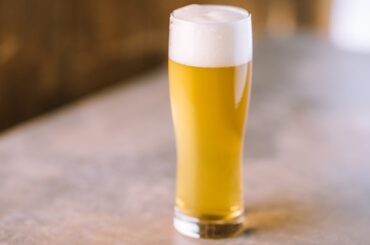
Beer is a fermented beverage produced from water, cereal starches, hops, and yeast. After initial fermentation, the liquid undergoes maturation at controlled temperatures to refine its flavor profile. The process concludes with packaging, where carbonation is achieved either through direct gas injection or secondary fermentation in the bottle.
Technical factors like water mineral ratios and enzymatic power in malt determine the beer’s final character. Brewers manage quality through specific temperature adjustments to remove off-flavors and use protective packaging to prevent light damage. These chemical considerations ensure the beverage maintains its intended taste, aroma, and carbonation levels.
In simple words, beer is an alcoholic beverage made from starches obtained from cereals and other grains (mainly barley and wheat), flavored and aromatized with hops (among other herbs and additives), which are then fermented in water with yeasts of the genus Saccharomyces.
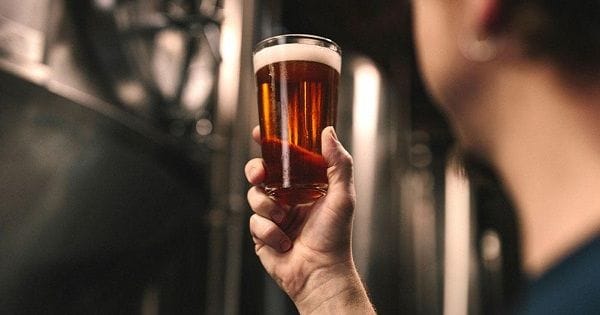
There is no so-called “inventor” of beer, nor any people who can claim they drank beer before another or that they were the first to brew and consume it.

The truth is that the development of craft beer and its consequent beer culture would have occurred independently and surprisingly similarly in Mesopotamia, Africa, the East, and the Americas.
Each people evolved their brewing techniques based on the grains available to them: wheat and barley beer in Mesopotamia and Egypt (kas and zythum); millet and sorghum in Africa (kaffir); rye in Russia (kvas); rice in Japan, China, and Korea (sake, samshu, and suk); agave in Mexico (pulque); corn and wheat; and even pine nuts in South America (chicha and/or muday).
In general, fermented beverages produced from other sugar sources are not called beer, even though they are made through a similar yeast-based fermentation process.
For example, fermented apple juice is called “cider,” fermented pear juice is called “perry,” and probably the most well-known of all, fermented grape juice is called “wine.”
Beer ingredients
In summary, we can say that brewing consists of 4 main ingredients (recognized in the Purity Law decreed by William IV), though not exclusive: water, malt, hops, and yeast, from which an endless variety of different beer recipes, specialty beers, or even non-alcoholic beers can be created.
1. Water
A large part of beer is water, around 90-95%, making it the main ingredient in its production and consumption.

Water, depending on its composition, contains ions that directly affect the final characteristics of a beer, for better or worse.
Different types of beer will require different water qualities. If the chemical fundamentals are known, it is possible to adapt any type of water to fit the beer style (India Pale Ale, Stout, etc.) you wish to brew; otherwise, you can simply choose to brew the beer style that best suits the available water type.
In general, some of the water minerals that interest brewers most are calcium, sulfates, and chlorides. Calcium increases the extraction of both malt and hops during mashing and boiling, reducing haze in the beer.
Copper, manganese, and zinc inhibit yeast flocculation. Sulfates reinforce hop bitterness and dryness, while chlorides provide a fuller texture and enhance sweetness.
2. Malt
Malt is the product obtained from the controlled development of cereal grain germination, after which a drying and toasting procedure is applied.
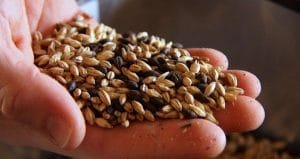
The goal of the malting process is to activate the enzymes that will later be responsible for converting the grains’ starches into fermentable sugars.
Once the grain has been transformed, the malt provides the starch, enzymes, and proteins necessary for producing the wort, the sweet broth that will serve as the yeast culture.
Likewise, the drying and toasting process gives the grains their characteristic color and aromas, which will later contribute to the final character of the beer.
In brewing, it is possible to use any cereal that has been malted so that its sugars become fermentable, with barley being the most widely used grain in Western brewing.
When toasting is minimal, we speak of pale malts, but toasting can even reach the point of burning.
Basically, the types of malt can be divided into three categories:
Base malts
These are pale malts, lightly kilned, with high enzymatic power (ability to convert starch into fermentable sugars), usually making up 85-100% of the total grain bill when brewing.
Among the best known are Pilsner (Czech Republic), pale ale, Munich, and Vienna malts.
Specialty malts
These are highly kilned malts, with little or no enzymatic power, ranging in color from amber to black.
Generally, they are used in small quantities and aim to develop specific colors and/or aromas/flavors in the beer, depending on the style.
There is a wide variety of specialty malts, including black malts, chocolate malts, roasted malts, etc.
Mixed malts
These are malts that undergo an intense kilning process but retain sufficient enzymatic properties to be used as a base or additives.
This category includes Crystal malts (England) and Caramel malts (Germany).
3. Hops
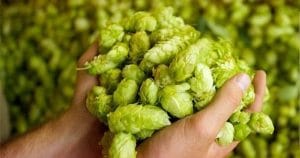
Hops (Humulus lupulus) is a plant of the Cannabaceae family, a relative of Cannabis sativa, native to Europe, Western Asia, and North America.
Historically, hops were not used as a common ingredient in brewing until after 1500 AD and were widely popularized during the 18th and 19th centuries.
Before that, brewers used a mixture of herbs called “Gruit“, mainly composed of yarrow (Achillea millefolium), mugwort (Artemisia vulgaris), and sweet gale (Myrica gale), to provide flavors and aromas to beer that would balance the sweetness of the malts during consumption.
The hops used in brewing come from the female flowers of the plant, called “cones,” which house the so-called “lupulin” glands.
Lupulin is a yellowish resin that is transformed during the brewing process, providing aromas, flavors, and antibacterial preservative capabilities, also helping to later stabilize the process of foam formation and retention.
Its main components are:
Alpha acids
They are a set of resins, mainly humulone, cohumulone, and adhumulone, responsible for the bitter taste in beer.
When boiled, these resins undergo a transformation process called isomerization, from which the bitter compounds that are finally dissolved in the beer, known as iso-alpha acids, are formed.
Beta acids
Also called lupulones, they are resins with low bitterness potential, but when oxidized, they can generate off-flavors and astringency in the beer.
Essential oils
These are responsible for providing flavor and aroma to the beer. Their quantity and quality are specific to each hop variety but generally represent between 0.5 and 3% of its total mass.
Tannins
They are responsible for inhibiting bacterial growth, favoring the healthy development of yeast during fermentation. This antibacterial action lasts over time, helping to preserve the beer.
Hops are classified into three main categories:
Bittering hops
These are rich in alpha acids and are added at the start of the boil. Some of the best-known representatives in this category are Brewer’s Gold, Northern Brewer, and Cascade hops.
Aroma hops
These hops provide a greater amount of aromatic elements and are added at the end of the boil, or even after fermentation in a process known as dry hopping.

Some of their most recognized representatives are Czech Saaz hops, German Spalt and Tettnang, English Golding and Fuggles, and American Cascade and Willamette.
Dual-purpose hops
These are hops that provide both aroma and flavor characteristics, though slightly less pronounced. It is a very variable category, and as an example only, German Hersbrucker and Hallertau hops, as well as their botanical derivatives, can be mentioned.
4. Brewer’s yeast
Yeast is a single-celled fungus that reproduces asexually by budding, a process in which its structure develops a bud or protuberance that then becomes a new individual.
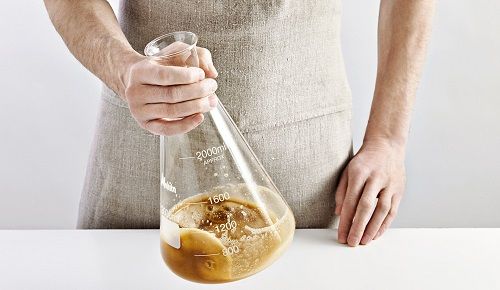
Most beer styles are made using yeasts of two Saccharomyces species, which consume sugar and transform it, producing alcohol (ethanol) and CO₂ (carbon dioxide).
This transformation is known as fermentation, a process in which the yeast converts the sugary wort into drinkable beer.
There are two basic types of yeast:
Top-fermenting yeast (ale)
This is the type normally found in nature and is called Saccharomyces cerevisiae.
This variety works at temperatures between 12 and 24°C, sitting on the surface of the wort during fermentation, which is why they are called top-fermenting yeasts.
Bottom-fermenting yeast (lager)
These yeasts, of the species Saccharomyces uvarum (also called S. carlsbergensis), work at temperatures between 7 and 13°C and sit at the bottom of the wort during fermentation, which is why they are called bottom-fermenting yeasts.
Lager yeasts were accidentally discovered by brewers in southern Germany who subjected their beers to low-temperature maturation in Alpine caves (lagering).
Recent studies have shown that “lager” yeasts are actually a genetic hybrid between ale yeasts and cold-resistant Patagonian yeasts (Saccharomyces pastorianus) that may have arrived in Europe with the start of transatlantic trade from the Americas.
Spontaneous fermentation yeast
In so-called spontaneous fermentation beers, no specific type of yeast is selected; instead, all yeasts suspended in the air are allowed to enter the wort.
In summary, in addition to the various Saccharomyces varieties, more than 50 different fermenters can be found, including Lactobacillus and Brettanomyces.
Beer brewing process
1. Malting
It all starts with malt production, and for this, any type of cereal can be used, although barley is mainly used today.
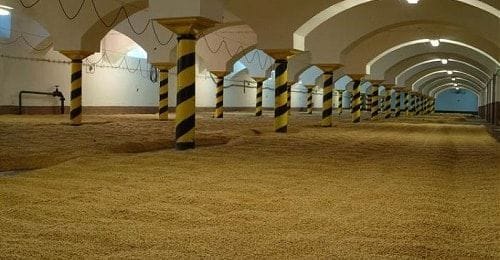
The malting process can be quickly summarized in the following stages: selection, humidification, germination, and drying/toasting.
The main objective is to simultaneously obtain the starch and the enzymes that will convert it into fermentable sugars.
To achieve this, the grains are moistened for 2 to 4 days until they germinate. Then, this process is interrupted when the size of the sprout has approximately equaled the size of the grain before it begins to consume its starch.
Finally, a drying process and different levels of toasting are carried out.
2. Milling
Milling aims to crush the malt grains without turning their interior into flour, trying to preserve the husk so that it later acts as a natural filter that facilitates the extraction of the wort obtained from mashing.

Generally, the mill used for milling is built with two fluted rollers separated by up to 1.5 mm, rotating in opposite directions.
3. Mashing
Mashing is the method used to extract the sugars from the previously milled malt.
The process basically consists of making a mixture of malt with hot water (65-70 °C) to hydrate it and activate the enzymes that will convert its starch into fermentable sugars.

The process takes between 60 and 90 minutes, and as a result, a thick, sugary liquid called “wort” is obtained.
Mashing ends with the lautering stage, where the wort is separated from the grain residue (spent grain).
Finally, sparging rinses the lautering residue with hot water to ensure total extraction of the sugars and nutrients produced during mashing.
4. Boiling
After lautering, the wort is transferred to a new vessel and heated to a boil for 1 to 2 hours (depending on the beer style) to sterilize it and allow its proteins to coagulate and settle.
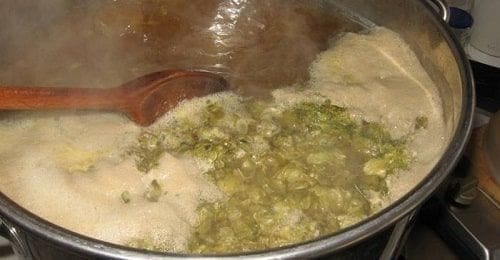
Boiling also begins the addition of hops, at the start of the boil mainly for bitterness and toward the end for flavor and aroma.
This final, cloudy wort is then clarified through a process called “whirlpool,” which involves swirling the wort so that sediments cluster in the center and then settle.
5. Cooling
After boiling, the boiling wort must be cooled quickly, going from 100 to approximately 20°C as quickly as possible.
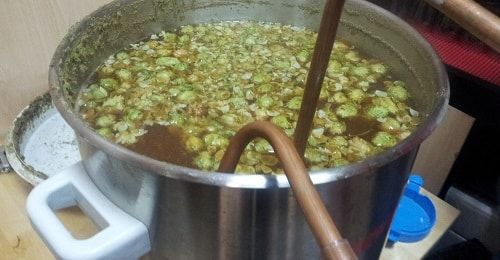
This prevents staying too long in temperature ranges that favor bacterial reproduction, bringing it to a temperature that allows the addition and work of the yeasts to begin fermentation.
6. Fermentation
Once the wort is cooled, it is oxygenated and injected with yeast to begin fermentation, which will convert the sugars into alcohol and carbon dioxide (CO₂). This process will take between 5 and 10 days, depending on the type of beer and the yeast used.
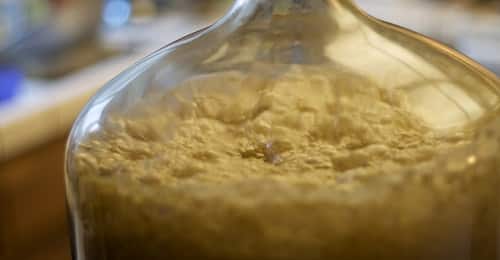
Initial oxygenation is done to allow the yeast to propagate properly during the first hours of fermentation, a period during which it will be consumed (aerobic process). From there, the rest of the fermentation will be an anaerobic process.
7. Maturation
At the end of fermentation, the “green” beer is transferred to maturation tanks to rest at a lower temperature, between 10 and 15°C for ales and between 0 and 4°C for lagers.
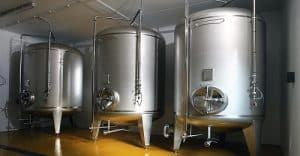
This stage aims to achieve the settling of the yeast that still remains in the wort, as well as the removal of unwanted aromas and flavors through degradation and/or evaporation.
8. Packaging
Finally, it is packaged and ready for consumption. Large breweries often add CO2 artificially, while craft producers generally carry out a second fermentation in the bottle.

For this second fermentation, some sugar is added before bottling, which, while generating a little more alcohol, also provides the desired carbonation in the final product.
Frequently asked questions (FAQ)
1. What is the difference between the sulfate-to-chloride ratio in brewing water?
The balance between sulfates and chlorides is the chemical key that defines the profile of a beer. A ratio tilted toward sulfates (e.g., 3:1) accentuates the alpha acids of the hops, providing a dry, sharp, and lasting bitterness, ideal for West Coast IPA. Conversely, a ratio favorable to chlorides (like 1:3) softens the bitterness and enhances the silky texture of malt proteins, boosting the mouthfeel fullness typical of New England IPA or Stout.
2. What is the diastatic power of malt, and why does it matter in mashing?
Diastatic power is the unit of measure (expressed in degrees Lintner or Windisch-Kolbach) that quantifies the number of active enzymes present in a malted grain. Base malts (like Pilsner or pale ale) have high diastatic power, meaning they have enzymes to spare not only to convert their own starches into sugars but also those of unmalted adjuncts (like oats or corn) that lack them. Highly roasted malts lose this capacity due to kiln heat.
3. What compounds cause the “skunked” or lightstruck beer defect?
The skunk-like odor defect occurs through a photochemical reaction. When ultraviolet light (solar or fluorescent) passes through the glass of the bottle, it breaks down isohumulones (iso-alpha acids derived from hops) in the presence of sulfur compounds. This synthesizes a molecule called 3-methyl-2-butene-1-thiol (MBT), whose human detection threshold is extremely low. To prevent it, the industry uses amber glass bottles (which block 98% of UV radiation) or chemically modified hops (tetrahydro-iso-alpha-acids) in clear bottles.
4. What is the diacetyl rest during fermentation?
Diacetyl is a natural byproduct of fermentation that imparts an undesirable aroma of butter, popcorn, or rancidity. Toward the end of active fermentation, brewers perform a diacetyl rest, which consists of raising the fermenter temperature by about 2 or 3°C for 48 hours. This increase stimulates the yeast to reabsorb the diacetyl and metabolize it into neutral compounds (such as 2,3-butanediol), ensuring a clean profile in the finished product before starting cold maturation (lagering).
5. How do corn sugar (dextrose) and table sugar differ for bottle carbonation?
Although both are used for the second fermentation, their molecular assimilation varies. Dextrose (glucose) is a monosaccharide that the yeast processes directly, quickly, and without cell stress, generating a clean carbonation. Traditional table sugar (sucrose) is a disaccharide that the yeast must first break down using the enzyme invertase; although it works perfectly well, excess sucrose can contribute residual cider-like flavors or slightly acidic notes in light-bodied beers.