This post is also available in:
 Español
  Português
  Français
When it comes to brewing beer, one of the main things we need to know inside out is the characteristics and handling of hops.
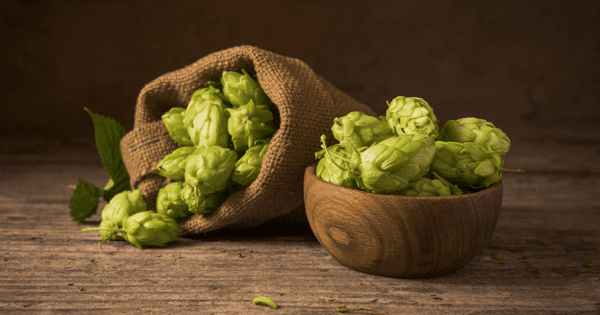
You have to take into account the type of hop, something of its origins, its technical characteristics and its organoleptic properties.

Below we describe 11 hop varieties in detail, namely Calypso, Cascade, Chinook, Citra, Northern Brewer, Mount Hood, Nelson Sauvin, Nugget, Saaz, Sorachi Ace and Summit.
The technical sheets for each variety, which used to be images, are now tables with the ranges of alpha and beta acids, cohumulone and essential oils, reviewed in October 2026. If you are looking for the history of the varieties that changed beer, you will find it in the 9 most influential hop varieties of all time.
The 11 Varieties at a Glance
Before going into each sheet, this table sums up where each hop comes from, what it is used for and which aroma dominates.
| Hop | Origin and year | Alpha acids | Use | Dominant aroma |
| Calypso | USA, Hopsteiner | 12 to 14% | dual purpose | pear, apple, citrus |
| Cascade | USA, 1972 | 4.5 to 8.9% | aroma | grapefruit, floral, pine |
| Chinook | USA, 1985 | 12 to 14% | dual purpose | pine, resin, grapefruit |
| Citra | USA, 2008 | 10 to 15% | aroma | mango, passion fruit, lime |
| Northern Brewer | England, 1934 | around 9.5% | dual purpose | mint, wood, pine |
| Mount Hood | USA, 1989 | 4 to 8% | aroma | floral, spicy, noble |
| Nelson Sauvin | New Zealand, 2000 | 12 to 13% | dual purpose | white grape, passion fruit, grapefruit |
| Nugget | USA, 1983 | 9.5 to 14% | bittering | herbal, pine, wood |
| Saaz | Czech Republic, traditional | 2.5 to 4.5% | aroma | floral, herbal, spicy |
| Sorachi Ace | Japan, 1984 | 11.5 to 16% | dual purpose | lemongrass, lemon, dill |
| Summit | USA, 2003 | 16 to 18% | bittering | orange, tangerine, grapefruit |
How to Read a Hop Technical Sheet
Alpha acids indicate bittering potential and isomerize during the boil, so a 15% hop gives three times the bitterness of a 5% hop at the same dose and time. Beta acids barely add bitterness when fresh and gain weight as the hop ages.
Cohumulone is the fraction of alpha acids that many brewers blame for a harsher bitterness when it goes above 30%, although the literature is not unanimous. Essential oils explain the aroma, with myrcene providing citrusy and resinous notes, humulene and caryophyllene an herbal and woody background, and farnesene the floral signature of noble hops such as Saaz.
Storage stability measures how much alpha acid remains after 6 months at room temperature. Cascade, Saaz and Mount Hood lose about half, so it is best to buy them from the latest harvest and store them vacuum sealed and cold, as we explain in 10 things you should know about hops.
1. Calypso Hops
This variety was developed by the Hopsteiner company. It is a diploid aroma hop, the result of a cross between a Hopsteiner 98005 female and a Hopsteiner male derived from Nugget and USDA 19058m.
It matures early and yields 2,800 to 3,370 kg/ha. It is highly resistant to downy mildew. Its cones are very long, compact and dense. It is used for both aroma and bittering.
Technical Characteristics
| Parameter | Calypso |
| Alpha acids | 12 to 14% |
| Beta acids | 5 to 6% |
| Cohumulone | 40 to 42% |
| Total oils | 1.6 to 2.5 ml/100 g |
| Myrcene | 30 to 45% |
| Humulene | 20 to 35% |
| Caryophyllene | 9 to 15% |
| Farnesene | less than 1% |
| Storage stability | retains 65 to 70% of alpha acids after 6 months |
Organoleptic Properties
1. Aromas
Fruit, apricot, peach, citrus, grapefruit, mango, kiwi, floral, grape, cut grass.
2. Flavors
Moderate to strong bitterness, very persistent. Resin, spicy.
3. Other Characteristics
Pear, apple, lemon, lime, earth, tea.
2. Cascade Hops
An aroma variety of American origin, particularly popular in the US craft brewing industry.
Although it is still very popular, at one time it was so prevalent that it defined the flavor of American microbrewery beer.
Cascade was developed by the US Department of Agriculture (USDA) in Corvallis, Oregon, and released in 1972.
It was the first aroma variety developed by the USDA hop breeding program.
It has a low to moderate level of alpha acids (4.5 to 7%) and a medium oil content (0.7 to 1.4 ml/100 g).
It comes from a 1956 collection of open-pollinated seeds, and its lineage includes Fuggle, the Russian Serebrianka and an unknown male.
It was originally meant to resemble the aroma variety Hallertauer Mittelfrüh, imported from Germany.
Its alpha and beta acid levels are similar to those of the German variety, differing in some qualitative factors. Its cones are medium-sized and compact, and its lupulin is yellow.
Cascade is highly resistant to downy mildew, especially in the rootstock, but moderately susceptible at the cone and leaf stage.
It matures from early to late season and is very well adapted to conditions in Washington and Oregon, but it is grown mostly in Washington. In 1975 Cascade accounted for 13.3% of all hops harvested in the US.
It has excellent yield potential, but its storage stability is very poor. For that reason, Cascade bales should be allowed to cool after packing, before going into cold storage.
It is a very versatile variety used for both bittering and aroma. This hop can be used to brew almost any beer style. Homebrewers often grow this plant in their gardens.
One of its distinctive traits is its fast growth, and it is a very hardy variety. Its aroma is described as floral and citrusy, with notes of grapefruit and pine needles.
Technical Characteristics
| Parameter | Cascade |
| Alpha acids | 4.5 to 8.9% |
| Beta acids | 3.6 to 7.5% |
| Cohumulone | 33 to 40% |
| Total oils | 0.8 to 1.5 ml/100 g |
| Myrcene | 45 to 60% |
| Humulene | 8 to 16% |
| Caryophyllene | 4 to 6% |
| Farnesene | 4 to 8% |
| Storage stability | retains 48 to 52% after 6 months |
Organoleptic Properties
1. Aromas
Citrus, very persistent tangerine, currant, a hint of mango and violet, grass, orange blossom.
2. Flavors
Dry to metallic bitterness, short but strong.
3. Other Characteristics
Orange, grapefruit, green and black pepper, spices, citrus blossom, pine needles. Moderate bitterness.
3. Chinook Hops
A high alpha acid hop of American origin with a pine and spice aroma.
This variety was developed by Chuck Zimmermann and released by Steve Kenny in 1985 as part of the US Department of Agriculture (USDA) hop breeding program in Prosser, Washington.
It was originally called Rocky IV. It has a high level of alpha acids (12 to 14%) and a high oil content (1.7 to 2.7 ml/100 g).
Like other high alpha acid varieties, Chinook has a low beta acid content (3 to 4%).
Its lineage includes the English varieties Petham Golding and Brewer’s Gold, as well as a wild American hop from Utah.
Chinook matures late and produces medium-sized, compact cones with dark yellow lupulin.
It is moderately resistant to downy mildew and Verticillium wilt, but slightly susceptible to viral infections, especially mosaic virus.
This variety performs best in the Yakima Valley, Washington, but not in Oregon, because of problems with downy mildew.
Its storage stability is fair to good. It has great bittering and aroma capacity. It is recommended for use at the beginning and in the middle of the boil.
It is commonly used in American Pale Ale and India Pale Ale, where it shows a clean bitterness and an aroma of pine needles and grapefruit. It can also be used in seasonal ales with good results.
There is some disagreement about using it in dark beers. Even so, some brewers get good results in Porter, Stout and Barley Wine. It can be unpleasant when concentrated.
It is used mainly in the US, where several of the most irresistible commercial beers are brewed with it.
Technical Characteristics
| Parameter | Chinook |
| Alpha acids | 12 to 14% |
| Beta acids | 3 to 4% |
| Cohumulone | 29 to 34% |
| Total oils | 1.5 to 2.7 ml/100 g |
| Myrcene | 35 to 40% |
| Humulene | 18 to 25% |
| Caryophyllene | 9 to 11% |
| Farnesene | less than 1% |
| Storage stability | retains 68 to 70% after 6 months |
Organoleptic Properties
1. Aromas
Grass, moss, white flowers, lime, grapefruit, peach (flat peach), lychee, currant, sage, oregano, rosemary.
2. Flavors
Strong, dry bitterness that fades over time, slightly metallic.
3. Other Characteristics
Pine, resin, citrus, smoky. Harsh bitterness.
4. Citra Hops
This variety was released in 2008 and within a few years became the most widely planted in the United States. Sierra Nevada uses this hop in its Torpedo Extra IPA.
Brewers and beer lovers seem impressed by its tropical fruit flavor and aroma and by the complexity that comes from this kind of profile.
It was born from a cross made in 1990 by the Hop Breeding Company from Hallertauer Mittelfrüh, Tettnanger, Brewers Gold, East Kent Golding and a wild American hop, and it reached the market in 2008 under the code HBC 394. Today it is the hop with the largest planted area in the United States.
Despite the limited technical information available, this variety has been widely described for its flavor and aroma of citrus, peach, apricot, passion fruit, grapefruit, lime, melon, currant, lychee, pineapple, mango, guava, papaya and various tropical fruits.
It is a variety with a high alpha acid content, averaging between 10 and 12%. It is recommended for flavor and/or aroma.
It is found above all in India Pale Ale, but it could work well in any beer where you want to highlight its flavor and aroma characteristics.
Although its alpha acid content is high, little is said about its qualities as a bittering hop.
Technical Characteristics
| Parameter | Citra |
| Alpha acids | 10 to 15% |
| Beta acids | 3 to 4.5% |
| Cohumulone | 20 to 35% |
| Total oils | 1.5 to 3 ml/100 g |
| Myrcene | 60 to 70% |
| Humulene | 7 to 12% |
| Caryophyllene | 5 to 8% |
| Farnesene | around 1% |
| Storage stability | retains 75% after 6 months |
Organoleptic Properties
1. Aromas
Mostly citrus, grapefruit, resin.
2. Flavors
Predominantly dry bitterness, persistent and building.
3. Other Characteristics
Citrus, peach, apricot, passion fruit, grapefruit, lime, melon, currant, lychee, pineapple, mango, guava, papaya.
5. Northern Brewer Hops
It was created in 1934 by Professor E. S. Salmon of Wye College, England. It comes from the old Canterbury Golding variety, crossed with a male genotype that in turn came from Brewer’s Gold and an unnamed American variety.
Salmon experimented a great deal with American hops in the early 20th century and probably obtained large amounts of alpha acids from these crosses.
Northern Brewer inherited a pleasant aroma from its female parent and a high alpha acid content from the male side.
It was widely grown in England. In the 1940s it was introduced in Belgium and later in Germany for its high alpha acid potential and its resistance to Verticillium wilt.
The Germans considered it a Belgian hop when it was planted in the Hallertau region, after the famous Hallertauer Mittelfrueh was devastated by Verticillium wilt between the 1960s and the early 1970s.
This variety is called Hallertauer Northern Brewer when it is grown in the Hallertau region.
It matures from early to mid season and is moderately resistant to downy mildew. However, it is very susceptible to powdery mildew.
It yields very well in England but more poorly in the US. Its storage stability is above average.
It is a dual purpose hop, although it is usually used for bittering. This variety is grown less and less.
It is being displaced by varieties with higher alpha acid levels.
Technical Characteristics
| Parameter | Northern Brewer |
| Alpha acids | around 9.5% |
| Beta acids | around 4% |
| Cohumulone | around 26% |
| Total oils | around 1.6 ml/100 g |
| Myrcene | around 56% |
| Humulene | around 21% |
| Caryophyllene | around 7.6% |
| Farnesene | less than 1% |
| Storage stability | retains 77% after 6 months |
Organoleptic Properties
1. Aromas
Grass, lychee, floral (oleander), tangerine, grapefruit, dry lawn, pepper.
2. Flavors
Dry bitterness. Noticeably bitter finish.
3. Other Characteristics
Clean, dry bitterness. Mint, tree leaves, spices.
6. Mount Hood Hops
It is the result of a 1983 cross between a tetraploid Hallertauer Mittelfrüh (2n=40) and an unknown male aroma variety.
It was released in 1989 and its name comes from Mount Hood, a volcano east of the city of Portland, above the Hood River.
Mount Hood is a triploid, which means it produces almost seedless cones even when grown near fertile males.
It adapts very well to conditions in the US Pacific Northwest, where it yields between 1,345 and 2,240 kg/ha.
This variety is very similar to its parent, the German Hallertauer Mittelfrüh. Its essential oil profile is practically identical, with only traces of farnesene.
Unlike Hallertauer Mittelfrüh, it matures later and yields better, and its alpha acid content is almost double, at 5 to 8%.
It produces medium-sized, moderately compact cones. Its lupulin is deep yellow.
It is an ideal substitute for the so-called European “noble” hops and is used both for its bittering characteristics and for its aromatic properties.
Its aroma is warm and pleasant, and it can be somewhat spicy when fresh.
Its storage stability is very low, so it should be kept cold or frozen after drying.
It retains only 50 to 60% of its alpha acids after 6 months of storage. It is used mainly in American craft beers.
Technical Characteristics
| Parameter | Mount Hood |
| Alpha acids | 4 to 8% |
| Beta acids | 5 to 8% |
| Cohumulone | 21 to 23% |
| Total oils | 1 to 1.7 ml/100 g |
| Myrcene | 30 to 40% |
| Humulene | 12 to 38% |
| Caryophyllene | 7 to 16% |
| Farnesene | less than 1% |
| Storage stability | retains 50 to 60% after 6 months |
Organoleptic Properties
1. Aromas
Citrus, lemon, white grape, mango.

2. Flavors
Dry to metallic bitterness, persistent and building.
3. Other Characteristics
Delicate aroma. Slightly floral and spicy. Clean bitterness.
7. Nelson Sauvin Hops
It is a modern New Zealand variety. It was released commercially in 2000 after an extensive selection and breeding program carried out by New Zealand’s Horticulture and Food Research Institute (HFRI).
Lion Nathan Brewery, based in Australia and New Zealand, worked together with HFRI on trials and sensory evaluation. The sensory selection was aimed at fruity characteristics and floral aromas.
The final results showed a unique and intense fruity flavor described as gooseberry, passion fruit and grapefruit, with hints of melon, descriptors usually applied to Sauvignon Blanc wine, which is produced locally.
Grown in the Motueka Valley, near Nelson, this hop with a Sauvignon Blanc aroma was accordingly named Nelson Sauvin.
The first commercial use of this hop was in Lion Nathan’s limited edition beer Mac’s Aromac in mid 2000.
Nelson Sauvin is well suited to craft beers, seasonal and specialty beers that offer different flavors.
This 13% alpha acid hop is used mainly as an aroma variety. Its fruity aroma and intensity are striking, so it should be used judiciously. Blending it with other varieties is also common practice.
In 2009, Japanese researchers identified some of the specific flavor compounds of Nelson Sauvin.
Isobutyric esters, including 2-methylbutyl isobutyrate, which contribute green apple and/or apricot flavor as a fruity characteristic.
Thiols, 3-sulfanyl-4-methylpentan-1-ol and 3-sulfanyl-4-methylpentyl acetate, which contribute a grapefruit and/or rhubarb-like flavor also found in Sauvignon Blanc.
Nelson Sauvin shoots emerge quite late, although they then grow vigorously.
Its cones are moderately large and compact. It has a moderate yield and good storage stability.
Technical Characteristics
| Parameter | Nelson Sauvin |
| Alpha acids | 12 to 13% |
| Beta acids | 6 to 8% |
| Cohumulone | around 24% |
| Total oils | around 1.1 ml/100 g |
| Myrcene | around 22% |
| Humulene | around 36% |
| Caryophyllene | around 11% |
| Farnesene | around 11% |
| Storage stability | good |
Organoleptic Properties
1. Aromas
Citrus, grapefruit, passion fruit, grape, floral.
2. Flavors
Moderate, metallic bitterness. Citrusy, grapefruit aftertaste.
3. Other Characteristics
White grape, gooseberry, pine, melon, resin. Overall, fruity and floral aromas similar to white wine.
8. Nugget Hops
It is one of the first so-called “super alpha” hops. It was released by Al Haunold of the US Department of Agriculture (USDA) in 1983, within the hop breeding program in Corvallis, Oregon.
Nugget originated in 1970 from a cross between two USDA varieties, each with a high alpha acid content.
Its main genetic ancestors include the varieties Brewer’s Gold, Early Green and East Kent Golding.
When grown in the US Pacific Northwest, Nugget averages between 12 and 15% alpha acids, about 5% beta acids and about 27% cohumulone.
This variety produces moderately large, compact cones. Its lupulin is deep yellow. It stores very well, retaining almost 70% of its alpha acids after 6 months of storage at room temperature.
Total oil content is 1.7 to 2.3 ml/100 g of dry cones, with an average of 54% myrcene, 19.4% humulene and 8.9% caryophyllene.
Its yield potential is excellent, usually between 2,000 and 2,700 kg/ha.
It is moderately resistant to pests. It has an herbal, slightly spicy aroma, but this is overshadowed by its bittering potential, so brewers rarely use it for aroma. It is ideal for adding a boost of bitterness in styles that call for it.
Nugget was actually ready for commercial introduction in the late 1970s, but market forces at the time were working against the super alpha hop segment.
In 1981, however, a worldwide shortage of alpha acids finally provided the push super alpha varieties needed to enter the market successfully.
That was when Galena, another super alpha hop, was also introduced and took root in Idaho.
Technical Characteristics
| Parameter | Nugget |
| Alpha acids | 9.5 to 14% |
| Beta acids | 4.2 to 5.8% |
| Cohumulone | 22 to 30% |
| Total oils | 1.5 to 3 ml/100 g |
| Myrcene | 48 to 59% |
| Humulene | 12 to 22% |
| Caryophyllene | 7 to 10% |
| Farnesene | less than 1% |
| Storage stability | retains 70 to 80% after 6 months |
Organoleptic Properties
1. Aromas
Pine, very strong resin, wood, rose, grass.
2. Flavors
Very persistent metallic bitterness.
3. Other Characteristics
Grass, spicy, geranium. Sharp bitterness.
9. Saaz Hops
Widely considered one of the most outstanding varieties in the world. It is a “noble” aroma hop from the Czech Republic.
It was selected from a local variety that has grown in Central Europe since the Middle Ages.
It owes its name to the town of Žatec (Saaz in German), about 60 kilometers northwest of Prague.
Internationally, this hop acquired its German name in the 19th century, when what is now the Czech Republic belonged to the German-speaking part of the Austro-Hungarian Empire.
Sometimes known as Saazer or Bohemian Red, Saaz produces medium to small, loose cones, and its lupulin is pale yellow.
It matures early and has low yield potential, but it has a particularly pleasant aroma.
Because of this, it is the most widely produced hop in the Czech Republic, and much of it is exported to breweries around the world. However, it is very susceptible to downy mildew and wilts easily.
Its storage stability is very low. Some virus-free Saaz clones, called Osvald clones, were introduced in the Czech Republic in an effort to increase yield.
It is an ideal aroma hop. It is usually used in pale, mild beers. Its alpha acid content is 3 to 5%, beta acid content 3 to 4%, and cohumulone content approximately 23%.
Its essential oils break down into approximately 30 to 40% myrcene, 25 to 30% humulene, 8% caryophyllene and around 14% farnesene.
In terms of growth characteristics, such as soft resin content and the composition and properties of its aromatic oils, Saaz is very similar to the German varieties Tettnanger and Spalter, which are also often called “noble” and which the hop market usually groups under the German term “Saazer Formenkreis,” literally the circle of Saaz forms.
Saaz is also very similar to the Polish variety Lublin, and some researchers even believe they are identical.
Despite its low bittering power, brewers and beer drinkers around the world value this hop highly for its pleasant aroma and because they consider the combination of Saaz, pale Bohemian or Moravian malt and the region’s particularly soft water unique, one of the most classic beer flavors in the form of Bohemian Pilsner.
Technical Characteristics
| Parameter | Saaz |
| Alpha acids | 2.5 to 4.5% |
| Beta acids | 4 to 6% |
| Cohumulone | 23 to 28% |
| Total oils | 0.4 to 0.8 ml/100 g |
| Myrcene | 25 to 40% |
| Humulene | 15 to 30% |
| Caryophyllene | 6 to 9% |
| Farnesene | 14 to 20% |
| Storage stability | retains 45 to 55% after 6 months |
Organoleptic Properties
1. Aromas
White flowers, dry grass, fresh grass, perfume, apple, white grape, orange, perhaps lemon.
2. Flavors
Mainly dry bitterness.
3. Other Characteristics
Earth, spices, orange blossom, cinnamon. Clean, delicate bitterness.
10. Sorachi Ace Hops
This hop was developed by Dr. Yoshitada Mori of the Japanese brewer Sapporo in the late 1970s.
It is a cross between Brewer’s Gold and Saaz, whose offspring was then crossed with a Beikei No. 2 male.
Sapporo’s breeding program formally released it in 1984, and soon it was being grown in Japan and on Sapporo’s hop farms in China.
The US Department of Agriculture made some research plantings in 1994, but this hop was not commercially available in the US until 2006, when it was introduced by Virgil Gamache Farms of Toppenish, Washington.
It was named Sorachi Ace after the Sorachi subprefecture in Hokkaido. The goal was to create a Saaz variety with more alpha acids, but the result was quite different.
Sorachi Ace averages 12 to 13% alpha acids, although contents of up to 16% have been reported in non-commercial plantings in Japan.
It is low in cohumulone, at 23%, and its bitterness is described as clean and fleeting. It matures mid season, grows vigorously and is highly resistant to downy mildew.
Its average yield is 650 kg/acre. This hop is particularly notable for its flavor and aroma, reminiscent of lemongrass, lemon peel and lemon verbena.
Some tasters find a background note of oak, with accents of cilantro, dill and diesel fuel.
Although fewer than 12 acres of this variety are grown in the US, Sorachi Ace has caught the attention of craft brewers looking to add new flavors, particularly to styles such as India Pale Ale, Saison and wheat beers.
Technical Characteristics
| Parameter | Sorachi Ace |
| Alpha acids | 11.5 to 16% |
| Beta acids | 6 to 7.5% |
| Cohumulone | 23 to 28% |
| Total oils | 1.5 to 3 ml/100 g |
| Myrcene | 44 to 55% |
| Humulene | 20 to 26% |
| Caryophyllene | 7 to 11% |
| Farnesene | 2 to 5% |
| Storage stability | good |
Organoleptic Properties
1. Aromas
Cut grass and sap, persistent and building, strongly floral, citrus, straw, fresh leaf, fruit, a touch of anise.
2. Flavors
Strong, persistent bitterness, mainly metallic, wood, nut.
3. Other Characteristics
Lemongrass, lemon verbena, lemon bubble gum, lemon peel. Clean bitterness.
11. Summit Hops
This is a unique variety, released in 2003 by the American Dwarf Hop Association in Yakima, Washington, and its story begins with the Nugget variety.
Its lineage runs as follows. In 1998, Nugget plus open pollination gave an unpatented male Nugget (Nugget-M); in 1999, Zeus plus Nugget-M gave USDA 19058M; also in 1999, Zeus plus USDA 19058M gave Lexus; and in 2000, Lexus plus open pollination gave Summit.
The original Nugget seeds came from a hop field in Harrah, Washington. It is a semi-dwarf variety.
In the years after 2000, several growing trials were carried out to prove its worth in terms of yield and resistance to diseases, fungi and pests.
It sits at the very top of the super alpha varieties, averaging an alpha acid content of 16 to 18%.
It is commonly used to brew India Pale Ales, especially in the US. Besides its bittering properties, this hop has a strong aromatic quality, predominantly citrusy, with notes of orange, tangerine and grapefruit.
It has a high oil content, approximately 1.5 to 2.5 ml/100 g, which probably accounts for its strong aroma.
Almost all of its oils fall in a medium range, except farnesene, which is almost nil. Its cones are medium-sized and moderately compact, with dark yellow lupulin.
This is the first dwarf variety from the US and it has a very low trellis. That is why harvesting it is very complicated and must be done by hand, also because of the lack of specialized machinery and because its yield is very high, at 2,200 to 2,700 lbs/acre.
It is very susceptible to downy mildew, although quite tolerant of Verticillium wilt. It has very good storage stability, retaining 85% of its alpha acids after 6 months at 20°C.
Despite being a very new variety, it has caught the attention of many brewers, especially American ones, and its use is starting to spread.
Technical Characteristics
| Parameter | Summit |
| Alpha acids | 16 to 18% |
| Beta acids | 3.3 to 4.3% |
| Cohumulone | 26 to 33% |
| Total oils | 1.5 to 3 ml/100 g |
| Myrcene | 30 to 50% |
| Humulene | 15 to 25% |
| Caryophyllene | 10 to 16% |
| Farnesene | 0 to 1% |
| Storage stability | retains 85% after 6 months |
Organoleptic Properties
1. Aromas
Cut grass, nettle, pepper, wood, perhaps nutmeg, a touch of lemon.
2. Flavors
Mostly metallic bitterness, strong and persistent, with a very long finish.
3. Other Characteristics
Orange, tangerine, grapefruit.
Frequently Asked Questions (FAQ)
1. What does it mean when a hop is dual purpose?
It means it works both for bittering at the start of the boil and for aroma at the end or in dry hopping. Chinook, Nugget, Nelson Sauvin, Sorachi Ace and Calypso fall into that category; Cascade, Citra, Mount Hood and Saaz are used mainly for their aroma and Summit for its bitterness.
2. Which of these hops has the most alpha acids?
Summit, with 16 to 18% alpha acids, followed by Sorachi Ace (11.5 to 16%), Citra, Chinook and Calypso. At the other end is Saaz, with 2.5 to 4.5%, the Czech noble hop of Bohemian Pilsner.
3. Which hop can replace European noble hops?
Mount Hood is the most common substitute for Hallertauer Mittelfrüh, because it descends from it and shares its oil profile. Saaz and Hallertau-grown Northern Brewer are also used in European-style lagers.
4. Why does Cascade lose so much alpha acid in storage?
Cascade retains only 48 to 52% of its alpha acids after 6 months at room temperature, one of the poorest stability ratings on the list. That is why it is bought as pellets from the latest harvest and stored vacuum packed and cold or frozen.
5. Which hop smells like white wine?
Nelson Sauvin, from New Zealand, released in 2000. Its thiols bring notes of white grape, gooseberry and passion fruit reminiscent of Sauvignon Blanc, which is where its name comes from.

Recommended
- The 9 most influential hop varieties of all time
- Dry hopping (dry hop): what it is, what it is for and what its benefits are