This post is also available in:
 Español
  Português
Water is the most abundant ingredient in beer and a very important element in the development of its final flavor characteristics.
Historically, brewers around the world have used locally available water to brew their beer, which has led to the development of beer styles associated with specific water profiles found in a given place.

For example, the water of Dortmund in western Germany is very hard and rich in calcium, sulfates, and chlorides. Meanwhile, the Czech city of Plzeň has very soft water, low in sulfates and bicarbonates.
Over time, brewers learned that if they wanted to reproduce these profiles, they had to manage the quality and composition of their water as a starting point that would allow them to establish consistency.
How does water affect beer flavor?
Since beer contains approximately 90 to 95% water, it is natural that its quality and composition have a very significant impact on the final flavor of the beer.
There are three main elements that will affect the flavor of beer: mineral composition, pH, and alkalinity.

Water hardness and mineral composition will impart flavor and influence the fermentation process, while pH will favor enzymatic activity during the mash and the proliferation of yeast during the fermentation stage.
Alkalinity creates a buffer to protect the pH from fluctuations during the brewing process, ensuring that bacteria cannot grow and eliminating excess tannins.
These three factors are inextricably linked and work together to guide the flavor and color of the beer.
Home water filtration systems
Today, reverse osmosis has established itself as the water treatment industry’s preferred filtration system for brewing beer.
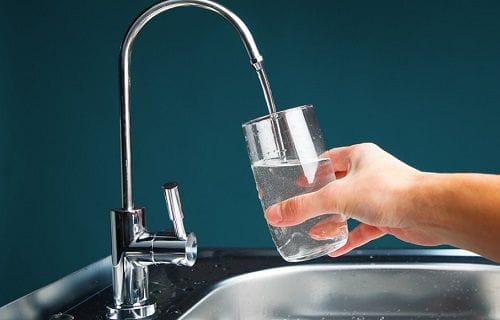
On the other hand, there are also systems based on the use of catalytic carbon that will help remove chloramines from the water, improving its taste.
Finally, water distillation and deionization also produce water of extraordinary purity.
1. Reverse osmosis
Reverse osmosis produces water that is soft, slightly acidic, and free of contaminants that could ruin the flavor, such as iron, nitrites, chlorine, and chloramines.
Using reverse osmosis treated water will provide the brewer with a blank slate to brew and execute their recipes under ideal conditions, giving the brewer full control over every element of the ionic composition of the water they use.
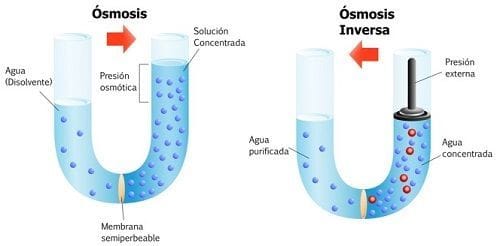
The purity of water produced by reverse osmosis is achieved by reducing contaminants, slowly forcing water through a semi-permeable membrane with very small pores.
These pores are capable of blocking even the passage of the tiniest contaminants while still allowing water molecules to pass through.
The osmosis process equalizes the concentrations of a solution on two sides of a membrane. As its name implies, reverse osmosis does exactly the opposite.
It separates pure water from all the organic and inorganic matter dissolved in the water; the contaminants are then discarded down the drain in a solution called “brine,” and the pure water, called “permeate,” exits the system and accumulates in a storage tank.
2. Carbon filters
If you are not yet ready to invest in a reverse osmosis system, an activated carbon filtration system will provide you with water free of the flavor-ruining aftertaste of chlorine.
In fact, reverse osmosis uses carbon pre-filters and post-filters to protect the membrane from chlorine and to improve the taste and smell of the water.
Through a process called adsorption, activated carbon filters absorb contaminants from the water, where organic compounds adhere to the extensive surface of the carbon filter like velcro.
Carbon filters are covered in pores that trap contaminants flowing through the water, and these pores vary in size by micron, being capable of reducing chlorine, sediment, and VOCs from your water supply.

Carbon filtration is the best method for removing chloramine from drinking water, though eliminating it presents a more difficult challenge.
Chloramine reduction can be achieved by increasing the contact time of the water with the carbon filter, so reducing the flow rate through the filter will increase chloramine reduction.
If you are satisfied with the mineral composition of your water for the beer you want to brew, carbon filtration is the solution to help eliminate that unpleasant chlorine taste.
3. Water distillers
Water distillers, like reverse osmosis, produce water that lacks any mineral, metallic, or organic content.
This is achieved through distillation, a process that mimics the natural water purification process of the earth.
Water distillers boil small amounts of water at a time, evaporating it completely and then cooling it to return it to its liquid state.
During distillation, everything from iron to fluoride remains in the boiling chamber, and the water exits stripped of any contaminants or minerals.
However, distilling water for brewing is only ideal in homebrew applications, as water distillers take between four and six hours to produce one gallon of water.
If you are only producing small batches of beer at a time, a water distiller could certainly help, but if you are running a larger-scale production, it is not advisable.
4. Deionization
Deionization systems remove the mineral content of water through a process called ion exchange.
Like water softeners, deionization systems use resin beds to facilitate ion transfer and remove contaminants from the water.
The systems exchange positively charged ions (called cations), such as iron, sodium, and calcium, for hydrogen ions.
Negatively charged ions (called anions), such as carbonates and sulfates, are exchanged for hydroxide ions; this results in high-purity water composed only of hydrogen and oxygen.
The medical and pharmaceutical industries often combine reverse osmosis with deionization, and it is widely used in the cosmetics and electronics industries.
5. Ultraviolet purification
If the water source you use to brew your beer comes from a well, it is essential to ensure that your water is free from pathogenic bacteria, viruses, and living organisms.
Ultraviolet (UV) purification uses ultraviolet light to neutralize any existing organisms in the water supply, deactivating their ability to reproduce and disabling their disease transmission potential.
Even if you are using a reverse osmosis system, if you are drawing water from a well or any source that may be microbiologically unsafe, it is advisable to have an ultraviolet purification system in place.
To achieve optimal performance from a UV system, one option is to install a sediment filter before treating the water, as ultraviolet rays have difficulty penetrating turbid water.
Frequently asked questions (FAQ)
What is the most important ion to add to reverse osmosis water to emulate classic profiles (Dortmund, Plzeň, Burton-on-Trent)?
The most important mineral ion to adjust is sulfate (SO₄²⁻), especially for hoppy or bitter styles. Sulfate enhances hop bitterness and produces a dry, clean finish — crucial for emulating the waters of Burton-on-Trent and Dortmund. Calcium (Ca²⁺) is also essential, as it aids in protein coagulation and helps lower mash pH.
What is “residual alkalinity” in water and how can a brewer adjust this value to brew dark beers?
Residual alkalinity (RA) is the water’s capacity to buffer the acidity generated during the mash. It is calculated from bicarbonate, calcium, and magnesium levels. Dark malts are inherently acidic; therefore, to brew dark beers without the mash pH dropping too low, water with high alkalinity (high bicarbonate concentration, HCO₃⁻) is needed to neutralize that acidity and maintain the pH in the ideal range (5.2–5.5).
How can the efficiency of chloramine removal from tap water using carbon filters be improved without investing in reverse osmosis?
To increase chloramine removal with carbon filters, it is essential to increase contact time and/or use catalytic carbon. Chloramine requires more time to be adsorbed than chlorine; therefore, the brewer must reduce the flow rate of water through the carbon filter so that it has greater exposure time. Catalytic carbon is a form of activated carbon with catalytic properties that breaks down chloramine more efficiently.
If using distilled water, what are the most common mineral additives (salts) used to reconstruct a brewing water profile?
The most commonly used mineral additives are:
- Gypsum (calcium sulfate, CaSO₄): provides Ca²⁺ (for pH control) and SO₄²⁻ (to intensify bitterness).
- Epsom salt (magnesium sulfate, MgSO₄): provides Mg²⁺ (yeast nutrient) and SO₄²⁻.
- Calcium chloride (CaCl₂): provides Ca²⁺ and chloride (Cl⁻), which enhances malt sweetness.
How can excess tannins be removed by alkalinity and how does this relate to astringent flavor?
Tannins are plant polyphenols extracted from the malt husk, especially under conditions of elevated pH and temperature. Alkalinity (bicarbonate) helps keep the pH in a safe range during sparging, preventing excessive extraction of tannins. If the sparge water pH rises too high (above pH 6.0), an excessive release of these astringent compounds occurs.

Recommended
- Bill Gates joins the ownership of Heineken by investing 902 million dollars
- Personalized beers and other perfect gifts for any beer lover