This post is also available in:
 Español
  Português
Gruit, also called grut, is an ancient combination of herbs and spices used to provide bitterness and flavor to beer before the use of hops became widespread from the 11th century onward.
Most of the herbs and spices used to compose Gruit were mildly narcotic, ranging from moderate to mild on the spectrum.

What Herbs and Spices Made Up Gruit?
Its composition was subject to local variations and in many cases a jealously guarded secret, but the general consensus reveals that the gruit blend is historically linked to 3 herbs: Yarrow (Achillea millefolium), Mugwort (Artemisia vulgaris) and Bog Myrtle or Sweet Gale (Myrica gale).
In addition to these, farmers introduced other herbs, spices, roots and fruits into the gruit composition to produce unique flavors and aromas. Among these adjuncts were wild rosemary, juniper, sage, licorice, ginger, cinnamon, nutmeg, etc.
Mugwort (Artemisia vulgaris)
Also known as common wormwood or felon herb, its essential oils contain thujone and eucalyptol, and it is quite toxic as it can cause hallucinations and convulsions.
For beer, the dried flowers and leaves were used, as fresh ones were not considered suitable. It gives beer a bitter/sweet flavor and a pleasant aroma.

Bitter Wormwood (Artemisia absinthium)
Also known as absinthe, grand wormwood or holy herb. This plant is a perennial herb with woody, hard roots that grows on poor soils. Its flavor is intensely bitter because it contains absinthin, which gives it digestive properties.
Its essential oil is rich in thujone, which can be toxic in very high doses, mineral salts and tannins. It has been and continues to be used in the production of some spirits such as absinthe and vermouth.
For beer, the whole plant was used, but preferably dried flowers and leaves. It is probably the most bitter of all known herbs.
Its leaves resist putrefaction and are one of the main antiseptic ingredients. When used in moderation, it produces beers with a pleasant flavor and a complement to malt flavor.
Due to its degree of bitterness and toxicity, it must be used with great caution, considering a medium boil of approximately one hour.

Yarrow (Achillea millefolium)
Also known as carpenter’s herb, achillea or poor man’s mattress, yarrow is an herbaceous plant found in abandoned farmland and roadsides.
It has probably been one of the most widely used herbs in the world; it is bitter, astringent and mildly aromatic.
Its flavor is not overwhelming and is very pleasant. In ancient times, the whole plant was used for beer, particularly flowers and leaves, which provided bitterness and preservation through antibacterial, antimicrobial and antiseptic properties.
Tannins and astringent action are stronger in the leaves and must be boiled just like hops.
On the other hand, the flowers contain very delicate aromatic compounds that would be lost in boiling, so it is recommended to use them in the wort as it cools or simply add them during fermentation in the same way as dry hopping.

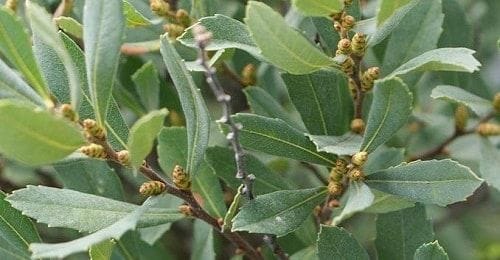
Bog Myrtle (Myrica gale)
It is the most prominent ingredient of medieval gruit. It is a small deciduous shrub with a resinous flavor and eucalyptus aroma.
The leaves have an astringent, balsamic, bitter flavor with a strong but not unpleasant and rather spicy aroma.
The most important application of this spice was during beer flavoring. It was used in the Middle Ages just as hops are used today — cooked with the wort and also added during the fermentation process.
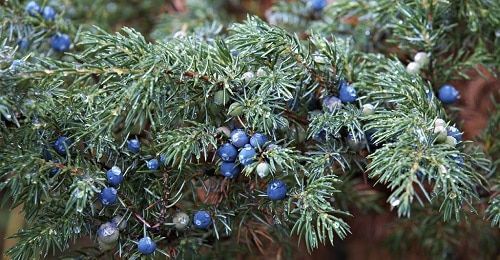
Common Juniper (Juniperus communis)
The berries are pleasant, with a bittersweet aroma reminiscent of gin — sweet with a hint of pine and turpentine. They produce a slight burning sensation in the mouth. Their use is traditional in beer from Scandinavian countries: Norway, Finland and Sweden.
Several methods are used in these countries for brewing Ale with juniper: in some, the macerate and wort are boiled together. In others, only the wort is boiled, and finally, neither the macerate nor the wort is boiled (this is known as raw ale).
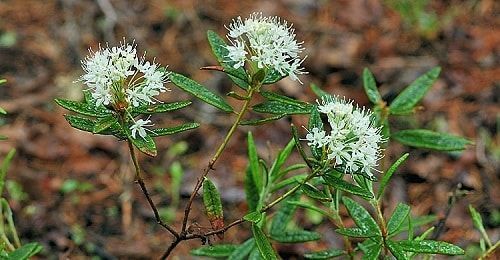
Labrador Tea (Rhododendron groenlandicum)
Also known as marsh tea or Hudson’s Bay tea. This plant was used in gruit for its pleasant freshness and spiced aroma. Flowers and leaves were used. It has a bitter flavor and should be handled with care as it can be toxic and cause headaches.
Heather (Calluna vulgaris)
It is also known under various regional names across Europe.
The plant presents numerous upright reddish-brown branches with many small leaves and very small purple-pink flowers forming a terminal cluster.
The flowers and stems were used from this plant; it is bitter with a strong aroma. For use in beer, it is boiled with the wort for an hour and a half. Tretalix heather was also used — with smaller leaves than the former but the same aroma and flavor.

Licorice (Glycyrrhiza glabra)
It is one of the oldest condiments. It has an anise-like, bittersweet flavor. It is widely used in confectionery, desserts, cakes and drinks, such as Irish beer (Irish Guinness) and an Italian liqueur called Sambuca.
It is also made into candies, tablets and wafer strips for its distinctive and pleasant flavor and its properties for eliminating bad breath.
It is used in beer to promote sweetness, creaminess and black color, ideal for porters and stouts. Licorice contains glycyrrhizin in its root, a fermentable sugar that is 30–50% sweeter than sucrose.
Generally, a piece of root is cut into pieces and used in the boil to add (non-fermentable) sweetness and a delicious flavor.


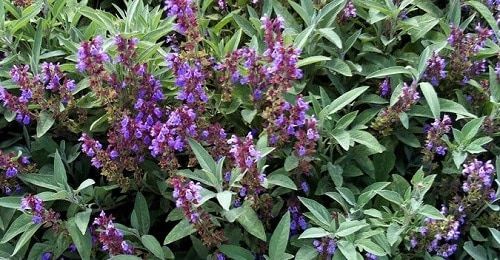
Sage (Salvia officinalis)
Pleasant in aroma and slightly bitter in flavor. It is known for its antibacterial and antiseptic properties; therefore, it greatly helps maintain beer stability. The whole plant is used, both fresh and dried.
Sage Ale was one of the main beers made in the Middle Ages and was considered highly medicinal and healthy. The volatile oils are not very soluble in water and need alcohol to be properly extracted.
Thus, by using it as a dry hop addition, the alcohol generated by fermentation can extract the finest qualities of this herb.
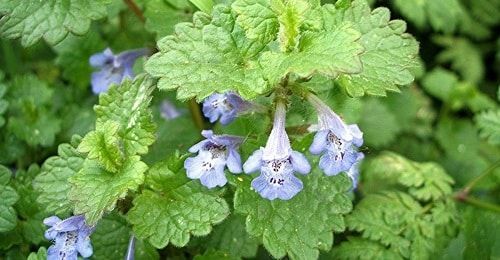
Ground Ivy (Glechoma hederacea)
The plant was known in the Middle Ages as Herba Hederae Terrestris, although it is little used today.
In natural medicine it is used to treat bronchitis, catarrh, asthma and intestinal ailments. It contains marrubiin, which has pectoral and expectorant effects, very useful against coughs.
Moderately toxic; it must be used with caution. It contains a bitter principle, marrubiin, which is a diterpene lactone similar to that of horehound, but present here in smaller amounts.
It also contains traces of essential oils, choline, tannins and phenolic acids (caffeic, chlorogenic, etc.).
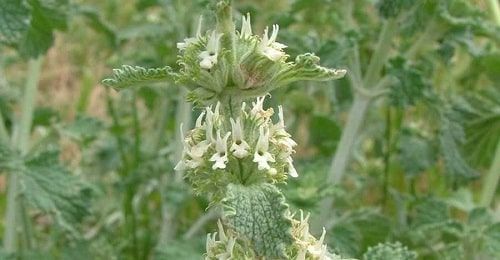
White Horehound (Marrubium vulgare)
White horehound is a herbaceous, perennial plant with a whitish appearance due to a fine velvety covering.
Horehound has always been considered a useful plant for the liver. It is a plant that gives off a characteristic smell, similar to the aroma of an apple.
The plant is native to southern Europe and commonly grows spontaneously in abandoned places, roadsides, at the foot of walls or among rubble.
It has traditionally been used to make the so-called “horehound beer” or “English horehound beer.”
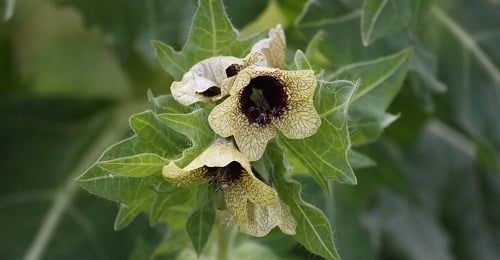
Black Henbane (Hyoscyamus niger)
Also known as stinking nightshade or black henbane, it is a plant of the genus Hyoscyamus in the family Solanaceae.
Like all species of the genus Hyoscyamus, it is a poisonous plant that, although it has certain beneficial pharmaceutical and medicinal uses for various ailments and in well-defined doses.
It must be handled with extreme caution, as the amount of dangerous active principles for a particular species or even an individual can vary significantly and unpredictably.
Ginger (Zingiber officinale)
It is a food that has been highly prized for thousands of years in the gastronomy of Eastern countries and is also used for its medicinal properties.
Sweet in flavor, intensely aromatic and slightly spicy, it is used in numerous preparations.
It contains a substance called gingerol, responsible for the spicy flavor of this condiment. It is an additive used in some beers with exotic touches.
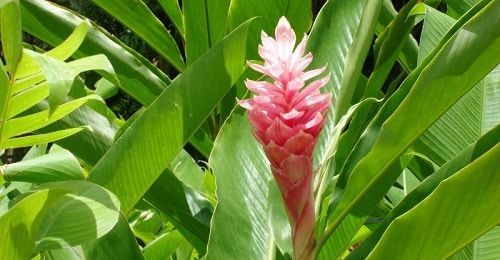
Anise (Pimpinella anisum)
Also known as aniseed or sweet cumin, it is an herb from the Apiaceae family native to southwestern Asia and the eastern Mediterranean basin.
Its seeds are used as a condiment in baking and confectionery, in the production of spirits (anise, anisette) as well as in some curries and seafood dishes.
All vegetative parts of the young plant are edible. The stems have a texture similar to celery and are much milder in flavor than the seeds.

Nutmeg (Myristica)
Nutmeg is the fruit of evergreen trees of the genus Myristica, originating from the Spice Islands (currently the Maluku Islands in Indonesia).
These trees are the source of two spices derived from the fruit: nutmeg and mace. Both nutmeg and mace have similar flavors, although nutmeg has a somewhat sweeter and finer taste.
The fruit was introduced to Europe by Arabs in the 11th century and played an important role in the gastronomy of some Eastern countries until the 18th century.
In traditional medicine, the nut and oil were used to treat diseases related to the nervous and digestive systems.
Myristicin is probably the chemical agent responsible for the psychotropic effects of nutmeg oil. Today it is often used in some beer preparations that include strong spirits.

Frequently Asked Questions (FAQ)
What was the main reason for the disappearance of Gruit and its replacement by hops?
The shift from gruit to hops was mainly due to economic and preservation reasons. The use of gruit was often subject to a feudal or local tax known as Grutrecht, whose monopoly belonged to the nobility or the church. As hops became popular (offering better preservative properties), brewers found a tax-free alternative that produced beer with a longer shelf life. The famous German Purity Law (Reinheitsgebot) of 1516, by restricting ingredients to only water, malted barley and hops (and later yeast), consolidated the final prohibition of gruit in Bavaria.
What side effects or sensations did Gruit beers produce due to their ingredients?
Since gruit contained herbs with mildly narcotic or psychoactive components (such as mugwort, black henbane or nutmeg), they were often associated with sensations that went beyond simple alcoholic intoxication. They were described as moderately narcotic or as producing feelings of euphoria, drowsiness or even hallucinations. This quality differentiated the experience of drinking Gruit Ale from that of modern hopped beers.
Is there current regulation that allows the production and sale of Gruit beers?
Gruit beers have experienced a resurgence today, especially within craft brewing. While the German Purity Law still governs traditional beer in Germany, outside this regulation, craft breweries produce “Gruit Ales” or “Botanical Beers” using traditional herbs or their own combinations. These beers seek to recreate the flavors and history of pre-hop beverages and their sale is legal as long as they comply with general food regulations.
How do the properties of Gruit compare to those of hops?
The main difference lies in the preservative function. Hops contain bitter acids (such as alpha and beta acids) that are potent antiseptics and preservatives, significantly extending beer’s shelf life. Gruit, while contributing bitterness and aroma, only offered limited preservation through tannins and some antibacterial properties of certain herbs (such as yarrow or sage). Additionally, hops provide a cleaner and more standardized bitterness, while gruit offered a more complex, herbal and sometimes earthy flavor profile.
In which regions of Europe was gruit and the Grutrecht system most popular?
Gruit was predominant in much of northern Europe and Germanic regions, before hops spread from the south. The Grutrecht system (the right to sell gruit and collect the tax) was deeply rooted in areas of the Holy Roman Empire, including territories of present-day Netherlands, Belgium and northwestern Germany (such as Flanders and Westphalia). These regions were bastions of gruit until the consolidation of hops, which first became popular in areas such as present-day Czech Republic and Bavaria.

Recommended
- Why should you rinse your beer glass just before serving?
- What is the origin of the terms Lambic and Gueuze?