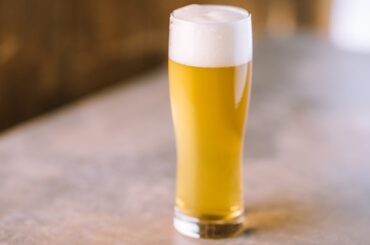
This post is also available in:
 Español
  Português
By Katie Brown
Those who frequently visit craft beer specialty bars have often observed how the bartender —or beertender in this case— rinses glasses with a stream of fresh water before draft beer service from the tap.


Now, what might seem like simply a good hygiene practice actually has a multitude of additional purposes and benefits for achieving proper beer service.
Rinsing Does Not Replace Washing
To discover why beertenders at the world’s best bars and breweries always spray fresh water on glassware just before service, Dan Lamonaca, owner and manager of Beer Karma in New York, notes:
While rinsing a glass before serving effectively contributes to a more hygienic drinking experience, it should never replace proper washing before service.
Lamonaca emphasizes:
Rinsing the glass is the last of multiple equally important stages for beer service, but it is completely irrelevant if the glass being rinsed has not been properly washed beforehand.
Reasons to Rinse Your Beer Glass
There are three main reasons to rinse and spray fresh water on a beer glass or cup before serving.
1. Cool the glass
The first is that it cools the glass slightly, since glasses that have just come out of the dishwasher and been stored may still be warm to the touch, which could raise the proper serving temperature of the beer once poured.
By rinsing with cold water beforehand, this potential problem is avoided in a very simple way.
2. Eliminate residual soap
The second reason is that it allows us to rinse any residual soap that may have remained adhered to the interior walls during washing.
Furthermore, when glasses sit on shelves for relatively extended periods —sometimes just a few hours— they can often accumulate dust, a problem that is quickly resolved with a blast of cold water under pressure.
3. Minimize surface tension
Finally, rinsing a glass would help improve the overall texture of the beer once served, as the water creates a slippery surface that minimizes surface tension and friction, helping to form a smooth and creamy head.
Signs to Watch for in Your Glassware
That said, there are some telltale signs that will let you know if your beer has been poured into an unrinsed glass.

Potentially, you could receive a larger head of foam than usual, which could even become a problem for the bar, as they would need to waste a bit more beer each time to achieve a proper pour.
Although this is nothing that good service technique cannot solve.
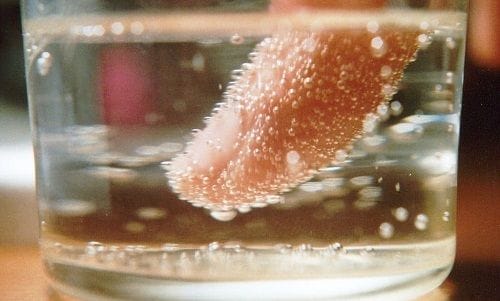
Another important point is that if there are still traces of dust or soap on the interior walls of the glass, the beer will develop nucleation points with bubbles adhering all over the internal surface. An unmistakable sign that the glass is still dirty.
While some consumers might think that rinsing the glass just before serving could dilute the beer, when the practice is performed correctly there is no negative impact on the service, as it involves a very, very insignificant amount of water.
Creating a Better Drinking Experience
Finally, properly washing and rinsing your beer glassware is not just a practice for draft beer drinkers.
The same applies whether you want to enjoy a can, a bottle, or a growler of beer. Even at home, more experienced consumers should always rinse their glassware with fresh water.
Because, while most beer bars have specialized star-shaped rinsers that allow glasses to be sprayed upside down at high pressure, a simple rinse in the sink will also suffice.
Literally, you just need to rinse the inside of your glass with cold water for about 3 to 4 seconds and drain without drying or using cleaning cloths.
Star-shaped sinks are actually more about process efficiency and water use than anything else.
Frequently Asked Questions (FAQ)
1. Why do bubbles stick to the walls of the glass if it is not rinsed properly?
This occurs due to unwanted nucleation points. When a glass has invisible residues of dirt, dust, or grease, the carbon dioxide in the beer is released and adheres to these imperfections. In a perfectly clean and rinsed glass, bubbles should only rise from the bottom or form the foam crown, never sticking to the sides.
2. Is it better to dry the glass with a cloth after rinsing it?
No, you should never dry with a cloth. Kitchen towels or dishcloths tend to leave imperceptible cotton fibers or microplastics that act as nucleation points, ruining foam retention. The correct method is to rinse with fresh water and let the excess drain by gravity just before service, keeping the glass moist.
3. Does the rinse water affect the flavor or alcohol content (ABV)?
It has no perceptible impact. The film of water that remains on the walls of the glass is only a few milliliters. In a standard pint (473 ml–568 ml), this amount is chemically insignificant to dilute the alcohol or alter the sensory profile of malt and hops. On the contrary, it improves the experience by eliminating external ambient odors.
4. Should you rinse the glass with warm or cold water?
Rinsing should always be done with cold water. Cold water helps stabilize the temperature of the beer (generally served between 4°C and 12°C depending on the style) and prevents thermal shock. Warm or hot water, in addition to warming the drink, would accelerate gas release, causing excessive foam formation and a flat beer in a short time.

Recommended
- Theories on the origin of the Lambic and Gueuze beer denominations
- The psychedelic beer that helped the ancient Wari empire rule the Andes