
This post is also available in:
 Español
  Português
  Français
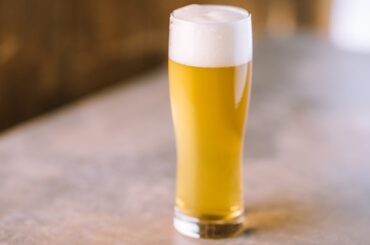
The Benedictio Cerevisiae, or Blessing of Beer, is included in chapter VIII of the Rituale Romanum, a Catholic liturgical manual dated 1614.
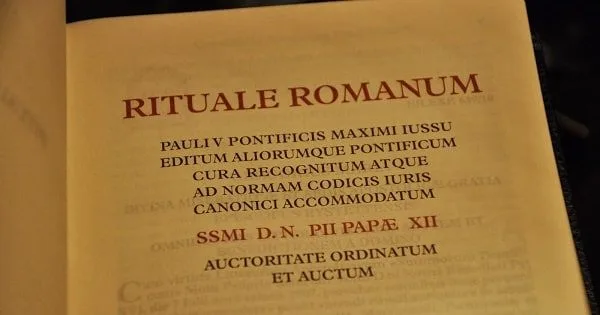
The chapter is titled “Blessings of Things Designated for Ordinary Use”, and in it you will find blessings for cheese or butter, for seeds, salt or oats for animals, fishing boats and, of course, for beer.

The ritual grew over time. Later editions added an appendix of blessings almost as long as the original book, among them the blessing of mountaineers’ ropes and tools, approved by Pius XI in 1931.
Benedictio Cerevisiae in Latin
The Rituale Romanum was promulgated under Pope Paul V. This is the text of the Benedictio Cerevisiae in its original Latin.
V. Adjutorium nostrum in nomine Domini.
R. Qui fecit caelum et terram.
V. Dominus vobiscum.
R. Et cum spiritu tuo.
Oremus.
Benedic, Domine, creaturam istam cerevisiae, quam ex adipe frumenti producere dignatus es: ut sit remedium salutare humano generi, et praesta per invocationem nominis tui sancti; ut, quicumque ex ea biberint, sanitatem corporis et animae tutelam percipiant.
Per Christum Dominum nostrum.
Amen.
Benedictio Cerevisiae in English
The English translation of the Benedictio Cerevisiae would be as follows.

V. Our help is in the name of the Lord.
R. Who made heaven and earth.
V. The Lord be with you.
R. And with your spirit.
Let us pray.
Bless, O Lord, this creature, beer, which you have deigned to produce from the finest of the grain, that it may be a healthful remedy for the human race, and grant, through the invocation of your holy name, that all who drink it may receive health of body and protection of soul.
Through Christ our Lord.
Amen
Frequently Asked Questions (FAQ)
1. Why Did the Catholic Church Include a Specific Blessing for Beer?
Beer was part of the daily diet in much of Europe, and many monasteries brewed it. The chapter of blessings in the Rituale Romanum brings together objects and foods in everyday use, and the prayer itself asks that beer be a healthful remedy for the body and a protection for the soul.
2. Who Is the Patron Saint of Beer and Brewers?
Although the Benedictio Cerevisiae is an official prayer, brewers usually invoke Saint Arnulf. According to tradition, Bishop Arnulf of Metz urged his flock to drink beer instead of water during an epidemic.
3. What Does the Phrase “ex adipe frumenti” Mean in the Blessing?
Literally it means “from the fat of the wheat”, but it is a biblical expression equivalent to “the finest of the wheat”. It comes from the Vulgate, for example Psalm 80 (81 in other numberings), “et cibavit eos ex adipe frumenti”, “he fed them with the finest of the wheat”.
4. Do You Need to Be a Priest to Give the Blessing of Beer?
The blessings of the Rituale Romanum are meant to be given by a priest. In a family setting, anyone can give thanks for the drink with a prayer inspired by the same spirit, without it being the liturgical blessing.
5. Are There Other Alcoholic Drinks with Their Own Blessings in the Rituale Romanum?
Yes. Besides beer, there is a specific formula for blessing wine on the feast of Saint John the Evangelist, December 27, as well as general blessings for any food or drink regarded as a “healthful remedy” for body and soul.

Recommended
- Who Was Saint Arnulf of Metz? The Patron Saint of Beer in Catholic Tradition
- God, Wine, and Beer, the Catholic Church’s Surprising Role in the Alcohol Industry