

This post is also available in:
 Español
  Português
  Français
A supertaster is a person who perceives the bitterness of PROP, a compound other people barely notice, far more intensely than average. Researcher Linda Bartoshuk’s lab identified this group in the 1990s, and science has since been refining what does and does not explain it.


The popular myth is simple and says that the more papillae you have on your tongue, the greater your ability to taste flavors and, as a result, the more bitter beer tastes. The most recent published studies show that reality is quite a bit more complex.
Where does the word supertaster come from?
The story begins with a compound called phenylthiocarbamide (PTC), which tasted very bitter to some people and like nothing at all to others. In 1932, Arthur Fox published a paper on it in the journal PNAS.
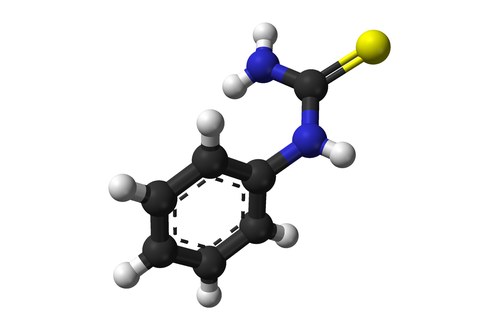
In the same issue, Albert Blakeslee published a study on how that difference is inherited. Decades later, Bartoshuk summed up the starting point this way.
Taste blindness to phenylthiocarbamide (PTC) and its chemical relative 6-n-propylthiouracil (PROP) was discovered in the 1930s.
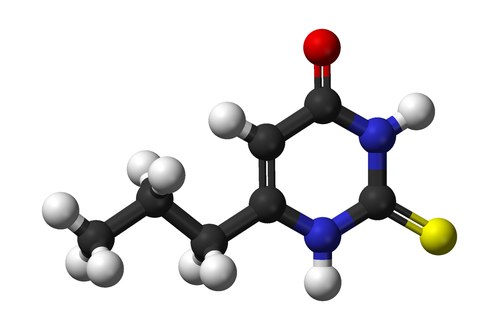
The next step came when Bartoshuk’s team began measuring not only whether people noticed PROP, but how intensely they noticed it. They reported it in 1994 in Physiology & Behavior.
In our laboratory, scaling of PROP bitterness led to the identification of a subset of tasters (supertasters) who rate PROP as intensely bitter.
How many people are supertasters?
Under the classification used by Bartoshuk’s group, about 25% of Americans are nontasters, 50% are medium tasters, and 25% are supertasters, according to a 1998 paper in Annals of the New York Academy of Sciences.
These proportions depend on the method and the population studied, so they are best read as a reference point. The same group observed in 1994 that women are supertasters more often than men.
Supertasters do not just sense PROP more strongly. According to the 1994 study, they also perceive other bitter and sweet tastes more intensely, and they feel more burn from irritants such as alcohol and the capsaicin in chili peppers.
Does the TAS2R38 gene explain it?
In 2003, Kim’s team reported in Science the identification of the TAS2R38 gene, a bitter taste receptor whose variants account for 55 to 85% of the differences in PTC sensitivity.
The gene does a very good job of explaining who can taste PTC and who cannot. It does a much poorer job of explaining who tastes it with extreme intensity, as Hayes, Bartoshuk, Kidd, and Duffy showed in 2008 in Chemical Senses.
PROP bitterness does associate with heightened taste sensations (i.e., supertasting), but this is not due to TAS2R38 polymorphisms.
That is why it makes no sense to talk about genetic supertasters based on a test for TAS2R38 and genetic sensitivity to bitterness.
More papillae, more flavor?
Fungiform papillae are the small pink dots on the front of the tongue, and they are home to taste buds. In a 1990 study of 16 people, Miller and Reedy found that the group with the most taste buds had 1.8 times as many papillae and rated PROP as significantly more intense.
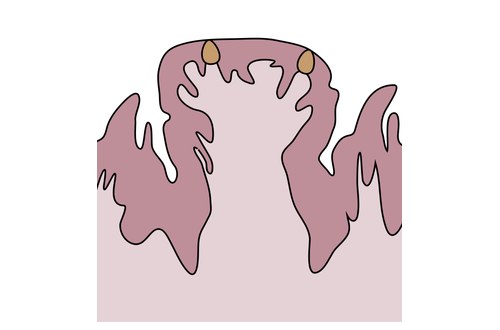
In 1994, Bartoshuk and her team found a correlation between papillae density and PROP bitterness, and they used it to support the supertaster concept. Later studies, which were much larger, did not confirm it.
In 2013, Fischer and colleagues measured the papillae of 2,371 people in Chemical Senses. Papillae density showed no relationship with PROP taster status, with TAS2R38 genotype, or with perceived intensity.
A year later, Garneau and her team analyzed 394 participants and published the results in Frontiers in Integrative Neuroscience.
PROP bitterness is not in any way predicted by papillae density. […] These data argue against the use of papillae density in predicting taste sensitivity and caution against imprecise use of the term supertaster.
| Study | Participants | Link between papillae and taste? |
|---|---|---|
| Miller and Reedy (1990) | 16 | Yes, for some tastes |
| Fischer and colleagues (2013) | 2,371 | No |
| Garneau and colleagues (2014) | 394 | No |
Supertasting is real as a phenomenon. What has fallen apart is the simple explanation, because more factors are at play than the number of papillae and a single gene.
How can you count your papillae at home?
The method labs use can be imitated at home. You dye the tip of your tongue with blue food coloring, the fungiform papillae stay pink against the blue background, and you count them inside a circle of known size.
The Denver Papillae Protocol developed by Nuessle and colleagues (2015) uses a 10 mm circle and only counts a structure as a papilla if it measures at least 0.5 mm. Fischer’s study used a 6 mm circle and found an average of 103.5 papillae per square centimeter.
To find out how many papillae fit inside that 6 mm circle on average, first calculate its area.
[math]A = \pi r^2[/math]
[math]A = 3.1416 \times 0.3^2 \approx 0.283 \ \text{cm}^2[/math]
Then multiply that area by the average density from the study.
[math]N = 103.5 \times 0.283 \approx 29[/math]
Around 29 papillae is typical for that circle, with a lot of variation from person to person. Counting them is an interesting experiment to try with friends, and according to the 2013 and 2014 studies, it will not tell you whether someone is a supertaster.
What does this have to do with beer?
In 1998, Intranuovo and Powers asked 100 people to rate the bitterness of a Budweiser and a Pilsner Urquell, in a paper published in Annals of the New York Academy of Sciences. Supertasters found the Pilsner Urquell significantly more bitter than medium tasters did.
In that study, the more bitter a beer tasted, the less people liked it. Supertasters reported having drunk less beer than nontasters when they first started drinking it regularly, and no differences were found in their current consumption.
A 2004 study by Duffy and colleagues in Alcoholism, Clinical and Experimental Research looked at 84 adults. Those who found PROP more bitter perceived ethanol as more intense and drank less alcohol, and once age was controlled for, PROP bitterness explained alcohol intake better than TAS2R38 genotype did.
There is an important nuance for IPA drinkers. Intelmann and colleagues tested all 25 human bitter taste receptors in 2009 against 15 hop compounds, and every one of those compounds activated combinations of three receptors, TAS2R1, TAS2R14, and TAS2R40, none of which is TAS2R38.
PROP sensitivity therefore works as a marker of general sensitivity, and not as a direct measure of the bitterness you notice in a beer. Hayes and Keast added in 2011 that supertasting goes beyond bitterness and also covers mouthfeel sensations and retronasal smell.
Frequently Asked Questions (FAQ)
1. What is a supertaster?
A supertaster is a person who perceives the bitterness of PROP, a laboratory compound, far more intensely than average. The term originated in Linda Bartoshuk’s lab in the 1990s. Supertasters also tend to experience other bitter and sweet tastes more intensely, and to feel more burn from alcohol and spicy food.
2. How do I know if I am a supertaster?
The usual approach in research is a PROP taste test at a laboratory or university, which measures how intensely you perceive it. Counting the papillae on your tongue or taking a TAS2R38 genetic test is not enough, because studies did not find that papillae predict it and the gene does not explain supertasting.
3. Do supertasters find beer more bitter?
In a 1998 study of 100 people, supertasters rated a Pilsner Urquell as more bitter than medium tasters did. The bitterness of hop compounds activates other receptors, not TAS2R38, so PROP sensitivity is only a general indicator.
4. Are there more supertasters among women?
Yes, according to the 1994 study by Bartoshuk, Duffy, and Miller, which found that women are supertasters more often and have more fungiform papillae. The link between papillae and sensitivity was not confirmed later in larger studies.
5. Do supertasters drink less beer?
Studies point in that direction, with some nuances. In the 1998 study, supertasters drank less beer than nontasters when they started drinking it, with no differences in current consumption. In a 2004 study, those who found PROP more bitter drank less alcohol.

Recommended
- Can’t Stand IPAs? The Answer May Lie in Your Genetic Sensitivity
- What Is the Difference Between Taste and Flavor in Beer?