This post is also available in:
 Español
 Português
 Français
Every time you open a can of beer, the snap of the tab sums up almost a century of inventions that began with steel cans you had to pierce with an opener. The history of the beer can starts in 1935 with the first sale to the public in the United States and runs through the cone top, the war, aluminum, the pull tab and the widget before it became the package most used by craft beer.
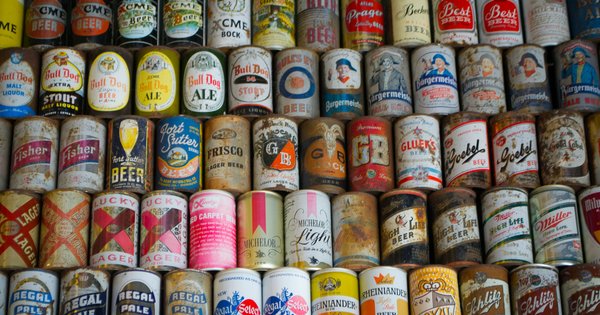
Each of those steps solved a specific problem, from the pressure that burst the first containers to the metallic taste that scared off brewers in the 1930s. Today the can accounts for 63.4% of all the beer sold in the United States, according to the Beer Institute, more than twice the share of the bottle.

From Durand’s Tin to Canned Beer
The can is much older than canned beer. In 1810, the Englishman Peter Durand patented the preservation of food in tinplate containers, a patent he sold two years later to Bryan Donkin and John Hall, who set up a factory that was already shipping canned food to the British army in 1813.
For more than a century the can held meat, vegetables and fish while beer stayed in kegs and bottles. The reason was both chemical and physical, because beer contains gas, presses against the walls of the container and reacts with bare metal until it takes on its flavor.
The American Can Company was trying to can beer at least as early as 1909 with cans that could not withstand the pressure of a drink that back then kept fermenting inside the container. Prohibition in the United States stopped the trials in 1920 and froze them for thirteen years.
When Was the Beer Can Invented?
After Prohibition ended in December 1933, American Can finished an inner lining that kept beer away from the metal and registered it in September 1934 under the Keglined trademark. The industry finally had a container that neither burst nor gave beer a metallic taste.
What was missing was a brewery willing to try it. The Gottfried Krueger Brewing Company, from Newark, handed out 2,000 test cans in Richmond, Virginia, where it won 91% approval among those who tried them.
With that approval came the first beer can, Krueger’s Finest Beer, which went on sale on January 24, 1935, in Richmond. By the end of that same year, 37 American breweries were already selling canned beer.
The Church Key Opener and the Cone Top Can
The first cans were made of steel and flat on top, so they were opened by piercing the lid with a pointed opener. Its patent, number 1,996,550 in the names of Dewitt F. Sampson and John M. Hothersall, was granted on April 2, 1935, under license to American Can, which even printed the instructions for using it on its cans.
In English it is called a church key, a nickname whose origin nobody has managed to document. The most repeated explanation says the first bottle openers looked like the large, ornate keys of churches, so the name passed on to the can opener.
Many breweries also did not want to buy new filling lines for a container that was still being tested. For them, Continental Can designed the cone top, with a bottle neck and sealed with the same crown cap used on bottles, which Schlitz adopted in September 1935 because it could be filled on the usual bottling machines.
In Europe, the pioneer was the Welsh brewery Felinfoel, in Llanelli, which produced its first canned beer in December 1935. Sales to the public began in March 1936, after several trial batches.
The Beer Can Goes to War
World War II gave the can its first large-scale endurance test. The United States government ordered 15% of beer production to be set aside for the troops, with a limit of 3.2% alcohol for the beer sold to soldiers.
The can traveled better than the bottle, weighed less and did not break in the holds of ships. From 1944, many of those cans were painted olive drab, according to some sources so they would not shine in the sun and give away positions, and according to others simply to make them look uniform.
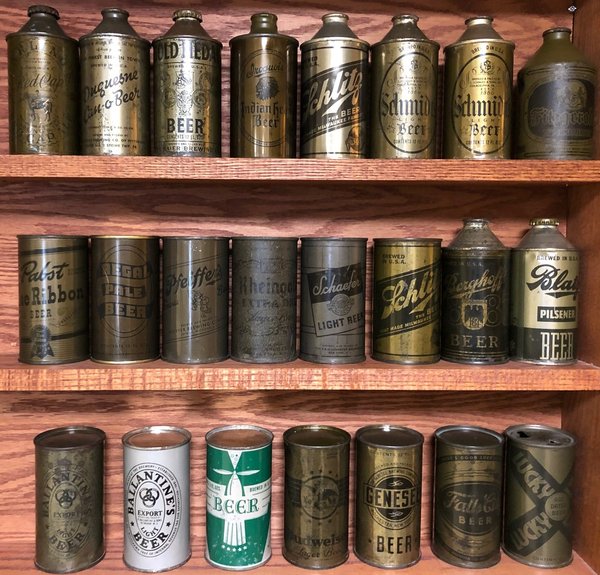
Every can sent to the front carried a legend declaring it free of internal revenue tax for export. Today they are prized by collectors, because they show both shapes of the time, the cone top and the flat top.
From Steel to Aluminum
Steel ruled canned beer for more than two decades, until in 1958 the Hawaii Brewing Company packaged its Primo beer in the first all-aluminum can. It was an 11-ounce format that gave the Hawaiian brewery more than one headache.
The company that brought aluminum to a large scale was Coors, which introduced its seamless aluminum can in January 1959. Bill Coors went as far as paying a penny for every can returned, a program the company describes as the first aluminum can recycling program in the United States.
The metal was lighter and did not rust, two advantages that over the years made the aluminum can the standard of the brewing industry. According to the International Aluminium Institute, the first beverage cans weighed more than 80 grams, while a 330 ml can weighs about 13 grams today.
Who Invented the Pull Tab?
The pull tab was born at a picnic without a can opener. Ermal Fraze, an inventor from Dayton, Ohio, found himself in 1959 with a can of beer he could not open and decided there had to be a way to do it without tools.
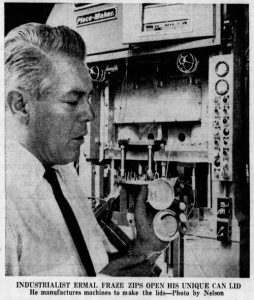
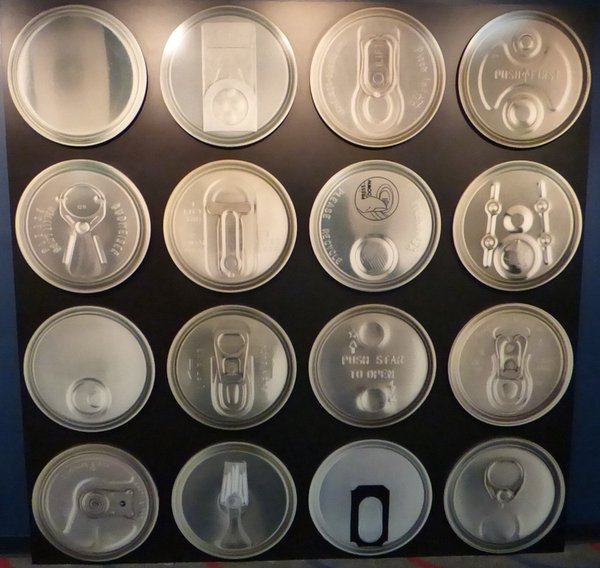
Fraze sold his system to Alcoa and patented it in 1963. Alcoa’s first customer was Iron City, from the Pittsburgh Brewing Company, which had already put the first beer cans with a pull tab on sale in 1962.
That tab came off completely and ended up thrown on beaches and in parks, when not inside the can itself, with the risk of swallowing it or getting cut. The solution arrived in 1975 with the tab that stays attached to the can, invented by Daniel Cudzik at Reynolds Metals and introduced by the Falls City brewery at the end of that year.

The Guinness Widget and Draught Beer in a Can
Beers served with nitrogen had their own problem, because in a can they lost the creamy head they get from the tap. Guinness solved it with the widget, a small plastic capsule charged with gas that releases it when the can is opened, launched commercially in 1988.
The invention won the Queen’s Award for Technological Achievement in 1991, the first one given to a brewing company. If you have ever heard a ball rattling inside a can of Guinness, that noise is the widget.
What the Can Holds Inside
No beer can touches bare aluminum, because since the Keglined lining of 1934 every can carries an inner coat of lacquer that separates the metal from the drink. That is why the metallic taste some people blame on the can usually comes from drinking straight from the rim, where the lips do touch the aluminum.
For decades, many of those lacquers were made with bisphenol A resins, a substance the European Union banned in food contact materials with Regulation (EU) 2024/3190. The rule entered into force on January 20, 2025, and covers varnishes and coatings, with a general transition period that ended on July 20, 2026.
The inside of the can also comes up in the debate about microplastics in beer, which compares how much each container contributes. That invisible lining is what makes a pale lager taste the same from the can as from the tap.
The Return of the Can with Craft Beer
For decades, the can carried a reputation as the container for cheap beer, while craft breweries defended the bottle as a sign of quality. Oskar Blues broke that prejudice in November 2002, when it started canning its Dale’s Pale Ale in Lyons, Colorado, as the first craft brewery in the United States to do so.
The same brewery shook things up again in 2013, when it presented the beer crowler together with Ball Corporation’s innovation center in Westminster, Colorado. It is a 32-ounce can that is filled and sealed on the spot at the bar, like a growler that does not break or let light through.
Today the rise of the can in craft beer comes with striking figures. According to the Brewers Association, in 2025 the can made up 78% of packaged craft beer volume in the United States, against 22% for bottles, a share that is now growing more slowly than in previous years.
The can also opened a new canvas for design, because its whole surface can be printed in a market where the package drives the purchase for many drinkers. Some breweries even use it to age beer in cans, something unthinkable twenty years ago.
Is the Can a Better Container Than the Bottle?
The can has two hard-to-dispute advantages for beer, because it blocks light completely and so avoids the lightstruck flaw that affects green and clear bottles. It also seals better against oxygen, the enemy of hop aromas in any IPA.
Its strong point is environmental too, because aluminum can be recycled over and over without losing quality. In Europe, 76.3% of beverage cans were recycled in 2023, according to European Aluminium and Metal Packaging Europe, while in the United States the rate fell to 43% that same year, according to the Aluminum Association.
Does that mean the bottle has lost the battle? We think not entirely, because returnable glass still makes sense wherever a good return system works. The full comparison is in our guide on bottle or can for craft beer.
Across the American market as a whole, the can never stopped leading, with 53% of volume in 1981 and 63.4% in 2025, according to the Beer Institute. What changed was its prestige, which went from the cheap container of the beach cooler to the one many of the world’s most respected breweries choose today.
It is hard to find another brewing invention that has changed so much in ninety years, from steel you had to puncture with a church key to a 13-gram sheet you open with one finger. The next time you hear the snap of a pull tab, remember that behind it there is a tin of food from 1810, a world war and a picnic without a can opener.
Beer Can Timeline
The table lists the milestones of the beer can with the dates the sources consulted agree on.
| Year | Milestone | Key player |
| 1810 | Patent for food preserved in tinplate | Peter Durand |
| 1909 | First beer canning experiments | American Can Company |
| 1934 | Registration of the Keglined inner lining | American Can Company |
| 1935 | First beer can sold to the public | Krueger, Richmond |
| 1935 | Patent for the church key opener | Dewitt F. Sampson and John M. Hothersall |
| 1935 | First major brewery with the cone top can | Schlitz |
| 1935 | First canned beer in Europe | Felinfoel, Wales |
| 1944 | Olive drab cans for the troops | United States breweries |
| 1958 | First aluminum beer can | Hawaii Brewing Company (Primo) |
| 1959 | Seamless aluminum can and payment for returned cans | Coors |
| 1962 | First beer cans with a pull tab | Iron City, Pittsburgh Brewing Company |
| 1975 | Tab that stays attached to the can | Reynolds Metals and Falls City |
| 1988 | Widget in Guinness cans | Guinness |
| 2002 | First craft brewery in the United States to can | Oskar Blues (Dale’s Pale Ale) |
| 2013 | The crowler is born | Oskar Blues and Ball Corporation |
| 2025 | The EU bans bisphenol A in food contact varnishes | Regulation (EU) 2024/3190 |
Frequently Asked Questions (FAQ)
1. When was the beer can invented?
The beer can became possible in 1934, when American Can registered the Keglined inner lining that kept beer away from the metal. The first can sold to the public was Krueger’s Finest Beer, which went on sale on January 24, 1935, in Richmond, Virginia, after experiments American Can had been running since 1909.
2. Who invented the pull tab on cans?
The pull tab was invented by Ermal Fraze, an inventor from Dayton, Ohio, who found himself without a can opener at a picnic in 1959. He sold his system to Alcoa, patented it in 1963, and Iron City beer introduced it in 1962. The tab that stays attached to the can arrived in 1975, from Reynolds Metals.
3. Since when have beer cans been made of aluminum?
The first all-aluminum beer can was used by the Hawaii Brewing Company in 1958 for its Primo beer. Coors was the one that brought aluminum to a large scale from 1959, because it was lighter than steel and did not rust.
4. Why is the beer can opener called a church key?
Church key is the nickname of the pointed opener used with flat top cans, patented in 1935 by Dewitt F. Sampson and John M. Hothersall. The origin of the name is not documented, although the most repeated explanation is that the first bottle openers looked like the large keys of churches.
5. What is the ball in Guinness cans for?
The ball in Guinness cans is the widget, a plastic capsule with gas that is released when the can is opened and forms the creamy head of draught beer. Guinness launched it in 1988 and in 1991 received the Queen’s Award for Technological Achievement for it.
6. Does the can give beer a metallic taste?
Beer does not touch the aluminum, because every can carries an inner lacquer that separates the metal from the drink, ever since the Keglined lining of 1934. The metallic taste some people notice usually comes from drinking straight from the rim, where the lips do touch the aluminum, so pouring it into a glass avoids it.
7. How much beer is sold in cans?
In the United States the can accounted for 63.4% of packaged beer in 2025, against 27.1% for bottles and 9.6% for kegs, according to the Beer Institute. In craft beer the share is even higher, because the can reached 78% of packaged volume that same year according to the Brewers Association.
References
- AlCircle. (n.d.). US craft beer aluminium cans share hits 78%, leading growth to level off, Brewers Association says. https://www.alcircle.com/news/us-craft-beer-aluminium-cans-share-hits-78-leading-growth-to-level-off-brewers-association-says-117621
- Beer Institute. (2026, June 3). Beer Institute releases new data highlighting changes in beer packaging [Press release]. GlobeNewswire. https://www.globenewswire.com/news-release/2026/06/03/3306317/0/en/Beer-Institute-Releases-New-Data-Highlighting-Changes-in-Beer-Packaging.html
- Brooks, J. (2015, April 2). Patent No. 1996550A, container opener or church key. Brookston Beer Bulletin. https://brookstonbeerbulletin.com/patent-no-1996550a-container-opener-or-church-key/
- European Commission. (2024). Commission Regulation (EU) 2024/3190. Official Journal of the European Union. https://eur-lex.europa.eu/eli/reg/2024/3190/oj
- Cone top. (n.d.). In Wikipedia. Retrieved October 31, 2026, from https://en.wikipedia.org/wiki/Cone_top
- Crawford-Brown, C. (2025, January 14). Reports show lower aluminum recycling rates, slowed growth in plastic recycling. Food Packaging Forum. https://foodpackagingforum.org/news/reports-show-lower-aluminum-recycling-rates-slowed-growth-in-plastic-recycling
- Dornbusch, H. (2012). Canning. In G. Oliver (Ed.), The Oxford companion to beer. Oxford University Press. https://beerandbrewing.com/dictionary/laSThpPptC
- European Aluminium & Metal Packaging Europe. (2026, February 17). Aluminium beverage can recycling reaches a new record [Press release]. https://european-aluminium.eu/wp-content/uploads/2026/02/EA-MPE-BevCan-2023-Recycling-Results-Press-Release-17-February.pdf
- Felinfoel Brewery. (n.d.). The evolution of Felinfoel. https://www.felinfoel.com/little-bit-history/
- HISTORY.com Editors. (n.d.). First canned beer goes on sale. HISTORY. https://www.history.com/this-day-in-history/January-24/first-canned-beer-goes-on-sale
- International Aluminium Institute. (n.d.). Lightweight. The Aluminium Story. https://alustory.international-aluminium.org/packaging/lightweight/
- MacRae, M. (2018, August 3). The comeback of the aluminum can, part 1. ASME. https://www.asme.org/topics-resources/content/comeback-aluminum-can-part-1
- Molson Coors. (2009). Molson Coors celebrates the 50th anniversary of the aluminum can introduced by Bill Coors in 1959 [Press release]. CSRwire. https://csrwire.com/press-release/molson-coors-celebrates-the-50th-anniversary-of-the-aluminum-can-introduced-by-bill-coors-in-1959/
- Peter Durand. (n.d.). In Wikipedia. Retrieved October 31, 2026, from https://en.wikipedia.org/wiki/Peter_Durand
- Phillips, R. (2013, August 1). Innovations in canned beer. All About Beer Magazine, 34(4). https://allaboutbeer.com/article/innovations-in-canned-beer/
- Rusty Cans. (2011, January). Schaefer olive drab, 1944-1945. https://rustycans.com/COM/month0111.htm
- Rusty Cans. (n.d.). The first pull tabs: 1962-1964. https://rustycans.com/HISTORY/zips.html
- Widget (beer). (n.d.). In Wikipedia. Retrieved October 31, 2026, from https://en.wikipedia.org/wiki/Widget_(beer)
- Wolinski, C. (2018, May 16). What is a crowler, exactly, and should you care? VinePair. https://vinepair.com/articles/what-is-a-crowler-beer-history/

Recommended
- The First Beer Can, Krueger and January 24, 1935, in Richmond
- 10 Reasons Why the Aluminum Can Is the Package of the Future