This post is also available in:
 Español
  Português
Bottle openers have become part of our personal toolkit, whether attached to our key ring, in our backpack, or as a basic kitchen utensil when going camping.
Typically, the choice of bottle opener also says something about us, whether it’s a pocket opener from your favorite brewery or an antique piece of wood and nails — there’s always a connection.
And just like with beer, there has never been a better time to start paying closer attention.
Generally, we don’t need to look far to come across the book by John Stanley and Donald Bull titled “Just For Openers: A Guide to Beer, Soda, & Other Openers” from 1999.
However, beyond the surface, the hundreds of bottle openers featured in this magnificent collection also serve today as a historical chronicle, a record of accessories with over 100 years of history — the crown cap and the bottle opener.
The Birth of a New Industry
In the last decade of the 19th century, carbonated beverages and beers were breaking into the retail markets of many cities in North America, usually in glass bottles sealed with an inserted cork or a “lightning” closure, very similar to the modern swing-top cap.
The available options tended to be costly, as both bottles and cork stoppers generally had to be reused many times.
The beverages inside often leaked and sanitation and hygiene issues were becoming an ever greater concern.
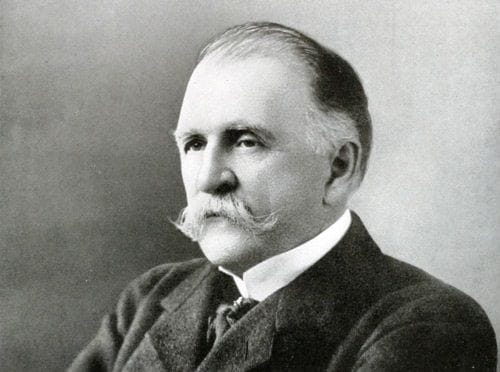
That was the mechanical challenge to which William Painter would devote much of his life.
Painter was born on November 20, 1838, in Triadelphia, MD, a town frequently devastated by flooding.
Despite a modest upbringing — his father worked as a farmer for much of his youth — Painter managed to find work quickly after completing his studies, first as an apprentice at a lacquer manufacturer and then at a leather shop in Wilmington, DE.
It was around this time that his intellectual life began to take shape, as he started participating in chess and debate clubs, and worked as editor of “The Every Monday Night: a Repository of Science, Literature, Sentiment and Fun.”
The many interests developed during this period of his life would eventually lead him to move in 1865, along with his wife Harriet and son Orrin, to Baltimore, where his creative abilities and increasingly sophisticated inventions would bring him and his loved ones great fortune.
William Painter and His Development as an Inventor
Decades later, in his book “Reminiscences of William Painter,” his son would recall that period of their lives with the excitement of a child let loose in a toy shop.
Painter had taken a job as foreman in the Murrill & Kiezer machine shop, providing a stable income for his family and forging close ties with the community.
His son would often delight in the novelties his father had invented — a potato gun, a windmill, or a ring that through a secret hand cylinder could shoot water.
“In fact,” his son reflects, “we never suffered from lack of fun.” That early joy would manifest itself in more than 80 patents on various subjects throughout Painter’s adult life.
His early patents included a cash register, a counterfeit coin detector and a safety seat for railroad cars.
However, the main focus of Painter’s patents would develop in inventions associated with regulators, hose couplers and lavatory devices.
His gasket and packing patents — all related generally to plumbing and pipework — ultimately found a natural application in bottling, specifically when it came to improving the traditional stopper design.

The Birth of the Crown Cap
It was in April 1885 that Painter received a patent for his “bottle stopper closure,” an elegant wire-based closure similar to the common lightning-type stopper.
Later that same year he received two more patents associated with stoppers, including one for a flexible convex stopper he called the “Baltimore Loop Seal.”
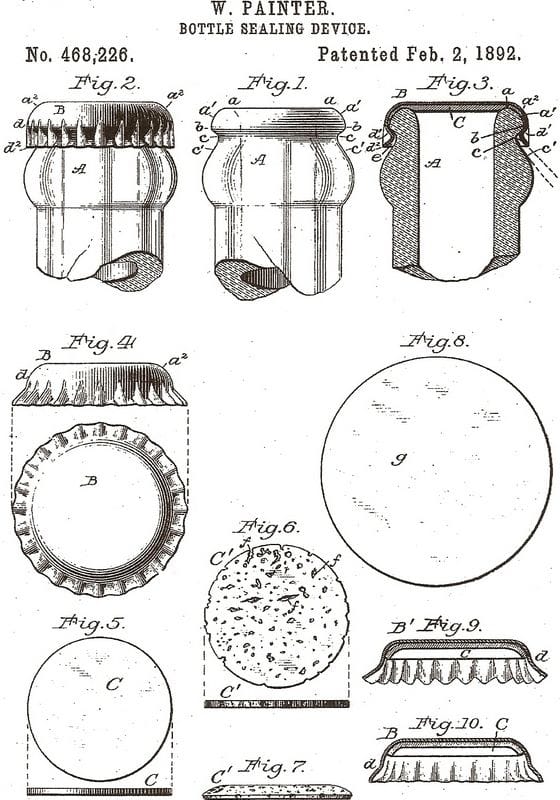
Shortly thereafter, William Painter would begin to change history: on November 5, 1889, he filed the first of a series of three patent applications for a “bottle sealing device.”
A second was filed in June 1890 and the third — the most important — was filed just one year later.
All three shared a similar core design: a sealing medium in the form of a thin disc or stopper, held firmly to the top of a bottle by a crimped metal disc.
The sealer was inexpensive, reliable, disposable (quite remarkable at the time) and firmly attached.
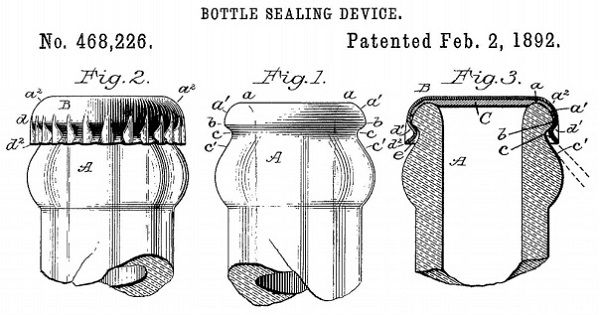
All three versions were accepted on February 2, 1892, as a device originally called the “crown cork.”
It is the third patent filed by Painter (No. 468,226) that we most easily recognize today, with its thin inner cork lining that was eventually replaced by plastic, and its 24 crown-shaped teeth that were later reduced to a standard of 21.
Creation of the Bottle Opener
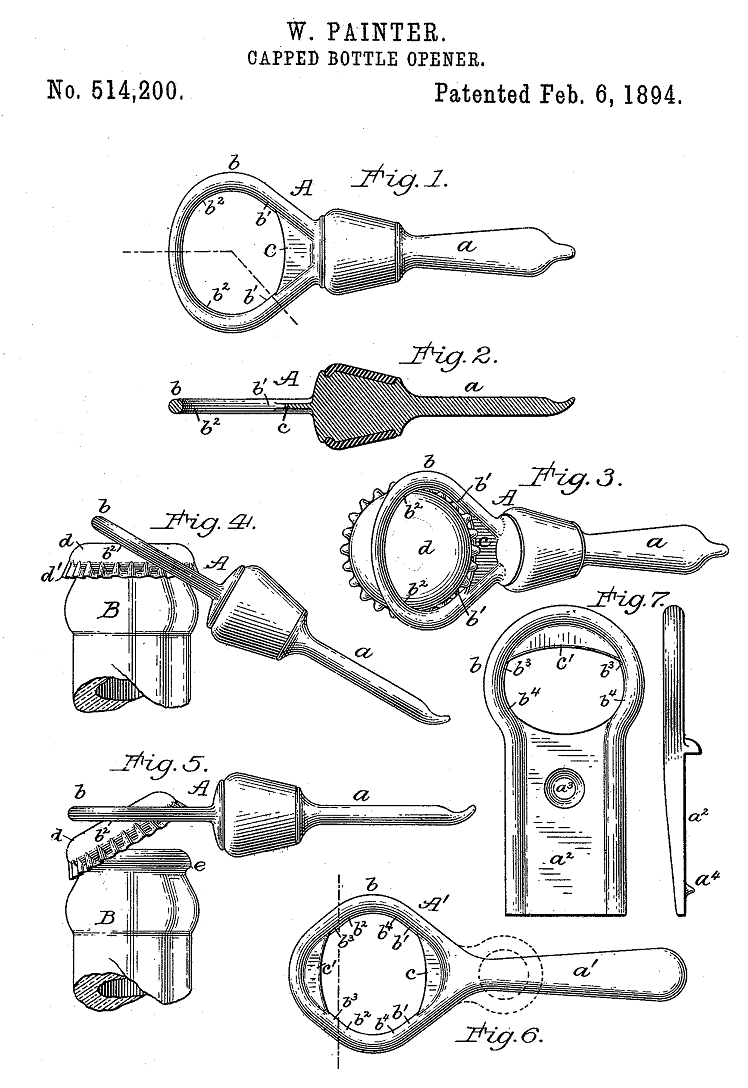
After that, it was Painter’s second patent that offered an associated solution for removing the crown cap (No. 524,200).
The drawings show a dotted, lever-like device hooked over a fixed cap.
Painter claimed:
The bottle openers devised can be adjusted and adapted to remove the sealing stoppers by engaging their protruding edges.
The modern bottle opener had been born.
Its degree of acceptance was so great that it was used not only for soft drinks, but also for bottles of milk, beer and even water.
From these inventions, the glass industry also benefited from strong development, which over time led to the manufacture of standardized bottles.
Around that time, the crown cap also began to be used to differentiate products by printing the company logo on its surface, giving birth to a new form of product advertising.
The Birth of Crown Cork and Seal
Painter’s first factory, “Crown Cork and Seal,” was located on the corner of Guilford and Oliver streets and was the place where custom equipment was manufactured for beverage companies, quickly becoming a company with an international presence.
When Painter died in 1906, his company already had factories in the United States, Europe, Asia and South America.
A few years later, in the early 1930s, Crown Cork and Seal was already responsible for providing sealing services for more than half of all bottles worldwide.
Frequently Asked Questions (FAQ)
What is the standard number of teeth a modern crown cap should have?
William Painter’s original design had 24 teeth, but this number was later reduced to the modern standard of 21 crimps (or corrugations), which ensures an optimal seal and easier opening.
What types of bottle closures were popular before the invention of the crown cap?
Before the crown cap, carbonated beverage bottles were commonly sealed with inserted cork stoppers or “lightning” closures (a swing-top mechanism similar to modern ones), and these tended to be costly as they were reused.
What other important invention did William Painter patent?
William Painter was a prolific inventor with more than 80 patents. Among his notable inventions not directly related to bottling are a cash register, a counterfeit coin detector, a safety seat for railroad cars and various devices related to plumbing.
Recommended
- ABV vs. ABW in beer: What is the difference when measuring alcohol content?
- What is a cold chain and how important is it for maintaining beer quality?