This post is also available in:
 Español
 Português
 Français
At the end of every brew day, at a small brewery in just about any American town, someone empties the mash tun and shovels the warm, damp barley into a pickup truck. A few hours later it ends up in the feed trough of a neighboring farm, very often without anyone charging a dollar for it.
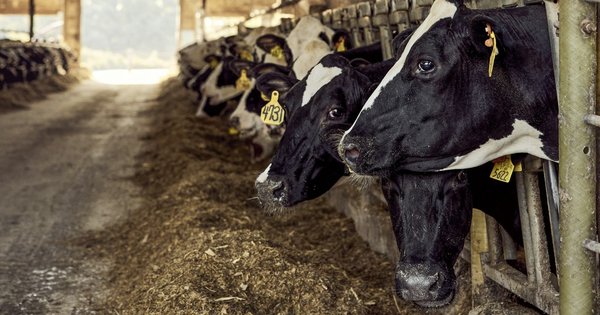
That daily trip is exactly what the Brews to Barns Act, introduced in the House of Representatives on October 22, 2026, wants to reward with a credit against the federal beer excise tax.

The bill is sponsored by Republican Mike Kelly of Pennsylvania and Democrat Brad Schneider of Illinois, both members of the House Ways and Means Committee, which is where the House writes its tax laws.
It offers 8 cents for every pound of spent grain donated for agricultural use, measured by dry weight, with a cap of $35,000 a year per brewery.
Glenn Thompson, chairman of the House Agriculture Committee, has also signed on as a cosponsor alongside Marilyn Strickland, co-chair of the House Small Brewers Caucus, on a list rounded out by Jeff Hurd, John Larson and Josh Riley.
That makes three Republicans and four Democrats, an unusual mix in a Congress where almost nothing related to taxes moves forward with support from both parties.
What Is Spent Grain and Why Does It End Up on Farms?
Spent grain is what’s left of the malt after mashing, once the hot water has pulled out the sugars that the yeast will turn into alcohol and all that remains at the bottom of the mash tun is a wet mass of husks, protein and fiber.
Every 31-gallon barrel, roughly 117 liters of beer, leaves behind more than 65 pounds of spent grain, about 30 kilograms.
Scaled up nationwide, American breweries produce around 4.7 million metric tons of spent grain a year, a byproduct that, together with the water that goes into every liter of beer, shapes a brewery’s environmental footprint. About 90% of it is already reused, mostly as livestock feed or compost.
Beyond the farm, spent grain has other lives, from the new generation of probiotics to trials aimed at fighting bacterial infections in salmon. These are promising uses, but they still don’t account for even a fraction of the volume that goes to the cows.
Why Does Giving Away Spent Grain Cost a Brewery Money?
Large breweries have a commercial market where they can sell their spent grain by the truckload, while small ones hand it over for free, or nearly free, to local farmers and cover the handling and hauling themselves.
The farmer gets cheap feed for the herd, and the landfill is spared a waste stream that, for every ton buried, amounts to about 513 kilograms of CO₂ equivalent.
If you’ve ever walked past a neighborhood brewery at the end of a brew day, you may have seen the drums of spent grain waiting by the door for the farmer to show up. Behind that scene are hours of labor and fuel that the brewery pays for out of its own pocket, with none of it showing up in its favor on the books.
Jason Lavery, co-founder of Lavery Brewing Company in Erie, Pennsylvania, put it plainly in the statement released when the bill was introduced.
Donating that grain to farmers is something we’re proud to do, but it also takes time and resources. The Brews to Barns Act would provide meaningful tax relief that we could reinvest directly into our brewery.
How Much Could a Brewery Save?
Small breweries in the United States pay a reduced federal rate of $3.50 per barrel on their first 60,000 barrels, so a brewery producing 2,500 barrels a year owes the government about $8,750 in beer excise tax.
According to Brewers Association estimates, if that brewery donates all of its spent grain for agricultural use, it could earn enough credits to bring that bill down to zero.

At 5,000 barrels, the potential savings climb to $17,500 a year, while larger breweries run into the $35,000 ceiling. Because the credit can never exceed what a brewery owes in excise tax, nobody would get a check from the Treasury for giving away their grain.
Reaching that ceiling would take donating roughly 200 tons of spent grain a year, measured by dry weight.
[math]\text{pounds to reach the cap} = \dfrac{35{,}000}{0.08}[/math]
[math]= 437{,}500 \text{ pounds} \approx 198 \text{ tons}[/math]
Adding up every small and independent brewery in the country, the Brewers Association estimates the bill could return up to $38 million a year to them.
What Happened With the Pennsylvania Version?
The idea was first tested in Pennsylvania, where state Representative Ryan Bizzarro championed a bill with the same name, HB 2234, which the state House passed on June 23, 2026, by a vote of 196 to 6 and which is now waiting its turn in the state Senate.
The state version is twice as generous as the federal one, at 16 cents per dry pound, although it caps the total of all credits at $5 million a year.
It hardly seems a coincidence that two of the federal bill’s backers, Kelly and Thompson, come from that same state. Pennsylvania pairs a long brewing tradition with a dairy industry that knows full well the value of cheap feed for its cows.
Does It Come in Time for American Craft Beer?
The proposal arrives as American craft beer has spent several years losing volume and closures keep piling up, including high-profile cases such as Rogue Ales, which announced the end of its operations after 37 years. Bart Watson, president and CEO of the Brewers Association, made the case for the bill in those terms.
The Brews to Barns Act offers practical tax relief that would allow brewers to put more money back into their businesses.
Thirty-eight million dollars a year spread across thousands of breweries won’t save anyone from going under, but it rewards something the industry was doing for free long before anyone coined the term circular economy. Is there a cheaper way to help an industry than paying it for what it already does well?
When Could It Take Effect?
For now, the Brews to Barns Act is only a bill. It still has to clear committee, pass a vote in the House of Representatives and then in the Senate before it can reach the president’s desk.
In the meantime, the Brewers Association, which made it a priority for 2026 and put it at the center of a visit by some 100 brewers to Capitol Hill in February, will keep working to add more cosponsors from both parties.
Until that happens, spent grain will keep leaving through the back door of breweries every afternoon, headed for the barns, still warm and smelling of bread, just as it always has.
Frequently Asked Questions (FAQ)
1. What Is the Brews to Barns Act?
It is a federal bill introduced in the U.S. House of Representatives on October 22, 2026, by Mike Kelly and Brad Schneider. It creates a credit against the federal beer excise tax for small breweries that donate their spent grain to farms for agricultural use.
2. How Much Would a Brewery Receive for Donating Its Spent Grain?
The credit is 8 cents per pound of donated spent grain, measured by dry weight, with a cap of $35,000 a year per brewery. It is nonrefundable, because it can never exceed what the brewery owes in federal beer excise tax.
3. What Happens to Spent Grain in the United States Today?
American breweries generate about 4.7 million metric tons of spent grain a year. About 90% of it is already reused, mainly as livestock feed or compost. Small breweries usually give it away to nearby farms, covering the handling and hauling themselves.
4. Is the Brews to Barns Act Already Law?
Not yet. The federal bill still has to clear committee and be passed by both the House of Representatives and the Senate. Pennsylvania has a state version, HB 2234, which the state House passed in June 2026 and which is awaiting a vote in the state Senate.

Recommended
- Chile’s Independent Brewers Association (ACI) Introduces Its New Executive Director
- What Are PFAS and Why Should You Worry About Them in Your Beer?