

This post is also available in:
 Español
  Português
  Français
Kokumi is the sensation of thickness, fullness, and persistence that certain substances produce in the mouth without having a basic taste of their own. Recent scientific reviews do not consider it a basic taste.


It has been described as a modulator that enhances sweet, salty, and umami tastes. In a study that compared beer, wine, and sake, only beer contained one of the peptides that trigger it.
The word combines two Japanese terms, koku and mi. Mi means taste, and kokumi literally means strong, rich, or concentrated taste, according to Yamamoto and Inui-Yamamoto (2023). It is the same construction used for the umami taste.
Koku is also an everyday term in Japan. It appears on the packaging of beer, coffee, chocolate, or soy sauce to describe a pleasant sensation in the mouth, according to a review published in 2026 in Chemical Senses.
From Garlic Broth to the Lab
One of the first scientific papers on kokumi was published by Ueda and colleagues in 1990 in the journal Agricultural and Biological Chemistry. They added an aqueous garlic extract to two soups and evaluated the result with a sensory panel.
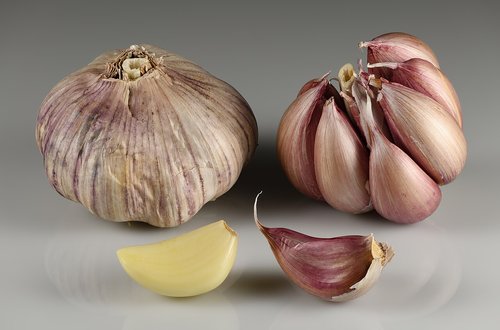
When a small amount (0.1 or 0.4% w/v) of the extract was added to the soups, it showed characteristic kokumi flavors (continuity, mouthfulness, and thickness).
The effect also appeared in an umami solution prepared with monosodium glutamate and inosinate. The authors attributed the activity to sulfur compounds in the garlic, including a γ-glutamyl peptide, the family of molecules that later research would associate with kokumi.
What Is Perceived in the Mouth?
The three attributes from the 1990 study remain the basis of the definition, and Kuroda and Miyamura (2015) define them more precisely. Thickness is the intensity of the taste about 5 seconds after tasting; continuity is its intensity at 20 seconds, and mouthfulness is the enhancement of the sensation throughout the whole mouth.
The review by Kitajima, Goda, and Kuroda (2026) expands the list.
Kokumi is an oral perception that is distinct from taste and may be described as a complex, ambiguous, and diverse taste-related oral perception that can be explained using perceptual terms like thickness, mouthfulness, continuity, roundness, richness, lastingness, and complexity.
Several of those terms are the ones used in tasting to talk about a beer’s body, such as mouthfeel or the persistence studied by the science of aftertaste.
The Calcium Receptor and γ-Glutamyl Peptides
The mechanism was described by Ohsu and colleagues in 2010 in the Journal of Biological Chemistry. The most studied kokumi substances, γ-glutamyl peptides, activate the calcium-sensing receptor (CaSR), a close relative of the T1R1, T1R2, and T1R3 receptors, which detect sweet and umami tastes.
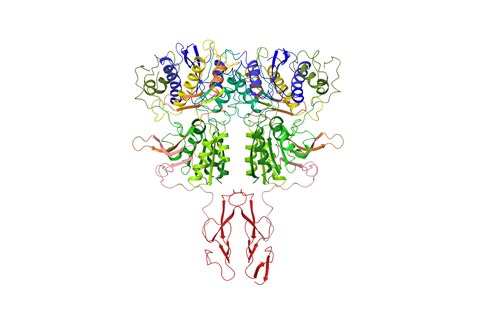
By human sensory analyses, we found that various extracellular calcium-sensing receptor (CaSR) agonists enhance sweet, salty, and umami tastes, although they have no taste themselves.
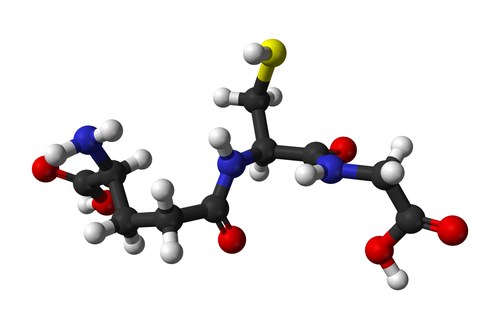
The study identified glutathione (γ-Glu-Cys-Gly) and the peptide γ-Glu-Val-Gly, among other γ-glutamyl peptides, as kokumi substances.
When a specific receptor antagonist, NPS-2143, was added, the kokumi effect was significantly reduced. The 2026 review notes that other receptors, such as GPRC6A, may also be involved.
In 2015, Kuroda and Miyamura summarized the sensory tests from the 2010 study with γ-Glu-Val-Gly in the journal Flavour. Added at 0.01%, it enhanced the sweetness, saltiness, and umami of solutions of 3.3% sucrose, 0.9% salt, and 0.5% monosodium glutamate. In a chicken consommé, at 0.002%, it increased continuity, mouthfulness, and thickness.
Is Kokumi a Sixth Basic Taste?
Kokumi appears among the candidates for new basic tastes. In 2015, researcher Charles Spence reported that some scientists propose it alongside metallic taste and the taste of fatty acids.
The most recent reviews rule it out as a basic taste because it is not perceived on its own. Kitajima and colleagues sum it up this way.
Kokumi substances are not recognized as having a basic taste on their own, but when combined with other taste stimuli, they elicit oral perception changes, such as complexity, thickness, mouthfulness, and continuity […].
The same review concludes that kokumi can be classified as a type of oral perception. Yamamoto and Inui-Yamamoto (2023) relate it to the quantitative aspect of sensations, which is assessed with attributes such as thickness, mouthfulness, or continuity, rather than to a new quality.
Why Are Kokumi and Umami Not the Same?
Umami is one of the five basic tastes, and its best-known substance is glutamate. It is detected by the T1R1 and T1R3 receptors, and a glutamate solution tastes umami on its own.
γ-Glu-Val-Gly has almost no taste of its own. According to the 2026 review, in water it becomes noticeable on its own from about 330 micromoles per liter, while in a consommé its effect appears from 16.5, about 20 times less.

The same review lists the thresholds of other γ-glutamyl peptides. In every case, the amount that is enough to notice their effect in a food is far lower than the amount needed to perceive them alone in water.
| Peptide | Threshold in water (µM) | Threshold in food (µM) | Test food | Where has it been identified? |
|---|---|---|---|---|
| γ-Glu-Val-Gly | 330 | 16.5 | Chicken consommé | Soy sauce, fish sauce, beer, cheese, fermented fish |
| Glutathione (γ-Glu-Cys-Gly) | 1,303 | 200 | Chicken broth | Garlic, scallop, yeast extract |
| γ-Glu-Val | 3,300 | 400 | Chicken broth | Legumes, fermented fish |
| γ-Glu-Leu | 9,400 | 5.0 | Aged cheese extract | Legumes, Gouda, Parmesan, fermented fish |
| γ-Glu-Phe | 3,000 | 2.8 | Salty and umami solution | Soybeans, Parmesan, fermented fish |
Each food threshold was measured in a different preparation, so the figures are useful for comparing each peptide with itself and not for ranking the peptides against one another.
That effect depends on other tastes being present, and umami is one of the tastes it enhances. Yamamoto and Inui-Yamamoto (2023) argue that palatability depends on a good balance between umami substances and kokumi substances.
The difference matters when reading research on beer. A 2025 study on umami peptides in lager beers deals with molecules that were studied at the umami receptor, not at the calcium receptor.
Kokumi in Beer
In 2015, Miyamura and colleagues looked for γ-Glu-Val-Gly in four wines, four sakes, and eight beers using liquid chromatography and mass spectrometry. They published the result in the Journal of Bioscience and Bioengineering.
The analyses indicated that γ-Glu-Val-Gly was present in all of eight beer samples at concentrations in the range of 0.08-0.18 mg/L, although the peptide was not detected in any wine or rice wine samples.
The authors suggest that the peptide is widely distributed in beer, without explaining its origin. One hypothesis is yeast, because a 2019 study published in PLOS ONE found that Saccharomyces cerevisiae produces γ-Glu-Val-Gly through two different pathways, although it did not analyze beer.
Whether that amount can be perceived remains unknown. The 2026 review puts the γ-Glu-Val-Gly threshold in a chicken consommé at 16.5 micromoles per liter, and to compare it with beer it has to be converted to milligrams per liter.
The conversion multiplies the molar concentration by the molar mass of the peptide. That mass is obtained by adding up the three amino acids that make it up and subtracting the two water molecules released when they bond.
[math]M = M_{\text{Glu}} + M_{\text{Val}} + M_{\text{Gly}} – 2\,M_{\text{H}_2\text{O}}[/math]
[math]M = 147.13 + 117.15 + 75.07 – 2 \times 18.02[/math]
[math]M \approx 303.3 \ \text{g/mol}[/math]
[math]c = \dfrac{16.5 \times 303.3}{1000} \approx 5.0 \ \text{mg/L}[/math]
The threshold is between 28 and 63 times higher than what was measured in the beers, which had between 0.08 and 0.18 mg/L.
[math]\dfrac{5.0}{0.18} \approx 28[/math]
[math]\dfrac{5.0}{0.08} \approx 63[/math]
A beer is not a consommé, and the threshold may vary depending on the food. We have not found published studies that add kokumi peptides to a beer and measure their effect on body or persistence, so their role in tasting remains a hypothesis.
Frequently Asked Questions (FAQ)
1. What is kokumi?
It is the sensation of thickness, continuity, and mouthfulness produced by some substances, such as glutathione and the peptide γ-Glu-Val-Gly. These substances have no basic taste of their own. The most studied ones act on the calcium-sensing receptor and enhance other tastes, especially sweet, salty, and umami. The term is Japanese, literally means strong, rich, or concentrated taste, and has been used in flavor research since at least 1990.
2. Is kokumi a basic taste?
No. Some authors have proposed it as a candidate, but recent reviews classify it as an oral perception. The reason is that kokumi substances are not perceived on their own; they only modify the intensity, complexity, and duration of other tastes. The five accepted basic tastes are still sweet, salty, sour, bitter, and umami.
3. What is the difference between kokumi and umami?
Umami is a basic taste produced by glutamate and detected by the T1R1 and T1R3 receptors. A glutamate solution tastes umami. Kokumi has no basic taste of its own; it acts mainly through the calcium-sensing receptor and becomes noticeable when other tastes are present, including umami, which it enhances.
4. Does beer have kokumi?
Beer contains γ-Glu-Val-Gly, a potent kokumi peptide. A 2015 study found it in all eight beers analyzed, at 0.08 to 0.18 mg/L, and did not detect it in wines or sakes. That amount is well below the threshold measured in a consommé, and we have not found published studies on its effect in beer tasting.
5. What substances produce kokumi?
The best studied are γ-glutamyl peptides, such as glutathione and γ-Glu-Val-Gly. The 2010 study that identified their mechanism found that other substances that activate the calcium-sensing receptor, such as calcium ions or L-histidine, also produce the effect. Foods in which they have been identified include garlic, soy sauce, cheese, and beer.

Recommended
- What Is Umami? Everything You Need to Know About the Fifth Basic Taste
- What Is the Difference Between Taste and Flavor in Beer?