This post is also available in:
 Español
  Português
The aftertaste—that prolongation of flavor that remains after swallowing a sip of beer—is much more than a simple persistence of flavors. It is a complex neurophysiological phenomenon involving chemical compounds, taste receptors, and cognitive processes.
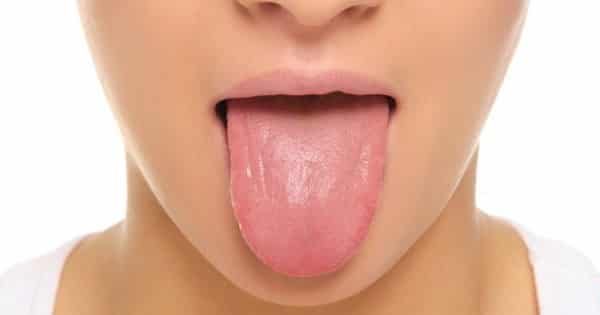

Unlike the initial perception of flavor, the aftertaste manifests in a late phase, when sapid molecules interact with specific areas of the tongue and the retronasal olfactory epithelium.
This effect is particularly relevant in beers with high hop loads, roasted malts, or complex fermentations, where compounds such as alpha-acids, polyphenols, or esters re-stimulate receptors after being progressively released by saliva.
Understanding this process not only enriches the tasting experience but also helps brewers design more balanced flavor profiles.
How the body processes residual flavor
The perception of aftertaste depends on well-defined physiological mechanisms. After the first contact with beer, sapid molecules dissolve in saliva and migrate toward the taste buds on the back of the tongue and throat—areas rich in bitterness receptors (TAS2R).
These areas, evolutionarily linked to the detection of potential toxins, are especially sensitive to compounds such as hop iso-alpha-acids, which explains why bitterness often dominates the aftertaste in hoppy beers.
Additionally, volatile compounds released in the oral cavity ascend through the retronasal pathway to the olfactory epithelium, where they integrate with taste signals to create a multisensory perception.
This phenomenon, known as “retronasal olfaction,” is key to the persistence of fruity or spicy aromas in beers such as Belgian Tripel or Barrel-Aged Stout.
Studies with functional magnetic resonance imaging have shown that this late phase activates different brain regions than those involved in initial taste, suggesting that aftertaste is processed as an independent sensory experience.
A critical factor in this phase is the dynamics of blinking and swallowing. Each time we swallow, a positive pressure pump is generated that forces volatile-laden air from the oropharynx toward the nasal cavity.
This means that the intensity of the aromatic aftertaste is not constant but pulsatile; it is mechanically reactivated with each swallowing movement or subsequent nasal exhalation after ingestion, allowing subtle notes of esters or phenols to appear seconds after swallowing the liquid.
The chemistry of aftertaste
From a molecular perspective, aftertaste is determined by the affinity of certain compounds for taste receptors and their resistance to enzymatic degradation in the mouth.
Polyphenols, such as tannins derived from dark malts or oak barrel aging, form complexes with salivary proteins (especially proline-rich ones), generating an astringent sensation that can persist for minutes.
This mechanism is particularly notable in beers such as Imperial Stout or aged Barleywine.
On the other hand, hop terpenes and sesquiterpenes, such as myrcene or humulene, have high affinity for the fatty tissues of the oral mucosa, from which they are progressively released, prolonging herbal or citrus notes.
This lipophilic property explains why beers with high aromatic hop content (such as NEIPAs) can present a more lasting fruity aftertaste than those with traditional hops.
It is essential to distinguish between real chemical persistence and sensory memory.
While tannin astringency is an active physicochemical interaction in the mucosa, many aftertaste descriptors (such as vanilla or cocoa) are cognitive reconstructions.
The brain completes the information based on the learned association between certain aromatic precursors and previous experiences, meaning that two tasters with different cultural backgrounds may experience qualitatively different aftertastes from the same sample, even if their chemical detection thresholds are identical.

Factors affecting aftertaste intensity
The aftertaste experience is not static; it varies according to individual physiological conditions and beer parameters. Saliva composition, for example, plays a crucial role.
People with higher secretion of salivary proteins (such as mucin) may perceive a less astringent aftertaste, as these molecules partially neutralize tannins.
As for the beer, parameters such as pH (low values intensify bitterness perception), alcohol content (alcohol enhances the extraction of volatile compounds), and carbonation (CO2 stimulates pain receptors, enhancing other flavors) directly influence the duration and intensity of the aftertaste.
A clear example is German Rauchbier, where low pH (3.8-4.2) and smoked phenols create a particularly persistent aftertaste.
Serving temperature acts as a kinetic modulator of the aftertaste. At low temperatures (<6°C), the volatilization of aromatic compounds is suppressed and saliva viscosity increases, delaying the arrival of molecules to receptors and shortening the secondary phase.
Conversely, serving a beer too warm (>14°C in light styles) accelerates the evaporation of ethanol and sulfur compounds, saturating the retronasal pathway with alcoholic notes that mask malty complexity and reduce the temporal window for perceiving subtle nuances.
Implications for brewing and tasting
For brewers, controlling aftertaste involves precise technical decisions. The choice of base malts with low polyphenol content (such as Pilsen) reduces residual astringency, while techniques such as mash hopping (adding hops during mashing) can soften aftertaste bitterness by promoting more complex isomerizations.
In professional tasting, evaluating aftertaste requires specific methodologies. The ISO 5492 standard recommends waiting 15-30 seconds after ingestion to assess its evolution, distinguishing between:
- Primary aftertaste (0-30 seconds): Dominated by highly soluble compounds (mineral salts, acids).
- Secondary aftertaste (1-3 minutes): Where liposoluble molecules (terpenes, esters) predominate.
- Tertiary aftertaste (+3 minutes): Associated with slow-release compounds (complex tannins, melanoidins).
Beyond timing, qualitative evaluation should focus on the “cleanliness” of the finish. A high-quality aftertaste is not necessarily the longest one, but rather the one whose decay curve is smooth and predictable.
Abrupt, metallic finishes, or those that change descriptor radically after 20 seconds, usually indicate fermentation imbalances, microbiological contamination, or water treatment errors—being more reliable warning markers than the aroma on the nose for detecting incipient technical defects.
The aftertaste as a sensory signature
Far from being a mere side effect, the aftertaste represents the culmination of the beer experience, where chemistry and physiology intertwine to create lasting impressions.
Its interdisciplinary study—ranging from the biochemistry of compounds to the neuroscience of perception—is revolutionizing both craft brewing and professional sensory analysis.
For the taster, understanding these mechanisms allows for a deeper appreciation of each style’s complexity.
For the brewer, it offers tools to design flavor profiles with intentional aftertastes, whether the clean fleetingness of a Pilsner or the prolonged sensory dialogue of an aged Quadrupel.
Ultimately, the aftertaste is the echo of a good beer—that chemical testimony that lingers when the glass is already empty.
Frequently Asked Questions (FAQ)
1. Why do I perceive a medicinal or plastic aftertaste in some beers?
This phenomenon is not a style characteristic, but a common defect known as chlorophenol. It occurs when yeast phenols react with residues of chlorine-based sanitizers or untreated tap water during brewing. Unlike the herbal aftertaste of hops, this residual flavor is persistent and unpleasant, signaling failures in cleaning or water filtration by the brewer.
2. How does glass design influence aftertaste perception?
Glass geometry is decisive for the retronasal phase. Glasses with narrow rims or tulip shapes concentrate volatile compounds at the top, facilitating the ascent of aromas toward the olfactory epithelium when swallowing. A poorly chosen glass, such as a standard tumbler, disperses these compounds and drastically reduces the complexity of secondary and tertiary aftertaste.
3. Is “finish” the same as aftertaste in a tasting?
Although used as synonyms, in professional sommellerie there is a technical nuance. The finish refers to immediate sensations at the moment of swallowing (whether dry, sweet, or bitter). The aftertaste, on the other hand, is the evolution of those flavors and aromas once the liquid is no longer in contact with the tongue, focusing on persistence and long-term sensory memory.
4. What foods can completely nullify beer aftertaste?
Consuming foods with high concentrations of capsaicin (spiciness) or saturated fats creates a film over the taste buds that blocks TAS2R receptors. This causes the aftertaste of complex beers, such as an IPA or Imperial Stout, to be perceived as flat or metallic. To avoid this, it is recommended to cleanse the palate with sparkling water or breadcrumbs before evaluating residual flavor.
5. How does oxidation affect the aftertaste of stored beers?
When a beer ages prematurely due to oxygen exposure, hop acids degrade and the aftertaste develops wet cardboard or paper notes. In high-gravity beers, this oxidation can be positive if it transforms into sherry or dried fruit notes, but in lighter styles, oxidation destroys the “cleanliness” of the aftertaste, leaving an earthy, brief sensation instead of a fresh one.

We Recommend
- Rogue Chocolate Stout clone recipe: Ingredients and step-by-step
- Introduction to beer and cigar pairing: Everything you need to know