This post is also available in:
 Español
  Português
  Français
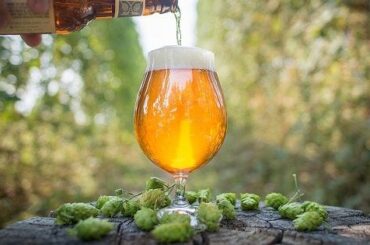
The India Pale Ale is one of the most popular beer styles worldwide, but if, despite everything, you are one of those people who cannot stand hop-heavy beers, this could be due to a genetic variation in your perception of bitter taste.


It has been shown that some people have a taste receptor gene that makes them more sensitive to bitter flavors, but now an unprecedented study sheds new light on the relationship of this gene with our perceptions more generally.
Researcher John Hayes, a food scientist at Penn State University, states:
What we have observed is that people differ markedly in the way they perceive the intensity of bitterness.
The TAS2R38 gene
Some years ago, John Hayes himself and researcher Valerie Duffy from the University of Connecticut had detected that some people, about 25% of the population, possess a variation of a gene known as TAS2R38, which makes them more sensitive to the perception of bitter tastes.
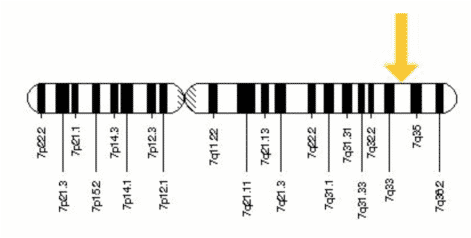
Valerie Duffy comments that she herself lacks the version of this gene:
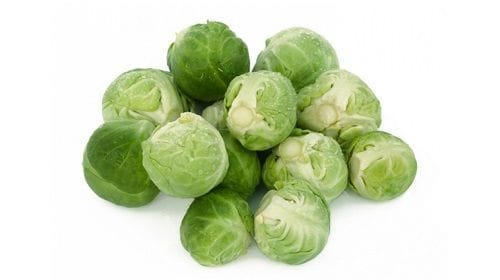
The idea of how you perceive bitter taste is linked to how strongly these compounds bind to the receptor, so when I eat bitter vegetables or Brussels sprouts, for example, they are naturally sweet to me.
Duffy’s hunch was that this could lead people to also avoid eating other types of vegetables. So she decided to put the theory to the test.
We recruited a group of volunteers and brought them to the lab to do taste tests with them and evaluate their sensitivities.
Specific tests were also conducted for the TAS2R38 gene, and they were asked to record daily the foods they consumed to document the process.
Sensitivity to bitter taste
The results showed that people who are less sensitive to these bitter compounds consume significantly more vegetables of all kinds than those who are sensitive—so much so that, over the course of a year, the difference was more than 200 servings.
While previous studies had already identified this association, the surprising aspect of these new findings is that it was shown that people who were highly sensitive to bitterness ate fewer vegetables in general, not just bitter ones.
Valerie Duffy explains:
What we believe is that if a person feels that some vegetables are too bitter, they will tend to generalize this to all other vegetables, mainly green ones.
Duffy further suggests that there are multiple factors, both biological and environmental, that influence our choice of foods and beverages, including our own upbringing.
This variation in vegetable consumption has its molecular basis in the haplotypes of the TAS2R38 gene. PAV (Proline-Alanine-Valine) is the functional variant of the receptor that binds with high affinity to bitter compounds, while AVI (Alanine-Valine-Isoleucine) is the variant with reduced or null affinity.

Since each person inherits two copies of the gene, three distinct phenotypes emerge that explain both the difference of 200 annual servings observed in the study and the differential perception of IPAs:
| Phenotype | Population frequency | Bitterness perception in IPA | Recommended style |
|---|---|---|---|
| Super-taster (PAV/PAV) | ~25% | Intense, astringent, and prolonged bitterness | New England IPA, Session IPA, Malt-forward ales |
| Medium taster (PAV/AVI) | ~50% | Balanced bitterness, tolerable with exposure | Classic American IPA, Pale Ale, Amber Ale |
| Non-taster (AVI/AVI) | ~25% | Mild or almost imperceptible bitterness | Double/Triple IPA, Imperial Stout, Barleywine |
TAS2R38 phenotypes and their impact on IPA perception
Sensitivity vs. aversion
It is essential to distinguish between the biological ability to detect bitterness and the hedonic response (liking or disliking) toward it. Subsequent studies in sensory science have shown that, although the TAS2R38 gene determines the intensity with which the compound is perceived, it does not automatically dictate preference.
A person can be genetically sensitive to bitterness and yet enjoy it if they have had prior positive exposures or if they associate that taste with pleasant experiences. Therefore, genetics loads the gun, but environmental and psychological factors pull the trigger of aversion.
Consumer adaptation
In conclusion, despite the current popularity of IPAs, the truth is that 20 years ago very few people drank them.
Beers that at that time were considered extremely hoppy, such as Sierra Nevada Pale Ale, are now considered quite “normal” for the taste of today’s consumer, who has become increasingly adapted to bitter taste.
Not all bitterness activates the gene in the same way
It is relevant for IPA drinkers that sensitivity to TAS2R38 does not respond identically to all sources of bitterness.
Recent research has observed that compounds derived from modern hops rich in essential oils (such as Citra or Mosaic) can be perceived as less aggressive by people sensitive to bitterness compared to the clean, resinous bitterness of traditional hops or magnesium salts.
This suggests that those who reject classic IPAs might tolerate New England IPAs or varieties with fruity profiles better, where sensory perception integrates sweet aromas that modulate the bitterness signal in the brain, regardless of their genetic load.
Frequently Asked Questions (FAQs)
1. Can sensitivity to bitter taste be modified?
Repeated exposure to bitter flavors can increase tolerance and, in some cases, even make some people begin to enjoy them. This is known as sensory adaptation or taste learning.
2. What foods do people with bitterness sensitivity reject?
In addition to bitter beers and vegetables like Brussels sprouts, people with high genetic sensitivity to bitterness tend to avoid unsweetened coffee, grapefruit, arugula, dark chocolate, and dry red wine.
3. Is there a genetic test to confirm this?
There are commercial genetic tests that include analysis of the TAS2R38 gene, which is related to bitterness perception. Specific taste tests can also be conducted in clinical or university settings.
4. How does culture influence taste acceptance?
Bitterness perception is also shaped by culture and upbringing. In some cultures where consumption of bitter foods is common from childhood (such as bitter herbal infusions or certain vegetables), people develop greater tolerance and liking for these flavors.
Bibliography
- Duffy, V. B., Hayes, J. E., Sullivan, A. C., & Faghri, P. (2009). Surveying food and beverage liking: A tool for epidemiological studies to connect chemosensation with health outcomes. Annals of the New York Academy of Sciences, 1170(1), 558–568. https://doi.org/10.1111/j.1749-6632.2009.04489.x
- Hayes, J. E., Feeney, E. L., & Allen, A. K. (2013). Do polymorphisms in chemosensory genes matter for human ingestive behavior? Food Quality and Preference, 30(2), 205–213. https://doi.org/10.1016/j.foodqual.2013.05.011
- Hopp, D. C., & Ziegler, H. (2004). Chemistry of hop bitter compounds: An overview. In Hop flavor and aroma: Proceedings of the 1st International Brewers Symposium (pp. 47–62). Master Brewers Association of the Americas. https://doi.org/10.1094/9781894750011.004
- Keller, K. L., & Adise, C. (2017). Genetic variation in taste and its influence on food selection and dietary intake. In Genetics and genomics of nutrition and health (pp. 127–148). Springer. https://doi.org/10.1007/978-3-319-55687-1_7
- Schönberger, C., & Kostelecky, T. (2011). Role of hop-derived bitter acids in beer bitterness perception and their interaction with human TAS2R receptors. Journal of the American Society of Brewing Chemists, 69(4), 231–238. https://doi.org/10.1094/ASBCJ-2011-0912-01

We Recommend
- Pizza dough recipe with craft beer or spent grain
- The history and origins of the Russian Imperial Stout style