
This post is also available in:
 Español
 Português
The legend of the Russian Imperial Stout style tells that the future Tsar of Russia, Peter the Great, was captivated by Porter-type beers during a visit to England at the end of the 17th century.
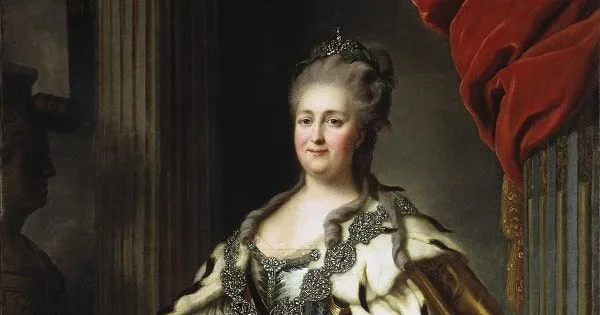
However, historical studies suggest that this narrative is more myth than documented reality. The strongest historical connection to the style comes from Catherine II (Catherine the Great), who reigned between 1762 and 1796.

Documents indicate that the empress enjoyed beers imported from England, especially those with a strong, malty profile. These beers, known as “Strong Porters,” were produced by London breweries such as Anchor Brewery, owned by Henry Thrale.
But when the first shipment spoiled due to the long journey and extreme weather conditions, English brewers supposedly quickly modified the recipe to brew a beer with higher alcohol content and more hops.
This not only helped preserve the beer during transport but also aligned with local preferences for strong, complex beverages.
Origins of the Russian Imperial Stout style
Although the story of a beer with high alcohol and hop formulation to survive a long, harsh-weather journey sounds familiar (the legend of the India Pale Ale’s birth is even more widespread), the truth is that the historical consensus on the development of the Russian Imperial Stout style leans more toward a beer variation that simply became popular due to taste preferences.
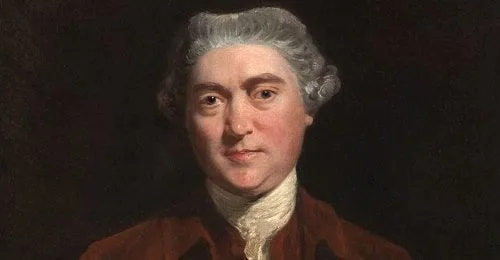
Specifically, the origin of the Russian Imperial Stout style indeed traces back to an early version of the Porter style brewed particularly intensely, a “Strong Porter” (the term Stout for a beer style was not yet used), produced in London by Henry Thrale of Anchor Brewery and known as “Thrale’s Entire.”
Maritime trade between England and various countries played a crucial role in popularizing these beers.
This beer, which was already exported to Russia at the end of the 18th century, was indeed one of Empress Catherine II’s favorite beers, and she repeatedly requested it for her own consumption and that of her court.
Furthermore, these beers were also sent to destinations with warmer climates, such as Sierra Leone in Africa, confirming that recipe adaptations were more due to flavor profile preferences than specific logistical needs.
The birth of “Imperial” beers
The term “Imperial” would come later, around 1821, possibly from the Russian connection, originally used to name this strong variation as “Imperial Porter,” a couple of years before Stout beers began to be differentiated as a style, with the first references recorded as “Imperial Double Brown Stout.”
From then until today, the term Imperial continues to be used to denote the stronger versions of traditional styles.
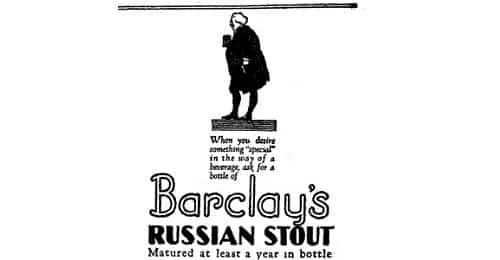
Finally, the name “Russian Imperial Stout” was not incorporated until the 20th century, mainly for marketing purposes.

Over time, Anchor Brewery was acquired by Barclay & Perkins Brewery, who continued to produce this beer on a small scale due to a diminished international market after the world wars.
Then, in 1955, Barclay & Perkins merged with Courage and Company, who continued to produce it until 1993, only to be revived later in 2007 by Wells & Young’s Brewery.
Courage Russian Imperial Stout
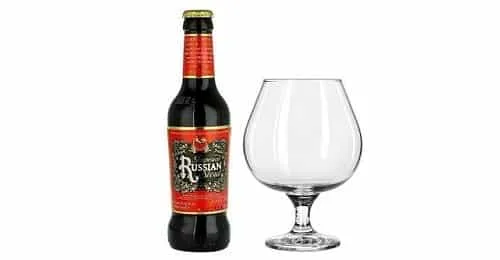
To better understand the style, we conducted a tasting of Courage Russian Imperial Stout, one of the last direct heirs of the 18th-century Strong Porter beers.
1. Appearance
The color is opaque black, impenetrable, with a light brown foam that rises slowly and forms a creamy, persistent layer. The visual texture invites contemplation.
2. Aroma
From the first moment, the beer reveals impressive complexity. Notes of roasted malt and coffee dominate, followed by nuances of dark chocolate, raisins, figs, and plums. A liqueur-like background, almost reminiscent of cognac, completes the aromatic profile.
3. Flavor
The initial taste is smooth yet intense, with notes of nut, dried fruits, and bitter chocolate. The profile evolves toward a balanced bitterness and a liqueur-like finish that leaves a dry, lingering aftertaste. The integration of sweetness, acidity, and bitterness is masterful.
4. Mouthfeel
The body is medium, but its texture is silky and enveloping. Low carbonation allows flavors to develop without interruption, culminating in a slight warmth that travels down the throat.
Modern evolution of the style
Today, Russian Imperial Stouts have experienced a renaissance thanks to the craft beer revolution. Breweries around the world reinterpret this classic, adding innovative elements such as bourbon barrels, wood aging, or even fruits and spices.
Notable examples include North Coast Brewing’s Old Rasputin, a classic and faithful interpretation of the style; Founders Kentucky Breakfast Stout (KBS), a bourbon barrel-aged version with coffee and chocolate notes; and BrewDog’s Tokyo, an experimental RIS with fruit additions.
Frequently Asked Questions (FAQ)
1. How long can a Russian Imperial Stout be aged or stored, and what flavors does it develop?
Russian Imperial Stout is one of the ideal beer styles for aging due to its high alcohol content. It can be stored from 6 months to several years (5 years or more) under stable conditions. Over time, the flavor evolves. Hop notes fade, bitterness softens, and dark fruit notes (raisins, figs, plums) and sherry or liqueur flavors intensify, with the alcoholic profile integrating more smoothly.
2. What is the ideal serving temperature for a Russian Imperial Stout, and what foods does it pair best with?
RIS should not be served ice cold. The ideal serving temperature is warm, between 10 and 14°C, allowing the complex aromas of malt, chocolate, and liqueur to fully release. Regarding pairing, it works exceptionally well with rich, dense desserts (such as dark chocolate tart, brownies, or tiramisu), strong blue cheeses (such as Roquefort or Gorgonzola), and roasted or grilled meat dishes with dark, caramelized sauces.
3. What does the term “imperial” mean in beer, and in what other styles is it used?
The term “Imperial” is used in craft beer to denote a more potent, stronger, denser version of a base style. Originally, it was associated with beers exported to the Russian Imperial Court. Today, this term is applied to many other styles to indicate a high-alcohol (high ABV), high-density version, such as Imperial IPA (or Double IPA), Imperial Porter, or Imperial Red Ale.
4. What types of malt and hops are characteristic of a Russian Imperial Stout?
To achieve its color and complexity, a RIS typically uses a Pale Ale malt base complemented by a robust blend of roasted or black malts (such as Chocolate malt, Black Patent malt, or Roasted Barley) to provide coffee and chocolate flavors. Historically, a significant amount of English hops (such as East Kent Goldings) was used to ensure preservation during travel; today, hops are used primarily to balance the massive sweetness of the malt, with earthy or herbal notes being preferred in classic versions.

Recommended
- Stella Artois and the centuries-old history of Artois Brewery
- Hop flavor vs. bitterness in beer: What is the difference?