This post is also available in:
 Español
  Português
Today it is very common to wonder what the real difference is between beer types and beer styles, whether industrial or craft, because while the original idea is shared, it is the latter that has clearly begun to impose itself in recent decades among brewers and the market in general.
British writer Martyn Cornell, on his website Zythophile, notes that records of brewing literature from the early 19th century (1830) through the mid-20th century (1970) reveal that for a very long time people only spoke of “types of beer” and other derived terms such as “varieties of beer,” “divisions of beer,” “species of beer,” “classes of beer,” and “families of beer” in very general terms.

Beer types according to how they’re made
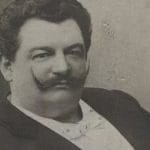
The reason for this is that, unlike the idea of beer types, the definition of beer style is a very recent concept, used frequently for less than 40 years and established by the late British journalist and writer Michael Jackson.
Until then, following the publication of his book The World Guide to Beer in 1977, no one had used the expression “beer style” at all.
However, Michael Jackson originally still devoted a section to “classic beer styles” and drew a distinction between “beer types” and “beer styles,” stating:
If a brewer has the specific intention of reproducing a classic beer, then he is working within a style. If his beer only has a simple general similarity, then it may be considered as within a type.
What is a beer style?
The old beer types were generally known by the city where they first began to be brewed — Pilsner, Vienna, Dortmund, Berlin — or by the type of water characteristic of the area — Burton, London, Melbourne, or Munich.
Today, with the converging acceptance of the term “beer style,” the phrase “beer type” has generally been restricted to referring to a broad division of families of malt-based beers according to the type of fermentation used: Ale or Lager beers, within which the family of beers made by spontaneous fermentation — or wild beers — is also considered, mainly Lambic styles produced in Belgium.
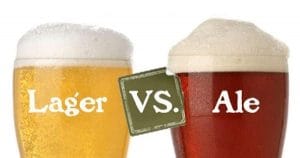
It is by following this initial subclassification of beer types that the branching into beer categories originates, and finally into the unique expression of the specific characteristics of each one — called beer style — defined by its aromas, flavor, composition, color, and alcohol content, among other things.
Beer ingredients
There are four basic ingredients in brewing any beer: water, yeast, malt, and hops, each contributing synergies that define the final characteristics of a beer.
Water can be soft or mineral-rich, lending identity and quality depending on the type of beer being brewed. Yeast is a microscopic fungus responsible for converting the sugars in the wort into alcohol and carbon dioxide during fermentation.
Malt contributes the essential elements that shape a beer’s body, foam, color, and alcohol level. It is obtained from the germination of cereal grains (mainly barley) that are then dried and roasted depending on the type of malt being produced.
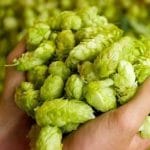
Finally, hops are what give beer its balance. This flower is responsible for much of beer’s aroma and bitterness. It began to be used in brewing in the 17th century, primarily for the purpose of sanitizing and preserving beer.
Below we explain the main styles found within each beer type.
Ale beer types and styles
Ale beers are top-fermented; this means that during brewing they typically ferment at temperatures ranging from 15–23°C (59–73°F), where the yeasts rise to the top of the vessel, producing significant amounts of esters and other secondary aromas and flavors, often of apple, pear, pineapple, grass, hay, banana, plum, or prune.
The term “ale” refers only to the fermentation type and has no relation to the color, style, or body of the beer.
Ale beers can be pale or dark, light or creamy, with a very wide range of alcohol content and bitterness. As always, everything depends on the ingredients used, their varieties, and the types of conditioning.
Among the main ale beer types we can find the following styles:
1. Brown Ale
A type of beer in which roasted barley is used in its production, which gives it tones ranging from amber to reddish brown. These are intense beers in which the hops make their presence felt, resulting in a beer with very defined flavors.
2. Trappist and Abbey Beers
These are beers brewed in Trappist monasteries with ATP certification or by private breweries that have acquired recipes originally brewed in monasteries of other orders. Chimay and Leffe are among the most recognized.
3. Mild Ale
Originally the working-class beer par excellence, it is a beer for fresh consumption, not very hoppy, served at room temperature and sometimes in combination with a more mature beer.
4. Old Ale
These are aged beers, generally high in alcohol content, dark, and still slightly sweet due to residual sugar from fermentation.
5. India Pale Ale (IPA)
IPAs are a beer type with a history of over 200 years — the story goes that it was necessary to add more hops to a Pale Ale recipe so that it could withstand the supply journey from England to India. Today there are at least 10 different types of IPA (American IPA, Double IPA, Red IPA, etc.), all inspired by the 18th-century English version.
6. Stout
Stout beers are generally very dark, with roasted flavors and moderate bitterness, and currently come in more than 5 different styles: American Stout, Imperial Stout, Cream Stout, etc.
7. Porter
Porter beers are what gave rise to Stout beers (which were originally a stronger version of Porter), although today they can be clearly distinguished by their smoother roast character and light sweet chocolate notes.

Lager beer types and styles
Lager beers, or bottom-fermented beers, generally work in temperature ranges of 7–12°C (45–54°F) during the fermentation phase, with the yeasts settling at the bottom of the vessel, then stored at 0–4°C (32–39°F) during the conditioning stage.
Lagers are a relatively recent type of beer in history, originating in the mid-19th century. Their development took hold following the invention of artificial refrigeration and the work of Louis Pasteur on the study of yeast contaminants that were spoiling beer in France.
Several centuries earlier, German brewers in Bavaria and Bohemia had already noticed that by storing beer in cold caves at a constant temperature, it kept without spoiling through the summer — the season when beer could not be brewed because the heat ruined the batches.
Today, lager beers are the most consumed in the world and take their name from this ancient German cold-storage technique (“lagern” means to store in German), a stage during which the beer also clarifies and smooths out.
Cooler conditions also inhibit the natural production of esters and other by-products, resulting in a “cleaner”-tasting beer.
Most of the lager beers brewed today are based on the Pilsner style developed in 1842 in the Czech city of the same name, being pale in color and high in forced carbonation, with an alcohol content of 3–6% ABV.
Some of the most recognized lager beer types include the following styles:
1. Bock
A style found among the stronger, more alcoholic lager beers. Typically German, it can be a pale or dark beer, but always with an intense flavor.
2. Dark
A lager beer type also known as Dunkel Lager. It is a dark, roasted lager, though not as intense as a Stout.
3. Pale Lager
The least roasted and least bitter lager, brewed with the goal of being a mass-market product with low alcohol content and soft, refreshing flavors.
4. Pilsner
The original clear and transparent beer, a lager style developed in the Czech Republic following intense protests by its residents over the poor quality of beers available at the time. Today it is the style on which all mass-produced beers are based, such as Budweiser or Corona.

Spontaneous fermentation beer types and styles
Wild or spontaneously fermented beers use wild yeasts from the environment during fermentation instead of cultivated strains with specific characteristics.
As far back as the Middle Ages, brewers had learned to harvest yeast from one beer and use it in the next batch, but a few isolated regions continued using wild yeasts.
The best-known region where spontaneous fermentation is still used is the Senne Valley in Belgium, where Lambic-style beers are produced.
Hybrid beer types and styles
Hybrid or mixed beer types make use of modern techniques and ingredients in place of and/or in addition to the traditional aspects of brewing.
While there is some variation between sources, mixed beer types are generally classified into the following categories:
1. Altbier and Kölsch
Both brewed as ale beers, before being cold-conditioned. There are also steam beers (Steam Beer), invented by German immigrants living in California, brewed with a bottom-fermenting yeast strain that tolerates warmer temperatures better.
2. Fruit and vegetable beers
Beers in which a mixture of some type of fermentable fruit or vegetable complement is added during the fermentation process.
3. Herb and spice beers
Special lager or ale beers to which herbs or spices derived from roots, seeds, fruits, vegetables, or flowers have been added in place of or in addition to hops.
4. Wood-aged beers
Generally traditional or experimental beers that have been aged in a wooden barrel or kept in contact with wood chips.
5. Smoked beers
A type of beer brewed with malt that has been exposed to the smoke of slowly burning wood, resulting in a dark beer with a smoky aroma and flavor. The best-known examples of this style are the Rauchbier from Bamberg, Germany.
6. Champagne-style beers
Beers with a final finish “à la méthode originale,” primarily in Belgium, including examples such as Grottenbier, Deus, and Malheur Bière Brut.
The beer family tree
Let’s get into the details: below is a poster of beer types and their styles (click to enlarge), where (almost) all beers find their place in this framework.

It is undoubtedly a very extensive map, but also very well documented, and will certainly be of great help for a better understanding of the concepts presented.