
This post is also available in:
 Español
  Português
By Randy Mosher
As you enjoy an IPA, have you ever wondered why this burst of bitterness inspires such passion? People seem to enjoy malts, but they love hops — sometimes beyond all reason. It borders on illness, in a magnificent way, but it is undoubtedly an obsession.
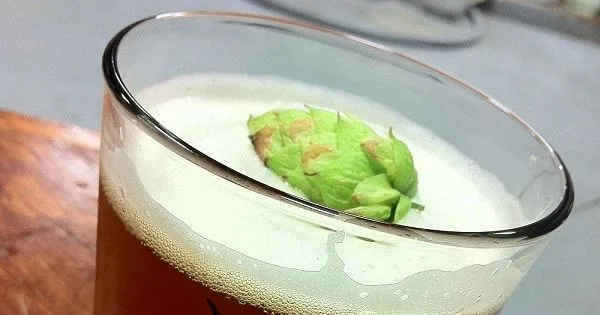
Since the earliest days of beer, bitter herbs have been used to balance the sweetness of malt, add refreshing qualities, and give the drink substantial body.
Historically, the importance of bitterness in beer has come and gone in waves — and right now we are still riding the crest of one of those waves.
The birth of bitter flavor
It may be the moment to peel back some layers of history on the most magical of beer’s flavors.
With only a few exceptions, bitter flavors play a secondary role in cuisine, so bitterness in beer really stands apart from most other foods and beverages.

It is an acquired taste, clearly evident when we see our friends venturing into the world of craft beer. But there is a good reason for their initial reluctance. Bitterness is a signal to consider when searching for something poisonous.
Our chemical senses exist to give us information about elements in the environment — especially potentially dangerous foods — and to help us detect whether a leaf, a berry, or a drop of nectar might be nutritious or not.
As plants and animals co-evolved, they became connected in a fascinating dance, where plants operate in self-defense mode, displaying obvious deterrents like thorns and thick rinds to avoid being eaten.
At some point, they also developed the capacity to produce toxic substances for their predators.
The genetics of bitterness
In due course, animals developed the ability to recognize poisons such as strychnine, cyanide, alkaloids, and many others. Yet awareness alone was useless; these perceptions had to be complemented by a call to action — one that was powerful, instantaneous, and aversive. Thus the sensation of bitterness was born.

And so the dance intensified, with plants developing ever more ingenious toxins; animals eventually evolved the capacity to recognize and avoid tens of thousands of bitter chemicals.
With that pattern in place, some plant species developed a decoy that worked just as well as the original arrangement. This means they lost the ability to produce toxins and began producing perfectly harmless chemical compounds — like those found in hops — that are equally effective at activating the bitterness aversion mechanism, thereby keeping most herbivores at bay.
The number of TAS2R genes — the genes that encode for bitterness receptors — is higher in herbivorous animals and always much lower or absent in pure carnivores.
Currently, 25 receptor genes have been identified in humans, mapped to various substances they can detect, and most can detect potentially toxic chemicals, though they may serve other purposes as well.
Bitterness receptors have also been found throughout the human intestine and in other less “obvious” locations, such as the lungs. What purpose these remote sensors serve is in practice a mystery.
The bitterness of certain herbs and spices was known in ancient times, and some probably found their way into ancient beers. Some chemical evidence of the composition of these beverages has been found in recent years, above all by Dr. Patrick McGovern, archaeologist and expert in ancient fermented beverages, but due to the great overlap in the composition of many herbs and spices, it has not been possible to gather much information on the subject.
Early evidence of hop use
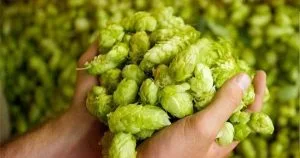
The earliest physical evidence of hop use in beer was unearthed in Umbria, northern Italy, dated to around 900 BC — two millennia before the true introduction of hops into European beer.
In the meantime, beers were seasoned with a secret blend of herbs and spices called gruit.
Some components of gruit, such as bog myrtle (Myrica gale), have some bitterness and a pleasant resinous aroma. Meanwhile, wormwood and gentian, both sharply bitter, have been used occasionally in beer to this day.
Historians believe that the shift to hopped beers began in northern Germany, perhaps in the Hanseatic trading zone of Bremen; it then spread gradually along the North Sea and eventually to Amsterdam and then to Flanders.
Finally, hops crossed the Channel to England along with the wave of 15th-century immigrants. By around 1600, the old unhopped beer was no more.
Types of bitterness
The clean, soft bitterness of hops proved perfectly suited to beer — at least to our modern tastes.
Recent studies suggest we have the capacity to discriminate up to five different types of bitterness.
The sensation offered by cinchona bark or wormwood is penetrating and can be unpleasantly dry — very different from the soft bitterness of hops.
Combined with their preservative qualities, this is probably why hops came to completely dominate the world of beer.
However, the bitterness of a beer is not only about hops. Dark beers contain a great deal of bitterness due to roasted malts.
The Maillard reaction, the source of most colors and flavors in beer, produces hundreds of highly aromatic chemicals that add the characteristic malt/bread/caramel/toasted aromas, but also produces odorless color molecules called melanoidins that can be very bitter in the darkest malts.
The taster and bitterness
As a taster, it is important to know that, compared to sour or salty, bitterness is slow to affect our palate.
The first two are very simple chemical phenomena and require only the simplest of cellular mechanisms to fire signals to the brain.
Bitterness, on the other hand — like sweetness and umami — requires an intermediate molecule, something called a G protein-coupled receptor, which takes a little longer to do its work. This time dimension in tasting is something to always pay attention to.
If you taste a moderately bitter beer of around 40 IBU against the same beer enriched with perhaps triple that, the first 10 seconds will feel exactly the same.

Bitterness takes time to settle on the tongue, fully developing in around a minute.
You almost have to watch the clock when tasting and force yourself to pay attention for much longer than you are probably accustomed to.

Not long ago I sat in a room full of people and we blind-tasted two otherwise identical beers — 40 and 100 IBU — with no prior explanation, and found that half the room failed to tell them apart. It is harder than you think.
Bitterness offers a roller-coaster experience, climbing its way up to the peak; then it pauses and the long descent begins.
Throughout that time, other flavors are weaving in and out of the beer: acidity taking the lead, then sweetness and some astringency, interweaving with the bitterness, pleasantly or otherwise.
You have probably noticed that bitterness really palate-wrecks you, so after one or two massively hopped beers, you will need a few minutes for your palate to recover.
It is also important to separate hop aromas from pure bitterness on the tongue. Although they are caused by completely different chemicals and distinct sensory systems, aroma and flavor do not live in entirely independent silos in our brain, so it takes some effort to separate them.
In another torturous test, beer judges were blindly given beers of similar bitterness, loaded with different levels of aroma hop oils, and most of us confused the intensified aroma with higher bitterness.
Even trained tasters have some difficulty identifying a specific level of bitterness.
Our accuracy on this task may be no better than 20%, so the taste between 40 and 50 IBU will be roughly the same.
Furthermore, many of the IBU levels printed on beer labels are based on brewery calculations rather than true laboratory analysis, so they may be off by an equally wide margin.
The other thing to bear in mind is that bitterness is always in context with the rest of a beer, so if you compare two equally hopped beers, the one with a great deal of malt may seem much less bitter than the one without.
Brewers know they must seek balance in their recipes. We, as tasters, must be aware of this and be careful not to trust the numbers to tell us how we should feel about any given beer.
The origin of hop bitterness
The bitterness in beer comes from five chemical compounds in hops known as alpha acids, which are extracted and chemically transformed — isomerized — by the heat of the boil.
All hops produce a similar bitterness sensation, although to varying degrees.
However, those with a higher proportion of an alpha acid called cohumulone have a reputation for a “harsher” bitterness, though this is the subject of heated debate.
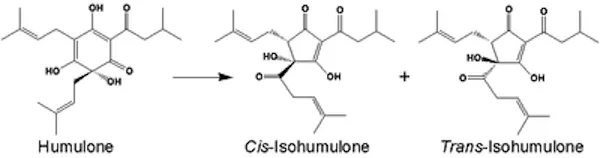
When offered to market, the bitterness power of hops is stated in an analysis as a simple percentage of alpha acids, with values ranging from approximately 2 to 20%.
In theory, hops used purely for bitterness should taste the same after their oils have been subjected to the vigorous one-hour boil typical of brewing.
Brewers have a hunch that this is not the case and generally choose a bittering hop that complements the character of the aroma hop notes.
The limits of hop bitterness
As creative brewers we have participated in a bitterness arms race, but we are beginning to bump into real limits.
Hop solubility decreases as concentration increases, so it is difficult to push it to very high levels — especially with the high price of hops these days.
Industry wisdom once held that 100 IBU was practically the maximum, but some recent analyses claim to have gone well beyond that.
However, there is some debate about the linearity of the common assays used and what they are really detecting above the upper end of the scale.
We can safely say there will never be a 1,000 IBU beer, though I know people who are probably trying.
It is also an open question as to what the maximum level might be for our taste buds. Above a certain threshold, more hop bitterness may simply not be perceivable.
Whether you are a passionate hophead or someone who prefers a more balanced approach, bitterness is a valuable flavor component that contributes to the unique charm of beer.
Bitterness quenches thirst, provides balance, tames powerful foods, and simply adds great flavor to beer.
As you raise your next glass of IPA, you might whisper a silent toast — for here is the power to subvert our inner fears toward far more pleasurable ends.
No se encontraron productos.
We recommend
- 5 myths about the relationship between nutrition and diabetes
- Sensory analysis: Beer is what you make of it
Frequently asked questions
Why is bitterness considered an acquired taste?
Because evolutionarily, bitterness served as a warning signal for potentially toxic compounds. Our brains are wired to be cautious about bitter flavors, so appreciating them — as in hoppy beers — requires repeated exposure that gradually overrides that initial aversion.
How many types of bitterness can humans perceive?
Recent studies suggest humans can discriminate up to five different types of bitterness. Hop bitterness is clean and soft, while bitterness from cinchona bark or wormwood is sharper and drier. Roasted malts also contribute distinct bitter notes through melanoidins.
Why is IBU not an accurate measure of perceived bitterness?
Because bitterness perception is influenced by context — malt sweetness, hop aroma, and individual genetic sensitivity all affect how bitter a beer seems. Additionally, many label IBU values are brewery calculations, not lab measurements, and our palate accuracy between similar IBU levels may be no better than 20%.