From sacramental wine regulations to Vatican duty-free shops and Trappist monasteries, the Catholic Church has shaped the alcohol industry in ways most drinkers never consider. The story spans canon law, papal certification of wine producers, and brands that wear the monastic habit without living it.
The story of Negra Modelo goes beyond the beer itself; it is a narrative that combines tradition, innovation, and deep cultural roots in Mexico.
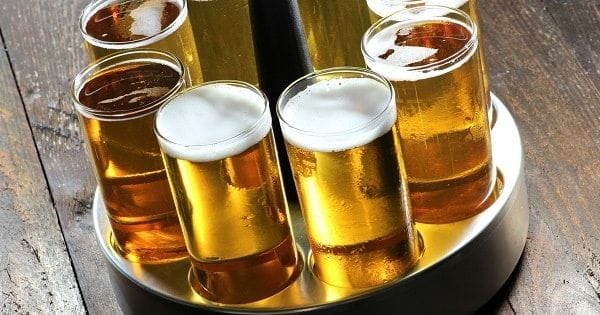
Stange (German for “rod” or “stick”) is a tall, narrow, cylindrical glass traditionally used to serve Kölsch-style beers from Cologne, Germany — full of history and tradition.
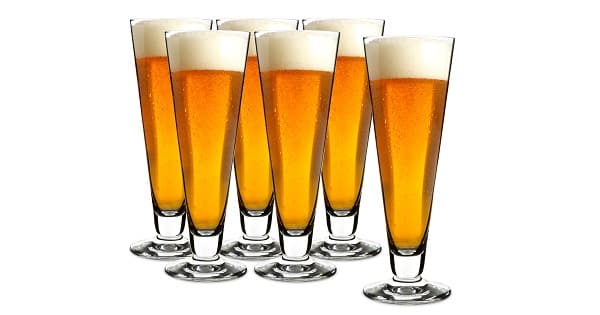
The Pilsner glass is used for many types of clear, bright beers. Its classic trumpet shape is narrow at the base and widens toward the top, maintaining carbonation, showcasing color and enhancing foam retention.
Serving beer in a frozen glass might seem like a good idea, but it actually destroys its aromas, dilutes it with water, and produces flat, lifeless foam. Here is why you should avoid it.
Rinsing the glass is the last of multiple equally important stages for beer service, but it is completely irrelevant if the glass being rinsed has not been properly washed beforehand.
The origins of the snifter glass date back to 18th-century France, gradually refined by European glassmakers to capture and concentrate the complex aromas developed during prolonged barrel aging.
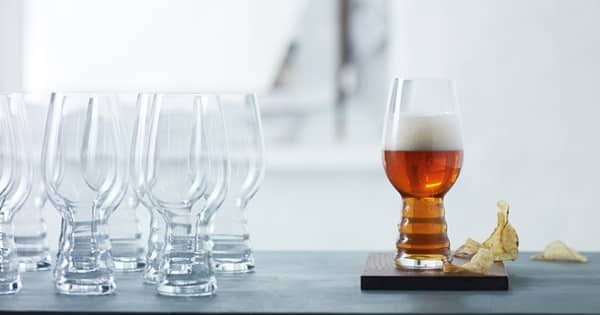
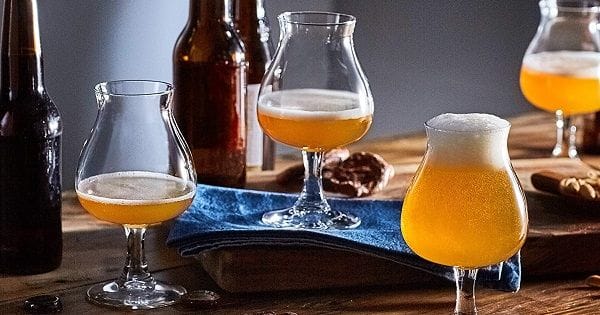
Developed in 2013 through a collaboration between the German glassware company Spiegelau and two of the leading companies of the Craft Beer movement in the United States, with Sam Calagione from Dogfish and Ken Grossman from Sierra Nevada.
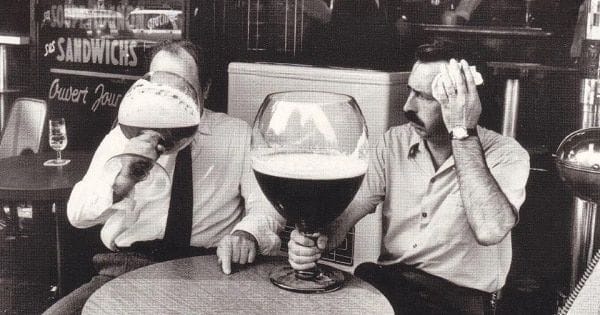
Researchers at the University of Bristol in the United Kingdom conducted an experiment that sought to demonstrate how the shape of the glass has a huge effect on the speed at which we consume a beer.
The AnDer glass was created by a team led by consultant Derek Walsh, sommelier André Köppen, and glass designer Alfred De Groot, who sought to address the need for a specialized glass for beer tasting.