This post is also available in:
 Español
  Português
The Pilsner glass is used for many types of clear, bright beers, with its classic shape that is narrow at the base and widens toward the top.
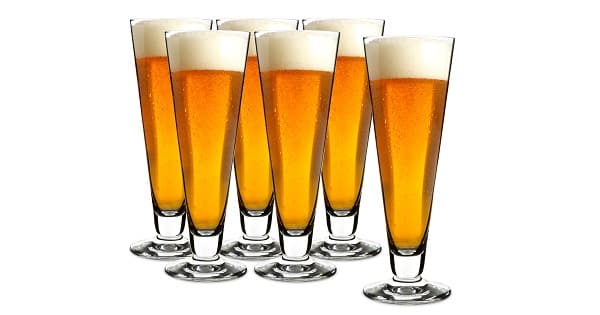
The Pilsner glass is tall, slim and conical, with a trumpet shape that allows it to contain the sparkling carbonation of the style while openly showcasing its clarity and color, while also helping to increase foam retention.

Its design promotes the retention of volatile compounds, enhancing their perception and allowing aromas to travel directly to the nose while drinking, accentuating the experience with every sip.
The most traditional versions have a harmonious, gradual widening, while others display a more pronounced curve — so they can be found in multiple forms.
Pilsner glasses are almost always smaller than a pint, with a capacity ranging from 250 to 360 ml (12 oz), although in Europe they can be found in sizes of up to 500 ml.

Suggested beer styles
- Pilsner
- Dortmunder
- Kölsch
- Altbier
- Cream Ale
- California Common
- Scotch Ale
Frequently Asked Questions (FAQ)
1. What is the exact difference between a Pilsner glass and a Weizen glass?
Although both are tall and stylized, they were designed for completely different styles. The Pilsner glass is straight, conical and trumpet-shaped, ideal for maintaining the carbonation and clarity of light lagers. The Weizen glass has a very pronounced upper curve to contain the dense foam of wheat beers, plus a thicker base to retain yeast sediment.
2. How does the shape of the Pilsner glass affect the temperature of the beer?
The tall, slim design with a narrow base reduces the beer’s contact surface with outside air and with the drinker’s hands. This minimizes body heat transfer to the liquid, keeping refreshing styles like Pilsner, Kölsch or Dortmunder colder for much longer while drinking.
3. Why is “Beer Clean” physical and chemical cleanliness essential in a Pilsner glass?
A glass with invisible traces of grease, soap or rinse aid will destroy foam retention and dissipate carbonation rapidly. To check if the glass is Beer Clean, bubbles should not cling to the inner walls when beer is poured; if they do, impurities are present that will ruin the sensory and visual experience.
4. What is “nucleation” at the base of some Pilsner glasses and what does it do?
Many premium modern Pilsner glasses include a laser etching at the bottom called nucleation points. This relief generates a constant, controlled release of CO2 bubbles, maintaining the beer’s carbonation and continuously feeding the foam head so it does not fade before the glass is finished.
5. Why are dark styles like Scotch Ale recommended in a Pilsner glass?
Although originally designed to highlight the clarity of golden beers, the Pilsner glass’s conical, widening trumpet shape channels the complex caramel, peat and fruity ester aromas of a Scotch Ale directly toward the nose, enhancing olfactory perception of fuller-bodied, higher-alcohol beers.

Recommended
- How to Make Beer-Battered Fried Chicken: Recipe and Step by Step
- Vertical Tasting vs. Horizontal Tasting: Goals and Differences