This post is also available in:
 Español
  Português
  Français
While there is an apparently unlimited number of types of sour beers or mixed fermentation beers, initially it must be understood that all of them are inspired by two Belgian styles, Lambic and Red/Brown Flanders.
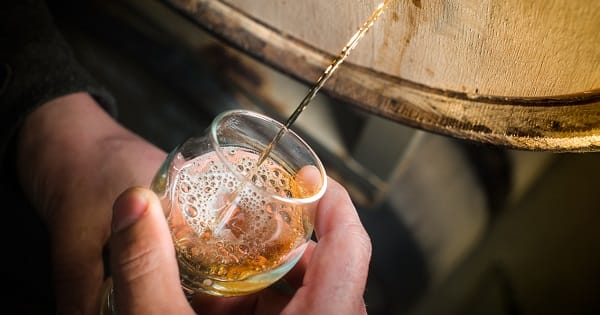
Generally, the aromas and flavors of sour and mixed fermentation beers are usually microbiologically driven, although this does not mean that malt and hops have no influence, but rather that the microorganisms used to ferment these beers will alter the character of the base ingredients.
Common Aromas and Flavors in Sour Beers
The aromas and flavors of sour and/or mixed fermentation beers can be divided into three main categories: fruity, acidic, and what brewers collectively call “funky.”
1. Fruity Aromas and Flavors
Fruity aromas and flavors, whether imparted by microorganisms or fruits, are dominant characteristics of many types of sour and mixed fermentation beers.
Generally, when fruity flavors are not derived from fruits, they come from ethyl esters and other types of esters often produced by wild yeasts of the Brettanomyces type, although also by wild Saccharomyces and lactic acid-producing bacteria.
Lactic acid or low amounts of acetic acid can also impart their own fruity character to a beer, often generating synergy with the fruity esters already present.
These types of fruity flavors can include pineapple, pear, cherries, apricots, ripe stone fruits, citrus, bananas, mango, tropical fruits, apple, blackcurrants, flowers/roses, etc.
Fruity character, of course, can also come from a fruit, but aging usually minimizes, modifies, or even eliminates this origin.
2. Acidic Aromas and Flavors
The “sour” flavor and aroma of beers categorized as sour is mainly driven by organic acids such as lactic acid, acetic acid; and in the case of fruit sour beers, citric acid and other organic acids derived from fruits.
Lactic acid generally presents as a citrusy and tart flavor; in contrast, acetic acid, at low levels, presents as sweet-and-sour, sometimes like green apple.
At high levels, acetic acid smells and tastes like vinegar and is considered an off-flavor, while lactic acid tends to be less harsh on the throat than acetic acid and is generally also more desirable.
In general, any level of lactic acid, from minimal to intense, can be pleasant or desirable in sour beers, with high levels leading to a more acidic flavor and low levels leading to a slight sweet-and-sour taste.
Organic acids derived from fruit can also increase the overall acidity or the “perception” of acidity.
3. “Funky” Aromas and Flavors
The term “funky” is often used as a generic term for different combinations of individual flavors and can mean different things to different people.
Funky generally refers to a combination of aromas and flavors that can include medicinal notes, horse blanket, leather, farm animals, dry hay, plastic, smoke, band-aid, clove, goat, cheese, wax, sweat, solvent, mold, soap, oil, mint, dried rose, eucalyptus, vomit/bile, foot odor, coconut, and/or vanilla.
These flavors generally derive from phenols and/or fatty acids produced during the fermentation of yeasts such as Brettanomyces, Pichia, and other wild yeasts.
Also included are enteric bacteria (in the case of spontaneous fermentation), lactic acid bacteria, and acetic acid bacteria.
Defining whether these individual flavors are “desired” or “undesired” aromas and flavors can be complicated, but a good rule of thumb is that if a “funky” character is low enough not to distract the consumer and adds complexity to enjoying the beer, then it should be considered desirable.
However, if the level of a specific flavor is so high that it is unpleasant or distracts from enjoying the beer, then it could be considered an unpleasant flavor.
Some styles, such as mixed fermentation sour beers and Lambic/Gueuze-type beers, welcome certain levels of many of these characteristics, but other styles, such as Kettle Sour, should have few or none in their profile.
Common Off-Flavors in Sour Beers
As with all off-flavors, each person has a different sensory threshold for each of them, with some people being more sensitive to some and less to others.
1. Acetic Acid
Among the most common off-flavors in mixed fermentation beers is an abundance of acetic acid. Often desirable at low levels, a high level of acetic acid smells and tastes like vinegar.
At these levels, acetic acid is more pungent than lactic acid and can cause an unpleasant burning sensation in the back of the throat.
Acetic acid bacteria (acetobacteria, gluconobacteria, and others) are the main producers of acetic acid, but Brettanomyces yeasts can also produce it in large quantities.
In most cases, large amounts of acetic acid are only produced when there is a large amount of oxygen available to the microorganism(s) that produce it.
Too much acetic acid indicates that the beer may have been exposed to too much oxygen during fermentation and/or aging processes.
Low levels of acetic acid can impart a pleasant fruity character and are acceptable in sour beers and/or beers brewed with Brettanomyces; however, this character should be restricted.

Red/Brown Flanders-style beers are an exception, as low to moderate amounts of vinegar flavor can be appropriate if balanced with the malt and result in a pleasant “balsamic vinegar” character.
2. Ethyl Acetate
Ethyl acetate is a yeast-derived ester produced from acetic acid and ethanol. In small amounts, it smells and tastes fruity, often like pineapple, and can be beneficial to a mixed fermentation beer.
However, a large amount of ethyl acetate smells and tastes like solvent or “nail polish remover.” Solvent character is always considered a defect in mixed fermentation beers, although again Red/Brown Flanders is an exception to this rule.
A high amount of ethyl acetate indicates too much oxygen exposure during fermentation and/or beer aging. Excessive acetic acid character and excessive ethyl acetate character often present simultaneously.
3. Tetrahydropyridine (THP)
Tetrahydropyridine (THP) is a ketone derived from microorganisms (like diacetyl) and is generally perceived in the aftertaste of beer.
Its different forms can develop slightly different flavor descriptors, but they are generally described as grainy at light levels and as “mouse cage” at higher levels. It is often compared to the flavor of American breakfast cereal Cheerios.
THP is believed to derive from certain strains of Lactobacillus (heterofermentative) and/or Brettanomyces, and its production is generally associated with the beer’s exposure to oxygen.
THP generally ages out of mixed fermentation beers if they are kept at room temperature for an extended period.
Small amounts of THP may not be bothersome to some, but for most, any level of THP is considered an unpleasant compound. As with diacetyl, about 30% of the population cannot detect some forms of THP.
4. Butyric Acid
Butyric acid is produced microbially in sour beers and is considered an off-flavor. It is characterized by smelling and tasting like bile or vomit, sometimes described as a slightly sweet “baby vomit.”
It is a common off-flavor in kettle sour beers, and its presence generally indicates a contaminant.
5. Isovaleric Acid
Isovaleric acid can be derived from microorganisms or from hops that have been exposed to oxygen.
It is usually characterized by having pungent cheese or foot odor aromas and flavors and is a characteristic that dissipates after a few months of aging.
Very small amounts of isovaleric acid may be acceptable in some styles, such as Lambic beers, but in any amount, it is generally considered an off-flavor in most sour and/or mixed fermentation beer styles.
6. Burnt Plastic or Rubber
The aroma and/or flavor of rubber or burnt plastic is generally considered an off-flavor in mixed fermentation beers.
However, very small levels can contribute positively to the beer’s complexity, as long as they do not distract from the overall pleasure of tasting the beer.
Generally, these aromas and flavors are believed to be developed from sulfur compounds, such as mercaptans or phenols, being indicative of unwanted microorganisms or stressed fermentation.
7. Indoles
Described as “fecal” or like “pigs on a farm,” indoles are considered an off-flavor in mixed fermentation beer at any level. Their presence is indicative of unwanted microorganisms present at some stage of fermentation.
Mouthfeel and Viscosity
Viscosity is a mouthfeel sensation, and its presence is detected either on serving or on the palate, as if it were a thick liquid, a vegetable oil, or a syrup.
Its development can be caused by microorganisms such as Pediococcus, although also by Pichia, Debaryomyces, Candida, and Lactobacillus, since it is actually a byproduct of their metabolism called exopolysaccharides (EPS).
If the viscosity is moderate to high in a mixed fermentation beer, it may indicate that more aging is needed.
Finally, in the presence of Brettanomyces, viscosity generally disappears after 3 to 9 months of aging at room temperature, although mature beers may still retain a slight viscosity that is considered desirable.
Frequently Asked Questions (FAQ)
1. What is the difference between Lambic and Flanders Red Ale?
Lambic is a spontaneously fermented beer, meaning it uses wild yeasts and bacteria from the air of the Zenne Valley in Belgium. This results in a markedly acidic, citrusy, and lactic flavor profile, often with a distinctive “funky” character (leather, farm). Flanders Red Ale (or Red/Brown Flanders) is a mixed fermentation beer, using mainly Saccharomyces yeasts followed by bacteria such as Lactobacillus and Acetobacter. It is aged in large oak barrels, giving it a more balanced profile: malty, fruity (cherry, plum), and an acidity closer to balsamic vinegar, thanks to an often acceptable level of acetic acid.
2. What is a “kettle sour” and how does it differ from a traditional sour beer?
Kettle sour is a quick method to produce acidity in beer. Unlike traditional sours that acidify during fermentation or aging (sometimes for years), in a kettle sour the acidification is done before boiling. The beer is inoculated with lactic acid-producing bacteria (Lactobacillus) in the kettle and kept at an ideal temperature until the desired acidity is reached (typically 24-48 hours). It is then boiled to stop acidification and kill the bacteria, resulting in a beer with clean, predominantly lactic acidity, with little or no “funky” character.
3. Is hops used in sour beers?
Yes, but generally in very small amounts and with low alpha-acid content. This is due to two main reasons. Hop alpha-acids are antimicrobial. If used in large amounts, they can inhibit the growth of lactic acid-producing bacteria (Lactobacillus and Pediococcus), which are essential for the acidity of these beers. On the other hand, hop bitterness clashes with acidity, potentially resulting in an unpleasant and unbalanced flavor. In most sour beers, the profile focuses on the acidic, fruity, and/or funky flavor, so bitterness is minimized so that acidity takes center stage.
4. How should I properly serve and store a sour beer?
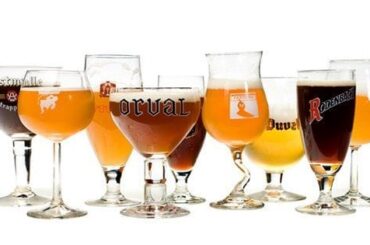
To optimize its flavor, sour beer should ideally be served at a temperature between 8°C and 12°C. This allows the complex fruity, acidic, and funky aromas to fully express themselves. A tulip or snifter glass is recommended to concentrate the aromas. As for storage, mixed fermentation sour beers are often designed to age. They should be stored vertically in a dark, cool place (ideally 10°C – 13°C) to allow the microorganisms to continue their slow evolution in the bottle, which can refine the acidity and develop new flavors over time.
5. Is it safe to drink a sour beer that has a slight “viscosity” or oily texture?
In most cases, it is completely safe. Viscosity, often described as an “oily” or “syrupy” texture, is caused by exopolysaccharides (EPS), which are byproducts of the metabolism of bacteria such as Pediococcus or Lactobacillus. This phenomenon is common in the early stages of mixed fermentation and generally disappears after several months of aging thanks to the action of Brettanomyces yeast, which breaks down the EPS. A slight viscosity in mature beers can even be considered desirable. It only becomes an off-flavor if it is excessive or if it is accompanied by other unpleasant flavors (such as butyric acid or indoles).