
This post is also available in:
 Español
  Português
  Français
The European Commission has registered Flanders Red Ale as a protected geographical indication (PGI), which means that across the EU single market the name and its Dutch version, Vlaams roodbruin bier, are now reserved for beers from West Flanders that meet the approved product specification.

The registration was formalized by Commission Implementing Regulation (EU) 2026/2168 of September 22, 2026, and announced in early October.
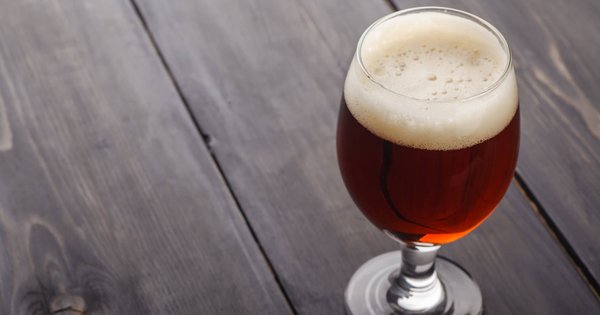
It is one of Belgium’s most recognizable sour beers, often compared to red wine for its color, its fruit and its acidity. With this registration, the EU protects a brewing method documented in West Flanders since 1851 and kept alive today by very few breweries anywhere in the world.
What Does the PGI Specification Require?
The single document published by the Commission defines Flanders Red Ale as a mixed fermentation beer matured entirely or partly in upright oak vats, traditionally known as foeders.
According to Brussels, this maturation method is unique in Belgian brewing culture and accounts for the mildly sour taste that sets the style apart.
The specification sets a minimum alcohol content of 3% and lists the permitted raw materials. These are barley malt, yeast, unmalted and other malted grains or fermentable sugars, local brewing water, hops, herbs, red fruit and natural sugars.
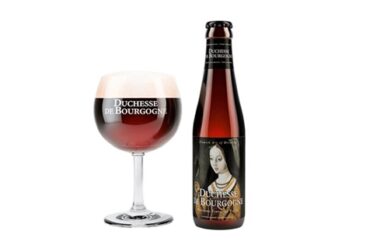
Beers of this style usually exceed that minimum comfortably, like Duchesse de Bourgogne from Verhaeghe, at around 6%.
Who Brews Flanders Red Ale?
The PGI protects a tradition shared by several breweries in West Flanders. The producers cited by Flemish public broadcaster VRT include Rodenbach in Roeselare, Verhaeghe in Vichte, Omer Vander Ghinste in Bellegem, Strubbe in Ichtegem, De Brabandere in Harelbeke, ‘t Verzet in Anzegem and SOSAB in Kortrijk.
Rodenbach is the brewery most closely associated with the style. As our guide to Flanders Red Ale explains, tradition holds that the mixed culture recipe was born at this brewery, which blends young beer with beer aged for months in foeders.
What Changes with European Protection?
Since its entry in the Union register, the names Flanders Red Ale and Vlaams roodbruin bier may only be used in the EU for beers that comply with the specification.

Protection covers labeling, commercial presentation and advertising, and allows action against imitations or references that could mislead consumers about the beer’s origin.
A brewery in another country making a Belgian style Flanders Red will no longer be able to sell it in the EU under that name. European geographical indication rules also prohibit evocation, including expressions such as style or type alongside the protected name.
Disputes over beer names have a long history, as shown by the long legal battle between Budweiser and Budvar.
How It Differs from Oud Bruin
The PGI is limited to the West Flanders tradition. Oud Bruin according to the BJCP, the sour beer of East Flanders associated with Oudenaarde and Liefmans, follows a different method and is not covered by this registration.
The BJCP guidelines describe Flanders Red as closer to red wine, fruity, tannic and dry from its time in wood, while Oud Bruin is maltier and less acidic.
Another Recognition for Belgian Beer
The registration adds to the recognition of Belgian beer culture, which UNESCO declared Intangible Cultural Heritage in 2016, as we recalled on the tenth anniversary of that declaration.
The European eAmbrosia register lists more than 3,900 protected names, and Flanders Red Ale joins it under number PGI‑BE‑03417.
Frequently Asked Questions (FAQ)
1. What is Flanders Red Ale?
It is a sour beer from West Flanders, in Belgium, made by mixed fermentation and matured entirely or partly in large upright oak vats called foeders. It has a reddish brown color, red fruit notes and a gentle acidity reminiscent of red wine. Since 2026 it has been a protected geographical indication in the European Union.
2. What does it mean to be a protected geographical indication?
It means that within the EU, the names Flanders Red Ale and Vlaams roodbruin bier may only be used for beers that comply with the specification approved by the European Commission. That includes the West Flanders area, maturation in foeders and a minimum alcohol content of 3%.
3. Which breweries make Flanders Red Ale?
Producers in West Flanders include Rodenbach, Verhaeghe with its Duchesse de Bourgogne, Omer Vander Ghinste, Strubbe, De Brabandere with Petrus Roodbruin, ‘t Verzet and SOSAB. Rodenbach is the brewery most closely associated with the style.
4. What is the difference between Flanders Red Ale and Oud Bruin?
Flanders Red Ale comes from West Flanders, matures in wood and has a more sour and tannic profile, close to red wine. Oud Bruin comes from East Flanders, is maltier with a softer acidity, and is not part of the new PGI.

Recommended
- Duchesse de Bourgogne: Tasting Notes and Recommended Pairings by a Beer Sommelier
- 5 Bike Routes to Discover the Beer Culture of Flanders in Belgium