This post is also available in:
 Español
  Português
  Français
Most people who enjoy beer, craft or otherwise, usually own a decent collection of beer glassware.
Many of them, however, may not have noticed that they own “nucleated” beer glasses, or they may not even know what that means, so let’s try to clear it up below.

What Are Nucleation Points?
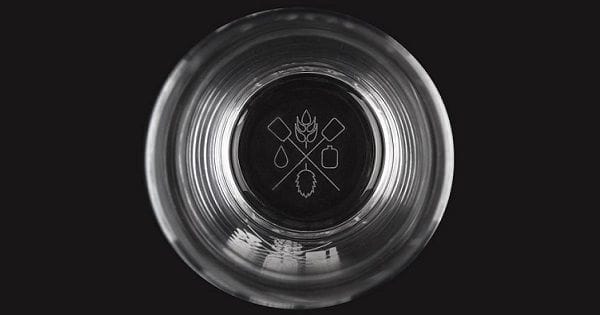
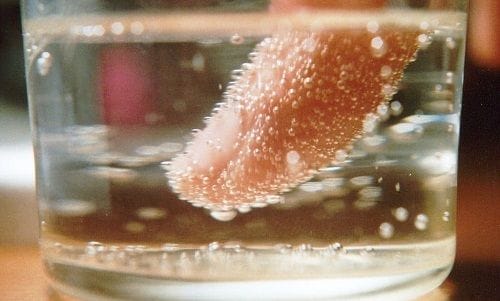
Nucleation points are areas on the glass surface where the CO2 dissolved in beer meets a small, intentionally added obstruction, which causes carbon dioxide to build up and then escape from the liquid as bubbles.
A nucleated beer glass, then, is one with a textured inner base designed to create nucleation points that release an almost constant stream of CO2 rising toward the surface.
A well-known example is the Samuel Adams Boston Lager glass, designed with the consulting firm TIAX, which features a laser-etched nucleation point to release bubbles and aroma steadily (Samuel Adams).
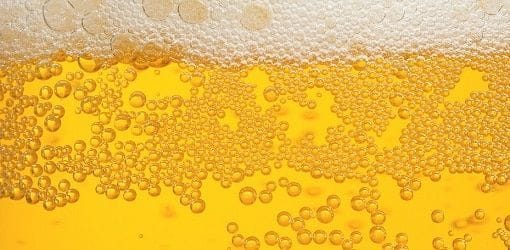
These bubbles rise to the top of the glass and build a thicker, foamier and longer-lasting head.
It’s worth pointing out that this effect is similar to what happens in glassware that hasn’t been properly washed and still holds traces of dust or grease, something you should definitely avoid.
Benefits of Nucleated Glassware
The benefit of the bubbling action produced by nucleated glassware is that it promotes a bigger head and usually enhances the perception of the beer’s aromas and flavors.
More nucleation points will indeed produce a pour with more and better foam, since that is exactly what this type of glassware is designed for.
As the head grows, each tiny bubble in it bursts and releases aromatic compounds into the air and toward the drinker’s nose.
How Nucleation Points Affect Beer
A fairly common misconception is that nucleated glassware increases a beer’s carbonation, which needs some clarification, since the amount of carbon dioxide dissolved in the liquid is limited.
What’s really happening is that the dissolved CO2 is released faster than it would be in a “regular” beer glass without nucleation points.
That’s why nucleated beer glassware suits some beer styles better than others.
Nucleated Glassware and Beer Styles
There are countless types of beer glasses around the world, each designed to bring out the best traits of a particular style, enhancing appearance and sensory perception through its structure and shape.
Nucleated glassware, on the other hand, relies on more than shape to have a pronounced effect on the beer poured into it, and it isn’t right for every beer.
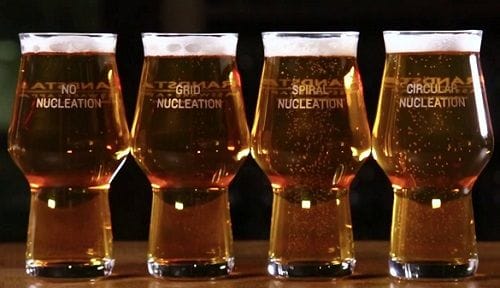
In general, nucleation points are great for any beer style where aroma plays a major role in the overall perception.

For example, for fans of Belgian beers, this type of glassware could help accentuate the aromas and flavors of moderately carbonated styles, at the cost of pouring a little less into the glass.
Nucleated glassware is also an excellent choice for Pale Ale or IPA styles, where the hop aroma is meant to stand out above everything else.
Highly carbonated beer styles, in contrast, may not be the best match for this type of glassware, since they could turn into foam volcanoes.
Other styles that are probably not a good fit for nucleated glassware include beers meant for slow sipping or those with high alcohol and low carbonation, such as barleywine or barrel-aged beers.
Advantages of Using Nucleated Glassware
Keep in mind that this type of glassware was created with a specific goal, which is to improve the appearance, the aroma and the overall experience of drinking a beer.
1. Head Formation
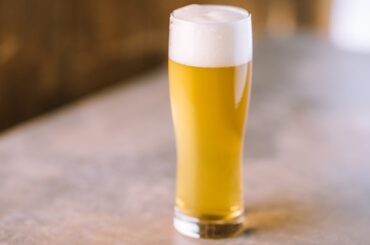
A nucleated glass will definitely produce a big, foamy head compared to a regular pint.
2. Perceived Aroma
This is a direct result of building a bigger head, because as each tiny bubble pops at the surface, it releases the beer’s aromas.
3. Flavor Intensity
In humans, the sense of taste is strongly shaped by the sense of smell, and the extra aroma released can have a pronounced effect on how a beer’s flavor is perceived.
4. Appearance
The steady stream of bubbles rising through a crystal-clear beer creates an eye-catching effect that is highly prized by those who believe appearance is a key part of enjoying a beer.
Disadvantages of Using Nucleated Glassware
Overall, there is only one real drawback to using nucleated glassware, and it is directly related to the beer’s carbonation.
All those beautiful bubbles rising through the glass are carbon dioxide, the gas responsible for fizz and foam.
The longer a beer sits in a nucleated glass, the more CO2 it releases, and over time this makes the beer go flat faster than it would in a regular pint.
So it really comes down to choosing the right glass for each type of beer and for each drinking occasion.
Frequently Asked Questions (FAQ)
1. How Does Beer Temperature Affect the Performance of Nucleated Glasses?
CO₂ is more soluble in the cold, so a very cold beer holds on to more gas and the nucleation points release fewer bubbles. As the beer warms up in the glass, the gas escapes more easily and the nucleation effect becomes more noticeable. That’s why it’s best to serve each style at its recommended temperature and no colder than needed.
2. Is There a Difference Between Laser-Etched Nucleated Glasses and Those With Physical Relief Patterns?
Both create microscopic irregularities on the inner surface of the glass, which is where dissolved CO₂ forms bubbles. Laser etching places those points precisely, and relief patterns or sandblasting cover a larger area. In both cases, the result depends more on the beer and its carbonation than on the etching method.
3. Is Nucleated Glassware Suitable for Nitro Beers?
It’s usually not the best choice. The creamy head of nitro beers forms as they’re poured, thanks to the nitrogen and the special faucet, and it doesn’t need nucleation points. A nucleated glass would only speed up the loss of the little CO₂ they contain, without adding anything to their texture.
4. How Does the Glass Material Influence Nucleation?
What creates nucleation points is the irregularity of the glass’s inner surface, whether etching, relief or leftover dirt, rather than the type of glass. A smooth, perfectly clean glass barely forms bubbles on its walls, which is why intentional etching produces a steady, localized stream of bubbles.

Recommended
- Beer Glassware: Imperial Nonick Pint
- Basic Psychology of Consumption According to the Type of Beer or Glass Used