This post is also available in:
 Español
  Português
The Gose style (pronounced “goze-uh”) is a type of beer whose earliest references date back to the reign of Emperor Otto III more than 1,000 years ago.
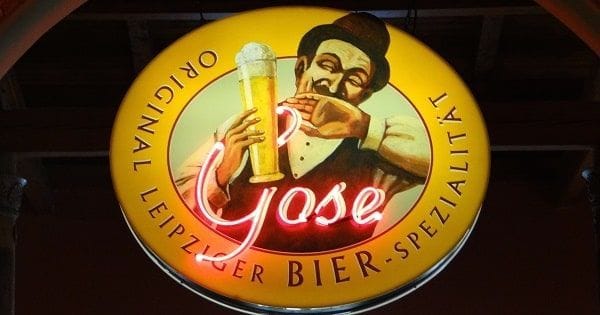
Its brewing was established during the 16th century in the then-prosperous mining city of Goslar, in the north-central region of Germany (present-day Lower Saxony), which had built its wealth through silver extraction.
The Legend of the Origin of the Gose Style
Legend has it that a knight named Ramm was walking through the area when his horse kicked the ground and uncovered rich silver deposits that would later give rise to the first mining settlements.

The Gose River, which flows through the city from the southwest and gave its name to the beer and served as the water supply for brewing, is said to have taken its name from Ramm’s wife, Gosa.
It was during the Middle Ages, as the mining industry declined and in the search for better markets, that the brewing of the Gose style migrated to nearby cities, particularly Leipzig, in eastern Germany, whose first brewing license dates from 1738 and which is now most closely associated with the style.
By the end of the 19th century, almost all Gose production was concentrated in 80 breweries within a 150-kilometer radius of Leipzig, and it was the most popular beer among its residents — so much so that traditional Gose is now called “Leipziger Gose.”
Characteristics of the Gose Style
The Gose style expresses “terroir” in beer — the idea that the environment in which it is produced imparts certain distinctive characteristics.
Unique in aroma and flavor, Gose is sharply intense and slightly salty due to the high mineral concentrations that were characteristic of the water from the Gose River.
Generally, barley malt and wheat malt (up to 60%) are used in its brewing, which gives it a degree of acidity and softness on the palate.

Originally, it was brewed by spontaneous fermentation (like Lambic and Berliner Weisse) until around 1880, when brewers began using ale yeasts and lactic acid bacteria (Lactobacillus).
Additionally, coriander seeds and small amounts of hops are added. The result is a yellow-colored beer, hazy, unfiltered, medium-bodied, effervescent, tart and fruity, with a restrained character of salt and coriander and low bitterness. Very refreshing and highly attenuated.
Although, due to the use of coriander and salt, Gose did not comply with the German Reinheitsgebot (purity law, abolished in 1986), since the original set of standards established in 1516 only applied to the Bavaria region, when it became national law in 1906, Gose was allowed to be brewed under an exemption that classified it as a regional specialty.
Traditionally it was bottled in a flat, semicircular bottle with a tall, narrow neck, designed to trap the foam generated during the second fermentation in the bottle and thus produce a natural yeast plug.
Why Did the Gose Style Disappear?
During the 20th century, the brewing of the Gose style slowly and intermittently disappeared, with World War II devastating most of the existing breweries.
In 1945, the last brewery producing it, Rittergutsbrauerei Döllnitz, closed its doors after being nationalized.
Four years later, Gose was revived by a former Döllnitz brewer, Friedrich Wurzler, who is believed to have been the only person who still knew the true recipe.
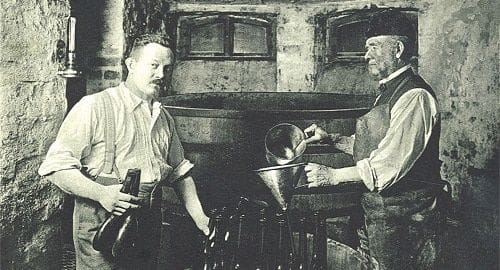
Years later and before his death, Wurzler passed the recipe to his stepson Guido Pfnister, who continued brewing it privately until his own death in 1966.

Low demand, the isolation and blockade following the Cold War division of Germany, and agricultural reform in East Germany — which prioritized the use of cereal grains for bread production — ultimately led to its disappearance.
The Revival of the Gose Style
It was not until the mid-1980s that the Gose style reappeared around Leipzig after nearly 30 years, thanks largely to Lothar Goldhahn, the owner of a bar in the city who, like Pierre Celis with Witbier in Belgium, bet strongly on reviving the style.
Goldhahn began by researching its characteristics with former consumers based on a few notes from the original recipe, then turning to the Schultheiss Berliner-Weisse-Brauerei, located in East Berlin, which at the time brewed Berliner Weisse.

Goldhahn was also joined by Dr. Hartmut Hennebach, a former microbiologist who had lost his job during the communist period and had until then been working as a bartender.
The first test batches were brewed in 1985 and commercial production began in 1986, but lasted only until 1988.
Since then, its production has been continuously resumed by at least three German breweries: Gasthaus & Gosebrauerei Bayerischer Bahnhof and Familienbrauerei Ernst Bauer in Leipzig, and Brauhaus Goslar in Goslar.
Today, the true market for Gose is not in Leipzig but abroad, where more than 30% of production is exported.
As expected, this interest meant that brewers outside Germany began producing their own versions, primarily in the USA, where it has reached its peak of popularity, with versions produced by breweries such as Westbrook, Anderson Valley, Evil Twin, and Sierra Nevada, among many others.
BJCP Style Guide Guidelines
Highly carbonated, tart and fruity wheat beer with a restrained character of salt and coriander and low bitterness. Very refreshing, with lively flavors and high attenuation.
1. Aroma
Light to moderate stone fruit aroma. Light, somewhat sharp acidity. Notable coriander aroma, which may have a characteristic lemonade-like quality and a high to moderate intensity. A light, bready, yeasty character like uncooked fermented bread dough. The acidity and coriander may create a bright, lively impression. Salt, if perceptible, may be perceived lightly, with a sea breeze character or simply as general freshness.
2. Appearance
Unfiltered, with moderate to full haze. White foam of moderate to high height with defined bubbles and good retention. Effervescent. Yellowish color.
3. Flavor
Moderate to restrained, but notable acidity, like a few drops of lemon in iced tea. Moderate dough/bread-like malt flavor. Light to moderate stone fruit, pip fruit, or lemon character. Light to moderate salty flavor up to the taste threshold. The salt should be noticeable (particularly in the initial taste), but should not have an overly salty flavor. Low bitterness, no hop flavor. Dry finish, fully attenuated with acidity rather than hops balancing the malt. Acidity may be more noticeable in the finish and thus enhance the refreshing quality of the beer. Acidity should be balanced and not excessive (though historical versions have been quite tart).
4. Mouthfeel
High to very high carbonation, effervescent. Light-medium to medium-full body. Salt, if perceived, may cause a slight tingling sensation with a mouth-watering quality. Yeast and wheat may give some body, but should not create a heavy sensation.
Frequently Asked Questions (FAQ)
1. What is the difference between a Gose and a Berliner Weisse?
The main difference lies in the ingredients and origin. Both are sour wheat beers (thanks to Lactobacillus), but Gose traditionally includes salt and coriander seeds for its characteristic flavor, elements not present in Berliner Weisse. Historically, Gose originated near Goslar and Leipzig, while Berliner Weisse is from Berlin. Berliner Weisse also tends to be lighter and is often served with syrups (red raspberry or green woodruff).
2. What foods pair well with a Gose?
Due to its tart, refreshing, and slightly saline profile, Gose is excellent for pairing with seafood, especially raw oysters, white fish, and sushi, as the beer’s salinity complements that of the dish. It also pairs very well with fresh salads, mild goat cheeses, and dishes with a slight heat or spice, such as Thai or Vietnamese cuisine, as its acidity helps cleanse the palate.
3. What other beers are similar to the Gose style?
The most similar styles are other sour wheat beers, such as Berliner Weisse and some Belgian Witbiers (though these are less acidic and not salted). It also shares similarities with some modern Sours, especially those incorporating fruit or salt, such as Fruit Sours or Kettle Sours that seek tart and refreshing profiles. Styles where terroir and salinity are key, such as some Oyster Stouts, may also be of interest.
4. How salty is traditional Gose?
In traditional Gose, the salinity is generally subtle, perceived as a light freshness or a “touch of sea breeze” (as indicated in the BJCP guide) and not as a predominantly salty flavor. Originally, this salinity came naturally from the high mineral concentrations of the Gose River water in Goslar. Today, salt is intentionally added (often table salt or sea salt) to replicate this effect, enhance the fruity and coriander flavors, and contribute to the characteristic mouthfeel that makes it so refreshing.
5. Has the Gose style continued to evolve since its modern revival?
Yes, modern Gose has evolved significantly, especially outside of Germany (primarily in the USA). Craft brewers have taken the sour and saline base to create countless variations, with the most popular being Fruit Gose (such as passion fruit, raspberry, mango) and Imperial Gose (with higher alcohol content). While traditional Gose (Leipziger Gose) maintains its coriander and salt flavors, current versions often explore much broader flavor profiles, prioritizing acidity and fruit over traditional coriander.