This post is also available in:
 Español
  Português
  Français
Mosquitoes, those tiny insects that have accompanied us throughout history, have developed surprisingly sophisticated mechanisms for locating their preferred hosts.
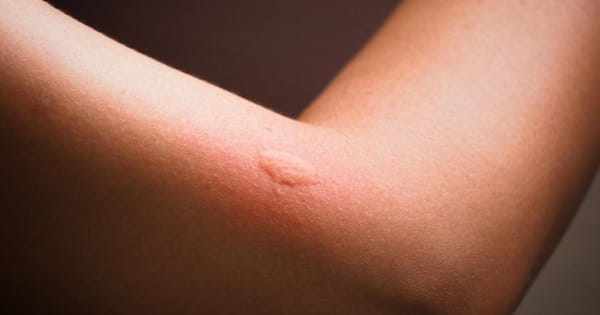
In recent years, scientific research has revealed an intriguing finding, namely that beer consumption can make us more attractive to these blood-sucking insects.

This phenomenon, which might seem trivial at first glance, has profound implications for public health and our understanding of disease vector ecology.
Beer as an Attraction Factor
For decades, the relationship between alcoholic beverage consumption and mosquito behavior has intrigued researchers.
One of the first experimental tests came in 2002, when Shirai and colleagues reported in the Journal of the American Mosquito Control Association that mosquitoes landed more often on 13 volunteers after they drank 350 ml of 5.5% beer.
In 2010, Thierry Lefèvre and his team confirmed this in Burkina Faso with Anopheles gambiae, the main malaria-transmitting mosquito in Africa.
Fifteen minutes after drinking a liter of dolo, a local sorghum beer of around 3%, the odor of 25 volunteers activated 47% of the mosquitoes, compared with 35% before drinking. In addition, 65% of those that took flight headed toward them.
In the control group, made up of 18 volunteers who drank water, attraction did not change.
The most intuitive explanation would be that beer warms the body or makes people exhale more carbon dioxide, but the data do not support it. In Lefèvre’s study, armpit temperature even dropped slightly after drinking. Exhaled CO₂ did not change, so neither of the two explains the increase in attraction.
Shirai also found no relationship between landings and ethanol in sweat or skin temperature.
Biochemical Mechanisms
Because in Lefèvre’s experiment the mosquitoes received only the volunteers’ body odor, the most likely explanation is that beer changes that odor, the mix of skin and breath compounds that mosquitoes use to choose whom to bite. Which specific compound changes after drinking is still unclear, according to the authors themselves.
Carbon dioxide activates mosquitoes and alerts them that someone is nearby, but in Lefèvre’s study it does not explain the difference between drinking beer and drinking water.
The most recent evidence comes from the Lowlands festival in the Netherlands, where a team from Radboud University Medical Center set up a container laboratory in 2023 and measured attraction on 465 attendees. Anopheles mosquitoes landed 1.35 times more often on the arms of those who had drunk beer, according to a preprint published on bioRxiv in August 2025 that has not yet passed peer review.
Neither Lefèvre’s study nor the festival study measured how long the effect lasts. Shirai and Lefèvre conclude that drinking alcohol increases the risk of bites, something to keep in mind at outdoor gatherings where people drink beer.
Practical Implications to Consider
The results of these studies have significant practical consequences, especially in regions where mosquito-borne diseases are endemic.
During outdoor activities such as picnics or social gatherings, it is advisable to use repellent and adopt additional protective measures, as well as to drink water to offset the diuretic effect of beer.
Dusk and night hours, when malaria mosquitoes bite, should be given special attention. The question also arises as to whether different types of beer might have variable effects on mosquito attraction.
The interaction between beer consumption and other factors, such as blood type or level of physical activity, represents a fertile area for future research.
In the case of blood type, Shirai and colleagues observed in 2004 that the tiger mosquito (Aedes albopictus) landed more often on people with blood type O, although the difference was only significant compared with blood type A.
The table summarizes the three cited studies that measured the effect of beer on mosquitoes.
| Study | Country | Participants | Drink | Result |
| Shirai et al., 2002 | Japan | 13 volunteers | 350 ml of 5.5% beer | More landings after drinking |
| Lefèvre et al., 2010 | Burkina Faso | 25 with beer and 18 with water | 1 liter of dolo (around 3%) | Activation from 35% to 47% and 65% of flights toward the volunteer |
| Blanken et al., 2025 (preprint) | Netherlands | 465 festival attendees | Beer, whatever each participant drank | 1.35 times more landings |
Frequently Asked Questions (FAQ)
1. Do All Beer Types Attract Mosquitoes Equally?
There are no studies comparing beer varieties. The three cited studies used very different drinks, a 5.5% beer, an African sorghum beer and whatever each festival attendee was drinking. Attraction increased in all of them.
2. Is the Effect on Mosquito Attraction Immediate?
In Lefèvre’s study, the increase was already measured 15 minutes after drinking. The cited studies do not indicate how long it lasts.
3. How Can You Reduce the Risk of Bites?
It is recommended to apply insect repellent containing DEET or icaridin, wear clothing that covers the skin, avoid strong perfumes and stay away from humid areas or areas with dense vegetation.
4. Why Does Beer Attract Mosquitoes?
It is not known for certain. Lefèvre’s study ruled out an increase in body temperature or exhaled CO₂ as the cause. Shirai also found no relationship with skin temperature. That is why the main hypothesis is a change in body odor that has not yet been identified.
References
- Shirai, O., Tsuda, T., Kitagawa, S., et al. (2002). Alcohol ingestion stimulates mosquito attraction. Journal of the American Mosquito Control Association, 18(2), 91-96. https://pubmed.ncbi.nlm.nih.gov/12083361/
- Shirai, Y., Funada, H., Takizawa, H., Seki, T., Morohashi, M., & Kamimura, K. (2004). Landing preference of Aedes albopictus (Diptera: Culicidae) on human skin among ABO blood groups, secretors or nonsecretors, and ABH antigens. Journal of Medical Entomology, 41(4), 796-799. https://doi.org/10.1603/0022-2585-41.4.796
- Lefèvre, T., Gouagna, L. C., Dabiré, K. R., et al. (2010). Beer consumption increases human attractiveness to malaria mosquitoes. PLoS ONE, 5(3), e9546. https://doi.org/10.1371/journal.pone.0009546
- Blanken, S. L., Inklaar, M. R., Wan, Z., et al. (2025). Blood, sweat, and beers: investigating mosquito biting preferences amidst noise and intoxication in a cross-sectional cohort study at a large music festival [preprint]. bioRxiv. https://doi.org/10.1101/2025.08.21.671470