This post is also available in:
 Español
  Português
In recent years, a particular fondness has developed for beers with “extreme” qualities: intensely hopped, strong roasted notes, wild funky characteristics, and high alcohol content.
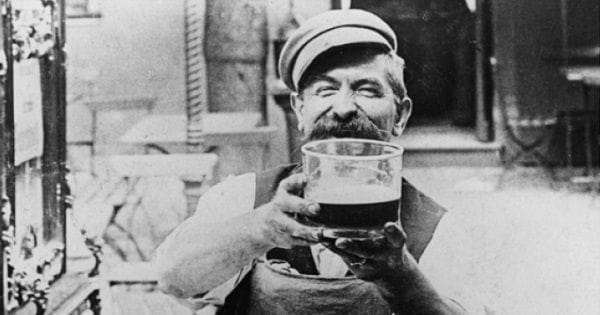
This sets the stage for sour flavors, where the Berliner Weisse manages to offer a restrained lactic acidity as its fundamental note, and where secondary fermentation results in a highly carbonated and very dry beer, placing it without a doubt among the most refreshing beverages — whether beer or otherwise.

Until recently rare even in Berlin, the current general delight in sour beers has put it back on the radar, with enthusiastic brewers from around the world venturing into its production, new German craft brewers reinventing it, and traditional style brewers struggling to hold their ground.
Berliner Weisse could not be more different from the textured and spiced Hefe-Weissbier of Bavaria.
Instead, it emanates from the northern and central European belt where top fermentation and wild influence were preferred — the natural home of brewers who make Lambic, Flanders Red, Gose, and Witbier.
As the Berliner Weisse becomes known and researched by today’s brewers, it is becoming a kind of interpretive beer — often in line with its older roots — a ripe curiosity that will undoubtedly allow for further exploration.
The tradition of wheat beers
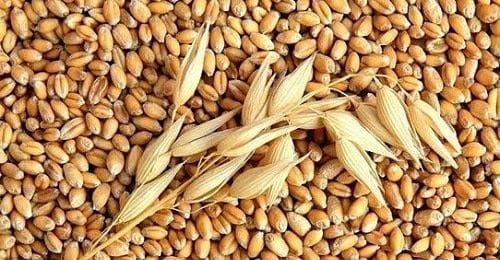
Brewing with wheat is as old as beer itself, and barley has not managed to displace it entirely.
Wheat cultivation spread widely across Europe during the Middle Ages, and many regional brewers used it for their local beers.
Many of those old beer styles died out, but many managed to survive, as demonstrated by the great variety of beers still brewed with raw or malted wheat.
Often, these were — or still are — influenced by wild yeasts and bacteria. Some brewers wisely chose to maintain this tradition, while others attempted to purge their beer of mischievous microbes through careful selection in inoculation or fermentation conditions.
Berlin began its life as a brewing city in 1572, and later in 1642 as a brewing city marked by the use of wheat, producing beers undeniably influenced by the ever-present and unavoidable Lactobacillus and Brettanomyces.
Berlin, with the potential to become the brewing mecca it could have been in the nineteenth century, was ready to stylistically perfect a distinctive indigenous beer. This raises the following question: what led to the development of the style?
The origins of the Berliner Weisse style
Some point to the Huguenots, Reformed French Protestants who came to Germany to escape Catholic hostility. As they moved through northern Europe, they encountered numerous regional beers, including those from France, Flanders, Brussels, and the Rhineland.
These regions bequeathed to us a great variety of top-fermented beers, some of which were heavily influenced by wild yeasts and bacteria, and which often contained wheat.
A more precise theory points to Cord Broyhan, an accomplished brewer who honed his craft in Hamburg and Hanover.
His eponymous Broyhan became the most widely distributed beer in northern Germany during the sixteenth and seventeenth centuries.
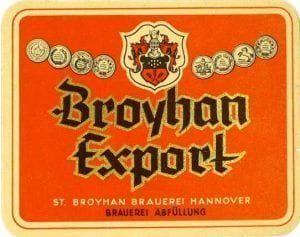
Relatively pale and low in gravity, the popular Broyhan found a home among opportunistic Berlin brewers in one of Europe’s most vibrant and cosmopolitan cities.
Berlin became the preeminent brewing city of continental Europe in the nineteenth century.
Berlin brewers exercised a degree of individuality with their indigenous beers, and a single brewery may well have developed distinct versions of the style by varying hop levels, gravity, and grain ratios.
It was common for brewers to produce beer at a higher alcohol content and then dilute it with water to suit their customers’ taste.
It may have been the distinctive thread of acidity that permeates the Berliner Weisse style that set it apart from other German beers.
As the pattern of the style developed, old and unusual procedures continued to be used despite the progressive brewing that swept most of Europe.
One of the most celebrated anecdotes about the style recounts that Napoleon’s soldiers drank Berliner Weisse during their assault on Berlin in 1809 and referred to it as the “Champagne of the North” due to its sparkling, elegant character.
Historical Berliner Weisse
The wort was often not boiled, although decoction was used, with hops added in the mash to aid filtration and fully extract their preserving qualities.

Typically, between 2 and 5 pounds of wheat were used for every pound of barley. As brewers elsewhere were moving toward bottom fermentation and single-strain yeast, Berlin’s Braumeisters remained true to their style.
It was simply another regional specialty that could even have been more closely related to Belgium.
Indeed, Berliner Weisses were sometimes revitalized with a dose of young, active beer — just as Gueuze is brewed by blending 1-, 2-, and even 3-year-old Lambic.
The Berliner Weisse style suffered the same fate as many regional beers during the second half of the nineteenth century, heavily pressured by the invasion of pale lagers.
However, it managed to weather the storm long enough to find refuge in the sciences related to fermentation and microbiology, thus maintaining its identity.
In this way, it was no longer spontaneously fermented but inoculated by brewers, so that identifying the organisms and conditions responsible for its development became paramount to properly perpetuating the style.
The acidity of “Lactobacillus delbrückii”
Biochemist Max Delbrück, while working at the Brewing Institute in Berlin between 1932 and 1937, isolated the potent bacterial strain that develops the style’s crucial acidity.
This strain was named Lactobacillus delbrückii, a common player also in the fermentation of Lambic, Gueuze, Flanders, and — today — American sour beers.

While the Berliner Weisse has not seen the same renaissance as many other ancient beer styles, it is undoubtedly in a better place than it was a generation ago.
Today there are various German brewers producing the style, some of whom even prefer to move away from the modern stylistic norm in favor of more original versions.
How to brew Berliner Weisse
Most are brewed and fermented in the traditional manner, with parameters and methods collectively unique to the style: minimal wort heating, single-digit IBUs, low original gravity, top fermentation and Lactobacillus, cold and/or warm conditioning, extreme attenuation, krausening, bottle conditioning, and extended maturation (often in stainless steel vessels).
The proportion of malted wheat has decreased from 50% to 30%. The wort is boiled for a very short time or kept just below boiling point solely to sanitize it while retaining the protein components essential for Lactobacillus nutrition and metabolism.
Conventional top-fermenting yeast is then inoculated alongside Lactobacillus delbrückii and fermented at standard temperatures.

After achieving proper attenuation, the wort is transferred to conditioning tanks and held warm or cold, depending on the brewery, with perhaps a fresh injection of krausen.
The conditioned beer continues to attenuate under the influence of Lactobacillus while developing its sharp acidity.
Krausen is then added again and the beer is bottled unpasteurized, encouraging metamorphosis in the bottle.
Attenuation can approach 100 percent, resulting in an extremely dry beer with an ABV of 2.7 to 3.5%.
This otherwise delicate beer, with its penetrating and lip-puckering profile, is typically softened with fruit syrups (mit Schuss) in its homeland.
Green woodruff (Waldmeister) or red raspberry (Himbeere) are also commonly used.
However, those who have already conditioned their palates to other sour beers could perfectly enjoy it without these sweet softeners.
The Berliner Weisse also holds the legal protection “Deappellation D’origine Contrôllée,” just as the Kölsch style does in Köln.
Berliner Weisse according to the BJCP
1. Aroma
A sharply sour character is dominant (moderate to moderately high). Can have up to a moderate fruity character (often lemon or tart apple). Fruitiness may increase with age and a slight floral character may develop. No hop aroma. Wheat may present as uncooked bread dough in fresher versions and, combined with the acidity, may suggest sourdough bread. May optionally have a restrained funky Brettanomyces character.
2. Appearance
Very pale straw color. Clarity ranges from clear to slightly hazy. White, voluminous, dense head with poor retention. Always effervescent.
3. Flavor
A clean lactic acidity dominates and can be very strong. Some complementary doughy, grainy, or bread-like flavors are generally perceptible. Hop bitterness is undetectable; acidity provides the balance rather than hops. Never vinegary. A restrained citrus fruitiness of lemon or tart apple may be detected. Very dry finish. Balance is dominated by acidity, but some malt flavor should be present. No hop flavor. May optionally have a restrained funky Brettanomyces character.
4. Mouthfeel
Light body. Very high carbonation. No alcoholic warmth. Sparkling, with juicy acidity.

Recommended
- 10 incredible pairings of beer and Peruvian food you can’t miss
- Somaek: How to prepare and enjoy Koreans’ favorite beer cocktail