This post is also available in:
 Español
  Português
Beer is a beverage that is “alive,” that changes over time. From the moment the beer leaves the brewery, its characteristics evolve and change. Sometimes this results in something positive.
Many of the “great” beer styles, such as Belgian Strongs or Imperial Stouts, benefit from aging in a cellar, like wine, for several months or even years, but for less robust, lower-alcohol beers, the aging process is often not as kind.
Fresh beer
Most beer styles are at their best when the beers are fresh, and age will only affect them negatively. As beer ages, it often acquires a stale taste that can be described as “cardboard,” “paper,” “wet paper,” and “sherry-like.”
These flavors will continue to change as it ages and can evolve into characteristics that can be described as “rotten fruit,” “cooked corn,” or even “garbage.”
While sherry-like flavors may not necessarily be bad in a Belgian Strong or an Imperial Stout, they are certainly not desirable in less robust beer styles. Cardboard, rotten fruit, or garbage flavors are never a desired taste in any beer.
The flavors of oxidation in beer
Most of the stale flavors that develop with aging are the result of oxidation.
The molecules of the various flavor compounds and alcohol within the beer undergo a chemical reaction with oxygen to form the molecules responsible for stale flavor.
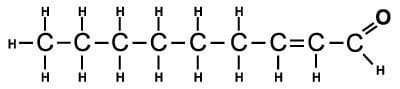
Fusel alcohols, acetaldehyde, and trans-2-nonenal are primarily responsible for most of the unpleasant off-flavors and aromas associated with stale, oxidized beer, although other compounds also contribute to it.
The specific way oxidation impacts the taste and aroma of beer depends on many details, depending on the particular type of beer.
If trans-2-nonenal forms in a lighter beer, it can generate a flavor similar to paper or lipstick. Trans-2-nonenal (an aldehyde compound) has a flavor threshold of approximately 0.1 ppb.
The aroma characteristics of many lighter beers can also be affected by oxidation. The malty character initially present in the aroma of a fresh beer can change to be perceived as “honey”.
This is due to the formation of 2,3-pentanedione, and while this may not necessarily be unpleasant, it is probably not what the brewer originally intended.

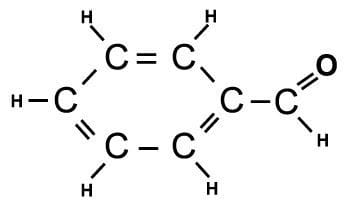
Darker, fuller-bodied beers tend to be affected differently by oxidation. When these beers oxidize, the rich malt flavors and aromas are replaced by sweet notes and sherry-like flavors.
These sherry-like flavors are the result of the oxidation of the chemicals responsible for beer flavor, called melanoidins, and these beers contain them in large quantities.
The oxidation products of melanoidins are multiple and have a wide range of flavors. One of the products is benzaldehyde, which has an almond-like taste and is a major contributor to the sherry-like flavor in oxidized beer.
A small amount of these sherry-like flavors can add complexity to the taste and aroma of certain strong beer styles such as Belgian darks and Barleywines, but even a small amount of these sherry-like flavors is generally not considered appropriate in light, low-alcohol beers.
Even in fuller-bodied, darker beers, excessive oxidation of melanoidins will cause the malty flavor to evolve into “caramel” and eventually lose that “malty” taste entirely over time.
Another flavor that can be caused by oxidation is the buttery/caramel flavor of diacetyl. Diacetyl is formed by the oxidation of alpha-acetolactate (a normal byproduct of yeast metabolism).
Many breweries use brewing techniques to avoid the presence of the alpha-acetolactate precursor in the finished beer, but many others do allow it.
If alpha-acetolactate is present in the finished beer, over time it will oxidize into diacetyl, and the intensity of the buttery/caramel flavor characteristic will increase as the beer ages.

Effect of heat on beer
Oxidation reactions occur in beer from the moment it is brewed, but the rate of oxidation, as with most chemical reactions, is accelerated by heat.
This means that keeping beer cold at all times (and fermenting at lower temperatures) will contribute to its preservation by reducing the rate of oxidation reactions associated with the development of unwanted aromas/flavors.

The temperature inside an uncontrolled climate cellar can reach 50°C on a hot summer day. The temperature inside a closed car trunk could even reach 60°C.
If the beer is stored at a relatively high temperature for a sufficiently long time, other unwanted aromas and flavors can develop.
At higher temperatures, dimethyl sulfide (DMS) can be produced in the beer, which is perceived as “cooked vegetables” or “cooked corn.”
Another flavor that can develop in beer as a result of prolonged exposure to heat is directly related to the breakdown of yeast.
If the beer has been exposed to high temperatures, is bottle-conditioned, and contains residual yeast, an autolysis process will begin, which will produce a burnt rubber/tire flavor and aroma.
Frozen beer
While keeping beer ice cold helps preserve its freshness, what happens when a beer freezes?
As beer is cooled to a lower and lower temperature, the proteins within the beer tend to precipitate out of solution and form haze (chill haze). Proteins begin to denature, and their molecular structure changes.
As they denature and form new structures, proteins can even cluster with other compounds and create small flakes within the beer. The removal of proteins from the beer changes the texture and mouthfeel.
If a beer is cooled to the freezing point, the new structures formed by denatured proteins are likely to remain solid even upon thawing.
Proteins undergo the denaturation process even at normal storage temperatures, and the flakes that develop as a result of this can often be observed in very old beers.
The act of cooling a beer to or near freezing accelerates the formation of compounds that lead to the development of these flakes.
Effects of the cold-heat cycle
Temperature cycles in beer can occur as part of a normal beer consumer’s life:
- Buy beer from the store (cold).
- Place the beer in the car while visiting other places (cold to hot).
- Take the beer out of the car and put it in the refrigerator (heat and cold).
- Remove the beer from the refrigerator and place it back in the car to take to a friend’s house (cold-heat).
- Take the beer out of the car and place it in the friend’s refrigerator (hot-cold).
- Remove leftover beer from the refrigerator and put it back in the car for the return trip (cold-heat).
- Forget the beer in the car and leave it there for several days.
General conclusions
Oxygen and heat are enemies of beer. Heat increases the rate of oxidation chemical reactions responsible for many of the stale, unpleasant flavors associated with beer that is past its prime.
The shelf life of beer will be longer, and the quality of the beer will be higher, if the beer is allowed to remain cold (not frozen) throughout its existence.
Frequently Asked Questions (FAQ)
1. Is it dangerous to drink expired or oxidized beer?
No, it is not dangerous or toxic. Unlike other foods, beer has an acidic pH, alcohol, and hops, which creates a hostile environment for human pathogens. However, an oxidized beer or one with a “cardboard” flavor will have lost all its organoleptic properties. Although it won’t make you sick, the experience will be extremely unpleasant due to the chemical compounds mentioned above.
2. Why is it said that the sun “ruins” beer in minutes?
This phenomenon is known as “skunking.” Unlike thermal oxidation, here UV radiation reacts with hop isohumulones, creating a molecule called 3-methyl-2-butene-1-thiol, which is almost identical to skunk musk. That is why, in addition to heat and oxygen, light is the third great enemy of beer freshness.
3. How long can a beer actually last, and how does it affect its profile?
It depends on the style and packaging, but as a general rule: IPAs and hoppy beers, consume within 3 months (hop aroma is the first to oxidize); Lagers and light Ales, 6 to 9 months under optimal conditions. High-gravity beers (Imperial Stouts, Barleywines) can last for years and even improve.
4. Does a can or a bottle protect more against oxidation?
Technically, the can is superior. The can offers a total hermetic seal that prevents the entry of residual oxygen and, most importantly, blocks 100% of UV light. Bottles, even amber ones, allow some radiation to pass through, and the crown cap seal is not as perfect as the double seal of an aluminum can.
Recommended
- Did Martin Luther change the historical course of beer brewing?
- Negroni: History and tips for preparing a fascinating cocktail