This post is also available in:
 Español
 Português
Hops are one of the essential ingredients in beer production. However, they are constantly subjected to a chronic problem that affects producers and consumers alike.
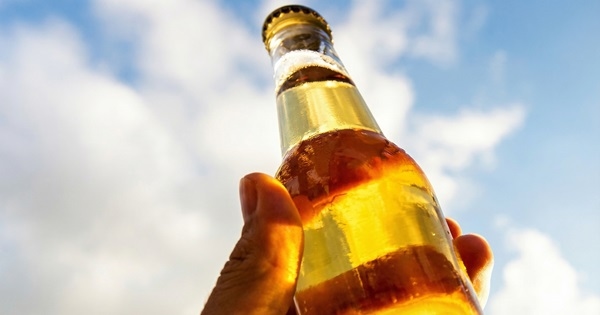
This is ultraviolet (UV) light-induced oxidation, which generates the undesirable “skunky” flavor. In response to this challenge, the modern brewing industry has developed innovative technologies to create modified hops that resist this degradation.

This phenomenon, known as “lightstruck flavor,” occurs when beer is exposed to visible or ultraviolet light, significantly compromising product quality.
Fortunately, through genetic modification, chemical processing, and new improvement techniques, the industry has succeeded in developing effective solutions that are transforming the way beer is produced globally.
Why do hops oxidize with UV light?
Hops contain natural bitter compounds called humulonic acids (α-acids or alpha-acids), which during the brewing process are transformed into isohumulonic acids (iso-alpha-acids).
These are crucial for imparting bitterness and foam stability to beer. However, iso-alpha-acids have a critical vulnerability: they are extremely sensitive to light in the 300–550 nanometer range of the light spectrum.
When iso-alpha-acids are exposed to light, they undergo a photochemical degradation process that generates undesirable volatile compounds.
This is especially problematic for beers packaged in clear or green bottles, where ultraviolet rays can easily penetrate.
The three phases of hop oxidation
Hop oxidation occurs in three distinct phases:
- Loss of initial freshness and aromatic complexity. The consumer begins to notice the absence of typical hop characteristics.
- New unpleasant flavors appear and bitterness begins to decrease, replaced by overripe fruit profiles.
- Severe deterioration with significant changes in the overall chemical composition of the beer.
An important factor is that hop components oxidize at different rates. Aldehydes, phenolic components, and especially ethanol are particularly susceptible.
The industry has identified that certain components can act as “reductones” — protective molecules that capture oxygen without causing adverse changes — significantly reducing the negative effects of oxidation.
The chemistry of skunky flavor
The main culprit behind this off-flavor is a specific molecule called 3-methylbut-2-en-1-thiol (3-MBT). This compound is extraordinarily potent, with an organoleptic threshold of approximately 4 parts per trillion in beer, making it one of the most potent flavorants known in the food industry.
The formation mechanism of 3-MBT requires three components simultaneously:
- Iso-alpha-acids (from hops).
- Riboflavin (vitamin B2, naturally present in beer).
- A sulfur source (sulfur-containing amino acids such as cysteine).
Additionally, the process requires specific light energy in the 300–550 nanometer range.
The first generation of solutions
The industry developed several types of chemically modified hop products to prevent the formation of 3-MBT.
1. Dihydro-iso-alpha acids (Rho-isohumulones)
These compounds are created by the selective reduction of the acyloin group present in natural iso-alpha-acids.
The result is a compound perfectly stable to UV radiation, as the light-sensitive group has been converted into a diol (two hydroxyl groups).
- Excellent light stability.
- Can be used in clear bottles without fear of skunky flavor.
- Maintain bitter flavor properties.
- Chemical modification of the flavor profile.
2. Tetrahydro-iso-alpha acids (THIAA or “Tetra”)
Tetrahydro-iso-alpha acids are produced by the hydrogenation of both the C=C and C=O bonds in the iso-3-hexenoyl side chain of iso-alpha-acids.
This creates a fully saturated molecular structure that is resistant to photodegradation.
- Produced from CO₂ hop extracts through isomerization and reduction processes.
- Estimated bitterness intensity between 35%–66% compared to iso-alpha-acids.
- Widely used by breweries that package in clear bottles.
- Frequently used at concentrations of 5 ppm or higher.
Specialized applications
According to recent research, tetrahydro-iso-alpha acids have additional biological properties.
Studies show they can act as estrogen receptor alpha (ERα) antagonists, potentially opening new pharmaceutical applications.
Hexahydro-iso-alpha acids (HEXA)
The latest HEXA product represents an important evolution. It is a translucent pale yellow aqueous solution containing potassium salts of hexahydroiso-alpha and tetrahydroiso-alpha acids in a 50:50 ratio.

- Standardized to 10% w/w by HPLC analysis.
- Bitterness intensity 1.3 times higher than iso-alpha-acids.
- Sharper, more intense bitterness profile.
- Significant improvement in foam stability even at low concentrations (2–5 ppm).
- Can be used in formulations to improve long-term flavor stability.
- Allows differentiation of beer products.
- Can replace traditional foam additives.
- No gushing potential even at doses of 5 ppm.
Controlled illumination of pre-isomerized extracts
One of the most surprising innovations in hop technology is the treatment of pre-isomerized extracts with controlled sunlight — a process that seems contradictory at first glance, but is highly effective.
- Pre-isomerized extracts containing at least 10% iso-alpha-acids by weight are taken.
- They are illuminated at a minimum intensity of 50 W/m² for at least 30 minutes.
- The light has maximum intensity in the 300–500 nm range.
During controlled illumination, the iso-alpha-acids undergo the same photolytic degradation that would cause problems in the final beer.
However, in the absence of critical reactants (such as thiol-containing substances), the reactive degradation intermediates are converted into other compounds that do not adversely affect the flavor or stability of the hops.
- Substantial improvement in the light stability of the pre-isomerized extract.
- Limited impact on bitterness and desirable flavor characteristics.
- Extracts treated this way can be placed in beers packaged in clear bottles without fear of 3-MBT formation.
Genetic modification of hops
Researchers are using CRISPR/Cas9 technology for hop genetic editing, although this technology presents unique challenges in this plant.
The goal is to identify and modify specific genes related to disease resistance and potentially improve stability characteristics.
- Genetic transformation rates in hops are relatively low compared to other plants.
- Marker selection in hops has proven problematic.
- The easiest cultivars to transform include ‘Cascade’ and ‘Fuggle’.
Researchers are developing transgene excision systems to achieve gene editing without residual transgenes, which would be more regulatorily acceptable.
Conventional genetic improvement
In addition to modern gene editing, conventional breeding programs continue to be crucial. Institutions such as the Hop Research Center Hüll in Germany are actively working on this topic.
1. Development of climate-adapted varieties
Introduction of new varieties with improved profiles (such as Titan for high alpha-acids and Tango for aromas).
Use of genome-level genomic predictions to accelerate the breeding process.
2. Development of specific DNA markers
Recent studies have examined hop gene expression under stress, revealing how hops respond to adverse environmental conditions.
This knowledge is fundamental for identifying genes associated with resilience and compound stability.
Researchers have identified that under combined stress (high temperature and low water availability), there is a significant increase in the expression of genes involved in:
- Antioxidant activity.
- Secondary metabolite metabolism.
- Photosystem II stabilization.
These genes are promising candidates for future gene editing programs focused on improving compound stability.
Sustainability and waste reduction
Improving hop stability has significant environmental implications. According to research, long-term stability improves when formulations including hexahydroiso-alpha acids are used, reducing the need for reworking or discarding compromised products.
| Method | Mechanism | Advantages | Limitations | Acceptance |
| Dihydro-iso-alpha acids | Chemical reduction of acyloin group | Perfect light stability | Altered flavor profile | High |
| Tetrahydro-iso-alpha acids | Hydrogenation C=C and C=O | Excellent stability + bitterness | Reduced bitterness intensity (35–66%) | High |
| Hexahydro-iso-alpha acids (HEXA) | 50:50 tetra+hexa combination | Superior bitterness (1.3×), improved foam | Higher cost | Growing |
| Pre-isomerized illumination | Controlled photodegradation without reactants | Preserves original characteristics | Requires specific process control | Moderate |
| CRISPR/Genetic editing | Modification of iso-alpha acid genes | Theoretically allows reduced expression | Still in research, low transformation rates | Experimental |
| Dark bottles/Opaque packaging | Physical light exclusion | Low cost, proven | Limits marketing options | Established |
Current limitations
Despite significant advances, persistent limitations remain. In genetic modification, hop transformation difficulties continue to be a technical challenge.
Regulatory acceptance varies significantly by region. The time to develop new varieties remains long, although techniques such as “speed breeding” are accelerating this.
In chemically modified products, the production cost of ultrapure extracts is significant, while some craft beer drinkers report less authentic flavors.
Future multipurpose trends
The future of modified hops appears to be oriented toward multipurpose varieties — hops that are simultaneously UV-resistant, disease-resistant, and adapted to a changing climate.
The use of sine-CRISPR gene editing technology that does not require residual transgenes for greater acceptance.
Regenerative agriculture using varieties that contribute to healthier ecosystems in addition to improved brewing properties.
Development of customized products based on hop extracts formulated specifically for different beer styles.
The future will likely see the convergence of these technologies with genetically edited hop varieties that naturally produce more light-stable compounds, grown using accelerated speed breeding techniques and potentially adapted to new geographic regions as a result of climate change.
Every beer that maintains its flavor quality under sunlight is a testament to decades of research in hop chemistry, molecular biology, and industrial processing.

Recommended
- Does beer make you gain weight? How many calories does beer have and how to calculate them?
- The photochemical degradation of beer and the origin of the skunky smell