This post is also available in:
 Español
  Português
Beer brewing is a complex process that has integrated many elements in the pursuit of optimization; one of the most popular auxiliary ingredients is Irish moss, or carrageenan, a red marine algae (Chondrus crispus) used to clarify and stabilize beer.
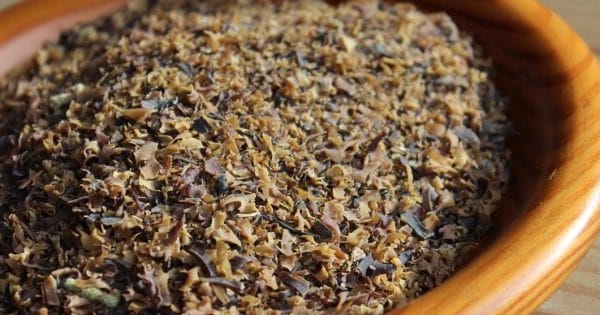
This fining agent is highly valued for its ability to reduce turbidity and improve beer stability during storage.
Origins and Properties of Irish Moss
Irish moss grows on the rocky shores of the North Atlantic, especially in Ireland, where it has been used for centuries both in gastronomy and for its medicinal properties.
Its main components are carrageenans, sulfated polysaccharides with a complex structure, including fractions such as kappa-carrageenan and lambda-carrageenan, known for their ability to form complexes with proteins — a key property in beer clarification.
How Irish Moss Works
The physicochemical properties of Irish moss make it a very effective fining agent for beer, acting through electrostatic interactions between its carrageenan compounds and wort proteins.
High molecular weight proteins, such as those from barley, are particularly susceptible to this interaction.
As Irish moss dissolves in the hot wort, generally during the last 15–30 minutes of the boil, the sulfated carrageenans attract oppositely charged proteins.
This process generates flocs, which precipitate to the bottom of the kettle, facilitating their removal, reducing the amount of suspended proteins, and contributing to the clarity and stability of the beer.
How to Use Irish Moss
Irish moss is commonly added in the last minutes of the wort boil, allowing its active components to be released and distributed evenly.
- The recommended dose is between 0.5 and 2 grams of Irish moss per 20 liters of wort.
- The addition time is 15–30 minutes before the end of the boil, which maximizes its effect without prolonging exposure to excessive heat.
It is important to remember that excessive doses of Irish moss can affect the texture of the beer or even generate unwanted colloidal turbidity, known as “hot haze.”
Comparison with Other Fining Agents
There are alternatives to Irish moss in the clarification process, such as bentonite, gelatin, and tannins; however, Irish moss is preferred due to its natural efficacy and its ability to act at elevated temperatures.
| Fining Agent | Composition | Temperature | Application | Advantages |
| Irish Moss | Carrageenans | 90–100°C | During wort boil | High efficacy at high temperature |
| Bentonite | Montmorillonite clay | 15–25°C | Secondary fermentation | Good for cold haze. |
| Gelatin | Hydrolyzed collagen | 5–15°C | Secondary fermentation | Used for final clarification |
| Tannins | Plant phenols | 15–20°C | Secondary fermentation | Contributes to stability. |
Impact on the Finished Beer
The use of Irish moss provides significant benefits to the final quality of the beer, including:

1. Clarity
Protein and carrageenan aggregates precipitate rapidly, resulting in a brighter, visually appealing beer.
2. Colloidal Stability
The reduction of suspended proteins decreases the likelihood of chill haze formation during storage, preserving the beer’s clarity.
3. Foam Retention
The removal of certain components that interfere with foam formation contributes to a denser and more persistent head.
4. Mouthfeel
Irish moss can subtly affect the texture of the beer, giving it a smoother and rounder perception.
5. Shelf Life
The reduction of proteins and other suspended compounds helps prevent defects in the beer during storage, extending its shelf life.
Irish Moss Effectiveness
To obtain the best results, it is important to consider the following factors:
- A pH of 5.2–5.5 is ideal for maximizing the action of Irish moss, as at this pH proteins tend to precipitate more easily.
- Irish moss is most effective at temperatures close to the boiling point (90–100°C), allowing optimal release of carrageenans.
- The presence of ions such as calcium and magnesium also influences protein precipitation and colloidal stability.
Formulas and Adjustments
To adjust the amount of Irish moss according to the wort volume, the following formula can be used.
For example, for a volume of 100 liters of wort and a dose of 1.5 g per 20 liters:

Frequently Asked Questions (FAQ)
Does Irish Moss add flavor or aroma to the finished beer?
No. Irish Moss is a neutral fining agent added during the wort boil. Its function is to precipitate proteins and other solids that cause cloudiness. After sedimentation and racking, it leaves no perceptible flavor, aroma, or aftertaste in the finished beer. Its use is focused exclusively on improving clarity and colloidal stability without altering the organoleptic profile of the beverage.
Is Irish Moss suitable for vegans or vegetarians?
Yes, Irish Moss is a natural red seaweed and is completely suitable for vegan and vegetarian beers. It is a popular plant-based alternative to animal-derived fining agents such as gelatin (hydrolyzed collagen). Brewers should verify that the commercial product does not contain non-vegetarian additives in its processing.
Is there a difference in effectiveness between leaf Irish Moss and powdered or granulated Irish Moss?
The main difference lies in ease of use and dissolution. Leaf or dried-chunk Irish Moss often requires prior hydration (soaking in warm or sterilized water for 15–20 minutes) before adding to the wort to ensure proper carrageenan release. Powdered or granulated Irish Moss (often labeled “Whirlfloc” or similar) is generally more concentrated and can be added directly to the boiling wort without pre-hydration, making it more convenient and consistent for homebrewers.
What happens if Irish Moss is added too early or too late at the end of the boil?
Adding it too early results in prolonged exposure to heat throughout the entire boil, which can degrade the carrageenans and drastically reduce effectiveness. Adding it too late — with very little time remaining or at the start of cooling — means insufficient contact time or temperature for the fining agent to act optimally, resulting in poor clarification. Maximum effectiveness requires carrageenans to be released and distributed in the wort at high temperature (90–100°C).
Should you rack or do a whirlpool after using Irish Moss?
Yes, it is essential. The purpose of Irish Moss is to agglomerate proteins and other solids into large flocs (hot break) that settle to the bottom of the kettle. Cool the wort rapidly after addition to facilitate sedimentation, perform a whirlpool or quiet rest to concentrate the trub in the center of the kettle, and rack the clear wort from the top, leaving the sediment in the kettle. The hot break and precipitated Irish Moss should not be carried over to the fermenter, as it can negatively affect yeast health and beer quality.
Recommended
- Catharina Sour: The Brazilian Beer Style Conquering the World
- How to Make Beer Battered Onion Rings: Recipe and Step-by-Step Guide