This post is also available in:
 Español
On Tuesday, July 14 at 7:30 PM, the Teatro Regional Cervantes in Valdivia opens its doors for the screening of the documentary “Valdivia, beer capital of the southern world,” produced by Ainilebu Films and Ojovitreo.
Admission is free. The screening is part of Beer Capital Week 2026, which brings together producers, consumers, and beer culture in the city from July 13 to 19.
The question the documentary seeks to answer
What makes a city of just over 170,000 inhabitants in southern Chile claim the title of beer capital of the southern world without anyone in the region seriously disputing the label?
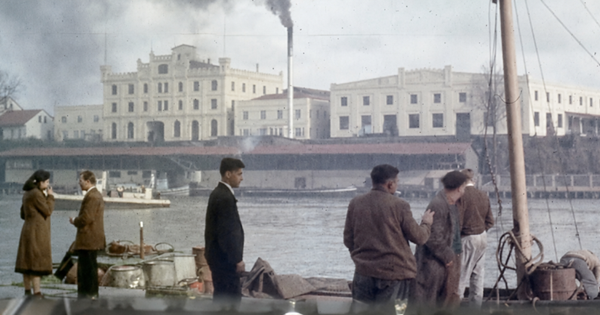
The answer proposed by Ainilebu Films has roots in the 19th century. The arrival of German settlers to Valdivia starting in 1850 was not just a migration process; it was the transfer of technical knowledge—the brewing of bottom-fermented beer—to a territory that offered the cold climate, clean water, and grains needed to make it viable on an industrial scale.
Within a few years, Valdivia went from being a declining city to becoming the first manufacturing hub in southern Chile, with its breweries as the productive core.
What makes Valdivia unique is having turned that legacy into the axis of its public identity with a coherence that few cities in the region have achieved.
Ainilebu Films and the indigenous layer of the narrative
The name of the production company is no coincidence. “Ainilebu” is the Huilliche word for the river now known as the Valdivia River, the same one that surrounds the city’s historic center.
The choice of name establishes from the start that the documentary is not limited to the official German narrative. The territory had a history of fermentation before European colonization, and that layer is also part of Valdivia’s beer story.
Co-producer Ojovitreo adds experience in audiovisual cultural dissemination. Together, they form a profile aimed at a documentary with historical rigor and a broad audience appeal, not a specialized niche.
The three acts of the documentary: from Anwandter to the craft ecosystem
The documentary is structured in three parts that function as temporal and narrative axes. The first act covers the arrival of the German colony and the development of the brewing industry up to the 1960 earthquake.
The second addresses post-disaster Valdivia and Armin Kunstmann’s role in rebuilding the brewing tradition. The third act shows the current ecosystem: Valdivia’s positioning as a beer city and the emergence of new brands with national and international projection.
The historical starting point that the documentary places on screen is the Anwandter Brewery, founded in 1851 by Karl August Wilhelm Paschen Anwandter, a pharmacist who had arrived in Valdivia a year earlier aboard the brig Herrmann, leading the first select group of German immigrants under the colonization policy promoted by Vicente Pérez Rosales.
What began as an artisanal production of 18 bottles per month for family consumption in his home quickly transformed into an industrial operation.
In 1853, the company was incorporated as Sociedad Anwandter Hermanos, allowing the modernization and expansion of facilities to Isla Teja, where multi-story buildings with nine underground cellars capable of storing six million liters were erected.
By 1914, the factory produced more than 25 million liters annually and employed about 300 workers with machinery comparable to that of European factories of the time.
The Anwandter family sold the company to Compañía Cervecerías Unidas in 1916. CCU maintained production in Valdivia until May 22, 1960, when the most powerful earthquake ever recorded completely destroyed the Isla Teja facilities.
The combination of the natural disaster with the severe economic depression that hit the city after the earthquake led to the definitive closure of what had been the most important brewery in southern Chile. Years later, CCU donated the former brewery lands to the Universidad Austral de Chile.
The second act of the documentary focuses on Armin Kunstmann, a chemical engineer who in September 1991 decided to revive Valdivia’s brewing tradition by brewing beer in his garage, next to Molinos Collico, together with his wife Patricia Ramos, his father Roberto, and his uncles Germán and Gerardo.
Production followed the 1516 Reinheitsgebot Purity Edict, decreed by William IV of Bavaria. In 1995, Sociedad Cervecera Valdivia Ltda. was established, and in 1997 the plant moved to the Toro Bayo sector, where it operates to this day.
In 2002, Cervecería Kunstmann partnered with CCU, creating Compañía Cervecera Kunstmann S.A., which accounts for 10 percent of the national premium beer market and exports to Mexico, Colombia, South Korea, and Argentina.
The third act of the documentary shows Valdivia’s current brewing ecosystem, where established brands like Kunstmann and Cuello Negro coexist with a network of craft breweries that have turned the city into a hub of production, tourism, and beer culture.
Cervecería Cuello Negro, for example, is one of the most awarded craft breweries in southern Chile, located at kilometer 8 of the Valdivia-Niebla route, in the Cutipay sector, on the riverbank.
The voices that build the narrative
The documentary combines historical research, photographic archive material provided in part by the Museological Directorate of the Universidad Austral de Chile, period recreations, and contemporary images of the landscape, the river, and the water.
But its backbone is the testimonies of those who have been direct protagonists of this history. The cast of interviewees includes Armin Kunstmann, a central figure in the post-1960 brewing resurgence; Patricia Ramos, co-founder of Cervecería Kunstmann; Cristián Olivares, Marila Barrientos, Anita Behn, Bastián Araya, and Alexis Correa, all linked to the development of the local beer business.
According to statements by Edmundo Cofré and Eduardo Elorz, the project’s intention is not to show a product associated with tourism but to narrate in audiovisual format the relevance of beer as a contribution to a city’s identity.
The idea had been brewing for years, when the team was working on the documentary about the painter Ricardo Anwandter, a descendant of the brewing family, and they already had a developed script that matured until they gathered enough material to begin production.
The team behind the camera
The documentary is directed by Edmundo Cofré, an audiovisual director and photographer with extensive experience in heritage documentary content.
His works include the following: the restoration of the Teatro Regional Cervantes, cinematography direction in the documentaries Cielo de Agua and Mareros, and co-direction of the acclaimed documentary Trazos de Agua, vida y obra de Ricardo Anwandter, a 34-minute short film presented at the Valdivia International Film Festival in 2022.
General production is overseen by Eduardo Elorz, a visual artist, audiovisual producer, and cultural manager who has led key initiatives in the region such as the Aguacero Valdivia International Festival, the Kinecromía pictorial series, and co-editing the book Adivinanzas en Mapudungun, presented at the Guadalajara Book Fair in 2024.
Ainilebu Films was created in 2019 with a specific focus on producing audiovisual pieces related to the cultural heritage and historical rescue of south-central Chile.
The production company was recently awarded the Best Environmental Film prize in Los Angeles, California, positioning it as a label with international projection within the documentary film circuit.
A venue with meaning
The choice of the Teatro Regional Cervantes as the premiere venue is no coincidence. Inaugurated in November 1935, the theater was built by architects Carlos Swinburn and Eduardo Secchi through the efforts of businessmen and immigrants seeking a performance venue to boost culture in the city.
With an initial capacity of 1,140 spectators, it positioned itself as the most important cultural space in Valdivia and one of the main venues in southern Chile, being the only one that survived the 1960 earthquake.
In 2007, after decades of progressive infrastructure deterioration, the theater closed its doors. A year later, the Regional Government of Los Ríos acquired the property to begin a restoration plan that required an investment of over 5 billion pesos, led by the Ministry of Public Works.
On September 7, 2019, the renovated Teatro Regional Cervantes reopened its doors to the community, preserving the building’s original appearance but incorporating modern technological standards in acoustics, 811 seats on the first level, upper floor, and gallery, plus rehearsal rooms, offices, and a recording studio.
For Edmundo Cofré and Eduardo Elorz, premiering at the Cervantes holds deep meaning because it represents one of the most important cultural spaces in southern Chile and the ideal place to share a story that belongs to the entire community. The decision to offer a free screening reflects the conviction that heritage should be accessible to all.
The beer map of the southern hemisphere
The title “beer capital of the southern world” is not a local marketing slogan. It implies a comparison with cities in Argentina, Brazil, and Uruguay that also have European immigration heritage and consolidated craft scenes.
The difference is that Valdivia has built institutions—Beer Capital Week, the Beer Capital Cup, the Seminar—that formalize that leadership year after year.
Beer Capital Week 2026
The documentary screening is just one of the activities that make up Beer Capital Week 2026, organized by the Municipality of Valdivia and the Capital Cervecera Guild Association.
Under the motto “In Valdivia, where beer tells its own story,” the initiative aims to position the capital of Los Ríos as a territory where beer transcends the productive to become a cultural, touristic, and identity expression.
The week is organized around three main axes. The Beer Capital Cup functions as the central competition and organizing axis of the event. It brings together national and international judges responsible for evaluating hundreds of beer samples from different regions of the country and the world, providing technical feedback that allows raising production standards.
For this second edition, the organization expects to receive 400 samples from more than 100 breweries, representing a growth of almost 35 percent compared to the first edition, when 262 samples from 70 breweries were received.
The Beer Capital Seminar opens training and conversation spaces around different dimensions of the beer ecosystem, including production, commercialization, tourism, marketing, innovation, and culture. Its first edition brought together some 280 attendees.
The Winter Festival, held at the Saval Park Fair Center, offers an open experience for the community with local breweries, gastronomy, live music, and the Beer Capital Cup awards ceremony. Its first edition gathered about 30,000 people, and over 10,000 liters of beer were consumed.
The documentary’s route after the premiere
The documentary’s creators have stated that their purpose is not limited to the Valdivia premiere. After the presentation at the Teatro Cervantes, they aim for the work to begin a tour through national and international festivals, documentary film screenings, educational spaces, and cultural dissemination platforms.
The goal is for Valdivia’s story and its brewing tradition to be known by audiences in Chile and abroad, positioning the city as a reference where heritage, culture, and innovation coexist and continue to build identity.
Event details
- Documentary: “Valdivia, beer capital of the southern world”
- Production: Ainilebu Films and Ojovitreo
- Direction and script: Edmundo Cofré
- General production: Eduardo Elorz
- Date: Tuesday, July 14, 2026
- Time: 7:30 PM
- Venue: Teatro Regional Cervantes, Chacabuco 210, Valdivia
- Admission: Free
- Estimated duration: 30 minutes
- Framework: Beer Capital Week 2026 (July 13-19)
Frequently Asked Questions (FAQ)
When and where will the documentary be presented?
On Tuesday, July 14, 2026, at 7:30 PM at the Teatro Regional Cervantes in Valdivia, with free admission.
Who produced the documentary?
It is a co-production by Ainilebu Films and Ojovitreo, two production companies based in Valdivia. The name Ainilebu comes from the Huilliche word for the current Valdivia River. Direction and script are by Edmundo Cofré, and general production is by Eduardo Elorz.
What is the documentary about?
It explores over 170 years of Valdivia’s brewing history, structured in three acts: the arrival of German settlers and the development of the Anwandter Brewery from 1851 to the 1960 earthquake; the resurgence of brewing tradition led by Armin Kunstmann from 1991; and the current beer ecosystem with Valdivia’s positioning as the beer capital of the southern world.
Who are the testimonies featured in the documentary?
The documentary includes testimonies from Armin Kunstmann, Patricia Ramos, Cristián Olivares, Marila Barrientos, Anita Behn, Bastián Araya, and Alexis Correa, all linked to the development of Valdivia’s brewing industry.
What else is happening during Beer Capital Week 2026 in Valdivia?
Beer Capital Week 2026 takes place in Valdivia from July 13 to 19 and includes three main axes: the Beer Capital Cup, a competition with national and international judges expecting 400 samples from over 100 breweries; the Beer Capital Seminar, with training spaces on production, tourism, marketing, and innovation; and the Winter Festival at the Saval Park Fair Center, with local breweries, gastronomy, live music, and the Cup awards ceremony.
What is Ainilebu Films?
Ainilebu Films is an audiovisual production company created in 2019 in Valdivia, specializing in heritage documentaries and the rescue of territorial memory in southern Chile. It was awarded the Best Environmental Film prize in Los Angeles, California. Among its previous works is the documentary Trazos de Agua, vida y obra de Ricardo Anwandter.
What is the connection between the Teatro Cervantes and Valdivia’s brewing history?
The Teatro Regional Cervantes, inaugurated in November 1935 by architects Carlos Swinburn and Eduardo Secchi, was built by businessmen and immigrants, many of German origin, the same group that drove the brewing industry. The theater survived the 1960 earthquake that destroyed the Anwandter Brewery. After closing in 2007 due to deterioration, it was restored with an investment exceeding 5 billion pesos and reopened on September 7, 2019.
What is the planned route for the documentary after the premiere?
Its creators aim for the documentary to begin a tour through national and international festivals, documentary film screenings, educational spaces, and cultural dissemination platforms, with the goal of making Valdivia’s story and its brewing tradition known to audiences in Chile and abroad.
You may also be interested in
- What is Chicha Beer? The hopless Andean style conquering markets
- What is a Mediterranean Lager? Spain presents its first own style