

This post is also available in:
 Español
  Português
  Français
Brewing existed for millennia as a craft governed by tradition and empiricism. Medieval brewers relied on observation and repetition to achieve consistent results, depending on luck and seasonality.

However, the 19th century brought a crisis that forced the industry to look beyond the inherited recipe. Beers turned sour, lost their character, and failed in transport.
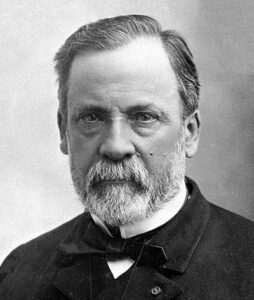
It was in this scenario of uncertainty that Louis Pasteur forever transformed human understanding of fermentation.
The context of an industry in crisis
In the mid-19th century, the French brewing industry faced fierce competition from German breweries.
The latter produced high-quality lagers thanks to cold temperature control, a luxury that French breweries could not easily replicate due to geographic and technological limitations.
Furthermore, beer diseases, caused by unknown microorganisms, ruined entire batches and generated devastating economic losses.
Producers were seeking urgent answers, and the French government commissioned Pasteur, already recognized for his previous work on wine diseases, to investigate the ailments afflicting beer.
At that time, the scientific debate was dominated by Justus von Liebig’s theory, which held that fermentation was a purely chemical process, a decomposition of organic matter. Pasteur set out to prove that reality was much more complex and fascinating.
The publication that changed the paradigm
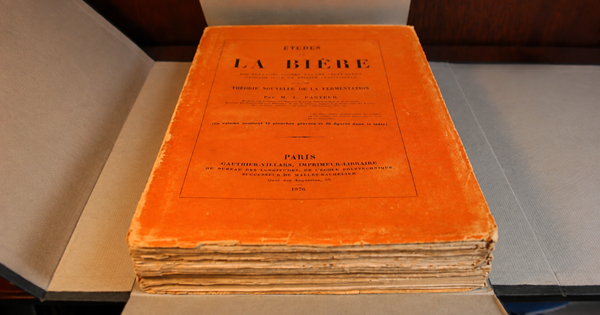
In 1876, Pasteur published his monumental work titled Études sur la Bière. This text was not simply a technical manual.
It represented an absolute paradigm shift in the understanding of biological processes. Pasteur demonstrated with irrefutable evidence that fermentation is the result of the metabolic activity of living organisms, specifically yeasts.
More importantly, he identified that beer diseases were caused by invading bacteria that competed with yeast for the wort’s resources.
This revelation moved beer from the realm of artisanal magic to the domain of applied microbiology.
Pasteur illustrated how healthy yeast dominates the environment when conditions are right, while unwanted microorganisms proliferate when hygiene or temperature fails.
His work established the foundations for the isolation and cultivation of pure strains, a concept that would revolutionize industrial production.
Science and intellectual property
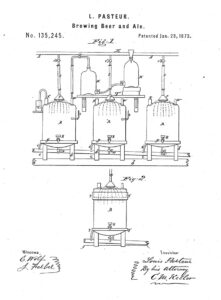
Before the publication of his book, Pasteur had already taken concrete steps to protect his findings and ensure their practical application. In 1871, he registered a patent in France on a method for brewing beer and preventing its diseases.
Subsequently, in 1873, he obtained patent number 135245 in the United States under the title of improvement in the brewing of beer and ale.
This move generated intense controversy in the scientific community. Many academics of the time considered that knowledge should be a public and free good.
Pasteur, however, understood that the industrial application of his discoveries required a framework that protected investment and ensured the correct adoption of his methods by breweries.

His pragmatic approach sought for science to have a tangible impact on society, beyond the laboratories.
The invisible legacy in modern beer
Pasteur’s influence permeates every aspect of modern brewing, although his name is rarely mentioned on a bottle label.
The concept of hygiene in the production plant, strict control of fermentation temperature, and the selection of pure yeast strains are direct descendants of his research.
Even pasteurization, although Pasteur himself was cautious about its application in beer for fear of affecting the sensory profile, became an industrial standard to guarantee the stability of the final product during transport and storage.
His work laid the foundations for yeast to cease being a mysterious ingredient and become the most powerful tool of the master brewer.
Years after the publication of his studies, the Carlsberg laboratory in Denmark would use Pasteur’s principles to isolate the first pure lager yeast strain in 1883, consolidating the dominance of this style in the global market.
Reflection on metabolic complexity
It is tempting to simplify Pasteur’s contribution as the moment when science defeated ignorance. Reality is much more nuanced. Pasteur opened a door to a microscopic universe of overwhelming complexity.
Today we know that the interaction between yeast, wort, and the environment is a biochemical dialogue that we are only beginning to fully understand.
The wild strains that we celebrate today in styles such as Belgian Pale Ale or mixed-fermentation beers were precisely the organisms that Pasteur sought to eradicate to achieve stability.
This historical irony reminds us that science does not eliminate mystery, but replaces it with deeper and more fascinating questions.
What in the 19th century was considered a disease is today valued as a complex and desirable flavor profile, demonstrating that context defines the value of a microorganism.
The biochemical ecosystem in the glass
Remembering the year 1876 is not about venerating an exact publication date, but about recognizing the moment when humanity decided to look inside the glass and see a living ecosystem.
Beer ceased to be just a beverage to become a field of study that unites history, biology, and art. Every time a brewer controls the temperature of their fermenter or analyzes the health of their yeast, they are participating in a conversation that Louis Pasteur began over a century and a half ago.
The next time you enjoy a clean, well-crafted beer, it is worth raising a glass to that French scientist who, with a microscope and an inquisitive mind, forever transformed the art of fermentation.
Frequently Asked Questions (FAQ)
1. Was Louis Pasteur the one who discovered yeast?
No. Yeast was first observed under a microscope by Antonie van Leeuwenhoek in 1680. Pasteur’s historical merit was demonstrating, consolidated in his 1876 work, that yeast is a metabolically active living organism responsible for fermentation, disproving the prevailing chemical theory that it was a simple decomposition process of matter.
2. Why did the French government commission Pasteur to study beer?
After the French defeat in the Franco-Prussian War (1870), France’s brewing industry was in crisis and massively losing market share to German lagers. The government sought an urgent scientific solution to save the national economy and improve the stability of its beers, a task that Pasteur accepted as an act of scientific patriotism.
3. Was pasteurization originally invented for beer?
No. Pasteur developed the controlled heating process in 1864 to solve French wine diseases. It was not until the research and publication of Études sur la Bière in 1876 that he adapted and refined this method specifically to stabilize beer and prevent the proliferation of lactic and acetic acid bacteria.
4. What is the direct relationship between these studies and modern lager yeast?
Pasteur’s principles on microorganism cultivation and isolation directly inspired Emil Christian Hansen at the Carlsberg brewery laboratory. In 1883, Hansen applied these methods to isolate and propagate the first pure lager yeast strain (Saccharomyces pastorianus), a milestone that revolutionized global industrial production.
5. Where can the original 1876 work “Études sur la Bière” be consulted?
The original French text is in the public domain and is available free of charge and digitized in repositories such as Internet Archive or Gallica (the digital library of the National Library of France). There are also historical translations into English, such as “Studies on Fermentation” (1879), accessible in specialized university libraries.
Bibliography
- Barnett, J. A. (2000). A history of research on yeasts 2: Louis Pasteur and his contemporaries, 1850 to 1880. Yeast, 16(8), 755–771.
- Hornsey, I. S. (2003). A history of beer and brewing. Royal Society of Chemistry.
- Pasteur, L. (1876). Études sur la bière, ses maladies, causes qui les provoquent, procédé pour la rendre inaltérable, avec une théorie nouvelle de la fermentation. Gauthier-Villars.

We Recommend
- How German beer helped David Bowie record ‘Heroes’ in Berlin
- Free WiFi is a thing of the past; now beer bars in China offer AI tokens