This post is also available in:
 Español
  Português
Having a beer before bed seems like a foolproof recipe for relaxing. Alcohol acts as a central nervous system depressant, lowers your guard, and helps you fall asleep within minutes. But the body keeps a different account. What happens in the following hours contradicts the initial promise.
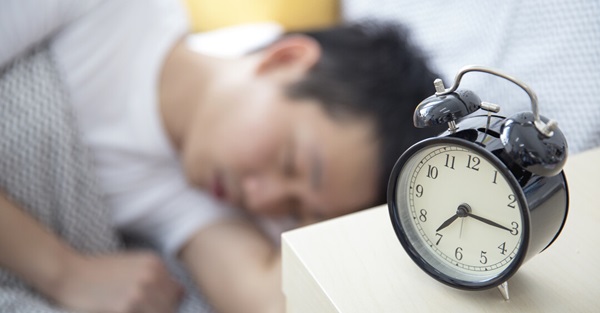
Alcohol’s sedative effect is real. The problem lies in what happens next: suppression of the REM phase, a rebound in the second half of the night, frequent micro-awakenings, and a quality of rest that cannot be recovered with an extra hour in bed.

Why alcohol seems to help you sleep
Ethanol acts on the GABA-A receptor of the central nervous system. GABA is the brain’s main inhibitory neurotransmitter: when alcohol potentiates it, neural activity decreases and alertness drops rapidly.
This is compounded by the effect on adenosine. Adenosine is a byproduct of neuronal metabolism that accumulates during waking hours and creates sleep pressure. Alcohol temporarily increases extracellular adenosine levels, which explains the heavy, drowsy feeling that appears even before finishing the first drink.
The result is reduced sleep latency: the person falls asleep faster than normal. In conditions of transient insomnia or anxiety, this effect is perceived as an advantage. Sleep science describes it differently.
Sleep architecture: REM and NREM cycles
Sleep is not a uniform state. It is organized into cycles of approximately 90 minutes that repeat four or five times throughout the night. Each cycle combines two main types of sleep:
- NREM sleep (Non-Rapid Eye Movement): three stages. Stages N1 and N2 correspond to light sleep. Stage N3, or slow-wave sleep, is the most physically restorative: it is where most growth hormone secretion and tissue repair processes occur.
- REM sleep (Rapid Eye Movement): characterized by rapid eye movements, muscle atonia, and brain activity similar to wakefulness. This is the stage where the most elaborate dreams occur. It has critical functions in memory consolidation, emotional regulation, and synaptic plasticity.
In the first half of the night, N3 sleep predominates. In the second half, cycles become richer in REM. This distribution is not accidental: the body prioritizes physical restoration in the first hours and cognitive and emotional restoration in the last.
What alcohol does to sleep cycles
First half: suppression of REM sleep
While alcohol is metabolized in the first hours of sleep, it actively suppresses REM. The person enters N3 — deep sleep — sooner, and the first REM period is shortened or disappears entirely.
A meta-analysis published in Alcoholism: Clinical & Experimental Research (Ebrahim et al., 2013) that analyzed 27 studies on alcohol and sleep reached a consistent conclusion: alcohol at moderate or high doses reduces REM sleep in the first half of the night across all groups studied. The effect is dose-dependent: the greater the intake, the greater the REM suppression.
Second half: REM rebound and micro-awakenings
The liver metabolizes ethanol at a rate of approximately one unit of alcohol per hour. Once the alcohol has been eliminated, the central nervous system experiences a rebound: the artificial suppression of REM gives way and the brain attempts to recover lost time. REM surges in the second half of the night with greater intensity than normal.
This rebound is not synonymous with good rest. It is accompanied by:
- Frequent micro-awakenings that fragment sleep without fully waking the person.
- Greater sympathetic nervous system activity, with night sweats, mild tachycardia, and a feeling of heat.
- More intense, vivid dreams, sometimes with distressing content.
The net result is sleep that is technically complete in hours but profoundly fragmented in quality.
The REM rebound and vivid dreams
The REM rebound that follows a night of alcohol consumption explains a phenomenon many people recognize: dreaming in an unusually intense and detailed way, sometimes with images related to alcohol itself or other emotionally charged situations.
During normal REM, the prefrontal cortex exerts some supervision over dream content. In the REM rebound, that supervision is more inhibited, allowing for more chaotic, memorable narratives with greater emotional charge.

If you’ve noticed that after drinking you dream more intensely, or that beer and alcohol imagery appears more frequently in your dreams than usual, the REM rebound is the mechanism behind it. What dreaming about drinking beer means from a symbolic and interpretive perspective has its own reading, but the physiological cause stems from this forced redistribution of REM.
Sleep pressure and the dependency cycle
The adenosine that alcohol artificially potentiates at sleep onset does not disappear when you close your eyes: it is metabolized during sleep. But the cycle does not come out clean. REM suppression disrupts the restorative function of the glymphatic system, which during deep sleep eliminates metabolic byproducts from the brain, including the accumulated adenosine from the day.
With habitual consumption, this mechanism deteriorates progressively:
- The ability to fall asleep without alcohol decreases because the system has adapted to the artificial support of adenosine.
- The alcohol sensitivity threshold rises: more of a dose is needed to produce the same initial sedative effect.
- Subjective sleep quality declines even when total hours remain stable.
It is a cycle in which the alcohol that initially “helps you sleep” ends up being the cause of the insomnia it claims to treat.
Hops as an alternative: sedation without ethanol
There is a component of beer with documented sedative activity that is not alcohol: hops. 2-methyl-3-buten-2-ol, a metabolite derived from Humulus lupulus cones, interacts with GABA-A receptors in a similar way to ethanol but without CNS depression or REM suppression.
A study published in Acta Physiologica Hungarica (Kyrou et al., 2017) analyzed the effect of non-alcoholic beer enriched with hops on sleep quality in nurses with rotating shifts. The results showed reduced sleep latency and anxiety levels without the rebound effects characteristic of ethanol.
Non-alcoholic beer brewed with varieties rich in myrcene and humulone preserves these compounds and may represent an alternative for those seeking a relaxing effect without compromising sleep architecture.
How many beers affect sleep?
Studies are consistent on one point: there is no safe threshold for sleep. Even low doses of alcohol (equivalent to less than one standard drink for a 70 kg adult) produce measurable effects on sleep architecture. What varies with dosage is the intensity and duration of the effect:
- One beer (0.33 l, 5% ABV): visible sedative effect on latency, mild REM suppression in the first cycle, usually compensated by the third or fourth cycle of the night.
- Two or three beers: REM suppression during the first three hours, more pronounced rebound, frequent micro-awakenings in the second half of the night.
- More than three beers: significant sleep fragmentation, reduction of total effective rest, increased night sweats and nocturnal sympathetic nervous system activation.
The timing of consumption also matters: drinking with dinner versus drinking two hours before bed produces different metabolization profiles. On an empty stomach, the peak blood alcohol level arrives sooner and the REM rebound occurs in the first hours of the night rather than in the second half, when REM should normally be most intense.
Frequently asked questions
1. Why does one beer help me fall asleep but I wake up at 3 a.m.?
Alcohol suppresses REM sleep in the first half of the night while it is metabolized, promoting deep sleep and shortening sleep onset latency. When the liver eliminates it, the central nervous system experiences a rebound: REM surges intensely in the second half of the night, generating micro-awakenings, vivid dreams, and fragmented sleep. Waking between 3 and 5 a.m. after drinking is one of the most documented patterns in the literature on alcohol and sleep.
2. Does alcohol affect everyone the same way?
No. Alcohol tolerance, body weight, gender, age, and hydration status influence the speed of metabolization and the intensity of effects on sleep. Women metabolize alcohol more slowly due to differences in alcohol dehydrogenase activity and a lower aqueous distribution volume. Older people have more fragmented sleep cycles as a baseline, which amplifies the impact of REM rebound.
3. Is it better to drink beer with dinner or just before bed?
With dinner is less disruptive to sleep. Food slows gastric absorption and reduces the peak blood alcohol level. If consumption occurs close to bedtime, the alcohol reaches the central nervous system when the sleep cycle has already begun, and the rebound occurs in the first hours of the night, which are the most valuable for deep sleep.
4. Does non-alcoholic beer affect sleep?
Not significantly. Without ethanol, there is no GABA-A inhibition or REM suppression. The hop components present in non-alcoholic beer have mild documented sedative activity — primarily 2-methyl-3-buten-2-ol — which can reduce sleep latency without the rebound effects. It is a viable alternative for those seeking the nighttime ritual without compromising rest quality.
5. Does abstaining from alcohol after habitual consumption cause more intense dreams?
Yes. In people who have consumed alcohol habitually and reduce or eliminate it, the REM rebound extends over several nights cumulatively. The brain attempts to recover all the REM phases suppressed during consumption, generating particularly vivid, sometimes disturbing, dreams during the first week of abstinence. This phenomenon, known as rebound sleep, is one of the most common symptoms of moderate withdrawal and can last between 5 and 14 days.

Recommended
- What does dreaming about drinking beer mean: symbolism, psychology and the most common interpretations
- Non-alcoholic beer: differences from traditional beer, process and real benefits
- Hoppy vs. bitter: what’s the difference and how it affects beer flavor