This post is also available in:
 Español
  Português
If you’ve ever wondered why some beers taste like cookies and others like fruit, or why some have a dense body and others are very light, the answer, almost always, lies in how and at what temperature the malt was mashed.
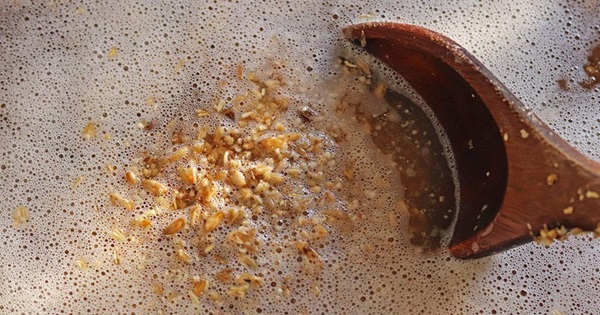
The technique known as step mashing is the most powerful tool to modify sugar structure and, therefore, the personality of beer.
Unlike single infusion (leaving everything at a fixed temperature, usually 67°C), step mashing subjects the grain to different thermal windows. This unlocks a range of enzymatic reactions that a single temperature cannot touch.
Contenido
What is step mashing?
Step mashing is a controlled thermal program applied during the mashing stage.
Imagine that instead of “cooking” the malt at a constant low heat, you take it through different temperature “rooms.” In each room, a different team of workers (the enzymes) is activated.
In the craft beer world, the dogma says that modern malts are so well-modified that they don’t need steps.
However, if you are looking for a very specific profile, such as a traditional German lager or a cloudy wheat beer with high foam retention, single infusion falls short.
Science supports that step mashing allows manipulation of wort fermentability much more precisely than simply adjusting the grind.
The heat map in step mashing
The success of this technique lies in knowing the exact ranges where each enzyme is happiest (and most efficient). An error of 3 degrees can completely change the fate of your batch.
1. Acid rest (35-45°C)
Although less used today (because we usually adjust pH with salts), this step activates phytase. It helps slightly acidify the mash, improving the performance of subsequent enzymes. It is useful if you are working with very hard water or low-acid malts.
2. Protein rest (45-55°C)
Here, peptidases and proteases come into play. Their mission is to break long proteins into smaller fractions.
- If it is too short, you will get unstable foam and hazy beer (although sometimes this is desired in hazy beers).
- If it is too long, you will kill the beer’s body, leaving it watery and without foam retention. In modern malts (Pilsner, Pale Ale), it is common to skip this step to avoid excessive degradation.
3. Beta-glucan rest (40-50°C)
This is only crucial when using adjuncts such as oats, wheat, or rye. These grains release beta-glucans, which make the wort as viscous as jelly.
A short rest at these values activates beta-glucanases, which cut those gums and facilitate filtration, avoiding the dreaded “stuck mash.”
4. Saccharification (60-70°C)
This is where it is defined whether your beer will be an alcohol missile or a body bomb. In this range, two superstar enzymes coexist:
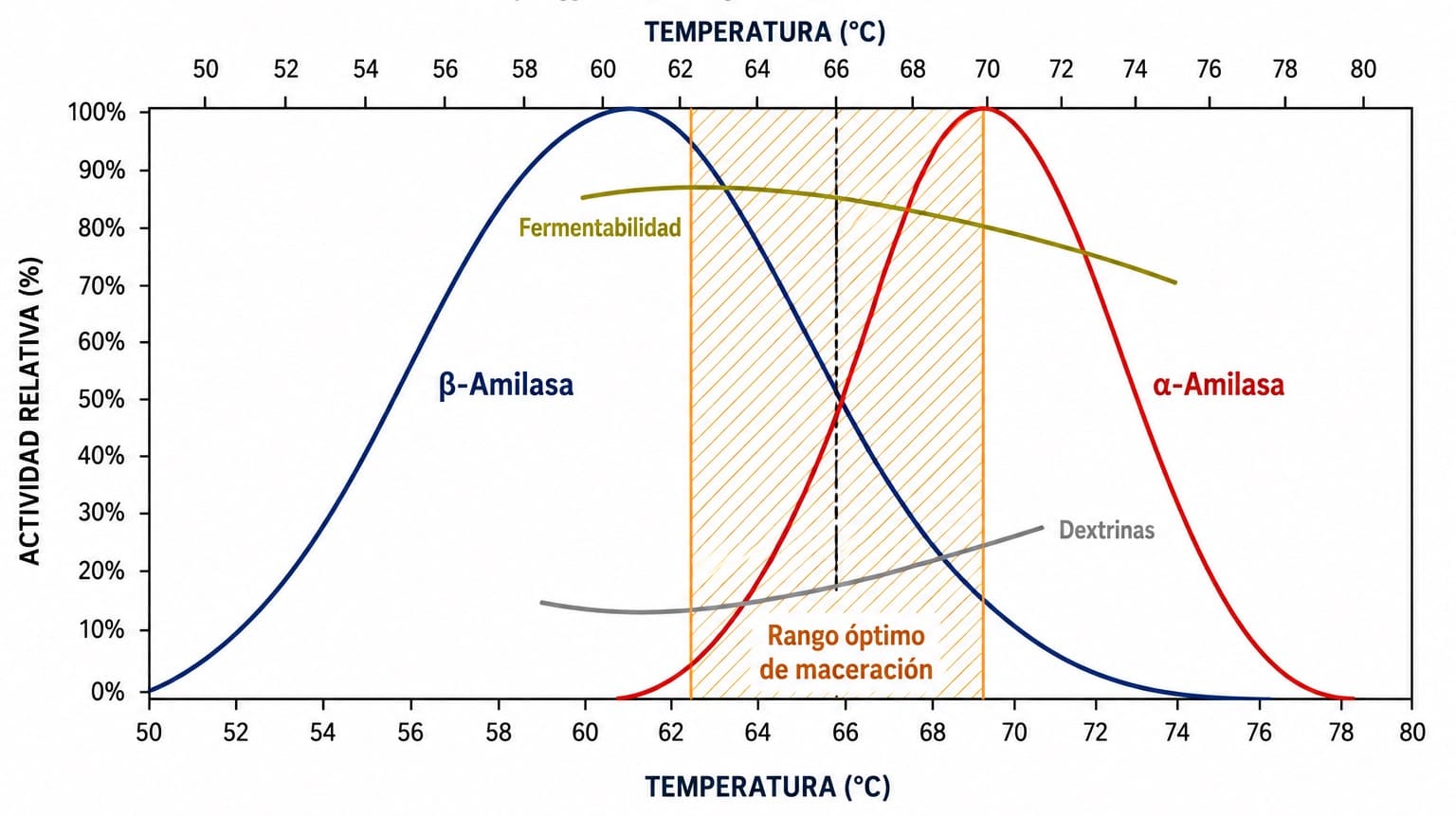
4.1 Beta-Amylase (61-65°C)
Cuts the ends of starch chains. Generates maltose, a highly fermentable sugar. At 63°C, yeast will convert almost everything into alcohol, leaving a dry, light finish.
4.2 Alpha-Amylase (68-72°C)
Breaks starch at random points. Generates dextrins (complex sugars). Yeast cannot eat these long chains.
At 70°C, you will get a wort with lots of body, a sense of sweetness, and a lower alcohol content for the same original gravity.

The optimal temperature range for alpha-amylase is 65–70°C, while beta-amylase prefers slightly lower temperatures, 60–65°C. The combination of both defines the attenuation profile.
5. Mash-out (75-78°C)
Once you have achieved the perfect sugar balance, you want to “turn off the machine.” Raising to 77°C denatures (kills) the enzymes. This stops conversion and also makes the wort more fluid, facilitating filtration or lautering.
Step mashing vs. single infusion
A recent study titled “Effect of step mashing on improving the sensory profile of craft beer” (Alcívar et al., 2026) sheds light on an uncomfortable truth: although step mashing improves certain physicochemical parameters (such as sugar extraction), it does not guarantee a win in flavor.
In the research, the experimental beer (step mashing) competed against a commercial beer (single infusion). The commercial beer obtained a higher overall score (2.55 vs. 2.18). The reason? Astringency and acidity.
This is key, as forcing the grain through more steps does not only extract sugar. It also drags polyphenols and phenolic compounds from the husks.
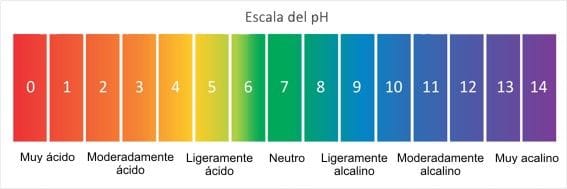
If your pH is not in the correct range (5.2-5.6), those compounds become aggressive on the palate, generating a dry, rough mouthfeel.
| Characteristic | Single infusion (67°C) | Step mashing (65->70°C) |
|---|---|---|
| Sugar profile | Maltose/dextrin balance | High maltose (dry) + tannin risk |
| Body | Medium – Round | Light |
| Mouthfeel | Velvety | Can become astringent |
| Complexity | Standardized | High (if well controlled) |
Is more extraction always better?
Alcívar’s study is a wake-up call for those obsessed with efficiency. Three regimes were tested (65°C, 70°C, and 75°C). The highest density was achieved at 65°C, demonstrating the high efficiency of Beta-Amylase.
However, the beer was rated lower sensorially. The main reason was the presence of phenolic aromas and vegetal notes perceived by the sensory panel.
This suggests that extractive efficiency alone does not guarantee sensory quality. That is, you can get a lot of sugar, but you are also squeezing out compounds you don’t want in your glass.
The ideal protocol for craft beer
Based on scientific evidence and field practice, here is a protocol to execute a safe step mash, avoiding astringency:
1. Control pH
If you go up to 75°C and your pH is high (>5.6), you are boiling the malt husk. That is guaranteed astringency. Acidify with lactic or phosphoric acid before mash-out.
2. Moderate grind
Do not pulverize the husk. You need it to act as a filter bed, not as tea dust.
3. Beta rest (62-64°C)
Let it rest for 45 minutes. That is enough for fermentability.
4. Alpha rest (70-72°C)
Only 15-20 minutes. You don’t need to caramelize; you just need to produce dextrins.
5. Mash-out (77°C)
Do it quickly. Do not hold it for 30 minutes; a 5-10 minute bath is enough to liquefy the wort.
Frequently Asked Questions (FAQs)
1. What exactly is step mashing?
It is a process in beer brewing where the mash temperature is progressively increased in specific stages, rather than maintaining a single constant value (single infusion), to activate different enzymes.
2. At what temperature should I mash to obtain a drier, higher-alcohol beer?
For a dry finish and high alcohol content (high attenuation), you should mash in the low beta-amylase range, between 61 and 64°C. This produces simple sugars that yeast will easily convert into alcohol.
3. What are the risks of step mashing at home?
The main risk is astringency. Raising the temperature, especially above 76°C, with inadequate pH extracts tannins from the husks, giving an unpleasant “black tea” or “walnut skin” flavor. Another risk is loss of body if you prolong the protein rest too long.
4. Is a protein rest always necessary?
No. With modern barley malts like Pilsner or Pale Ale, the protein rest is unnecessary and can even damage foam retention. It is only recommended if you use a high percentage of unmalted wheat, oats, or rye.
5. How do I know if I have completed starch conversion?
You can perform the iodine test. Place a sample of wort on a white plate and add a drop of iodine. If the color turns blue or black, starch is still present; if it remains the color of iodine (amber), conversion is complete.
References
Alcívar Cedeño, U. E., Alay Anchundia, K. J., Delgado Chila, C. J., Burgos Briones, G. A., & Munizaga Párraga, D. R. (2026). Effect of step mashing on improving the sensory profile of craft beer. centroazucar.uclv.edu.cu
Recommended
- Westmalle Tripel: Tasting notes and pairings recommended by a beer sommelier
- What is the Maillard reaction? Ingredients, mechanisms, and chemical development