This post is also available in:
 Español
  Português
Beer brewing, a process that has historically used hop flowers (Humulus lupulus) to achieve its preservation balance and bitterness, is now undergoing a structural transformation driven by the science of alternative ingredients.
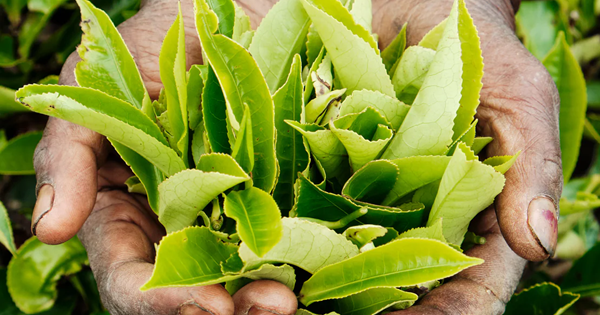
The introduction of green tea leaves (Camellia sinensis) into the hot wort represents a profound functional substitution that alters the colloidal chemistry of the medium from its initial phases.
This molecular transition replaces alpha and beta acid resins with a complex matrix of flavan-3-ols, where epigallocatechin gallate (EGCG) acts as the new reactive axis.
Analytical data reveal that this substrate change directly impacts the physicochemical properties of the wort and redefines yeast viability, accelerating sugar attenuation times through a massive contribution of free amino acids that modify the cellular metabolism of Saccharomyces cerevisiae.
The result of this innovation is a product that exhibits superior resistance to temporary oxidative deterioration and displays a completely renewed spectrum of aromatic compounds.
The disappearance of typical hop monoterpenes gives way to the concentration of light terpene alcohols and short-chain aldehydes, which transform the sensory perception in the mouth.
This is not the development of a gas-flavored infusion but rather a reengineering of the fermentative ecosystem that challenges traditional standards of the global brewing industry and establishes new bases for the eco-design of functional beverages.
Contenido
- Physicochemistry of hop substitution
- Yeast viability and metabolism
- Sensory profile and aromatic compounds
- Antioxidant activity and oxidative stability
- Technical limitations and challenges at industrial scale
- Market perspectives and agronomic viability
- Frequently Asked Questions (FAQs)
- 1. Does beer brewed with green tea alter the final alcohol percentage?
- 2. What effects does residual caffeine from green tea cause in beer?
- 3. Can matcha-style powdered green tea be used in the production line?
- 4. How does beer foam react to the total absence of hops?
- 5. Is it necessary to modify yeast nutrients when using green tea?
- References
- Recommended
Physicochemistry of hop substitution
The molecular architecture of a conventional beer rests on alpha acids isomerized during wort boiling, responsible for stabilizing foam, providing characteristic bitterness, and exerting selective bacteriostatic action against gram-positive microorganisms.
When evaluating green tea as one of the most viable hop substitutes, food science has demonstrated that Camellia sinensis introduces a radically different chemical framework that alters the surface tension and conductivity of the medium.
Tea catechins and hydrolyzable tannins do not undergo thermal isomerization processes, meaning that the resulting bitterness is integrated through direct binding mechanisms with salivary proteins, generating a different tactile experience in the oral cavity.
Green tea componentFunction in wortDifference from hops
| Catechins (EGCG, ECG) | Clean bitterness contribution and primary antioxidant | Do not depend on thermal heat isomerization |
| L-theanine | Supply of free assimilable nitrogen (FAN) | Absent in hop resinous structures |
| Total polyphenols | Formation of colloidal complexes and redox reduction | Greater affinity for proteins, increases chill haze |
| Free caffeine | Thermostable residual alkaloid | Psychoactive compound nonexistent in hops |
This compositional change alters kinetic variables during boiling in the brew house. The release of weak organic acids from tea leaf tissues causes a drop in the actual wort pH towards ranges of 4.0 to 4.2, accelerating the spontaneous precipitation of barley malt proteins (hot break).
However, the absence of lipid fractions and hop humulones weakens viscosity at the air-liquid interface, reducing foam crown elasticity, which forces a reconfigured milling with cereals rich in glycoproteins such as flaked wheat or oats to preserve visual retention in the glass.
Yeast viability and metabolism
The impact of Camellia sinensis on yeast viability represents one of the most complex phenomena in current fermentation biotechnology. L-theanine and glutamic acids present in green tea extract act as an immediate source of assimilable nitrogen for Saccharomyces cerevisiae cells.
This nutrient flow optimizes the synthesis of structural proteins in the cell membrane during the first hours of inoculation, achieving a significant decrease in latency time (lag phase) and a spike in glucose and maltose consumption rates in the first 36 hours of the process.
Despite this initial metabolic stimulus, high concentrations of green tea polyphenols introduce critical variables that can compromise cellular health in the medium term.
Free catechins have the ability to adsorb to yeast cell walls, altering their electrostatic surface charge and increasing membrane hydrophobicity.
This physical change induces premature flocculation of cells, which cluster and fall to the bottom of the fermenter cone before having metabolized maltotriose fractions, leading to stuck fermentations or unbalanced residual sugar profiles.
Likewise, the high chelating capacity of green tea phenolic compounds reduces the availability of essential metal ions in the wort, especially zinc and magnesium.
These minerals function as indispensable cofactors for the activation of alcohol dehydrogenase, the enzyme responsible for the final step of the Embden-Meyerhof pathway for ethanol production.
A green tea dosage exceeding 3 g/L without prior mineral correction can stress the yeast, increasing the synthesis of diacetyl and undesirable sulfur compounds.
Sensory profile and aromatic compounds
Hop substitution transforms the map of volatile aromatic compounds detectable in the final product by gas chromatography.
In a conventional beer, the olfactory profile is dominated by terpene hydrocarbons such as myrcene and humulene, which provide persistent resinous and spicy notes.
By suppressing hops and incorporating green tea, these chromatographic peaks disappear and give way to a volatile fraction dominated by monoterpene alcohols and short-chain aldehydes, which completely modify the fruity identity of the beverage.
Linalool emerges as the main aromatic marker in these new formulations. This compound has an extremely low olfactory detection threshold and provides floral notes that interact synergistically with fruity esters (such as isoamyl acetate) synthesized by yeast, generating a clean profile reminiscent of jasmine and stone fruits.
Parallel to this, the presence of hexanal and (E)-2-hexenal introduces nuances of freshly cut grass and raw green leaves, providing a sensation of botanical freshness that does not show the heavy or oily notes of old-school hops.
On the taste level, the bitterness derived from catechins is characterized by rapid release kinetics on TRPM5 receptors of the tongue, dissipating more quickly than the bitterness of isohumulones.
This lack of persistence reduces the bitter aftertaste and produces a drying and clean sensation on the mucous membranes due to the transient precipitation of salivary proteins.

This quality positively alters modern consumer perception, who associate this dryness with greater lightness and superior drinkability compared to intensely hopped craft styles.
Antioxidant activity and oxidative stability
From a preservation engineering perspective, the main advantage of using green tea lies in the exponential increase in antioxidant activity within the liquid matrix.
Traditional beer undergoes an inevitable degradation process due to the presence of traces of dissolved molecular oxygen during packaging. This oxygen reacts with unsaturated fatty acids derived from malt, triggering the formation of linear aldehydes that ruin the fresh flavor of the product.
Camellia sinensis polyphenols intervene in this mechanism by interrupting the free radical cascade before it affects lipid fractions.
Analytical studies using DPPH and FRAP methods demonstrate that the reducing power of a beer brewed with green tea exceeds that of a conventional version by up to 150%.
Epigallocatechin gallate molecules act as free radical traps, donating electrons to reactive oxygen species and transforming them into stable, non-reactive compounds.
This slows the appearance of organoleptic aging markers such as furfural and 5-hydroxymethylfurfural, allowing the beer to maintain its original aromatic profile intact for prolonged storage periods, even under conditions of environmental thermal stress.
This oxidative stability eliminates the need to incorporate synthetic preservative additives (such as potassium metabisulfite or ascorbic acid) in small-scale bottling lines.
Green tea functions as an integrated biological preservation system that protects the most delicate fermentation esters, guaranteeing an extended and clean commercial shelf life that responds optimally to the demands of international markets that penalize the use of exogenous chemicals in fermented beverages.
Technical limitations and challenges at industrial scale
Despite the documented biochemical advantages, processing Camellia sinensis in modern brew houses presents operational obstacles that complicate its large-scale adoption.
Green tea leaves exhibit low apparent density and high water absorption capacity compared to compacted hop pellets.
During the separation phase in the whirlpool tank, the mass of saturated leaves tends to collapse at the bottom of the tank, preventing the formation of the classic sediment cone and causing fine particles to be dragged into plate heat exchangers, slowing wort cooling.
The appearance of chill haze constitutes another critical aesthetic limitation. When the liquid temperature drops below 4°C during the maturation phase, tea catechins form stable hydrogen bonds with proline-rich proteins derived from barley.
This colloidal complex generates a dense opacity that does not respond well to traditional clarifying agents such as isinglass or bentonite. To obtain a bright product that meets the visual standards of the mass market, industrial plants must incorporate specific protease enzymes (such as proline endoprotease) or subject the batch to costly cross-flow membrane tangential filtration processes.
Technical challengeMolecular/physical causeIndustrial mitigation strategy
| Line clogging | Low density and high buoyancy of tea leaf | Use of standardized liquid extracts or matcha-style grinding |
| Permanent haze | Hydrogen bonds between catechins and prolines | Application of protease enzymes or tangential microfiltration |
| Flavor inconsistency | Tannin variability according to tea harvest | Controlled batch blending before boiling |
| Brand restrictions | Local purity regulations (Reinheitsgebot) | Labeling under the “specialty malt beverage” category |
Added to this is the persistence of caffeine in the final product. This alkaloid is highly thermostable and does not undergo modification or degradation by the enzymatic apparatus of Saccharomyces cerevisiae.
Chemical analyses indicate that a beer brewed with a standard green tea dosage retains between 10 and 30 mg/L of active caffeine.
Although this concentration is far from the levels of a cup of coffee, its presence introduces a psychoactive compound absent from traditional beer, which requires strict labeling audits to comply with food transparency regulations in demanding markets.
Market perspectives and agronomic viability
Recent scientific literature, reflected in the technical publications of the American Society of Brewing Chemists (ASBC), suggests that green tea does not seek to replace hops in mass-volume productions but rather to establish itself as a strategic raw material for well-defined specialty segments.
Its viability is high in the formulation of low-bitterness beers, functional product lines with natural antioxidant claims, and as a supply alternative in geographic regions where hop cultivation is unviable due to photoperiod light hour requirements.
From an agronomic point of view, the water footprint and climatic demands of Camellia sinensis differ completely from those of hops.
While hops require costly vertical trellising infrastructure and are highly vulnerable to heat waves affecting traditional growing areas, tea plantations show greater structural resilience in acidic soils and steep terrain.
The integration of green tea into the fermentation industry’s input catalog diversifies global supply options, offering brewmasters a sustainable biotechnological tool that balances operational efficiency with sensory innovation in every bottle.
Frequently Asked Questions (FAQs)
1. Does beer brewed with green tea alter the final alcohol percentage?
No. The ethanol content in a fermented beverage depends on the concentration of fermentable sugars (maltose, glucose, maltotriose) extracted from malted grain during mashing. Green tea provides amino acids, polyphenols, and essential oils, but its contribution in fermentable carbohydrates is negligible, so the final alcohol content is entirely determined by the cereal recipe used.
2. What effects does residual caffeine from green tea cause in beer?
Caffeine extracted during wort boiling survives fermentation without being altered by yeast, remaining at concentrations of 10 to 30 mg/L in the finished product. This level is low compared to the 200 mg in a typical cup of coffee, so it does not generate a marked stimulating effect, but it does act by slightly modifying consumer perception by enhancing the sensation of cognitive freshness after swallowing.
3. Can matcha-style powdered green tea be used in the production line?
Yes, the use of micro-milled green tea such as matcha eliminates the physical problems of clogging in filters and whirlpool tanks caused by whole leaves. However, this format drastically increases the contact surface area, which raises the extraction rate of tannins and can trigger colloidal haze and astringency if exposure times and addition temperatures in the kettle are not reduced.
4. How does beer foam react to the total absence of hops?
The foam crown loses physical stability and degrades more quickly. This occurs because hop isohumulones are responsible for forming the hydrophobic network that holds malt proteins on the glass surface. When hops are removed, bubbles lack this elastic reinforcement, a technical problem that brewers solve by incorporating wheat malts or oat flakes, which provide high levels of alternative structural glycoproteins.
5. Is it necessary to modify yeast nutrients when using green tea?
Although green tea is rich in L-theanine and provides free assimilable nitrogen that stimulates early cell growth, it also functions as a potent mineral chelator. Catechins tend to trap zinc and magnesium ions dissolved in the brewing water, leaving them out of reach of the yeast. Therefore, compensatory zinc additions to the wort are recommended to prevent alcohol dehydrogenase enzyme from reducing its activity at the end of fermentation.
References
- Rahım, S., & Yildirim, H. (2025). New beer type produced by using bioactive compound-rich materials as an alternative to hops. Food Science and Applied Biotechnology, 8(1), 11–23. DOI: https://doi.org/10.30721/fsab2025.v8.i1.416.
- Wu, J., Zhang, Y., Qiu, R., Li, L., & Zong, X. (2024). Effects of tea addition on antioxidant capacity, volatiles, and sensory quality of beer. Food Chemistry: X, 21, 101193. ISSN: 2590-1575.
Recommended
- The green revolution in beer: How is sustainability transforming the industry?
- UV oxidation-resistant hops: Cutting-edge technological innovation