This post is also available in:
 Español
  Português
FOMO in the craft beer industry refers to the tendency of consumers to seek out and document limited-production varieties before they disappear from the market.
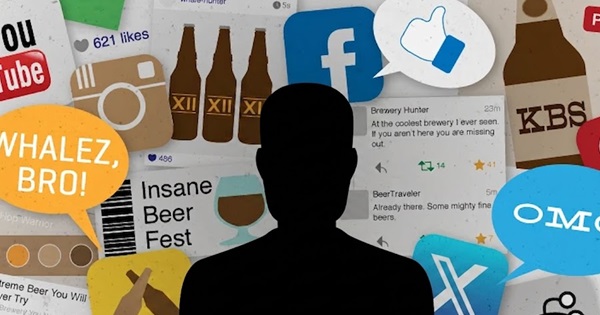
This phenomenon, far from being a marginal curiosity, now constitutes one of the central drivers that seems to sustain innovation, communication, and commercial strategy in the sector.
Driven by controlled releases, gamification dynamics, and digital registration platforms, this behavior has transformed the consumption experience into a process of collection, social validation, and identity construction within specialized communities.
The perception of scarcity not only influences the value assigned to the product but also modifies distribution models, production planning, and even the creative direction of breweries.
Many breweries have adjusted their strategies to prioritize special editions over their permanent catalogs, redefining the relationship between supply, demand, and operational sustainability.
This shift generates obvious opportunities, such as greater visibility and higher margins, but also poses structural risks that merit careful analysis.
Contenido
- Origins and evolution of the FOMO concept
- Scarcity as a market strategy
- Digital validation and registration platforms
- Secondary market and “white whales”
- When hype outweighs quality
- Frequently Asked Questions (FAQs)
- 1. How can consumers distinguish between a valuable limited edition and mere marketing strategy?
- 2. What effects does this single-release model have on the financial sustainability of microbreweries?
- 3. Is there evidence of consumer fatigue regarding the oversupply of limited releases?
- 4. How do breweries manage the balance between accelerated innovation and quality control?
- 5. What role do social media algorithms play in the perception of urgency?
- Recommended
Origins and evolution of the FOMO concept
Although the term “FOMO” (“Fear Of Missing Out”) is often associated with volatile financial markets or cryptocurrency trading, its origin is strictly academic.
The acronym was popularized in 2004 by Patrick J. McGinnis in an article for The Harbus, the Harvard Business School magazine, where he described the social anxiety derived from exclusion from student networks and events.
McGinnis observed how the abundance of options generated paralysis and fear of missing out on valuable experiences, a pattern that decades later would find fertile ground in mass consumption.
Decades earlier, in 1996, marketing strategist Dan Herman had already identified similar behaviors, describing how consumers made decisions based not on product utility but on the anticipation of regret for not having acquired it.
This perspective anticipated what we now understand as attention economics applied to consumption.
In the beer context, FOMO does not translate into direct economic losses as in trading but rather into the concern about being left out of conversations, trends, or recognition within the community.
Tasting a limited edition no longer responds solely to taste or sensory curiosity but also to participation in a shared cultural phenomenon.
Beer becomes a vehicle for belonging, and its consumption an act of identity validation.
Scarcity as a market strategy
Small-batch production has become an effective mechanism for generating interest, maintaining margins, and differentiating brands in a highly competitive sector.
When a brewery announces that only 300 cans of a specific variety exist, perceived value shifts from organoleptic characteristics to temporal availability.
This phenomenon is supported by well-documented principles of consumer psychology: limitation activates an urgency response that prioritizes immediate acquisition over prolonged evaluation.
From an operational perspective, small batches allow breweries to experiment with seasonal ingredients, unconventional fermentation techniques, or creative collaborations without compromising the stability of their base production.
However, this flexibility comes at a cost. The constant rotation of references demands greater complexity in inventory management, raw material planning, and quality control.
Additionally, the pressure to regularly release new products can lead to shortened maturation times or simplified sensory validation processes.
For many enthusiasts, tracking these releases is organized within digital communities where information exchange, anticipation of dates, and coordination to acquire products generate dynamics similar to other collectibles markets.
Beer ceases to be solely a tasting product and becomes an object of symbolic exchange, whose value lies both in its sensory experience and its ability to generate narrative and status.

Digital validation and registration platforms
The growth of the craft sector has coincided with the popularization of applications like Untappd, which allow users to record, rate, and share each consumption.
These tools have institutionalized the documentation of the beer experience, granting visibility to the variety of styles tasted, consumption frequency, and geographic diversity of acquired references.
The platform operates through clear gamification mechanisms: badges for styles tasted, rankings by activity, and medals for brewery visits.
This system rewards diversification and frequency, encouraging consumption oriented toward collection rather than sensory depth. The user not only drinks but also accumulates digital achievements that reinforce their identity within the community.
This digital traceability directly influences consumer preferences and brewery decisions. Some breweries observe that collaborative, seasonal, or eye-catching label editions generate more online interaction than their core line products.
In response, the sector has increased the frequency of releases, which requires adjustments in production planning, maturation times, and quality control protocols.

The hidden but present risk is that priority may shift from product excellence to its capacity to generate digital engagement.

Secondary market and “white whales”
The combination of concentrated demand and restricted supply has led to physical queues, digital lotteries, and an unregulated secondary market.
The term “white whale” is used to refer to those hard-to-access beers that consumers seek over long periods, often without guarantee of success.
This dynamic fosters a parallel ecosystem where resale prices can significantly exceed original value, especially in the case of collaborations between renowned breweries or commemorative editions.
According to reports from the Brewers Association, the segment of special editions and unique releases has experienced sustained growth compared to fixed catalog brands.
Consumer behavior analysts point out that, in an oversupply environment, the perception of exclusivity acts as a decision filter where the ephemeral becomes a priority over the permanent.
This preference is not irrational but selective, reflecting a transformation in the hierarchy of craft consumer values.
Unequal access to these products generates tensions within the community. Those who live near breweries or have greater schedule flexibility have structural advantages in acquiring limited releases.
This asymmetry can exclude segments of the public who, although interested, cannot participate in the urgency dynamics that characterize the model.
Craft beer, originally conceived as an inclusive and local movement, thus faces the challenge of balancing exclusivity with accessibility.

When hype outweighs quality
So far, the analysis has described mechanisms, trends, and dynamics. But it is necessary to address an issue that runs through the entire phenomenon: what happens to the real quality of the product when the urgency to launch, record, and collect displaces technical rigor and sensory maturation?
The pressure to maintain a constant cadence of new products can lead breweries, especially those in growth stages or with limited resources, to prioritize speed over excellence.
A beer that has not completed its maturation process, has not undergone stability tests, or has not received structured sensory feedback can reach the market with avoidable defects.
The consumer, motivated by FOMO, acquires the product before these problems manifest, and subsequent evaluation is conditioned by the context of scarcity and social validation.
This shift has medium-term consequences:
- It erodes public trust in brewery consistency.
- It generates a saturation of references that makes it difficult to identify genuinely outstanding products.
- It incentivizes a race for visual novelty, where label design, provocative naming, or collaboration with influential brands can weigh more than the quality of the liquid inside.
The paradox is evident. FOMO, which originally sought to connect consumers with valuable experiences, can end up promoting superficial consumption, where digital registration and symbolic possession replace conscious tasting and sensory enjoyment.
Craft beer was born as a reaction against standardization and the prioritization of volume over character. We run the risk that, under the logic of limited release and algorithmic validation, similar dynamics may be reproduced, albeit with a different aesthetic.
Some breweries have begun to respond to this tension through transparency practices, such as publishing detailed tasting notes, sharing quality control protocols, and explaining the technical reasons behind each limitation.
Others choose to reserve specific spaces for experimentation without affecting their base line. These initiatives are promising but require sustained commitment and clear communication with the consumer.
The final challenge is not to eliminate FOMO but to integrate it in a balanced way. Scarcity can be legitimate when it responds to technical limitations, ingredient seasonality, or well-founded creative decisions.
Digital validation can enrich the experience when it complements, rather than replaces, sensory reflection. Collection can be a valid motivator when it does not override the pleasure of mindful drinking.
The craft beer industry stands at a crossroads. It can choose to deepen the logic of ephemeral release and digital urgency, or it can reaffirm its commitment to quality, transparency, and sensory experience as central pillars.
Both paths are viable but lead to different destinations. The choice will define not only the future of breweries but also the very nature of the community that sustains them.

Frequently Asked Questions (FAQs)
1. How can consumers distinguish between a valuable limited edition and mere marketing strategy?
Transparency in communication is the main indicator. Breweries that specify production volume, availability dates, and technical reasons behind the limitation (such as ingredient seasonality or tank capacity) typically operate with authentic criteria. Conversely, the absence of concrete data or constant renewal of “sold out” notices without operational justification may signal an artificial scarcity tactic. Consulting independent sources and specialized communities also helps validate the actual relevance of the release.
2. What effects does this single-release model have on the financial sustainability of microbreweries?
Frequent small-batch production can generate high per-unit margins but also increases operational costs, as it involves recipe changes, packaging line adjustments, greater logistical complexity, and communication effort. For breweries in a consolidation stage, the balance between special editions and stable catalog products is key. Those that manage to integrate both lines without overloading their production capacity tend to maintain greater resilience against demand fluctuations.
3. Is there evidence of consumer fatigue regarding the oversupply of limited releases?
Some trend reports and digital community analyses point to growing interest in “curation” over accumulation. Part of the public is prioritizing quality over quantity, seeking meaningful experiences rather than recording the maximum number of references. This movement does not invalidate the FOMO phenomenon but suggests an evolution: scarcity remains relevant, but its value increasingly depends on the technical and narrative coherence of the product.
4. How do breweries manage the balance between accelerated innovation and quality control?
Breweries with mature processes typically reserve specific tanks or lines for experimentation without interfering with the production of their base portfolio. Additionally, many implement internal validation protocols (blind tastings, stability tests, and focus group feedback) before releasing a limited edition. The key lies in treating innovation as a structured process, not as a reactive response to digital trends.
Platforms prioritize content with high interaction within short time windows. A release announced with limited advance notice, attractive imagery, and clear calls to action has a higher probability of appearing in feeds and generating accelerated engagement. This does not create FOMO by itself but amplifies its reach and propagation speed. For the consumer, recognizing this mechanism helps make more conscious decisions, differentiating between genuine desire and algorithmic stimulus.
Recommended
- How to optimize your beer content to increase visibility in AI-powered searches?
- Budweiser vs. Budweiser? The century-old dispute over brand rights