This post is also available in:
 Español
 Português
 Français
If you open Ads Manager tomorrow to promote your new IPA on ChatGPT, the ad won’t make it through review. OpenAI’s advertising policies, updated on September 10, 2026, rule out any beverage above 0.5% alcohol along with the activities built around it, from a brewery tour to a festival.
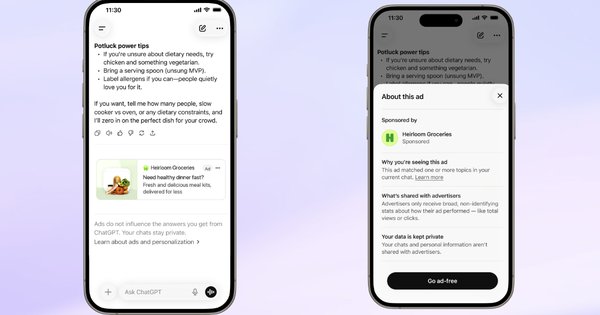
ChatGPT’s ad platform is already self-serve in 89 countries, from the United States and the United Kingdom to Mexico, Spain, Brazil or Argentina, with payment per impression or per click. More than one brewery will only learn about the ban after opening the account, adding the card and installing the pixel.

For beer with alcohol, the channel is closed, at least until OpenAI changes the rule. What follows explains exactly what the rule says, which businesses in the beer world can still give it a try and how to launch a campaign when the product qualifies.
What Do OpenAI’s Policies Say About Alcohol?
The section on alcohol and tobacco is short and leaves little room for interpretation. This is the current wording.
Ads that promote or facilitate the sale, use, or consumption of alcohol or tobacco are currently disallowed, including marketing for alcoholic beverages (products over 0.5% ABV), cigarettes, vaping, or nicotine products, as well as alcohol or tobacco-focused activities.
The same policy accepts incidental references to alcohol only when alcohol is not the focus of the ad and everything else fits within the allowed categories. During this initial phase those categories are lifestyle and home goods, local services, travel and experiences, digital products and education.
Review doesn’t stop at the ad copy. OpenAI looks at the headline, the description, the image and the landing page as a whole, with an official example that fits the industry like a glove, a food delivery ad that ends up on an alcohol delivery page.
That review is carried out by language models and automated classifiers before the ad can run. There’s no account executive to convince that your beer is craft, local or responsible.
What’s Off Limits for a Brewery?
The obvious part is off limits, meaning alcoholic beer in any format, whether through the online store, delivery, a subscription club or the launch of a limited edition. So are the experiences where beer takes center stage, such as the brewery tour, the guided tasting, the festival or the taproom’s growler night.
The point most breweries will overlook is the landing page. An ad for glassware or T-shirts can be flawless, but if it leads to a store where the main product is beer, the end-to-end consistency rule leaves it exposed to rejection.
That is a reading of the rule rather than a documented case, because OpenAI doesn’t publish examples from the industry. With an automated reviewer in the loop, the sensible assumption is that the system will look at the whole store rather than at the product in the ad.
What About Non-Alcoholic Beer?
It’s the only door the letter of the policy leaves ajar. The text defines an alcoholic beverage as a product over 0.5% ABV, so a 0.0 or a beer of up to 0.5% falls outside that definition on paper.
Nothing guarantees the automated reviewer will read it the same way. A can with a brewery’s logo, the word beer in the headline and a landing page with the rest of the lineup one click away add up to everything a classifier needs to flag it as alcohol advertising.
If your brewery has a non-alcoholic line, it’s worth testing a page dedicated solely to it, with no visible links to the alcoholic beers or to the main store. When an ad is rejected, Ads Manager shows the exact reason when you hover over the status, a detail worth saving because OpenAI doesn’t publish cases from the industry.
Which Businesses in the Beer World Can Give It a Try?
The ones that can try are those selling something other than alcohol to an audience that also drinks beer. A glassware or housewares store, a hotel in a beer region that sells the stay rather than the beer trail, a cookbook publisher or a booking app fit within the allowed categories, as long as the ad and its destination don’t put alcohol at the center.
Homebrewing equipment, which the policy doesn’t mention, sits in a gray area best treated as a rejection risk. A home fermentation kit is hard to read as something unrelated to alcohol consumption.

Beer sommelier courses and brewing schools are the most debatable case, because education is an allowed category while the subject of the course is alcohol. Brewery software doesn’t have it easy either, since at this stage OpenAI is prioritizing the mass consumer market while business services are not among the open categories.
So Where Is the Opportunity for a Brewery in ChatGPT?
It lies in the answer, not in the ad, because according to OpenAI ads influence neither what ChatGPT answers nor the sites it cites. They appear separately from the answer and always carry a sponsored label.
When someone asks ChatGPT for a stout to pair with dessert or a brewery to visit in Brussels, what decides whether you show up is your visibility in AI assistants, which is built through content, reputation and mentions on other sites. That work comes with a well-known problem, ChatGPT naming your beers without linking to your store.
If Your Business Qualifies, This Is How to Launch a Campaign
Setting up ChatGPT Ads starts at ads.openai.com with the work email of whoever will manage the account. Before confirming, check three settings that can never be changed, namely the country, the currency and the time zone. During signup it’s best to skip the option that builds an automatic ad, because it can start spending as soon as it’s approved.
In the settings you upload the logo, without which no ad will run, the company credit card and the legal business name, which goes through a verification that can take up to seven business days. The card is charged every time accumulated spend reaches a billing threshold that doesn’t work as a cap, so spending is controlled through each campaign’s budget.
Measurement comes before the campaign, with UTM parameters in each ad’s URL to separate in Google Analytics the paid traffic from the traffic ChatGPT already sends for free. If you install OpenAI’s pixel later, it should fire only with the visitor’s cookie consent, because by default it assumes consent was given.
For the first campaign the recommended objective is clicks, with the maximum bid of between $3 and $5 per click that OpenAI suggests to start. Instead of keywords, each ad group carries context cues, natural phrases that describe what is offered, who it serves and in what situation they need it.
Each ad, with a headline of up to 50 characters, body text of up to 100, a square image and its destination URL, goes through review before running. If it ends up in Not serving status, the reason appears when you hover over the status.
Is It Worth It for the Beer Industry?
For a brewery selling alcoholic beer the question doesn’t apply, because the channel is closed. For everyone else it’s worth remembering that ads are only shown to signed-in adults on the Free and Go plans, while Plus, Pro, Business or Enterprise users get ChatGPT without ads.
Performance evidence is still thin. A working paper by Kaiser and Schulze published in October 2026, not yet peer reviewed, measured in US stores a 0.37% conversion rate on paid ChatGPT clicks versus 1.17% on Google.
Until OpenAI opens the category, beer’s place in ChatGPT is the answer. The next time someone asks it what to bring to a barbecue, what will count is what the web says about your pale ale, not what you paid to appear underneath.
Frequently Asked Questions (FAQ)
1. Can You Advertise Beer on ChatGPT?
No. OpenAI’s advertising policies, updated on September 10, 2026, don’t allow ads that promote or facilitate the sale or consumption of beverages above 0.5% alcohol, nor ads for activities centered on alcohol. Review includes the landing page, so an ad for another product that leads to a beer store can also be rejected.
2. Can You Advertise Non-Alcoholic Beer on ChatGPT?
The policy defines an alcoholic beverage as a product over 0.5% ABV, so a 0.0 beer falls outside that definition. OpenAI doesn’t mention it explicitly and review is automated, so the outcome isn’t guaranteed. The safest approach is to use a landing page dedicated solely to the non-alcoholic line.
3. Can a Brewpub or a Brewery Tour Advertise on ChatGPT?
It’s unlikely. The policy excludes activities centered on alcohol, a description that fits tours, tastings, festivals and taprooms. References to alcohol are only accepted when they are incidental, as with a hotel or a restaurant where beer is not the focus of the ad or the landing page.
4. Does Paying for Ads on ChatGPT Make It Recommend My Beers?
No. According to OpenAI, ads appear separately from the answer with a sponsored label. They don’t influence what ChatGPT answers or the sources it cites. Whether a brewery shows up in a recommendation depends on its organic visibility, that is, on its content, its reputation and the mentions it gets on other sites.
5. How Much Does It Cost to Advertise on ChatGPT?
The minimum daily budget depends on the market and the account currency, with $25 as the standard benchmark in the United States. For click campaigns, OpenAI recommends starting with a maximum bid of between $3 and $5 per click, adjusted according to the competitiveness indicator shown in Ads Manager. The card is charged every time accumulated spend reaches the account’s billing threshold.
Recommended
- Why ChatGPT Talks About Your Beers But Never Links to Your Store
- How to Optimize Your Beer Content for AI Search Visibility