This post is also available in:
 Español
 Português
 Français
The decline in alcohol consumption among Gen Z has sparked an intense debate across the drinks industry, and it is reshaping patterns that brewers need to understand if they want to adapt strategically.
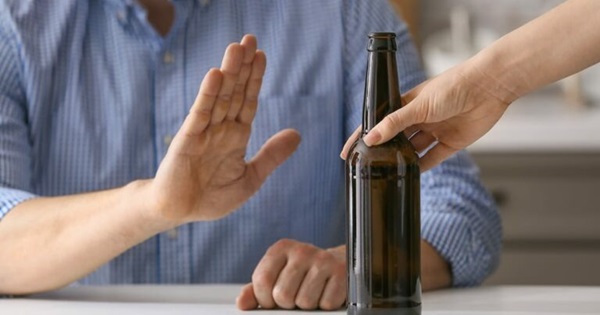
Contrary to simplistic narratives that blame this trend on health concerns or the influence of social media, an analysis built on economic, sociological and demographic data reveals more complex dynamics with strategic implications for the beer sector.

The RaboResearch report (Nesin, 2025), based on primary data from the U.S. Bureau of Labor Statistics (BLS, 2025), the National Survey on Drug Use and Health (NSDUH, 2025) and the Monitoring the Future Survey (2025), identifies three key drivers.
1. The economic factor
One of the main reasons behind Gen Z’s lower alcohol consumption is its economic situation.
Data from RaboResearch and the U.S. Bureau of Labor Statistics (2025) show that households led by members of this generation spend a similar share of their income on alcohol as previous generations.
Their wages, however, are significantly lower, which translates into lower absolute spending. In other words, Gen Z is not rejecting alcohol on principle. It simply has fewer resources to spend on it.
This is nothing new, because young people have always had less disposable income. What stands out is the comparison with young people a decade ago, since in 2012 and 2013 households headed by people under 30 spent 1.11% of their after-tax income on alcohol, compared with 0.74% between 2022 and 2024.
This suggests that, beyond a lack of resources, other factors are at play.
| Generation | Alcohol spending (% of after-tax income) |
| Gen Z | 0.72% |
| Millennials | 0.72% |
| Gen X | 0.65% |
| Baby Boomers | 0.83% |
| National average | 0.73% |
2. The digital revolution and its impact
The rise of smartphones and social media has transformed the way young people socialize.
Where in-person gatherings were once the main setting for drinking, virtual interactions have now gained ground.
Studies such as the Monitoring the Future Survey (2025) show that the share of high school seniors who report having been drunk at least once has fallen dramatically, from 64.4% in 1991 to 33% in 2024.
This decline coincides with the spread of smartphones, which have changed not only how young people relate to one another but also how their parents supervise them.
Location tracking apps and the constant presence of social media have raised the perceived risk of drinking, especially among minors.
According to Edison Research, the share of Americans aged 12 and older who own a smartphone rose from 31% in 2011 to 88% in 2021, a jump that makes parental monitoring easier and reduces the chances of drinking without supervision.
3. Demographic changes
Gen Z’s demographic makeup also plays a key role in this trend.
On the one hand, women now make up the majority of young drinkers, yet their average intake is significantly lower than men’s.
On the other hand, Gen Z is more ethnically diverse than previous generations, with a higher share of Asian, Latino and Black Americans, groups that have traditionally drunk less alcohol.
These changes have direct implications for the beer industry. While beer has traditionally been associated with male drinkers, spirits and other alcoholic beverages are gaining popularity among young women.
Since 2019, more women than men aged 18 to 25 drink alcohol in the United States, according to the NSDUH survey, although women drink on average about half as much as men. Gen Z is also the most diverse generation so far, with a smaller share of non-Hispanic white people, the group that has historically drunk the most.

| Generation | Non-Hispanic white population |
| Gen Z | 50% |
| Millennials | 54% |
| Gen X | 59% |
| Baby Boomers | 71% |
What it means for the beer industry
Given this landscape, beer brands need to adapt if they don’t want to fall behind. A key strategy could be developing products aligned with Gen Z’s values and preferences, such as lower alcohol beers or healthier options.
Marketing campaigns should also focus on digital experiences and online communities, where young people spend much of their time.
2026, the year the decline hit 1980 levels
In November 2026, Citi’s research team put a number on what this article described a year earlier, with U.S. beer shipments down 3.9% between January and September. If that pace holds through December, annual volume will end up about 18% below 2021 and even below 1980 levels, which would make it the fifth straight year of decline.
Not all beer is falling at the same rate. In those nine months only super premium beer, hard cider and non-alcoholic beer grew, and non-alcoholic is the segment with the clearest gains even though about 98% of that growth is concentrated in just five brands.
Among the large brewers, only Constellation Brands, which owns Modelo and Pacifico in the United States, ended the period in positive territory with 2.9% more volume. Boston Beer lost 11.3%, Molson Coors 5.1% and AB InBev 3.1%.
Citi’s data don’t break consumption down by age, so it would be a mistake to pin the whole decline on Gen Z. What does fit RaboResearch’s diagnosis is the map of what is growing, because non-alcoholic beer and premium formats are exactly what a generation with less income and more social scrutiny chooses when it decides to drink less but better.
Nor is it the only front. Drugs such as Ozempic or Mounjaro, which reduce the urge to drink in some of the people who take them, add to the pressure on volume, a topic we covered in what the trials say about Ozempic, Mounjaro and alcohol.
A gradual shift, not a revolution
Although Gen Z drinks less alcohol than previous generations did at the same age, this trend is likely to ease as they get older and their incomes rise.
Nesin estimates that by their mid-30s their consumption will be much closer to that of earlier generations, although it will probably remain lower because of the weight of demographic change.
For the beer industry, this represents both a challenge and an opportunity. Brands that manage to understand and adapt to these changes will be better positioned to win over this generation as it matures.
The key will be offering products and experiences that resonate with their values and lifestyle, without losing sight of the economic and social realities that shape how they drink.
Frequently asked questions (FAQ)
1. What is the sober curious movement and how does it affect Gen Z?
The sober curious movement refers to the conscious choice to cut back on or give up alcohol, not necessarily because of addiction but for mental and physical well-being. For Gen Z, this means alcohol is no longer the ultimate “social validator.” They prefer to stay in control of their public image (avoiding being exposed on social media) and to prioritize mental health, which has boosted the market for high-quality non-alcoholic (NA) beers.
2. Why does Gen Z prefer cocktails and Ready-to-Drink (RTD) beverages over traditional beer?
The preference for RTDs and cocktails comes from the search for more varied, sweet or fruity flavor profiles that classic mass-market beer doesn’t offer. These formats are also often seen as “premium” or aesthetic products, ideal for sharing on visual platforms such as Instagram or TikTok, where how a product looks matters as much as how it tastes.
3. How does the “care economy” influence young people’s spending on alcohol?
Gen Z puts a larger share of its discretionary budget into wellness experiences, digital subscriptions and proactive health. Because their real incomes are lower, they apply a very strict “value for money” filter. If they are going to drink, they prefer a craft or functional option (such as beers with adaptogens) over drinking for volume, following the motto of “drink less, but better.”
4. Is the decline in alcohol consumption a permanent or temporary trend?
The data suggest it is a structural shift. Although consumption usually rises slightly with age and financial stability, factors such as ethnic diversity (with cultures that drink less alcohol) and the digitalization of social life are permanent variables. RaboResearch expects the gap with previous generations to narrow considerably as Gen Z reaches its prime spending years, although without fully returning to historical levels.
5. What can craft breweries do to attract Gen Z?
The key lies in transparency and innovation. Gen Z values purpose-driven brands (sustainability, diversity) and clear labels that show ingredients and calories. The breweries that are succeeding are those launching hybrid styles, such as malt-based hard seltzers, beers with probiotics or alcohol-free versions that keep the hoppy complexity of an IPA.
References
Nesin, B. (2025). The real reasons Generation Z is drinking less alcohol [Research report]. RaboResearch Food & Agribusiness. https://www.rabobank.com/knowledge/q011475715-the-real-reasons-generation-z-is-drinking-less-alcohol
Licata, Z. (April 23, 2025). Rabobank: Cell Phones, Less Disposable Income and Demographic Shifts to Blame for Gen Z Drinking Less. Brewbound. https://www.brewbound.com/news/rabobank-cell-phones-less-disposable-income-and-demographic-shifts-to-blame-for-gen-z-drinking-less
Vinetur. (November 11, 2026). Citi warns U.S. beer shipments could fall below 1980 levels in 2026. https://www.vinetur.com/en/amp/20261111110819/citi-warns-us-beer-shipments-could-fall-below-1980-levels-in-2026.html

Recommended
- The Green Revolution in Beer: How Sustainability Is Transforming the Industry
- Beer Consumption and Prostate Health: What Science Says