
This post is also available in:
 Español
 Português
 Français
Neither Ozempic nor Mounjaro prohibits alcohol in its official product information, so an occasional beer is not contraindicated for people who inject semaglutide or tirzepatide, unless their doctor advises otherwise. What these drugs can change is the risk of low blood sugar in some patients.
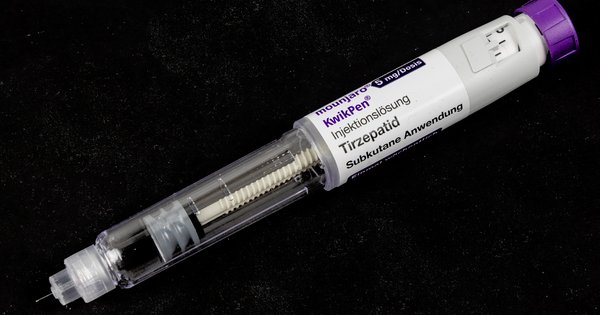
Early studies also suggest that alcohol takes longer to reach the bloodstream and that the urge to drink decreases, especially in people with obesity.

The latest significant finding came from Denmark in 2026. A trial by the Mental Health Centre Copenhagen published in The Lancet showed that semaglutide, the active ingredient in Ozempic and Wegovy, reduced heavy drinking days by 13.7 percentage points more than placebo in adults with alcohol use disorder and obesity.
The beer industry is already watching these results closely. On October 23, 2026, Reuters reported on a Heineken presentation to British pubs and bars in which the brewer warns that these medications reduce the desire to drink, while the consultancy Circana estimates that US households with a GLP-1 user spend around 13.5% less on beer than households without users after two years of treatment.
What does the official product information for Ozempic and Mounjaro say about alcohol?
The summaries of product characteristics authorized in Spain, consulted in the AEMPS information center, do not list alcohol consumption among the interactions or the warnings for either medication.
The same is true of the US FDA prescribing information, where the only mentions of alcohol are the benzyl alcohol used as an excipient in some Mounjaro presentations and the alcohol swabs in the injection instructions.
Two warnings in that product information do intersect with drinking. The first is acute pancreatitis, observed with GLP-1 receptor agonists (drugs that mimic a gut hormone that regulates appetite and glucose).
Heavy alcohol use is among the most common causes of pancreatitis, according to the US National Institute of Diabetes and Digestive and Kidney Diseases (NIDDK), a fact worth keeping in mind during treatment.
The second warning is hypoglycemia. The Ozempic product information states that the risk increases when semaglutide is combined with a sulfonylurea or with insulin, two common treatments for type 2 diabetes.
Alcohol makes that scenario worse because the liver prioritizes clearing ethanol over maintaining blood glucose, as the American Diabetes Association explains, especially when drinking on an empty stomach. The relationship between beer and blood glucose has its own nuances because of the carbohydrates beer provides.
Then there is the digestive system, where nausea, vomiting and diarrhea are the most common adverse effects of both drugs. Ten of the eleven users interviewed by Reuters said they drink less. Among their reasons, they cited feeling uncomfortable or unwell when drinking.
Why can blood alcohol take longer to rise on a GLP-1?
GLP-1 receptor agonists slow gastric emptying, one of the mechanisms by which they make people feel full. A group at Virginia Tech, in the United States, set out to test whether that brake also changes how alcohol reaches the bloodstream.
The pilot study, published in Scientific Reports in October 2025, enrolled 20 adults with obesity (a body mass index of 30 or higher) who drank occasionally.
Ten were taking a maintenance dose of a GLP-1, six on semaglutide, two on tirzepatide and two on liraglutide. The other ten were not taking any weight-loss medication.
Each participant drank three vodka and juice mixed drinks over one hour, with a dose calculated to reach a breath alcohol concentration of 0.08 grams per deciliter, measured with a breath analyzer.
At 20 minutes, the GLP-1 group registered 0.017 grams per deciliter compared with 0.037 in the control group, a gap equivalent to slightly more than half.
[math]\text{Reduction} = \dfrac{0.037 – 0.017}{0.037}[/math]
[math]\text{Reduction} \approx 0.54[/math]
In other words, 54% less breath alcohol at that point. From minute 35 onward the curves no longer differed significantly, while the area under the curve for the whole session remained lower in the treated group.
The feeling of intoxication was lower in the treated group throughout the session, a difference that was significant overall but that the analysis at each time point did not confirm. Nausea did not explain that pattern. After drinking, appetite rose in the control group and did not change significantly in the treated group.
The authors propose that part of these drugs’ effect on drinking is peripheral, meaning it occurs in the digestive system and not only in the brain, as happens with disulfiram.
The trial was done with vodka mixed with juice. The authors did not measure the effect with beer.
How do GLP-1 drugs act on the urge to drink?
The other pathway is in the brain. According to a 2026 review from Drexel University, GLP-1 receptor activity in the ventral tegmental area and the nucleus accumbens modulates the reward circuit that dopamine sets in motion when people drink.
In rodents, several GLP-1 agonists and tirzepatide reduce alcohol intake, alcohol seeking and relapse, and also prevent alcohol from activating the mesolimbic dopamine system, according to a 2026 review from the Medical University of Łódź, in Poland.
In humans, a Danish trial with exenatide provided brain imaging. Functional magnetic resonance imaging showed a weaker response to alcohol cues in the ventral striatum and septal area, two key regions in reward and addiction.
The same trial found lower dopamine transporter availability in the treated group. The authors of the Virginia Tech pilot therefore propose two possible mechanisms, one central, acting on the reward circuit, and one peripheral, linked to gastric emptying.
What trials show in people with alcohol use disorder
Alcohol use disorder is the clinical diagnosis that brings together what used to be called abuse and dependence, with different degrees and types of alcoholism. Four studies define what is known today about GLP-1 drugs in this area.
The first was the exenatide trial, published in JCI Insight in 2022 by the Psychiatric Centre Copenhagen. It enrolled 127 patients seeking treatment, who received a weekly 2 milligram injection or placebo for 26 weeks, alongside cognitive behavioral therapy.
Exenatide did not significantly reduce heavy drinking days compared with placebo. An exploratory analysis found that it did reduce them, along with total alcohol intake, in the subgroup of patients with obesity.
The opposite occurred in the 52 patients with a body mass index below 25, as exenatide increased heavy drinking days by 27.5 percentage points compared with placebo. The authors attribute this to a possible larger drop in glucose in lean people.
Two studies appeared in JAMA Psychiatry in 2025. A team led by the University of Eastern Finland followed 227,866 people with alcohol use disorder in Swedish health registries between 2006 and 2023, with a median follow-up of 8.8 years.
The 4,321 people who used semaglutide had, while taking it, a 36% lower risk of hospitalization for alcohol than in periods without the drug (adjusted hazard ratio of 0.64). With liraglutide, the reduction was 28%.
Taken together, the medications indicated for alcoholism did not significantly change that risk in the cohort, while naltrexone alone reduced it by 14%. The authors urge caution with that comparison because each drug was compared with its own untreated periods.
It is an observational study, which compares each person with themselves and does not randomly assign the drug. Its authors call for clinical trials to confirm the findings.
The second 2025 study was a randomized trial. At the University of North Carolina at Chapel Hill School of Medicine, 48 adults with alcohol use disorder who were not seeking treatment received placebo or semaglutide at low doses for nine weeks, with 0.25 milligrams weekly at first, 0.5 afterward and 1 milligram only in the final week.
Semaglutide reduced the grams of alcohol participants drank in a laboratory session, with a medium-to-large effect size. Outside the laboratory, the number of drinking days did not change. Drinks per drinking day fell, along with weekly craving for alcohol.
The 2026 Lancet trial is the most recent. The Mental Health Centre Copenhagen randomly assigned 108 patients with moderate or severe disorder and obesity, 53 women and 55 men, to semaglutide 2.4 milligrams weekly or saline for 26 weeks.
All received cognitive behavioral therapy. In total, 88 participants, or 81%, completed treatment.
Heavy drinking days fell by 41.1 percentage points with semaglutide and 26.4 with placebo. Simple subtraction gives a slightly different figure from the one the trial reports.
[math]41.1 – 26.4 = 14.7[/math]
The official difference is 13.7 points (95% confidence interval 5.4 to 22.0, p = 0.0015) and comes from the trial’s statistical model, an ANCOVA with imputation of missing data. The published abstract does not explain why it does not match the simple subtraction.
Adverse effects were mainly gastrointestinal, mild or moderate and transient. The trial’s funders include the Novo Nordisk Foundation, which is linked to the manufacturer of Ozempic and Wegovy.
Side by side, the four studies point in the same direction, with very different designs, sizes and populations.
| Study | Design and participants | Drug and duration | Main result |
|---|---|---|---|
| Klausen et al., JCI Insight, 2022 | Randomized trial, 127 patients | Exenatide 2 mg weekly, 26 weeks | No overall effect, reduction with obesity and increase with BMI below 25 |
| Lähteenvuo et al., JAMA Psychiatry, 2025 | Observational cohort, 227,866 people | Semaglutide and liraglutide, 2006 to 2023 | 36% lower risk of hospitalization for alcohol with semaglutide |
| Hendershot et al., JAMA Psychiatry, 2025 | Phase 2 randomized trial, 48 adults | Semaglutide 0.25 to 1 mg weekly, 9 weeks | Less alcohol in the laboratory and fewer drinks per drinking day |
| Klausen et al., The Lancet, 2026 | Randomized trial, 108 patients with obesity | Semaglutide 2.4 mg weekly, 26 weeks | Heavy drinking days 13.7 points lower than with placebo |
Why the beer industry is watching these drugs closely
The Heineken presentation, sent in October 2026 to its hospitality customers in the United Kingdom, explains that GLP-1 users feel full sooner and order fewer rounds, which puts pressure on beer and cider sales.
In response, the brewer recommends that venues promote half pints, offer more beers with little or no alcohol and pair drinks with small plates. Otherwise, it warns, they risk losing visits and spending.
The weight of the channel explains the concern. According to a Heineken UK report, beer generated nearly £14 billion in British pubs, bars and restaurants in the year to February 2026, of which less than £300 million came from beers with little or no alcohol.
In the United States, Circana tracked households with a GLP-1 user between 2024 and 2026. After two years of treatment they were spending about 7% less per month on alcohol than households without users, counting drinks consumed both at home and away from home. For beer, the gap was around 13.5%.
According to JPMorgan, about 10 million people in the United States took medications such as Ozempic or Wegovy in 2025.
Not all brewers read these data the same way. Carlsberg maintains that they do not yet show the drugs to be a clear driver of beer consumption, Diageo considers that their impact will be manageable even if their use spreads, and AB InBev declined to comment.
Circana’s data are observational. They show that these households buy less beer, without proving that the drug is the only cause.
What to keep in mind when drinking beer on a GLP-1
The first recommendation is to talk to the doctor who prescribes the treatment, especially for people with type 2 diabetes who use insulin or a sulfonylurea, the combination with the highest risk of hypoglycemia.
Drinking with food in the stomach reduces the risk of low blood sugar, according to the American Diabetes Association.
Non-alcoholic beer greatly reduces ethanol without always eliminating it, since in Spain that label can be used for beers with up to just under 1% alcohol by volume. It also retains its carbohydrates, which matter in diabetes. The differences in carbohydrates between types of beer are wide, as are those between the non-alcoholic beers on the market.
Severe or persistent abdominal pain, sometimes radiating to the back and with or without vomiting, requires seeing a doctor immediately, whether or not alcohol has been consumed. It is the warning sign of pancreatitis described in the product information, which calls for stopping the drug if pancreatitis is suspected.
No GLP-1 agonist is approved by the FDA to treat alcohol use disorder, as a 2026 review from Drexel University points out. For people who want to cut back, treatments and strategies with stronger evidence already exist to stop drinking beer.
Challenges and open questions
Evidence on GLP-1 drugs and alcohol is advancing quickly. It still leaves several questions unanswered.
- The strongest results come from people with obesity or type 2 diabetes, while in lean people the exploratory analysis of the exenatide trial pointed in the opposite direction.
- The effect on alcohol has yet to be separated from the effect of weight loss.
- It has not been shown that the benefit lasts once the drug is stopped, as a 2026 editorial from Vita-Salute San Raffaele University in Milan stresses.
- Many of the results depend on the drinking that patients themselves report.
- The effect on alcohol absorption was measured in the Virginia Tech pilot with vodka, not with beer.
A 2026 review from the University of Pennsylvania counted 19 interventional trials that are ongoing or completed but unpublished, which will show whether these drugs move from promising candidates to a treatment for alcoholism. For the beer industry, the question is a different one, how much beer will go unserved if their use keeps growing.
Frequently Asked Questions (FAQ)
1. Can you drink beer on Ozempic or Mounjaro?
The official product information neither prohibits it nor lists it among the interactions, so an occasional beer is not contraindicated. More caution is needed in diabetes treated with insulin or sulfonylureas, because of the risk of hypoglycemia, or with a history of pancreatitis, a situation in which Mounjaro has not been studied. It is best to check with a doctor.
2. Does Ozempic take away the urge to drink alcohol?
In clinical trials, semaglutide reduced the desire to drink and alcohol consumption in people with alcohol use disorder. In the 2026 Lancet trial, heavy drinking days fell 13.7 percentage points more than with placebo in patients with obesity.
3. Why does alcohol take effect later on Ozempic?
Because GLP-1 drugs slow gastric emptying. In a Virginia Tech pilot with 20 people, breath alcohol at the 20-minute mark was 54% lower in those taking these drugs, with no significant differences from minute 35 onward. Feeling the effect later is no reason to drink more.
4. How much alcohol can you drink on Ozempic?
There is no established amount for people taking GLP-1 drugs, since the product information sets no limit. The doctor should assess it case by case, especially when there is diabetes, a history of pancreatitis or alcohol use disorder.
5. Why does alcohol cause nausea on Ozempic or Mounjaro?
Nausea, vomiting and diarrhea are the most common adverse effects of these drugs, which also slow digestion. Ten of the eleven users interviewed by Reuters in 2026 said they drink less. Among their reasons, they cited feeling uncomfortable or unwell when drinking.
6. Is Ozempic approved to treat alcoholism?
No. No GLP-1 agonist has FDA approval for alcohol use disorder, so its use for that purpose remains experimental despite the good results of the trials.
References
Klausen, M. K., Jensen, M. E., Møller, M., Le Dous, N., Jensen, A. Ø., Zeeman, V. A., Johannsen, C. F., Lee, A., Thomsen, G. K., Macoveanu, J., Fisher, P. M., Gillum, M. P., Jørgensen, N. R., Bergmann, M. L., Enghusen Poulsen, H., Becker, U., Holst, J. J., Benveniste, H., Volkow, N. D., Vollstädt-Klein, S., Miskowiak, K. W., Ekstrøm, C. T., Knudsen, G. M., Vilsbøll, T. and Fink-Jensen, A. (2022). Exenatide once weekly for alcohol use disorder investigated in a randomized, placebo-controlled clinical trial. JCI Insight, 7(19), e159863. doi.org/10.1172/jci.insight.159863
Lähteenvuo, M., Tiihonen, J., Solismaa, A., Tanskanen, A., Mittendorfer-Rutz, E. and Taipale, H. (2025). Repurposing Semaglutide and Liraglutide for Alcohol Use Disorder. JAMA Psychiatry, 82(1), 94-98. doi.org/10.1001/jamapsychiatry.2024.3599
Hendershot, C. S., Bremmer, M. P., Paladino, M. B., Kostantinis, G., Gilmore, T. A., Sullivan, N. R., Tow, A. C., Dermody, S. S., Prince, M. A., Jordan, R., McKee, S. A., Fletcher, P. J., Claus, E. D. and Klein, K. R. (2025). Once-Weekly Semaglutide in Adults With Alcohol Use Disorder. A Randomized Clinical Trial. JAMA Psychiatry, 82(4), 395-405. doi.org/10.1001/jamapsychiatry.2024.4789
Klausen, M. K., Justesen, S. K., Pedersen, J. N., Rasmussen, L., Jensen, A., Jensen, M. E., Knorr, U. B., Bergmann, M. L., Holst, J. J., Hartmann, B., Koob, G. F., Benveniste, H., Volkow, N. D., Ekstrøm, C. T., Knudsen, G. M., Vilsbøll, T. and Fink-Jensen, A. (2026). Once-weekly semaglutide versus placebo in patients with alcohol use disorder and comorbid obesity. A randomised, double-blind, placebo-controlled trial. The Lancet, 407(10540), 1687-1698. doi.org/10.1016/S0140-6736(26)00305-3
Quddos, F., Fowler, M., de Lima Bovo, A. C., Elbash, Z., Tegge, A. N., Gatchalian, K. M., Kablinger, A. S., DiFeliceantonio, A. G. and Bickel, W. K. (2025). A preliminary study of the physiological and perceptual effects of GLP-1 receptor agonists during alcohol consumption in people with obesity. Scientific Reports, 15(1), 32385. doi.org/10.1038/s41598-025-17927-w
Zawilska, J. B., Zwierzyńska, E. and Wojcieszak, J. (2026). Searching for New Pharmacological Treatments of Alcohol Use Disorder (AUD). Focus on GLP-1 Receptor Agonists. International Journal of Molecular Sciences, 27(10), 4502. doi.org/10.3390/ijms27104502
Nittur, A., Belzar, A. and Rai, C. (2026). Exploring semaglutide for alcohol use disorder. A review of clinical efficacy and neurobiological mechanisms. Addictive Behaviors, 185, 108878. doi.org/10.1016/j.addbeh.2026.108878
Woo, S., Zhu, G., Castro, C., Phuong, A., Roy, A., Davis, C. N. and Kranzler, H. R. (2026). GLP-1 Receptor Agonists for Treating Alcohol Use Disorder. A Critical Review. Alcohol, Clinical and Experimental Research, 50(5), e70312. doi.org/10.1111/acer.70312
Singh, S. and Das, M. (2026). When weight-loss drugs reduce drinking. Glucagon-like peptide-1 receptor agonists as phenotype-enriched harm-reduction therapy for alcohol use disorder. Annals of Medicine and Surgery, 88(10), 6240-6243. pubmed.ncbi.nlm.nih.gov/42866353
Rumney, E. (October 23, 2026). Exclusive. Heineken document reveals worries over weight-loss drugs and beer sales. Reuters. wsau.com
AEMPS, CIMA. Summary of product characteristics of Ozempic (semaglutide) and summary of product characteristics of Mounjaro (tirzepatide). cima.aemps.es
NIDDK. Symptoms and causes of pancreatitis. niddk.nih.gov
American Diabetes Association. Alcohol and diabetes. diabetes.org

Recommended
- How to stop drinking beer? What works according to science and the mistake that can be dangerous
- Can people with diabetes drink beer? How beer affects blood glucose