
This post is also available in:
 Español
  Português
  Français
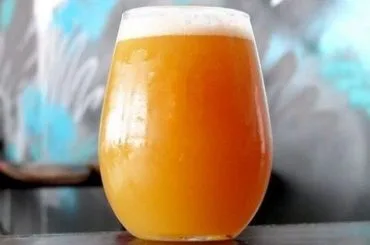
In recent years, craft beer styles have undergone a remarkable transformation, with a renewed focus on finding unique ingredients that bring complexity and richness to beer.
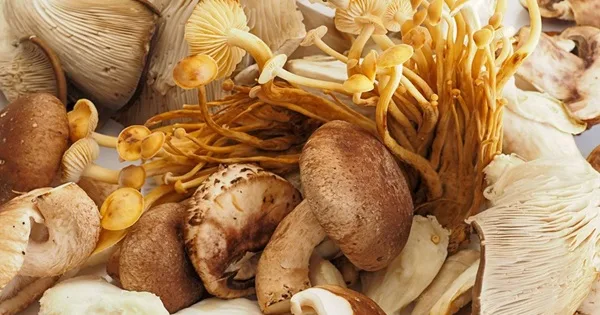

Among these innovative ingredients, edible and adaptogenic mushrooms have been gaining ground, offering not only new sensory experiences but also potential health benefits within a new category known as functional beverages.
Adding mushrooms to beer is creating a new wave of styles that blend tradition and innovation, driven by the sensory richness and the health benefits they may offer.
The Role of Mushrooms in Brewing
The Fungi Kingdom is one of the five major biological kingdoms, home to a diverse group of organisms that, unlike plants, do not photosynthesize and instead feed by breaking down organic matter.
This kingdom encompasses a wide variety of groups such as molds, yeasts, edible mushrooms and adaptogenic fungi, which play a crucial role in nature by recycling nutrients and helping maintain ecological balance.
Throughout the history of beer, single-celled fungi, especially those of the genus Saccharomyces (from the Greek “Saccharo”, meaning sugar, and “Myces”, meaning fungus), have played a crucial role in fermentation, converting sugars into alcohol and carbon dioxide.
However, the term “mushroom beer” has evolved to also include mushrooms proper, the fruiting bodies of certain macroscopic multicellular fungi such as shiitake, reishi and chaga, among others.
Many of these mushrooms have unique sensory and bioactive properties that can be integrated at different stages of the brewing process to create beers with innovative flavor and texture profiles, while also bringing in bioactive compounds that are highly valued by consumers.
Edible and Adaptogenic Mushroom Varieties
The range of edible and adaptogenic mushrooms used in brewing not only adds flavor complexity but is also associated with effects on general well-being.
That appeal deserves some nuance. Most of the effects attributed to these mushrooms come from laboratory or animal studies, and clinical trials in humans are still few and small, as mycologists such as Nicholas Money and Heather Hallen-Adams point out (National Geographic, 2024).
Reishi (Ganoderma lucidum)
Reishi is one of the best known adaptogenic mushrooms and is credited with antioxidant and anti-inflammatory properties.
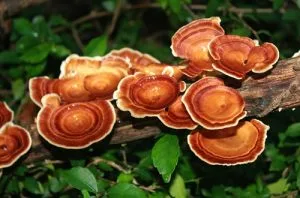
Traditionally used in Eastern medicine, it adds an earthy, slightly bitter note to beer, making it a perfect complement to dark beers such as Stout or Porter.
Reishi is also credited with benefits in regulating the immune system and reducing stress, although the evidence in humans is still modest, which makes its inclusion an added draw for those looking for a functional beer.
Chaga (Inonotus obliquus)
Considered a superfood in many cultures, this mushroom is credited with antioxidant properties, observed mainly in the laboratory.
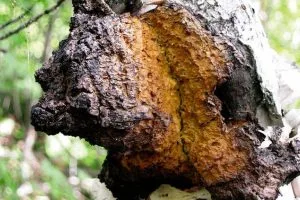
Chaga has a deep flavor that can contribute an earthy profile ideal for more robust beers such as Imperial Stout or Bock styles.
Beyond its unique flavor, chaga is credited with adaptogenic properties against physical and mental stress. The evidence supporting this is almost entirely preclinical.
Adding chaga to beer not only enhances sensory complexity but also brings in a mushroom that traditional medicine has associated with longevity.
Chaga also calls for caution. Its oxalate content is very high, and clinical cases of oxalate nephropathy have been published in people who consumed it in powdered form for months (case report, 2022; case report, 2020). It is best used in moderation in the recipe.
Shiitake (Lentinula edodes)
Shiitake is an edible mushroom that is very popular in Asian cuisine, with an umami character that makes it a perfect choice for beers seeking greater depth of flavor.
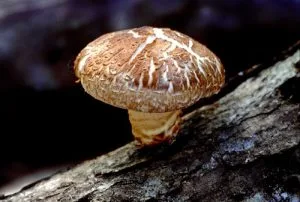
Used in Amber Ale or Pale Ale styles, its earthy and fruity notes integrate well, complementing caramelized malts and the slightly bitter notes of the hops.
Shiitake is also credited with immunostimulant properties and is rich in B vitamins, which adds extra nutritional value to the beers that include it.
Maitake (Grifola frondosa)
Maitake is another adaptogenic mushroom that stands out both for its delicate flavor and for the properties attributed to it.
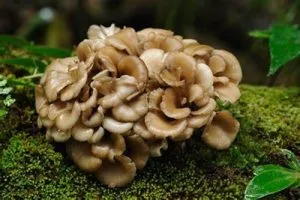
With a meaty texture and a flavor that ranges from earthy to slightly sweet, maitake can be integrated seamlessly into medium intensity beers such as a Brown Ale, where its mild profile enhances the malty notes without overwhelming the flavor.
This mushroom is credited with regulatory effects on the immune system, making it an attractive option for those interested in the functional benefits of their drinks.
Oyster (Pleurotus ostreatus)
The oyster mushroom is one of the most versatile edible mushrooms in the kitchen, known for its soft texture and delicate flavor.
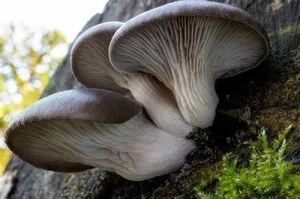
Added to beer, it can contribute a subtlety that never dominates the flavor profile, which makes it ideal for light, refreshing beers such as Wheat Beer or Blonde Ale.
Beyond its flavor, the oyster mushroom provides protein and vitamins, adding a nutritional component that is highly relevant to consumers.
Chanterelle (Cantharellus cibarius)
The chanterelle, known for its fruity and slightly peppery flavor, is an edible mushroom that is highly prized in gastronomy.
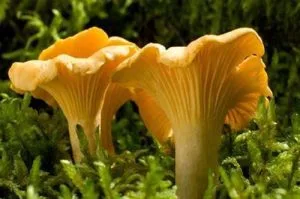
Its unique flavor works very well in Amber Ale styles or even in beers brewed with roasted malts, adding an aromatic complexity that complements the grain and hop base.
Beyond its flavor profile, the chanterelle is credited with antioxidant and anti-inflammatory properties.
Matsutake (Tricholoma matsutake)
Matsutake is a highly prized mushroom in Japanese cuisine, famous for its unique flavor and distinctive aroma, reminiscent of spices and fresh wood.
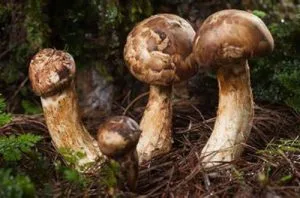
Its inclusion in beer delivers a complex and exotic sensory experience, ideal for styles that seek a special touch and a more refined flavor profile.
Matsutake is also credited with antioxidant and anti-inflammatory properties.
Lion’s Mane (Hericium erinaceus)
Lion’s mane is an edible mushroom credited with neuroprotective properties, often used in traditional medicine to improve cognitive function and reduce anxiety.
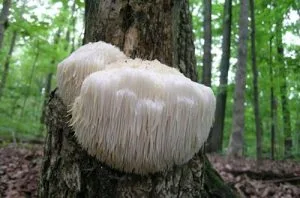
In beer, its mild, slightly sweet flavor can be a perfect complement to Amber Ale or Pale Lager styles.

On the functional side, lion’s mane is associated with effects on memory and concentration, a line of research whose results in humans are still preliminary (National Geographic, 2024).
Cordyceps (Cordyceps militaris)
Cordyceps militaris is a mushroom credited with energizing properties, traditionally used to boost physical endurance and improve athletic performance.
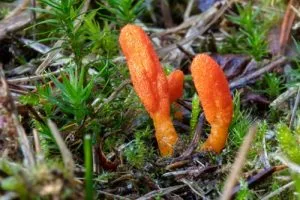
In beer, cordyceps can add a slightly earthy flavor, complementing light-bodied hoppy beers such as Pale Ale or IPA.
| Mushroom | Attributed Properties | Beer Style |
| Reishi | Antioxidant, anti-inflammatory, stress regulation. | Stout, Porter |
| Chaga | Antioxidant and adaptogen for physical and mental stress (attributed). | Imperial Stout, Bock |
| Shiitake | Umami flavor, immunostimulant, rich in B vitamins. | Amber Ale, Pale Ale |
| Maitake | Immune regulator, earthy and sweet flavor. | Brown Ale |
| Oyster | Delicate flavor, high in protein and vitamins. | Wheat Beer, Blonde Ale |
| Chanterelle | Fruity and slightly peppery flavor, antioxidant. | Amber Ale, Black Lager |
| Matsutake | Complex flavor, antioxidant, spicy aroma. | Refined or exotic styles |
| Lion’s Mane | Neuroprotective, memory and concentration (under study). | Amber Ale, Pale Lager |
| Cordyceps | Energizing, physical endurance. | Pale Ale, IPA |
Which Mushroom Format Should You Use?
The form in which mushrooms are used is also a key factor in how their characteristics carry into the beer.
Depending on the beer style and the mushroom variety, brewers can use fresh mushrooms, dried mushrooms or extracts.
1. Fresh Mushrooms
Fresh mushrooms contain more water, which means they provide a lower concentration of flavor and compounds than dried mushrooms or extracts.
Even so, their fresh flavor can be useful in beers that aim for a gentle, less dominant integration.
2. Dried Mushrooms
Having lost much of their water content, dried mushrooms concentrate more flavor and bioactive compounds.
They are ideal for beers seeking a more robust flavor profile, as they are more intense and can release their essential oils more quickly during the boil or secondary fermentation.
3. Mushroom Extracts
Extracts offer the advantage of a high concentration of the mushrooms’ active compounds, allowing a controlled and precise addition of their flavors and their prized functional effects.
Extracts are especially useful when aiming for a more intense flavor profile or when the goal is to incorporate the adaptogenic or medicinal properties of mushrooms without altering the overall flavor of the beer too much.
How to Add Mushrooms to Beer
Using mushrooms in brewing is a practice that can profoundly transform both the flavor and the functional profile of the drink.
However, given the nature and diversity of mushrooms, adding them during brewing must be handled with precision to maximize their sensory benefits without compromising the quality of the final product.
Mushrooms can be introduced at different stages of the brewing process, each with its own considerations regarding how their volatile compounds and properties affect the final result.
1. Boil
The boil is one of the most crucial stages in brewing beer, since this is when many of the volatile compounds are extracted into the wort, including the essential oils from hops and, in this case, from mushrooms.
When mushrooms are added to the wort during the boil, they release their essential oils and water soluble compounds, which can enrich the beer with a range of more complex flavors and aromas, such as earthy, umami and slightly woody notes.
However, heat can alter the more delicate compounds in mushrooms, reducing the intensity of certain flavors or even evaporating their bioactive properties.
For this reason, the type of mushroom chosen and the amount used are decisive factors in making sure they are properly incorporated without losing their main characteristics.
2. Conditioning
One of the most effective ways to add mushrooms to beer, especially those with more delicate flavors, is during conditioning.
Conditioning is the period in which the beer matures and its flavors integrate more deeply, allowing the added ingredients to blend into the overall profile of the drink.
At this point, mushrooms can influence the beer more gradually, and their presence comes across as more integrated and balanced.
The process can last anywhere from a few days to several weeks, depending on the type of mushroom and the desired result.
In terms of texture, the polysaccharides present in some mushrooms can give a smoother, rounder feel with a velvety mouthfeel.
The Future of Mushroom Beer
The use of edible and adaptogenic mushrooms in brewing remains a field of experimentation and creativity within craft brewing.
With more and more brewers interested in combining complex flavors with the health benefits of mushrooms, more innovative beer styles are likely to emerge, each with a unique profile that responds both to sensory preferences and to the demand for functional products.
That appeal has a legal limit. In the European Union, Regulation (EC) 1924/2006 prohibits beverages containing more than 1.2% alcohol from bearing health claims, and the Court of Justice of the EU has interpreted this broadly (EUR-Lex). A mushroom beer can highlight its flavor and its ingredients. It cannot be marketed as functional.
In short, edible and adaptogenic mushrooms are opening up new possibilities in craft brewing, not only for their ability to enrich flavor but also for their potential health benefits.
With the right approach, these mushrooms make it possible to create innovative beers with unique sensory profiles, ensuring that this trend continues to develop in the future.
Wee Heavy Recipe with Chanterelle Mushrooms
The following recipe was originally published by Denny Conn, a member of the American Homebrewers Association, cofounder of the Experimental Brewing podcast and author of the books Experimental Homebrewing and Homebrew All-Stars.
Batch size: 20.8 L (5.5 gal)
IBU (bitterness): 26
ABV (alcohol): 9.6%
Ingredients
- 9.1 kg (20 lb) Simpson’s Golden Promise malt
- 113 g (4 oz) roasted barley (450°L)
- 31 g (1.1 oz) Northern Brewer hops (10% AA, 45 min)
- 2.8 L (3 qt) Wyeast 1728 Scottish Ale yeast starter
- 900 g (2 lb) chanterelle mushrooms
- 1 teaspoon Irish moss (15 min) or ½ Whirlfloc tablet (5 min)
Instructions
- Mash for 90 minutes at 68 °C (154 °F), recirculate and transfer the wort to the boil kettle. Draw off 3.8 L (1 gal) of wort and boil it down to 0.9 L (1 qt) until it reaches a syrupy consistency.
- Bring to a boil, add the reduced wort and keep boiling for 90 minutes. Chill to 13 to 14 °C (55 to 57 °F) and pitch the yeast starter. Ferment at 13 °C (55 °F) until final gravity is reached (2 to 4 weeks).
- Brush the mushrooms thoroughly with a little water, without washing them, cut them into pieces and optionally spray them with Star San, making sure they stay dry. Place them in a vacuum bag, seal and freeze for at least one week.
- The day before, take the mushrooms out of the freezer and place them in a sanitized secondary vessel, rack the beer onto them and leave for 2 weeks.
- Transfer the beer to another vessel for cold conditioning at 2 to 4 °C (36 to 39 °F) for at least one month. Bottle or keg to moderate carbonation (4 to 5 g/L of CO₂).
Frequently Asked Questions (FAQ)
1. Do mushrooms affect head retention in beer?
Mushrooms contain very little fat, so their effect on foam depends mainly on their polysaccharides. Compounds such as beta glucans increase viscosity and give a silkier mouthfeel, which can help maintain a more persistent foam head. The exact effect varies with the species, the format and the dose.
2. Do mushrooms need to be boiled to extract their bioactive compounds?
For adaptogenic mushrooms such as Reishi or Chaga, boiling is beneficial because it helps break down the chitin cell walls, releasing bioactive compounds such as terpenes. However, for culinary varieties with delicate volatile aromas, a long boil can destroy their sensory profile. An advanced technique is double extraction, which consists of using one portion in the boil to extract bioactive compounds and another during cold conditioning for aroma.
3. Does the alcohol in beer cancel out the properties of adaptogenic mushrooms?
Not necessarily. In fact, alcohol acts as a solvent that helps extract compounds that are not water soluble (such as certain antioxidants and triterpenes). By combining water extraction during the mash and boil with alcohol exposure during maturation, a more complete spectrum of the mushroom’s compounds is extracted. That does not make beer a drink with proven health effects.
4. What food safety precautions should be taken when using mushrooms?
It is essential to use only mushrooms from certified sources to avoid poisoning. In brewing, prior freezing is recommended (as indicated in the Chanterelle recipe) to break down cell structures, along with sanitizing agents such as Star San or brief exposure to high temperatures (pasteurization) before adding them to the fermenter, to prevent infection from wild yeasts or bacteria present on the mushrooms.
5. Do mushrooms contribute fermentable sugars to the wort?
The contribution of fermentable sugars from mushrooms is negligible. Although they contain carbohydrates, most are complex fibers and polysaccharides that standard yeasts (Saccharomyces) cannot metabolize. Therefore, using mushrooms will not significantly increase alcohol content (ABV), and their effect will show mainly in the body, umami flavor and the mushroom’s own character.
Additional References
- Conn, Denny. “Homebrewing with Mushrooms”, www.homebrewersassociation.org.
- Home Brew Advice, “Brewing Beer With Mushrooms: 6 Things You Should Know”, homebrewadvice.com.
- Kiss My Brew, “Brewing with Mushrooms”, www.kissmybrew.com.
- Cotter, Tradd. “Brew Outside the Box: Making Mushroom-Infused Beer.” Chelsea Green Publishing. www.chelseagreen.com.

Recommended
- Non-Alcoholic Beers as Functional Drinks? A New Category Beginning to Expand
- What Are Lipids in Beer? A Double-Edged Sword Between Fermentation and Stability