
This post is also available in:
 Español
 Português
 Français
India Pale Ale, or IPA, is a family of beers known for an intense hop bitterness and a respectable alcohol content. There are two main variants, the original English IPA and the far more famous American IPA, and hops lead the way in both.
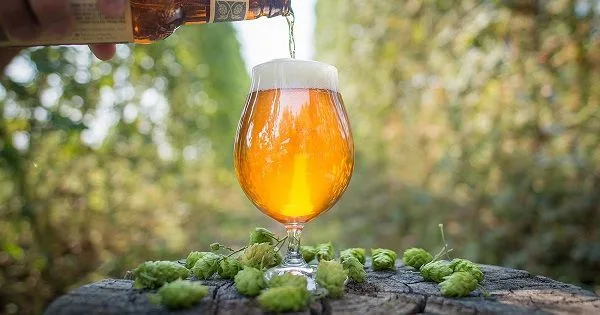
English IPAs use fewer hops, with a softer, floral and earthy aroma. Their balance depends on enough malt flavor, body and complexity to support the hops.
American IPAs show an intense, prominent hop aroma, floral, citrusy, resinous, piney or fruity, that comes from American hop varieties.
Many of them are dry hopped, meaning hops are added cold during fermentation or conditioning. In the American versions the malt takes a back seat.
Here is a selection of clone recipes for some of the most famous IPAs in the world, so you can pick the one you want to brew at home.
Treat them as a reference, because you will most likely need to adapt them to the size of your system, your efficiency or the ingredients you can find. The specs belong to each clone and do not always match the commercial beer.
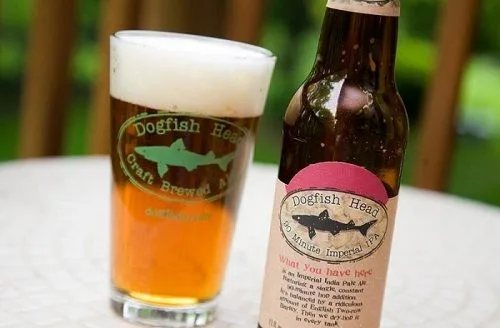
1. Dogfish Head 90 Minute IPA recipe
Beer style: Double IPA
Recipe type: All grain
Batch size: 19 liters
Ingredients
- 16.0 lb (7.3 kg) two-row pale malt
- 1.0 lb (0.45 kg) Munich malt
- 2.5 oz (70 g) Amarillo pellets [8%], 90 minutes (see instructions)
- 0.75 oz (21 g) Simcoe pellets [13%], 90 minutes (see instructions)
- 0.5 oz (14 g) Warrior pellets [15%], 90 minutes (see instructions)
- 1.0 oz (28 g) whole Amarillo [8%] (dry hop)
- 0.5 oz (14 g) whole Simcoe [13%] (dry hop)
- 0.5 oz (14 g) whole Glacier [5.8%] (dry hop)
- 1 packet of Wyeast 1056 American Ale yeast
Instructions
- Do a single infusion mash at 150 °F (66 °C) for 60 minutes. Boil for 90 minutes.
- Combine all the boil hops in a bowl, then weigh out 0.2 ounces (5.6 grams) of the mix and add it to the boil every five minutes throughout the boil.
- Ferment at 72 °F (22 °C) until the gravity is stable at terminal. Move to secondary and add the dry hops for at least a week.
Beer profile
Original gravity: 1.086
Final gravity: 1.016
ABV: 9.0%
IBU: 90
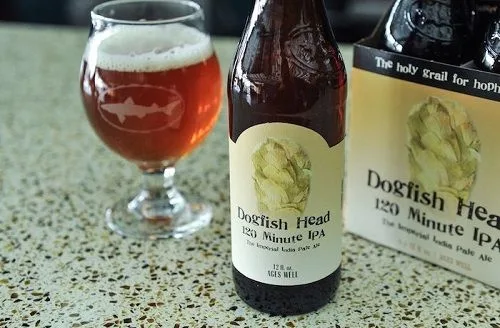
2. Dogfish Head 120 Minute IPA recipe
Beer style: Double IPA
Recipe type: All grain
Batch size: 19 liters
Ingredients
- 16 lb (7.26 kg) Pilsner malt
- 0.5 lb (0.23 kg) English amber malt
- 11.0 lb (5 kg) dextrose (added during fermentation)
For primary fermentation
- 1 packet of White Labs WLP001 California Ale or Wyeast 1056 American Ale yeast
For secondary fermentation
- 1 packet of White Labs WLP099 Super High Gravity Ale yeast
Mix the following hops in a container and add about 0.1 oz (3 g) of the blend every three minutes during the boil.
- 1.38 oz (39 g) Amarillo pellets [10%] (continuous addition)
- 1.38 oz (39 g) Simcoe pellets [13%] (continuous addition)
- 1.38 oz (39 g) Warrior pellets [16%] (continuous addition)
Mix the following hops in a container and add about 0.2 oz (6 g) of the blend to the fermenter every day.
- 1 oz (28 g) Amarillo pellets [10%] (daily dry hopping)
- 1 oz (28 g) Simcoe pellets [13%] (daily dry hopping)
- 1 oz (28 g) Warrior pellets [16%] (daily dry hopping)
Instructions
Do a single infusion mash at 149 °F (65 °C) with a ratio of 1.3 quarts of water per pound of grain for the malt base. The sugar is added during fermentation.
Andy Tveekrem, a former Dogfish Head brewer, gives these directions for the clone.
The key to brewing a 120 Minute IPA clone is adding hop pellets continuously throughout the 2-hour boil. You will be adding more hops than you think is prudent. Start the main fermentation with the first yeast at 72 °F (22 °C). Two or three days later, make a 2-quart starter for the high-gravity yeast. After the main batch has fermented for several days, or when primary fermentation is about half complete, add the high-gravity yeast. Feed the fermenter twice a day with dextrose dissolved in fermented beer. Some 35 to 40 percent of the total fermentables should come from dextrose. Feed the sugar for about 7 to 14 days. The length and the final alcohol level will depend on the health and temperature of the yeast. Add yeast nutrient every other day. Check the gravity before and after feeding to make sure you are not adding too much sugar. Stop feeding when the yeast cannot take any more, or the beer will end up too sweet. Also add a small bag of hops every day to boost the aroma. This beer will need conditioning time to clear. Bottle conditioning is not recommended, because the alcohol will inhibit yeast activity. The final beer should be at least 18% ABV.
Beer profile
Original gravity: 1.092 (before the dextrose additions)
Final gravity: 1.042
ABV: 21% (the commercial beer is listed at 15 to 20%)
SRM: 7.2
IBU: 120
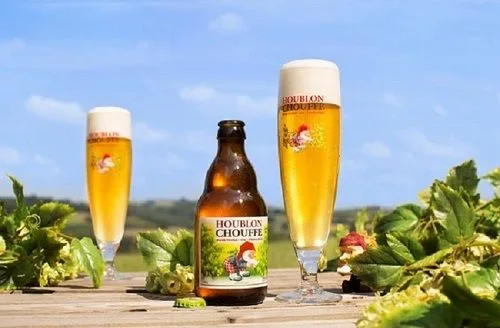
3. Houblon Chouffe IPA recipe
Beer style: Belgian IPA
Recipe type: All grain
Batch size: 21 liters
Boil volume: 23 liters
Ingredients
- 10.75 lb Belgian Pilsner malt (1.6 L)
- 2 lb cane sugar (late addition)
- 0.7 oz Columbus pellets [15%], boil 60 minutes
- 0.4 oz Columbus pellets [15%], boil 20 minutes
- 1.2 oz Saaz pellets [3.5%], boil 7 minutes
- 0.7 oz Amarillo pellets [8.6%], dry hop 2 days
- 1 packet of Wyeast 3522 Belgian Ardennes yeast
Instructions
Mash at 127 °F (53 °C) for 20 minutes, at 145 °F (63 °C) for 20 minutes and at 154 °F (68 °C) for 10 minutes, then raise to 176 °F (80 °C) for the sparge. Boil the wort for 60 minutes. Ferment between 18.3 °C and 23.9 °C.
Beer profile
Original gravity: 1.071
Final gravity: 1.014
ABV: 7.5%
IBU: 56
SRM: 4
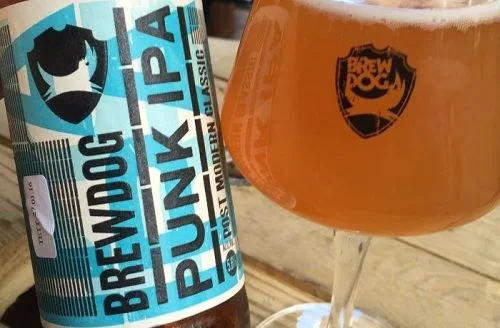
4. BrewDog Punk IPA recipe
Beer style: American IPA
Recipe type: All grain
Batch size: 50 liters
Boil volume: 55 liters
Ingredients
- 13.5 kg Maris Otter pale malt (3.75 L)
- 60 g Chinook pellets [13%], boil 60 minutes
- 55 g Ahtanum pellets [6%], boil 15 minutes
- 30 g Nelson Sauvin pellets [12.5%], boil 15 minutes
- 30 g Simcoe pellets [12.7%], boil 10 minutes
- 30 g Chinook pellets [13%], boil 2 minutes
- 30 g Nelson Sauvin pellets [12.5%], boil 2 minutes
- 30 g Simcoe pellets [12.7%], boil 2 minutes
- 1 packet of White Labs WLP007 Dry English Ale yeast
Instructions
Mash at 67 °C for 60 minutes and sparge for 10 minutes at 76 °C. Boil for 60 minutes. Ferment between 18.3 °C and 21.1 °C.
Beer profile
Original gravity: 1.060
Final gravity: 1.015
ABV: 5.9%
IBU: 66
SRM: 7
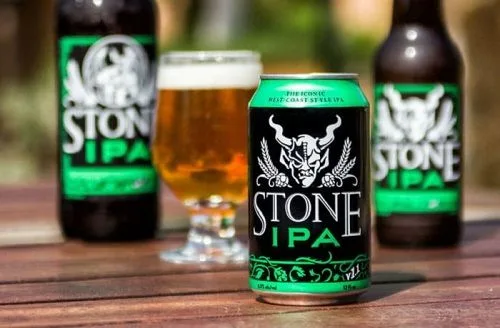
5. Stone IPA recipe
Beer style: American IPA
Recipe type: Extract with grain
Batch size: 19 liters
Ingredients
- 5 lb (2.3 kg) light dry malt extract
- 1 lb 10 oz (0.74 kg) liquid malt extract
- 1 lb (0.45 kg) two-row pale malt
- 1 lb (0.45 kg) Crystal malt (15 °L)
- 0.5 oz (14 g) Magnum (14%) (60 min)
- 0.64 oz (18 g) Perle (7%) (60 min)
- 2 oz (57 g) Centennial (15 min)
- 1 oz (28 g) Centennial (dry hop)
- 0.5 oz (14 g) Chinook (dry hop)
- 1 teaspoon of Irish moss (15 min)
- 1 packet of White Labs WLP002 yeast (1.5 qt / 1.5 L yeast starter)
- 1 cup of corn sugar (priming)
Instructions
- Mash in 3 liters of water at 149 °F (65 °C) for 45 minutes. Top up with water to 17 liters of wort, add the dry malt extract, then bring to a boil for 60 minutes, adding the hops at the times indicated.
- Add the liquid malt extract during the last 15 minutes of the boil.
- Chill the wort and transfer it to a fermenter. Aerate the wort and pitch the yeast. Ferment at 68 °F (20 °C) and dry hop for 3 to 5 days.
Beer profile
Original gravity: 1.065
Final gravity: 1.012
ABV: 6.9%
SRM: 8
IBU: 77
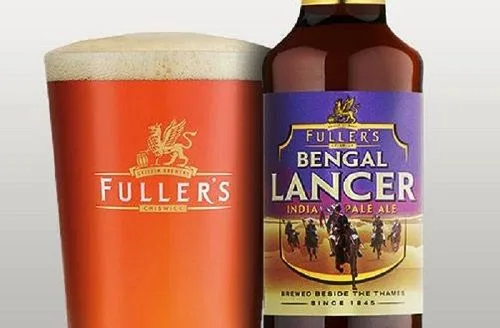
6. Fuller’s Bengal Lancer IPA recipe
Beer style: English IPA
Recipe type: All grain
Batch size: 10 liters
Ingredients
- 2.3 kg Golden Promise (3 L)
- 0.05 kg extra dark Crystal (160 L)
- 37 g East Kent Goldings [5%], boil 60 min
- 12 g Fuggles [4.5%], whirlpool at 99 °C for 8 min
- 10 g East Kent Goldings [5%], dry hop 4 days
- 20 g Target [11.5%], dry hop 4 days
- 10 g Irish moss, boil 10 min
- 1 packet of Danstar Windsor Ale yeast
Instructions
Mash the grains in 15 liters of water for 60 minutes at 66.6 °C, then boil for 60 minutes and finally ferment between 17.8 and 21.1 °C.
Beer profile
Original gravity: 13.4 °P
Final gravity: 3.6 °P
ABV: 5.27%
IBU: 50
SRM: 8.4
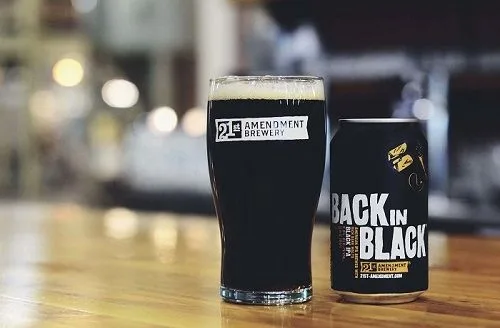
7. 21st Amendment Back in Black IPA recipe
Beer style: Black IPA
Recipe type: All grain
Batch size: 21 liters
Boil volume: 25 liters
Ingredients
- 4.5 kg German pale ale malt (2.3 L)
- 500 g flaked oats (2.2 L)
- 350 g CaraMunich III (57 L)
- 300 g Carafa I (340 L)
- 150 g Carafa III (535 L)
- 120 g acidulated malt (3.4 L)
- 100 g turbinado sugar (10 L)
- 10 g Warrior pellets [16%], boil 60 min
- 10 g Cascade pellets [7%], boil 20 min
- 10 g Chinook pellets [13%], boil 20 min
- 20 g Simcoe pellets [12.7%], boil 20 min
- 20 g Cascade pellets [7%], boil 10 min
- 20 g Chinook pellets [13%], boil 10 min
- 20 g Simcoe pellets [12.7%], boil 10 min
- 30 g Cascade pellets [7%], dry hop 7 days
- 30 g Chinook pellets [13%], dry hop 7 days
- 80 g Simcoe pellets [12.7%], dry hop 7 days
- Yeast nutrient, mash 10 min
- ½ Whirlfloc tablet, boil 15 min
- 1 packet of White Labs WLP001 California Ale yeast
Instructions
- Mash the grains in 28 liters of water at 45 °C for 15 minutes, then at 67 °C for 90 minutes and finally at 78 °C for 15 minutes.
- Boil the wort for 60 minutes and finally ferment between 20 and 22.8 °C.
Beer profile
Original gravity: 1.063
Final gravity: 1.014
ABV: 6.49%
IBU: 79
SRM: 32
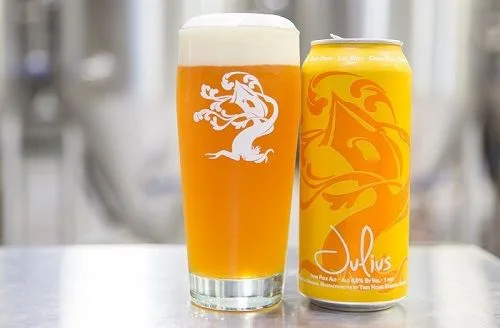
8. Tree House Julius NEIPA recipe
Beer style: New England IPA
Recipe type: All grain
Batch size: 21 liters
Ingredients
- 3.5 kg German pale ale malt (2.3 L)
- 1 kg German wheat malt (2 L)
- 600 g flaked oats (2.2 L)
- 200 g rice hulls (0 L)
- 150 g German Carapils (1.3 L)
- 100 g German melanoidin malt (25 L)
- 50 g German acidulated malt (3.4 L)
- 100 g lactose (milk sugar)
- 10 g Citra pellets [11%], boil 75 min
- 50 g Citra pellets [11%], whirlpool at 78 °C for 10 min
- 50 g Mosaic pellets [12.5%], whirlpool at 78 °C for 10 min
- 50 g Simcoe pellets [12.7%], dry hop 7 days
- 50 g Citra pellets [11%], dry hop 3 days
- 50 g Citra pellets [11%], dry hop 3 days
- 1 packet of Wyeast 1318 London Ale III yeast
Instructions
- Mash the grains in 26 liters of water at 50 °C for 10 minutes, then at 64 °C for 35 minutes, then at 72 °C for 35 more minutes and, for the last 5 liters, at 78 °C.
- Boil the wort for 70 minutes and finally ferment between 17.8 and 23.3 °C.
Beer profile
Original gravity: 1.062
Final gravity: 1.017
ABV: 6.0%
IBU: 42
SRM: 5
Frequently asked questions (FAQ)
1. How do you avoid oxidation when dry hopping a homebrewed IPA?
Oxidation is the worst enemy of an IPA, because it destroys the aromatic compounds from the hops. To minimize it, add the dry hops while there is still a little fermentation activity left (around 90% attenuation), so the residual CO2 sweeps out the oxygen that gets in when you open the fermenter. You can also purge the vessel with CO2 if you have the equipment.
2. What should you do if your IPA turns out too bitter or “harsh” on the palate?
This effect, called hop burn, is common in NEIPAs and Double IPAs with heavy hop loads. It is usually caused by leftover plant matter in suspension. The fix is a cold crash (dropping the fermenter to 1 to 2 °C for 48 hours) to settle out the hop debris. If the bitterness comes from the water, check the sulfate to chloride ratio in your next batch.
3. What is the best substitute for Citra or Mosaic hops in these recipes?
If you cannot find the specific hops for recipes like Julius, look for varieties with similar oil profiles. For Citra, a blend of Simcoe and Amarillo works well. For Mosaic, you can try a combination of Simcoe and Nelson Sauvin. Remember to adjust the amounts to the alpha acid percentage of each harvest.
4. Why did my IPA turn out hazy if it is not a NEIPA?
In styles such as West Coast or English IPA, haze is usually hop haze (from polyphenols) or chill haze (proteins that drop out in the cold). For a brilliant beer, chill the wort quickly after the boil and use finings such as Irish moss or Whirlfloc in the last 10 to 15 minutes of the boil.
5. Can you bottle a high-ABV Double IPA like the 120 Minute?
As the Dogfish Head recipe notes, alcohol levels above 15 to 18% inhibit the yeast, so the priming sugar will not turn into gas and the beer will end up flat and sweet. For extreme beers like this, the best option is to keg and force carbonate with external CO2 to get the right level of carbonation.
Recommended
- 6 Myths Revealed About the Origin of India Pale Ale (IPA) Beers
- How Is a New Beer Style Born? Origin and History of the Black IPA